
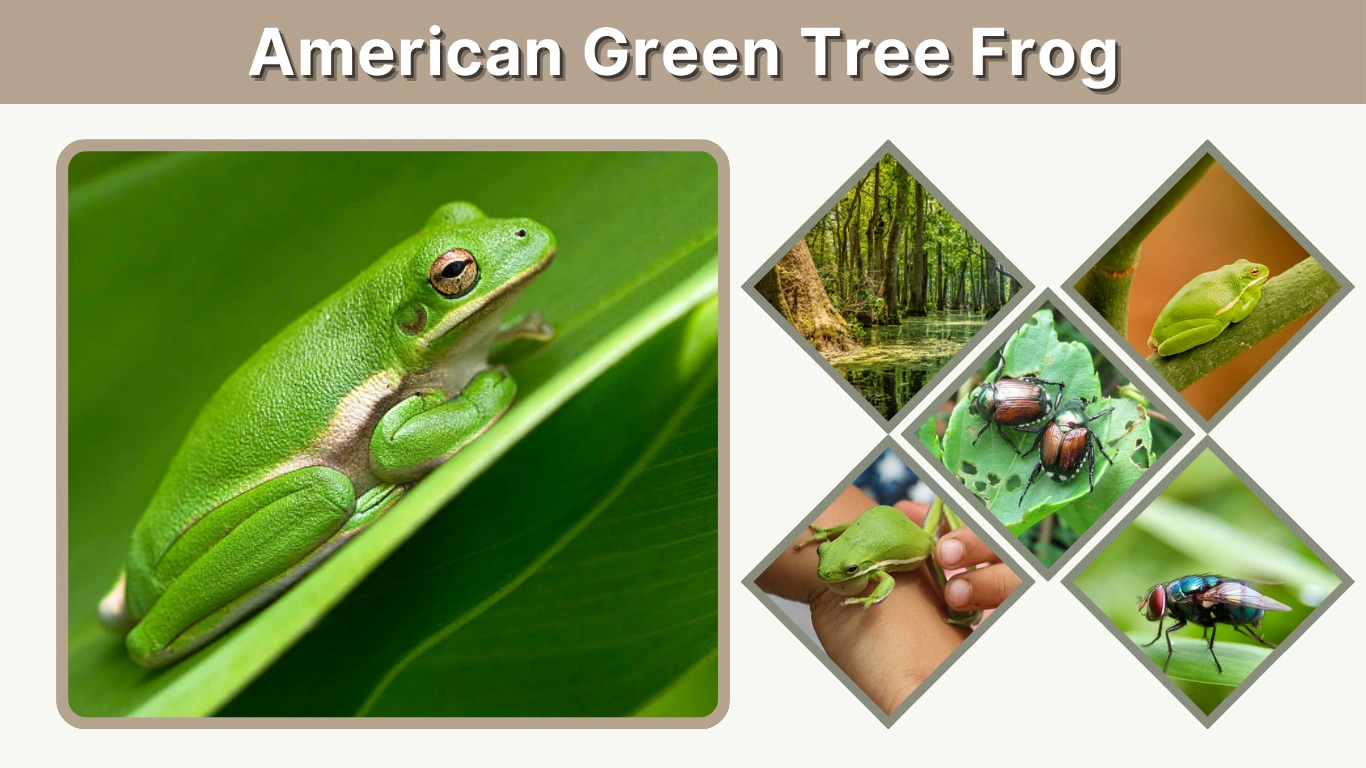
The American green tree frog (Hyla cinerea) is one of North America’s most recognized amphibians—beloved for its bright coloration, gentle nature, and distinctive nighttime calls. Found across the southeastern United States, this small arboreal frog thrives in warm, humid environments and is also a popular beginner-friendly pet. This guide covers identification, habitat, behavior, diet, sounds, care requirements, and more, offering a complete foundation for understanding this fascinating species.
Identification

- Bright green body with a smooth, glossy texture
- Distinct light cream or yellow stripe along each side
- Large toe pads for climbing
- Golden to copper-colored eyes
- Slim, agile build suited for vertical habitats
- Males smaller with darker throats; females larger and rounder
American green tree frogs are often confused with other green tree frog species, but their clean side stripe and slender frame help distinguish them.
Scientific Name & Classification
The American green tree frog’s scientific name is Hyla cinerea, a member of the Hylidae family—true tree frogs. They share traits with other North American tree frogs, including sticky toe pads and excellent climbing ability. Their close relatives include the squirrel tree frog and the barking tree frog.
Range & Distribution
This species is widespread across the southeastern United States, especially in states such as Florida, Georgia, Alabama, Louisiana, Mississippi, and the Carolinas. They favor warm, humid climates and are often found near bodies of water. Their distribution continues to expand due to human-made water sources like backyard ponds and wetlands.
Habitat & Adaptations

American green tree frogs thrive in swamps, marshes, wetlands, and vegetated ponds. They prefer areas rich in reeds and vegetation where they can climb and hide. Adaptations include:
- Moisture-regulating skin that prevents drying out
- Strong toe pads for efficient climbing
- Camouflage coloration to blend with leaves
- Nocturnal behavior that helps them avoid predators
These adaptations allow them to survive in both natural wetlands and suburban environments.
Size, Appearance & Characteristics
American green tree frogs are small, typically growing 1.25 to 2.5 inches long. Their color can range from lime green to dark olive depending on temperature, humidity, and mood. Some rare individuals display an albino or yellowish variant.
Their lifespan varies from 2–5 years in the wild but often reaches 6–8 years in proper captive care. They are active, alert, and known for their energetic climbing and expressive calls.
Life Cycle & Reproduction
These frogs follow a classic amphibian life cycle:
- Egg Stage – Females lay eggs on floating vegetation in shallow water.
- Tadpole Stage – Tadpoles feed on algae and develop over several weeks.
- Metamorphosis – They transition from tadpole to froglet, developing legs and lungs.
- Adult Stage – Adults become fully terrestrial-amphibious climbers.
In the wild, breeding typically occurs after warm rains. In captivity, hobbyists often use a rain chamber to mimic these conditions.
Diet & Food

In nature, American green tree frogs eat small insects, including:
- Flies
- Mosquitoes
- Moths
- Beetles
- Small spiders
As pets, they thrive on:
- Crickets
- Fruit flies
- Small roaches
- Occasional mealworms or waxworms (treats only)
A varied, appropriately sized insect diet helps keep them healthy and active.
Call, Sound & Vocalizations
The American green tree frog is famous for its distinctive “quonk” or “queenk” call—a repetitive, nasal sound often heard in summer nights. Males call to attract mates and establish territory. Their calls intensify during warm, rainy conditions. Females generally do not vocalize, making calls a reliable way to identify males.
Behavior & Temperament
American green tree frogs are nocturnal, becoming most active after sunset. They spend daytime hours resting on leaves, branches, or tank walls. At night, they hunt insects, climb vertically, and explore their environment. Although visually curious, they are not fond of frequent handling; excessive contact can stress them and affect their skin’s protective mucus layer. Their alertness, agility, and animated nighttime behaviors make them popular display pets rather than hands-on companions.
Poisonous? Safety for Humans & Pets
American green tree frogs are not poisonous to humans or household pets. They secrete mild skin compounds for protection, but these are harmless unless an animal mouths or eats the frog, which may cause minor drooling or stomach upset. Dogs and cats should not be allowed to grab or chase them, as the frog is at greater risk than the pet. Gentle, minimal handling and handwashing are always recommended.
Predators
In the wild, American green tree frogs face a variety of predators, including:
- Snakes
- Birds such as herons and owls
- Larger frogs
- Fish
- Small mammals
Their main defenses include camouflage, quick leaps, and staying high in vegetation to avoid ground predators.
American Green Tree Frog as a Pet

These frogs are excellent for beginners due to their hardiness, small size, and low maintenance needs. They are available at reptile expos, pet stores, and online breeders. Prices generally range from $5 to $15 in the U.S. and slightly higher in the U.K. They make great display pets for people who enjoy watching natural amphibian behaviors.
Pros
- Easy to care for
- Active and interesting to watch
- Affordable
- Suitable for small living spaces
Cons
- Not ideal for frequent handling
- Noisy during mating season
- Sensitive to poor humidity conditions
Care Guide (Care Sheet)
Enclosure / Tank Setup
A vertical terrarium is best to simulate natural climbing behavior. A single frog can live in a 10-gallon tank, though 20 gallons is recommended for groups. Provide:
- Live or artificial plants
- Branches and vines
- A shallow water dish
- A secure, ventilated lid
- Moisture-retaining substrate like coco fiber or sphagnum moss
A planted terrarium supports humidity, provides hiding spots, and reduces stress.
Temperature & Humidity
- Temperature: 72–82°F (22–28°C)
- Night drop: 68–72°F (20–22°C)
- Humidity: 60–80%
- Mist once or twice daily or use an automatic misting system.
Ensure the enclosure never becomes overly wet or stagnant, which can cause respiratory problems.
Lighting
American green tree frogs do not require strong UVB lighting, but low-level UVB (2–5%) improves long-term bone health. Provide a 12-hour day/night cycle.
Handling & Stress Prevention
Minimal handling is best. If handling is necessary:
- Wash hands before and after
- Use moistened, clean hands
- Avoid squeezing the frog
- Limit handling time
Observe stress signs—dark coloration, hiding excessively, or refusing food.
Cleaning & Maintenance
- Spot clean daily
- Rinse water dish daily
- Deep clean every 2–4 weeks
- Replace substrate as needed
Breeding in Captivity
To breed American green tree frogs, keep them in groups with a ratio of 2–3 males per female. Increase humidity and simulate rain with a misting system or rain chamber. Once eggs are laid, transfer them to a separate tank with clean, shallow water. Tadpoles require algae or powdered food until they develop limbs.
Health & Common Problems
Common issues include:
- Dehydration from low humidity
- Red leg disease (bacterial infection)
- Shedding issues
- Parasites from wild-caught insects
A healthy frog has smooth skin, bright color, clear eyes, and consistent appetite.
Tankmates & Compatibility
American green tree frogs can be kept together if enough space is provided. However, mixing species is not recommended, as size and humidity needs differ, and some frogs may carry pathogens that affect others.
VS Similar Species (Comparison Table)

| Feature | American Green Tree Frog | Cuban Tree Frog | Gray Tree Frog |
| Size | 1.25–2.5 in | 3–5 in | 1.5–2 in |
| Color | Bright green | Green/brown | Gray mottled |
| Call | “Quonk” | Harsh squeak | Musical trill |
| Temperament | Docile | Invasive, aggressive | Calm |
Fun Facts
- They often cling to windows at night to catch insects drawn to lights.
- Their color changes slightly with weather or stress.
- Males call more intensely just before rain.
- They are the state amphibian of Georgia and Louisiana.
FAQs
Are American green tree frogs poisonous?
No—these frogs are harmless to humans and pets. They may produce mild skin secretions, but these are not dangerous. If a dog or cat mouths them, the frog is at greater risk than the pet. Simply wash hands after handling.
What do American green tree frogs eat?
They eat small insects such as crickets, fruit flies, roaches, and moths. In captivity, offer gut-loaded crickets and occasional treats like waxworms. Avoid oversized prey to prevent digestive issues.
How long do American green tree frogs live?
Most live 2–5 years in the wild, but with proper care—including consistent humidity, varied diet, and clean enclosure—they commonly live 6–8 years in captivity.
Where do American green tree frogs lay their eggs?
Females lay eggs on floating plants or shallow vegetation in calm water. In captivity, they often use a rain chamber setup, laying eggs on plant leaves or smooth surfaces near the waterline.
How big do American green tree frogs get?
Adults typically reach 1.25 to 2.5 inches long. Females are slightly larger than males, while males exhibit darker throats and more pronounced calls.
