
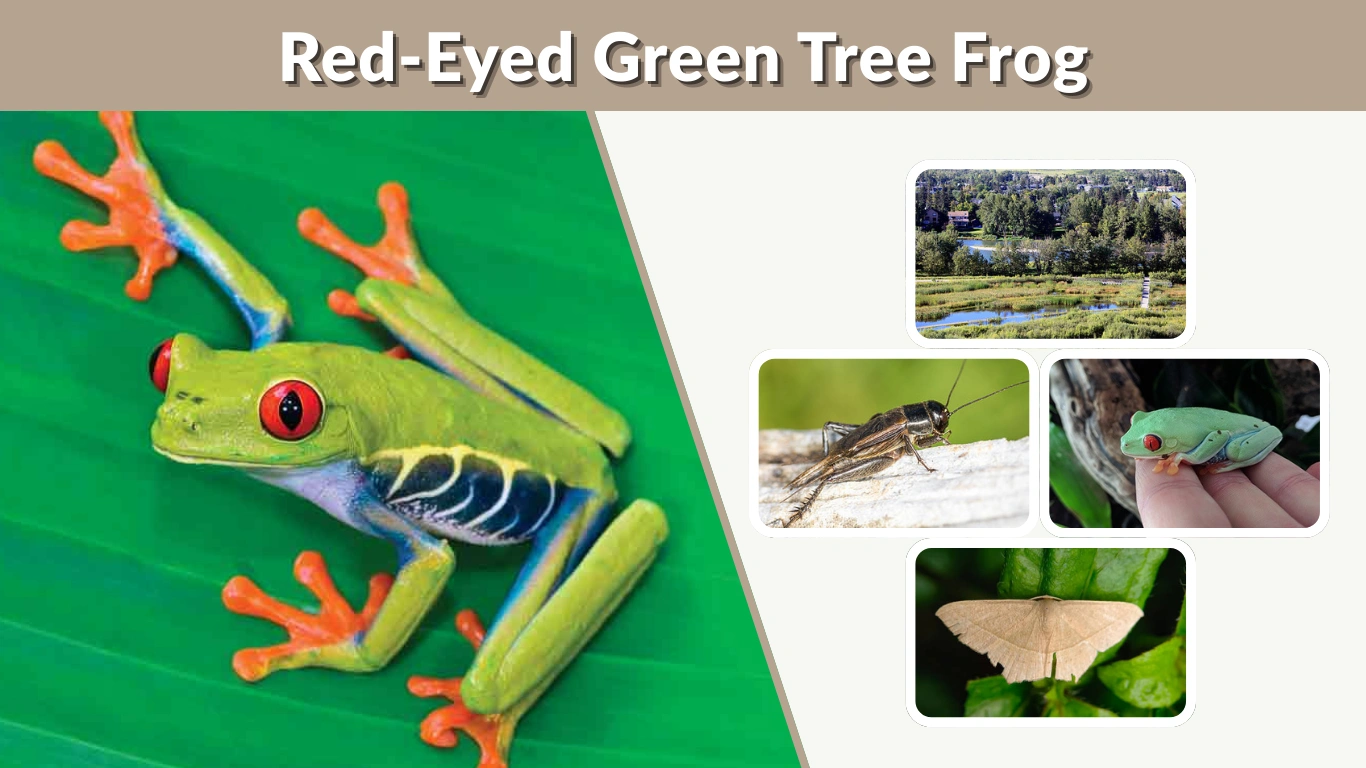
The red-eyed green tree frog is one of the most recognizable amphibians in the world, famous for its vibrant green body, bright red eyes, and striking blue-and-yellow side stripes. These frogs are popular pets, fascinating rainforest dwellers, and a favorite subject in photography and art. This guide explores their identification, natural habitat, life cycle, diet, care requirements, enclosure setup, behavior, and interesting facts to help both beginners and experienced keepers.
What Is a Red-Eyed Green Tree Frog?
The red-eyed green tree frog, commonly known simply as the red-eyed tree frog, belongs to the genus Agalychnis and has the scientific name Agalychnis callidryas. Although many people search for “green tree frog with red eyes,” this species is distinct from the American green tree frog (Hyla cinerea) or Australian green tree frog (Litoria caerulea). Only Agalychnis callidryas naturally displays the vivid crimson eyes that make the species iconic.
These frogs are native to Central America, ranging from southern Mexico through Costa Rica and Panama. While Australians often refer to a similar species as the “Australian red-eyed green tree frog,” true Agalychnis species do not naturally occur in Australia; instead, regional naming overlaps cause confusion.
Identification

- Bright, emerald-green back
- Large, vivid red eyes with vertical pupils
- Blue and yellow striping along the sides
- Distinctive orange feet
- Smooth, moist skin
- Adults typically 2–3 inches long
- Juveniles appear lime-green and brighten with age
- May turn dark green or brown when stressed or resting
- Slender limbs designed for climbing
- Sticky toepads for gripping leaves
Species Facts
Red-eyed green tree frogs are nocturnal, spending most of the day resting on leaves. Their signature red eyes act as a defensive adaptation called startle coloration: when the frog opens its eyes suddenly, predators hesitate for a moment, giving the frog time to escape. Their bodies also shift from bright to dark green depending on environment, humidity, temperature, or stress levels.
They are not poisonous, though their colors make them appear dangerous. In the wild, they live high in rainforest canopies and only descend for breeding. Their predators include birds, snakes, bats, and larger frogs. Their lifespan ranges from 5 to 10 years in the wild, and 10 to 14 years in captivity with excellent care.
Habitat & Natural Environment

Red-eyed green tree frogs thrive in humid, warm rainforest regions. Their natural habitat includes:
- Dense tropical forests
- Areas near rivers and ponds
- Moist vegetation
- Canopy-level branches and broad leaves
They prefer temperatures between 75–85°F (24–29°C) and humidity levels above 70%, with nighttime humidity rising even higher. In the wild, these frogs hide under leaves during the day to stay cool and prevent dehydration. At night, they become active, hunting insects and vocalizing.
Although many searches mention the “red-eyed green tree frog Australia,” this species is not native to Australia. Australians often encounter the Litoria species, which can appear similar but lack the intense red eyes.
Lifespan & Life Cycle
Red-eyed tree frogs have a fascinating life cycle, beginning as eggs laid on leaves overhanging water. Tadpoles drop into the water after hatching, eventually developing legs and lungs before climbing onto land.
The general timeline:
- Egg stage: 6–10 days
- Tadpole: 6–8 weeks
- Froglet: rapid growth phase
- Adult: color intensifies with age
Many keepers wonder, “When do red-eyed tree frogs turn green?”—young frogs start off a lighter shade and deepen to bright emerald as they mature. Conversely, dark green coloration usually indicates rest, temperature adjustment, or mild stress rather than illness.
Diet & Feeding

In the wild, red-eyed tree frogs eat a variety of insects:
- Crickets
- Moths
- Beetles
- Flies
- Small grasshoppers
In captivity, a consistent feeding routine keeps them healthy. Most keepers offer:
- Gut-loaded crickets
- Dubia roaches
- Small locusts
- Occasional waxworms or flies
Calcium and vitamin supplementation prevents deficiency, especially in juveniles. Feeding occurs at night when the frogs are naturally active and alert.
Red-Eyed Green Tree Frog as Pets

Red-eyed green tree frogs are popular pets because of their striking appearance and relatively gentle temperament. However, they are best for owners who can maintain a humid, tropical environment. These frogs should be considered display pets rather than handling pets—excessive handling stresses them and damages their delicate skin.
They are generally hardy when their basic needs are met, which makes them suitable for dedicated beginners. The cost varies depending on region, with captive-bred juveniles usually being healthier and more colorful than wild-caught imports.
Enclosure & Terrarium Setup
A proper enclosure is essential for keeping your frog healthy. These are arboreal frogs, so their tank setup must emphasize vertical climbing space, stable humidity, and safe, natural décor. A 12×12×18 inch tank is the smallest acceptable size for a single frog, though a 18×18×24 enclosure is preferred for groups.
Important setup elements include:
- Exo Terra or Zoo Med vertical terrarium
- Coconut fiber or forest floor substrate
- Live plants such as pothos or bromeliads
- Branches, cork bark, and leaf cover
- Misting system or daily hand-misting
- Low-intensity UVB optional but beneficial
- Temperature gradient of 75–85°F
- Humidity between 70–90%
Good ventilation prevents mold, and deep plant cover helps the frog feel secure. This section also covers their terrarium setup, enclosure tips, and how to maintain consistent moisture.
Daily & Long-Term Care
Proper care requires consistency. Frogs should be misted in the evening, fed at night, and kept in a quiet environment. Their enclosure must be spot-cleaned daily and deep-cleaned every few weeks.
Baby frogs need more frequent feeding, higher humidity, and careful monitoring. Adults require regular supplementation, especially calcium.
Many keepers ask “Why is my red-eyed tree frog dark green?”
Common reasons include:
- Daytime resting mode
- Lower temperature
- Temporary stress
- Nighttime color shift pattern
Dark coloration is usually natural unless paired with lethargy or lack of appetite.
Breeding Red-Eyed Green Tree Frogs

Breeding requires a seasonal simulation:
- Raise humidity
- Lower temperatures slightly
- Provide rain chamber or heavy mist cycle
Frogs lay eggs on leaves overhanging water. After hatching, tadpoles fall into the water and grow rapidly. Captive-bred babies adapt well to terrariums and are more colorful. Many keepers search for tadpoles for sale, but purchasing captive-bred froglets is usually easier and safer.
Buying Guide & Availability
These frogs are commonly sold online and at specialty reptile stores. Searches such as “red-eyed green tree frog for sale,” “for sale UK,” or “for sale Australia” reflect regional availability. In most places, captive-bred frogs cost more but are far healthier than imports.
When choosing a frog:
- Look for bright colors
- Active nighttime behavior
- Clear eyes
- Clean belly
- No signs of dehydration or thinning
Avoid frogs that appear excessively dark during the day or have sunken eyes.
Comparison Table
Below is a quick comparison of red-eyed green tree frogs vs common green tree frogs:
| Feature | Red-Eyed Green Tree Frog | Green Tree Frog (USA/AUS) |
| Eye Color | Bright red | Gold or black |
| Genus | Agalychnis | Hyla / Litoria |
| Habitat | Central American rainforest | USA or Australian wetlands |
| Activity | Strictly nocturnal | Partially nocturnal |
| Difficulty | Moderate | Easy |
Many ask: “Can red-eyed tree frogs live with green tree frogs?”
The answer is no—their environmental, dietary, and stress differences make cohabitation unsafe.
FAQs
Why is my red-eyed tree frog dark green?
They often darken when resting, cooling down, or experiencing mild stress. Dark green acts as camouflage during the day. As long as the frog is active at night and eating normally, the color change is natural.
Can red-eyed tree frogs live with green tree frogs?
They should not be housed together. Their humidity needs, stress tolerance, and pathogen risks differ significantly. Mixing species increases the chance of aggression, illness, and environmental conflicts.
How long do red-eyed green tree frogs live?
Most live 10–14 years in captivity with excellent care. In the wild, their lifespan is shorter—typically 5–8 years due to predators, environmental fluctuations, and disease.
What do red-eyed green tree frogs eat?
They eat small insects such as crickets, roaches, fruit flies, and moths. In captivity, feeding should occur at night with properly gut-loaded prey and calcium supplementation to prevent deficiencies.
Where do red-eyed green tree frogs live?
They are native to Central American rainforests, particularly in humid lowland tropical regions of Mexico, Costa Rica, and Panama. They spend much of their lives high in trees, descending only to breed.
