
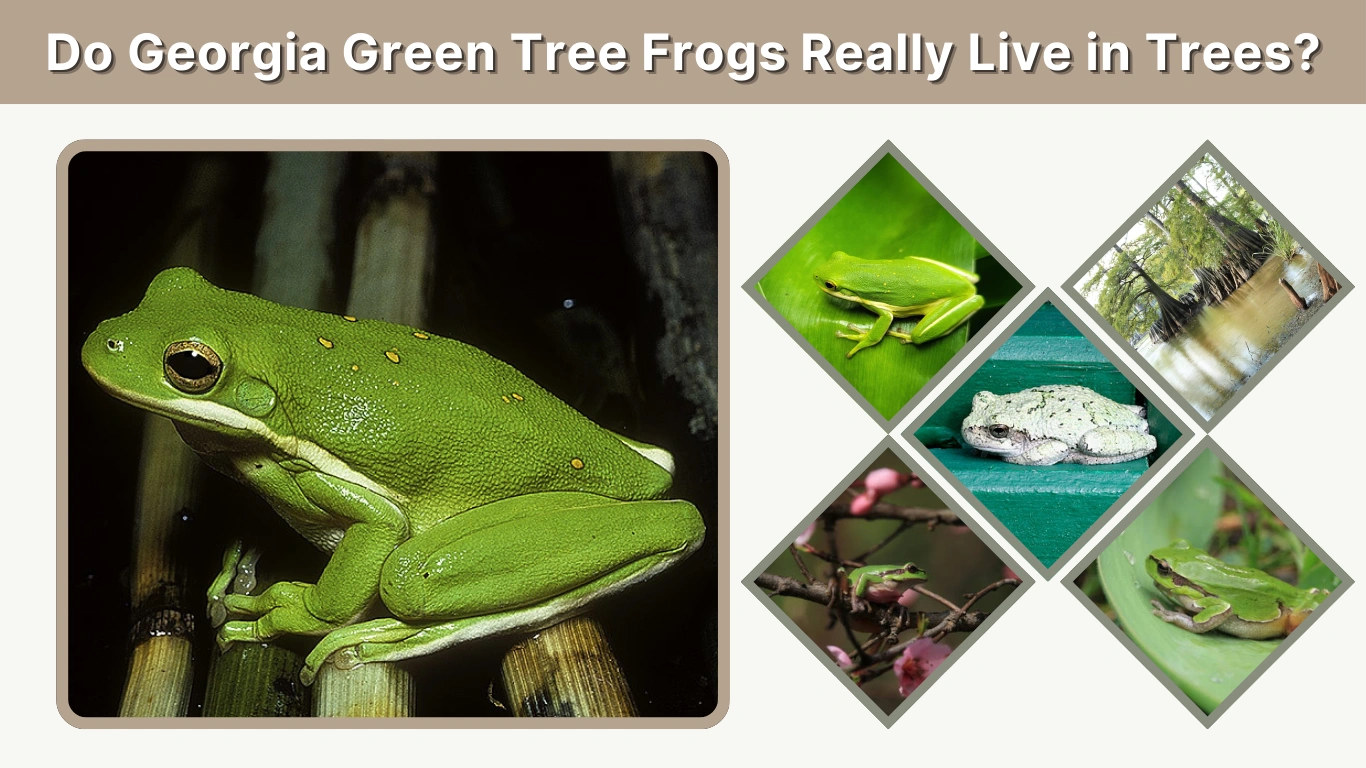
Georgia’s green tree frogs are admired for their bright coloration and their unmistakable nighttime calls that echo through wetlands and woodlands. But many people wonder whether these frogs truly live in trees or whether the name is only a loose description. In reality, trees play a central role in nearly everything they do—feeding, hiding, calling, and surviving. This article explores their tree-related behaviors, adaptations, and habitats to reveal just how deeply tied they are to arboreal life.
Identification

Georgia green tree frogs show several physical traits that make them perfectly suited for life in trees:
- Large adhesive toe pads that help them grip tree bark, wet leaves, and smooth surfaces
- Slender, lightweight bodies designed to move easily across thin branches
- Bright green coloration that blends with tree foliage, offering camouflage
- Thin lateral stripe that breaks up their outline among leaves and stems
These features are not simply aesthetic—they are key adaptations that help the frogs cling, climb, and hide effectively in their arboreal homes.
Do Georgia Green Tree Frogs Live in Trees?
Arboreal Lifestyle Explained
Yes—Georgia green tree frogs truly live in trees for much of their lives. They spend a significant portion of their active hours perched on branches, leaves, vines, and shrubs. Elevated resting sites protect them from snakes, raccoons, and ground-hunting predators. Male frogs often choose small tree branches as calling posts, where sound carries more clearly over water and through foliage. Trees also give the frogs access to moisture, as dew and rain collect on leaves where they sleep and feed.
Tree Use Throughout the Year
Their use of trees shifts slightly with weather and seasons. During warm, humid nights, they climb higher into tree canopies to feed on flying insects. During storms or extreme heat, they may descend to lower branches where leaves offer denser cover and protection from wind. In breeding season, they climb down toward trees and shrubs growing along pond edges, staying close to water while still relying on tree cover for safety.
Size and Tree-Adapted Physical Traits

Though small—typically 1.5 to 2.5 inches long—their size is an advantage for navigating the delicate branches and thin leaves of Georgia’s wetland trees. Their bodies are light enough that they can rest on narrow stems without bending them. Their eyes offer a wide field of vision, ideal for spotting predators while clinging to tree bark. Even their toe pad structure is specialized for gripping both smooth and rough surfaces, letting them climb wet leaves as easily as textured trunks.
ange and Tree-Rich Environments
Across Georgia, green tree frogs are most abundant in areas where trees and water intersect. They thrive along forest edges, wetland woodlands, lake borders, and creekside tree lines. Their ideal environments include places where moisture supports insect life and where shrubs or trees offer foliage cover. Open grasslands or dry, treeless areas rarely support stable populations because the frogs depend heavily on shaded leaves to avoid dehydration. In suburban regions, they flourish wherever homeowners maintain healthy tree cover and backyard ponds.
Even within cities, green tree frogs will settle in small patches of trees—especially if those trees grow near drainage areas or retention ponds. Their ability to inhabit both large swamps and small decorative trees shows how essential trees are for their survival, no matter the setting.
Tree-Based Habitat

Natural Arboreal Habitat
In the wild, these frogs favor trees found in wetlands such as cypress, maple, tupelo, and water oak. They climb onto broad leaves to sleep during the day and use thin branches for nighttime hunting. Wetland trees provide natural humidity that keeps their skin from drying out. Many individuals hide in tree cavities or rest beneath overlapping leaves that create shaded pockets. These areas also offer protection from birds and larger predators that struggle to find frogs camouflaged among the greenery.
Human-Influenced Arboreal Habitat
Green tree frogs readily adapt to human-modified environments where tree cover remains intact. They use ornamental trees, porch plants, garden shrubs, and low-hanging limbs as resting spots. Small trees planted near water features—such as koi ponds or decorative fountains—become ideal living spaces. Porch lights attract insects, and frogs often climb nearby trees or railings to hunt. Trees around homes, especially moisture-rich ones, create perfect microhabitats that mimic their natural forested wetlands.
Tree-Related Behavior
Daily Arboreal Behavior
During daylight, green tree frogs cling to leaves or bark close to tree trunks where shade keeps temperatures cool. Their coloration allows them to disappear into foliage, giving them excellent camouflage. When night falls, they emerge along branches to feed on insects drawn to tree canopies. Males choose specific perches on narrow limbs to amplify their calls, using the height to project sound further across forests and wetlands.
Seasonal Arboreal Behavior
Seasonal shifts influence how high or low the frogs climb. Warm, humid nights encourage them to move higher, where insect activity is greatest. In autumn or dry periods, they stay lower in trees to retain moisture and avoid wind exposure. During breeding season, they travel downward to tree limbs hanging over ponds, using these low branches as safe platforms where they can call to attract mates. Throughout the year, they move strategically through tree levels to balance feeding, safety, temperature, and humidity.
Green Tree Frog vs Other Tree-Using Frogs

| Feature | Green Tree Frog | Cope’s Gray Tree Frog | Squirrel Tree Frog |
| Primary Tree Use | Wetland shrubs & trees | Tall hardwood forests | Urban yard trees |
| Color Match | Bright green foliage | Gray bark camouflage | Green/brown mixed |
| Climbing Skill | Excellent | Excellent | Moderate |
| Calling Sites | Thin leafy branches | High trunks | Bushes & small trees |
Bite and Tree-Safety Considerations
Green tree frogs are harmless, especially when encountered on trees around homes or natural areas. They do not bite people and rarely attempt to defend themselves. If handled, they may jump toward the nearest tree or shrub for safety. It’s advisable to wash hands after touching any amphibian, but there is no danger. When inspecting trees for frogs, gently check leaves or branches, avoiding sudden movements that might startle them.
FAQs
Why do Georgia green tree frogs prefer trees?
Trees offer shelter, shade, moisture, and abundant insects. Elevated perches reduce predator risk and allow males to call more effectively. Their adaptations are specifically designed for tree living.
How high do they typically climb in Georgia forests?
Most stay within 6–12 feet, though they may climb higher in dense, humid vegetation. They choose heights that balance safety, moisture, and access to insects.
What types of trees attract green tree frogs the most?
Wetland-associated species—cypress, tupelo, and water oak—are favorites. In suburban areas, ornamental trees with broad leaves also attract them, especially near water.
Do they sleep in trees during the day?
Yes. They rest on shaded leaves or bark, often in clusters of foliage where they blend in. These protected spots help prevent dehydration and predator detection.
Can planting more trees help attract green tree frogs?
Absolutely. Adding moist, insect-friendly trees near water sources greatly increases the chances of green tree frogs settling in an area.
