
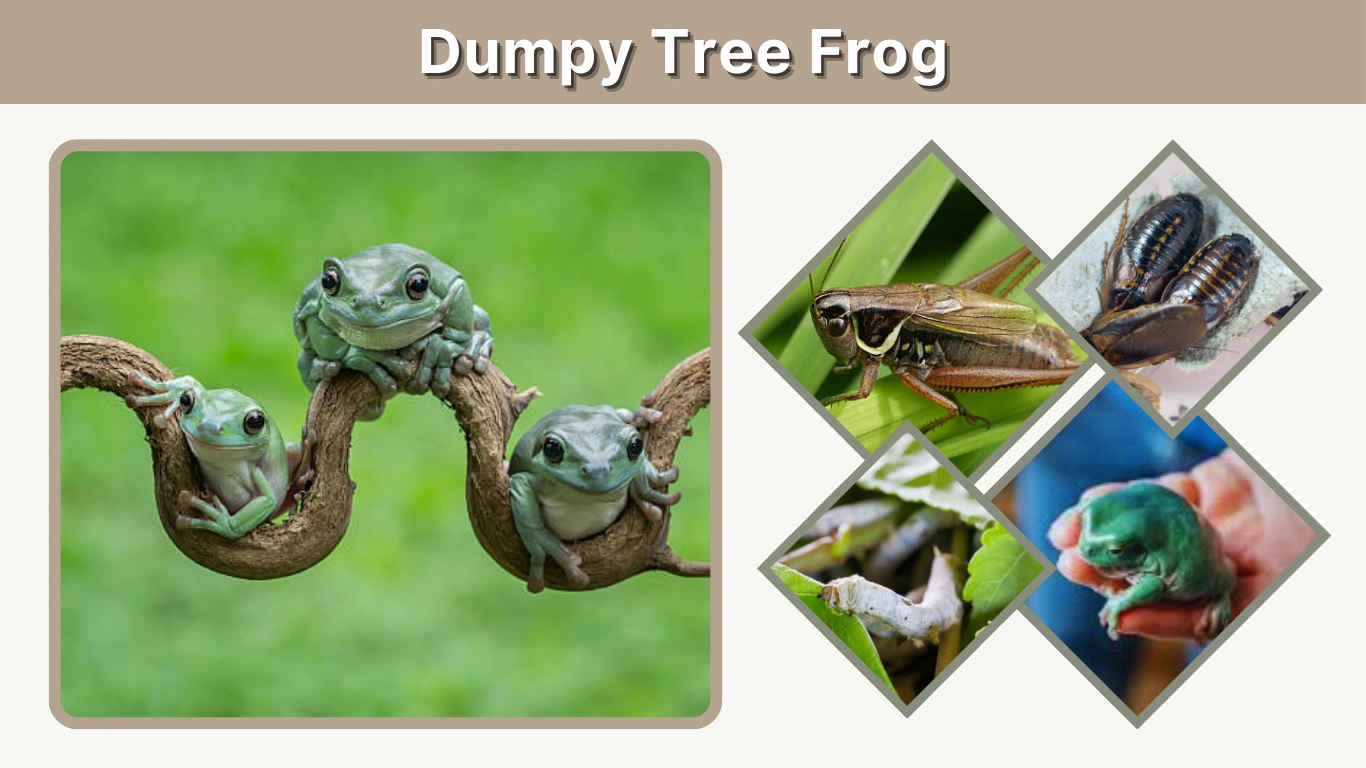
The Dumpy Tree Frog, also known as the White’s Tree Frog or Australian Green Tree Frog, is one of the most popular pet amphibians in the world. Known for its gentle temperament, big expressive eyes, and charming “chubby” appearance, this species is an ideal beginner frog that adapts easily to captive care. Dumpy Tree Frogs come in a wide range of colors and morphs, live impressively long lives, and thrive in simple, well-designed enclosures—making them a top choice for both new and experienced keepers.
Identification

The Dumpy Tree Frog (Litoria caerulea) gets its nickname from its soft, pudgy build and relaxed posture. In the wild, this frog ranges from forest to semi-arid regions, adapting to humid environments as well as dry spells. In captivity, their naturally calm nature makes them one of the easiest amphibians to handle—though handling should still be kept minimal.
Key Characteristics
- Smooth, waxy skin that helps reduce water loss
- Rounded body with a “dumpy” look
- Large toe pads for climbing
- Big, friendly-looking eyes
- Typical colors: green, turquoise, blue-green, or morph variations
These frogs can change shades depending on stress, temperature, and humidity, making them visually fascinating for keepers.
Natural Habitat & Behavior
Native to Australia, New Guinea, and surrounding regions, Dumpy Tree Frogs typically live in trees, shrubs, and moisture-rich areas. They’re arboreal and nocturnal, spending most daylight hours sleeping in shaded spots and becoming active at night to hunt for insects.
In their natural habitat, they experience:
- Warm temperatures
- High humidity
- Access to water-filled tree hollows and vegetation
- Occasional dry periods, during which the frog secretes a waxy coating to retain moisture
Behavior Traits
- Calm and slow-moving
- Known for cute “smiles” and expressive faces
- Males call with a deep, pleasant croak
- Capable of tolerating handling better than most amphibians
Their relaxed demeanor is one of the main reasons they’re beloved as pets.
Dumpy Tree Frog Morphs & Color Phases

One of the biggest attractions of this species is the variety of color morphs now available in the pet trade. Although the classic morph is bright green, breeders have produced multiple eye-catching variations.
Popular Morphs
- Blue Dumpy Tree Frog – Soft sky-blue or teal coloration
- Blue-Eyed Dumpy – Bright blue eyes, rare and highly sought after
- Snowflake Dumpy – Speckled pattern with pale blue or white spotting
- Yellow or Golden Dumpy – Soft yellow to honey-toned hue
- Purple Dumpy – Reddish or lavender-tinted skin
- Brown Dumpy – Chocolate or earthy tones
- Giant Dumpy Tree Frog – Larger-than-average individuals selectively bred
Some morphs originate naturally, while others are selectively bred. Shades may change throughout the frog’s life, creating a continuously shifting appearance.
Size, Growth & Lifespan
Dumpy Tree Frogs grow quickly during their first year and reach their full adult size between 10–18 months. They are one of the larger tree frog species, known for their sturdy, chubby bodies.
Average Size
- Adult length: 3 to 5 inches
- Largest individuals: Up to 5.5 inches (giant morphs)
- 6-month juveniles: Usually 1.5 to 2.5 inches
Females tend to be bigger and heavier, while males are slightly smaller with more pronounced vocal sacs.
Lifespan
One of the most impressive traits of this species is its longevity.
- Captive lifespan: 12–20 years, sometimes more
- Wild lifespan: Typically shorter due to predators and environmental challenges
With proper care, these frogs can live as long as a cat or small dog.
Are Dumpy Tree Frogs Poisonous?

Dumpy Tree Frogs are not dangerous to humans, but like most amphibians, they have mild skin secretions that help protect them from predators and bacteria. These secretions are not potent poisons—they may cause mild irritation if you touch your eyes or mouth after handling.
They are safe pets as long as you:
- Wash hands after contact
- Avoid touching your face or eyes before washing
- Keep them away from household pets that might lick them
Their defensive secretion is more of a natural moisturizer than a toxin.
Dumpy Tree Frog Care Guide
Keeping a Dumpy Tree Frog is relatively simple, but proper setup is essential for long-term health.
Enclosure Requirements
Dumpy Tree Frogs need a tall, vertical tank because they love climbing. A 18x18x24 enclosure is recommended for one adult, while larger groups need more space.
Minimum Tank Sizes
- Single frog: 18x18x24
- Pair: 24x18x24
- Group of 3–4: 36x18x24 or larger
Provide plenty of branches, cork bark, and plants to mimic their natural arboreal habitat.
Tank Setup
This species requires the right balance of heat, humidity, and light.
Temperature
- Day: 75–82°F
- Night: 68–75°F
A heat lamp is optional depending on room temperature.
Humidity
- Ideal range: 50–70%
- Occasional spikes to 80% are beneficial
- Must have good ventilation to prevent mold
Lighting
- Natural light or low-UVB lighting works well
- Optional UVB is recommended for improved long-term health
Substrates
- Coconut fiber
- Reptile-safe soil
- Bioactive substrate mixes
These help maintain humidity and reduce stress.
Diet & Feeding

Dumpy Tree Frogs are insectivores, eating a wide range of feeder insects in captivity. A balanced, varied diet is key to maintaining their health, preventing obesity, and supporting long-term vitality.
What Dumpy Tree Frogs Eat
- Crickets
- Dubia roaches
- Silkworms
- Black soldier fly larvae
- Mealworms (only as treats)
- Hornworms
- Waxworms (rare treat—high fat)
Juveniles should be fed daily, while healthy adults typically eat 3–4 times per week. Overfeeding is a common issue, especially since Dumpy Tree Frogs tend to eat eagerly and store excess fat.
Supplements
To maintain proper bone health, provide:
- Calcium with D3 (every other feeding)
- Multivitamin powder (once weekly)
Because amphibians absorb nutrients differently from reptiles, dusting insects is crucial for preventing metabolic disorders.
Poop & Health Indicators
- Brown, well-formed poop = healthy
- Loose stool = parasites or improper diet
- Lack of poop = dehydration or low temps
Monitoring waste is a simple but effective way to detect health problems early.
Handling, Behavior & Temperament

Compared to most amphibians, Dumpy Tree Frogs tolerate gentle handling quite well. Their calm demeanor and slow movements make them feel almost cat-like in temperament.
Tips for Safe Handling
- Handle only with clean, wet hands
- Avoid lotions, sanitizer, or soap residue
- Support their entire body
- Keep handling short to avoid stress
Frogs have permeable skin, meaning they easily absorb chemicals, oils, or residues. Proper hygiene protects both you and the frog.
Behavior You May Notice
- Croaking: Males call at night, especially after misting
- Glass surfing: Can indicate stress or hunger
- Color shifts: Mood, hydration, temperature, or humidity-related
- Belly wiping: A quirky behavior where the frog wipes its face using its feet
Dumpy Tree Frogs are expressive, making them a joy to observe.
Housing Multiple Dumpy Tree Frogs
These frogs are generally social and can live with others of the same species. However, you must consider enclosure size and individual temperament.
Rules for Group Housing
- Similar-sized frogs only
- Avoid mixing juveniles with adults
- Provide multiple hides and perches
- Increase tank size significantly
- Monitor feeding to prevent competition
A minimum 36-inch tall enclosure is recommended for groups of three or more. Ensure plenty of vertical climbing space and several secure resting spots.
Health Issues & Common Problems
Dumpy Tree Frogs are hardy, but like all amphibians, they are prone to certain conditions when their environment isn’t ideal.
1. Obesity
The most common issue. Caused by:
- Overfeeding
- High-fat foods
- Lack of activity space
Use varied feeders and avoid fatty insects.
2. Skin Infections
Redness, sores, or fungus may appear due to:
- Poor cleanliness
- Standing water
- Low ventilation
Bioactive setups with drainage layers help prevent these issues.
3. Metabolic Bone Disease (MBD)
Occurs when calcium or UVB is lacking.
Symptoms include:
- Weak limbs
- Soft jaw
- Tremors
Easily avoided with proper supplementation.
4. Parasites
Symptoms:
- Weight loss
- Runny poop
- Lethargy
Most are treatable with veterinary prescriptions.
5. Dehydration
Can happen quickly due to:
- Low humidity
- High temps
- Inadequate misting
Provide both a humid environment and a clean water dish.
Early detection leads to better outcomes, so observe your frog daily.
Buying Guide
Dumpy Tree Frogs are widely available from reptile shops, expos, breeders, and online sellers. Prices vary depending on morph, age, and rarity.
Where to Buy
- Reptile expos (best for morph selection)
- Local breeders
- Online reptile retailers
- Petco and Petsmart (standard green morphs)
- Classifieds and specialty amphibian groups
- UK and Australian specialty shops
Price Range
- Standard green morph: $30–$60
- Blue morphs: $80–$150
- Snowflake, blue-eyed, giant, rare morphs: $150–$400+
Juveniles are cheaper; older frogs cost more due to proven health and size.
What to Look For
A healthy Dumpy Tree Frog should have:
- Clear, bright eyes
- Smooth, unbroken skin
- Strong climbing grip
- Normal breathing
- Healthy, rounded body shape
- No bone deformities
Ask sellers about feeding habits, age, and enclosure history.
Fun Facts
- They can “smile,” giving them a cute, friendly expression
- Their waxy skin helps them retain moisture
- They can change color depending on environment and stress
- They are one of the few frogs that tolerate gentle handling
- They can live longer than most reptiles their size
FAQs
How long do Dumpy Tree Frogs live?
With proper care, most live 12–20 years, and some have reached over 25 years in captivity. Good diet, stable humidity, and a clean enclosure significantly boost lifespan.
Do Dumpy Tree Frogs need UVB?
UVB is not mandatory, but low-level UVB lighting is beneficial. It supports calcium absorption and overall vitality, especially in long-lived species like this.
Are Dumpy Tree Frogs good beginner pets?
Yes—these frogs are one of the best amphibians for beginners thanks to their adaptability, calm temperament, and forgiving nature when it comes to minor enclosure mistakes.
What do Dumpy Tree Frogs eat?
They eat insects such as crickets, roaches, silkworms, and worms. Occasional treats like waxworms should be limited due to high fat content.
How big do they get?
Adults typically grow 3–5 inches, with females being larger. Giant morphs and exceptional individuals may exceed 5.5 inches.
