
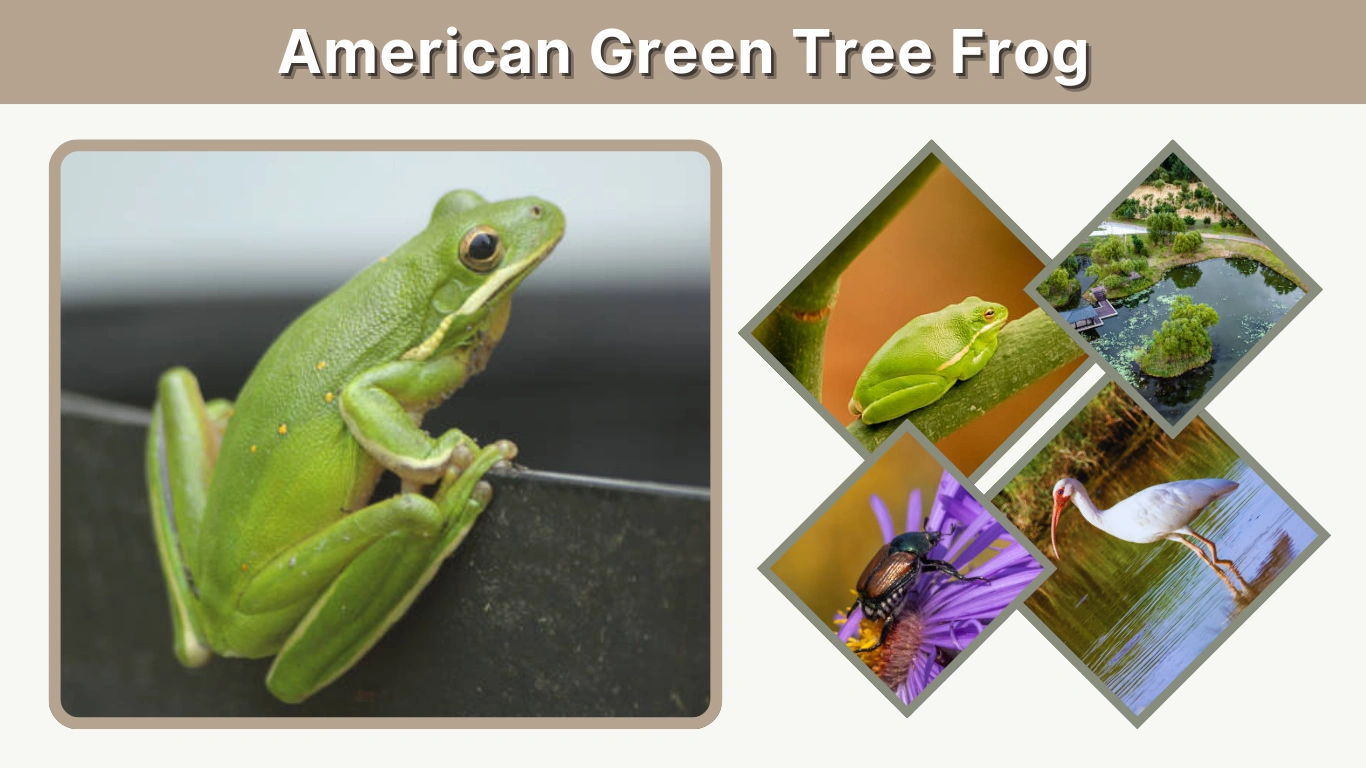
The American green tree frog (Hyla cinerea) is one of the most recognizable amphibians in the southeastern United States. Known for its bright coloration, sticky toe pads, and distinctive mating calls, this species thrives in wet, humid environments where insects are abundant. Their simple care requirements also make them a popular choice among amphibian enthusiasts. Understanding their size, coloration, habitat, behavior, and lifecycle provides deeper insight into their ecological importance and survival strategies.
Identification

- Bright green or yellow-green body with possible gold flecks
- Distinctive white or cream lateral stripe running along the side
- Smooth, moist skin typical of tree frogs
- Large round eyes with horizontal pupils
- Expanded toe pads adapted for climbing
- Sharp, repetitive breeding call often heard in warm seasons
Size and Physical Characteristics
The American green tree frog is a relatively small tree frog species, usually ranging between 1.25 and 2.5 inches in length. Females generally grow slightly larger than males, a common trait among many frog species. Their lightweight, slender bodies are built for agility, allowing them to leap efficiently between vegetation.
Body Structure
Their limbs are thin but muscular, supporting powerful jumps. The toes end in broad adhesive pads that allow secure climbing on glass, leaves, and other smooth surfaces. Their skin is smooth and moist, aiding in respiration and hydration. Eyes are positioned for excellent peripheral vision, helping them detect predators and prey.
Coloration
American green tree frogs are best known for their vibrant green coloration, though individuals may appear yellow-green, olive, or even brown depending on conditions. Their color can shift subtly in response to temperature, humidity, lighting, and stress, allowing moderate camouflage in fluctuating environments.
Markings
A clean, white or cream stripe typically runs from the upper lip down the sides of the body, though this stripe may be broken or missing in some individuals. Some frogs display tiny golden spots scattered across their backs, adding visual variation.
Habitat

The species is native to the southeastern United States, with populations extending from Florida and Georgia westward into Texas and north into parts of Kentucky and Virginia. These frogs thrive in warm, humid regions where standing water is prevalent.
Preferred Environments
American green tree frogs favor habitats such as:
- Marshes and swamps
- Wetlands and floodplains
- Ponds, lakes, and human-made retention areas
- Vegetation along water edges
Their arboreal nature draws them to tall grasses, reeds, shrubs, and trees where they can hide and hunt.
Microhabitat Use
During the day, they often rest on large leaves or nestled among dense foliage. At night, they become active hunters, navigating vegetation with precision. Their affinity for artificial lights—where insects gather—often brings them close to human dwellings.
Behavior

American green tree frogs are primarily nocturnal, spending daylight hours resting and becoming active after sunset. Their behavior revolves around feeding, avoiding predators, and attracting mates during breeding seasons.
Feeding Behavior
These frogs are opportunistic insectivores, feeding on:
- Flies
- Mosquitoes
- Moths
- Beetles
- Small spiders
They employ a sit-and-wait strategy, remaining still until prey moves close enough to snatch with their long, sticky tongues.
Communication
One of their most iconic features is their loud, repetitive call, often described as a “quank” or nasal honk. Males call primarily during the warm months to establish territory and attract females. In large choruses, hundreds of males may vocalize at once, creating an unmistakable soundscape near wetlands.
Predator Avoidance
Camouflage is essential to survival. Their green bodies blend seamlessly with leaves and stems, helping them evade birds, snakes, and larger amphibians. When threatened, they may leap quickly away or retreat into dense vegetation.
Lifecycle
The lifecycle of the American green tree frog follows the classic amphibian pattern, beginning with external fertilization. Breeding season typically occurs from late spring through summer when warm temperatures and rainfall create ideal conditions. Males gather near water and call persistently to attract females. After pairing, females lay clusters of eggs on the surface of calm water or attached to floating vegetation.
Eggs and Tadpoles
Egg masses hatch within a few days, releasing small tadpoles that graze on algae and plant material. As they grow, their tails thicken and bodies develop hind legs first, then front limbs. Tadpole development generally lasts four to six weeks, depending on water temperature and food availability.
Metamorphosis
Once metamorphosis begins, the tadpole’s tail is absorbed, lungs fully form, and the froglet emerges ready for life on land and vegetation. Young froglets often remain near water at first, gradually expanding their range as they mature.
Lifespan

Wild Lifespan
In their natural habitat, American green tree frogs typically live 2 to 5 years, though survival depends on habitat quality, predators, and environmental stability.
Captive Lifespan
Under controlled conditions with proper humidity, temperature, and diet, they may live up to 6 years or more. Clean water, a safe enclosure, and a varied insect diet contribute significantly to longevity.
Influencing Factors
- Predation from birds, snakes, and fish
- Exposure to pollutants or pesticides
- Availability of food and shelter
- Disease, particularly fungal infections like chytrid fungus
Range and Distribution
American green tree frogs inhabit much of the southeastern U.S., including Florida, Georgia, Alabama, Mississippi, Louisiana, the Carolinas, and parts of Virginia and Texas. They prefer temperate to subtropical climates with ample moisture. In some regions, accidental transport and intentional release have introduced them to areas outside their native range.
Diet
These frogs play an important ecological role as insect predators. Their diet includes:
- Mosquitoes
- Small beetles
- Moths
- Gnats
- Crickets
As highly effective pest controllers, they help balance local insect populations. In captivity, they thrive on a diet of gut-loaded crickets, small roaches, and occasional flies.
Predators and Threats

In the wild, American green tree frogs face several natural and human-related threats.
Natural Predators
- Water birds
- Snakes
- Larger frogs
- Fish (tadpoles especially)
Environmental Dangers
- Habitat loss from development
- Water pollution and pesticide drift
- Climate shifts reducing wetland availability
Human Impacts
Artificial lighting alters behavior, drawing frogs into areas where predators or vehicles pose risks. Habitat fragmentation also limits movement and breeding opportunities.
American Green Tree Frog vs. Similar Species

| Feature | American Green Tree Frog | Gray Tree Frog | Squirrel Tree Frog |
| Color | Bright green to yellow-green | Gray, mottled | Variable green or brown |
| Size | 1.25–2.5 inches | 1.5–2 inches | 1–1.5 inches |
| Key Marking | White lateral stripe | Mottled pattern | Often lacks strong stripe |
| Call | Nasal, repeated “quank” | Musical trill | Raspy, chattering |
| Habitat | Wetlands, marshes | Woodlands | Suburban & wild wetlands |
FAQs
How do American green tree frogs choose their habitat?
They prefer moist, warm environments with abundant vegetation and insects. Wetlands, ponds, and marshes provide ideal breeding conditions. Dense foliage offers shelter from predators and stable humidity, both of which are essential for amphibians with permeable skin.
What do baby green tree frogs eat?
Newly metamorphosed froglets eat very small insects such as fruit flies, tiny crickets, and small gnats. Their diet gradually expands as they grow, allowing them to capture larger prey. Consistent access to insects is crucial for rapid early growth.
Are American green tree frogs good pets?
Yes. They are hardy, easy to care for, and visually appealing. Proper humidity, a secure enclosure, and a varied insect diet are essential. Their nocturnal calls can be loud, however, meaning they may not be ideal for quiet bedrooms.
Do they change color?
American green tree frogs can shift between green, yellow, and brown tones. These changes occur due to temperature, humidity, stress, or background color. While not as dramatic as chameleons, this helps them blend into surrounding vegetation.
Why are their calls so loud?
Their calls amplify across wetlands to attract females and compete with males during breeding season. The vocal sac inflates to project sound efficiently. In large choruses, the combined calls can be heard from a great distance.
