
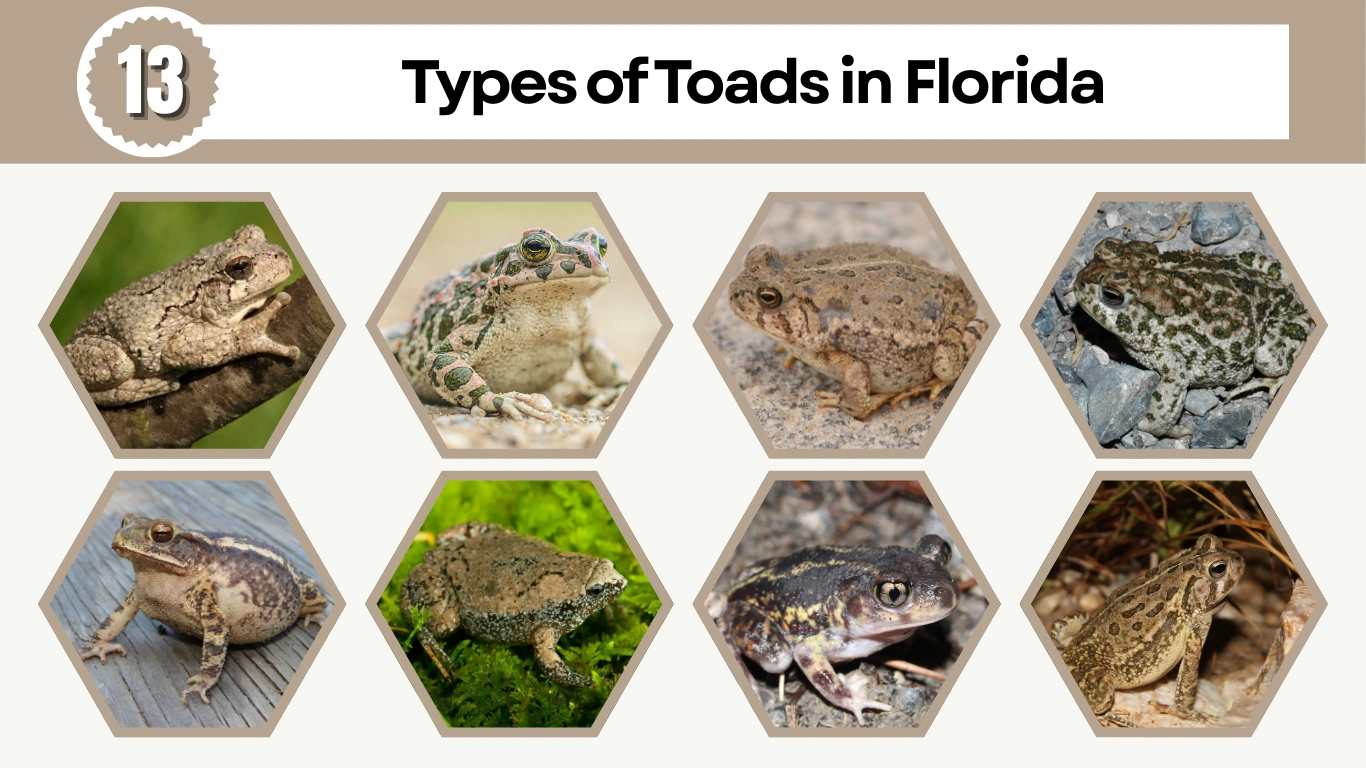
Florida is home to a diverse range of toad species, thanks to its warm climate, varied habitats, and abundant wetlands. From small, secretive toads hidden beneath leaf litter to large, easily recognizable species found in neighborhoods, these amphibians play an important role in local ecosystems. Understanding the different types of toads in Florida helps with proper identification, conservation awareness, and safe coexistence, especially when encountering native and non-native species in the wild or around homes.
1. Southern Toad (Anaxyrus terrestris)

The Southern Toad is one of the most widespread native toads in Florida and is commonly seen in both natural and residential areas. It thrives in warm climates and is especially active during the rainy season. Because of its adaptability, this species is often encountered in gardens, parks, and wooded landscapes.
Identification
- Medium-sized toad, typically 5–9 cm (2–3.5 inches) long
- Distinct cranial crests with large knobs behind the eyes
- Body color ranges from brown to gray or reddish-brown
- Dark, irregular blotches on the back
- Pale or cream-colored underside, sometimes lightly speckled
Habitat
Southern Toads favor dry, sandy habitats such as pine flatwoods, oak hammocks, scrublands, and coastal areas. They frequently burrow into soil or hide under leaf litter to retain moisture and escape extreme temperatures.
Behavior
This species is mainly nocturnal and becomes most active after rainfall. Males are known for their long, high-pitched trilling calls during the breeding season, which usually occurs in temporary pools and shallow wetlands.
Diet
Southern Toads feed on a wide variety of small invertebrates, including ants, beetles, spiders, snails, and worms. Their feeding habits make them beneficial for controlling insect populations.
Range in Florida
The Southern Toad is found throughout much of Florida, particularly in the Panhandle and central regions, and is one of the most frequently observed toads in the state.
2. Oak Toad (Anaxyrus quercicus)

The Oak Toad is the smallest native toad in North America and a common species in Florida’s sandy upland habitats. Despite its tiny size, it is easily recognizable and often seen during the warmer months, especially after rainfall.
Identification
- Very small size, usually 2–3.5 cm (0.75–1.4 inches) long
- Distinct light-colored stripe running down the center of the back
- Dark brown or black body with irregular dark spots
- Smooth to slightly warty skin compared to larger toads
- Short legs and compact body shape
Habitat
Oak Toads prefer dry, sandy environments such as pine flatwoods, scrub, oak woodlands, and open grassy areas. They often take shelter under leaf litter, logs, or in shallow burrows to avoid heat and predators.
Behavior
This species is primarily diurnal, which is unusual for toads. During the breeding season, males produce a high-pitched, chirping call near temporary pools, ditches, and flooded grassy areas.
Diet
Oak Toads feed on very small invertebrates, including ants, mites, small beetles, and other tiny insects found on the ground surface.
Range in Florida
The Oak Toad is found throughout much of Florida, particularly in central and northern regions, and is commonly encountered in suitable sandy habitats across the state.
3. Fowler’s Toad (Anaxyrus fowleri)

Fowler’s Toad is a medium-sized toad that occurs in parts of northern Florida, particularly in areas with sandy soils and nearby water sources. It is often confused with the American Toad but can be distinguished by its markings and call.
Identification
- Medium-sized, typically 5–9 cm (2–3.5 inches) long
- Gray, brown, or olive-colored body
- Dark blotches on the back, usually containing three or more warts each
- Light-colored underside, sometimes with faint spotting
- Short cranial crests compared to similar species
Habitat
This species prefers sandy or loose soils near rivers, lakes, beaches, and floodplains. It is commonly found in open woodlands, fields, and along shorelines where it can easily burrow.
Behavior
Fowler’s Toad is mostly nocturnal and becomes active during warm, humid nights. Males produce a short, nasal “waaa” call during the breeding season, often from shallow water.
Diet
Its diet consists mainly of insects and other small invertebrates, including beetles, ants, moths, and spiders.
Range in Florida
In Florida, Fowler’s Toad is primarily found in the Panhandle and northern regions, with its range decreasing farther south.
4. American Toad (Anaxyrus americanus)

The American Toad is a well-known species across much of eastern North America and occurs in limited parts of northern Florida. It is adaptable and often found in a variety of natural and human-altered environments.
Identification
- Medium to large size, usually 5–10 cm (2–4 inches) long
- Brown, gray, or olive body with dark blotches
- One or two large warts within each dark blotch
- Light-colored underside with dark speckling
- Prominent parotoid glands behind the eyes
Habitat
American Toads inhabit forests, woodlands, meadows, and suburban areas. They prefer areas with moist soil and access to temporary or permanent water for breeding.
Behavior
This species is primarily nocturnal and most active during warm, wet nights. Males produce a long, musical trill during the breeding season, often near ponds and slow-moving water.
Diet
American Toads feed on a wide variety of insects and other invertebrates such as beetles, ants, caterpillars, worms, and spiders.
Range in Florida
In Florida, the American Toad is mainly restricted to the Panhandle and far northern parts of the state.
5. Cane Toad (Rhinella marina)

The Cane Toad is a large, non-native species introduced to Florida and is now established in parts of the state. It is easily recognized by its massive size and is often found around human settlements, where it can pose risks to pets and native wildlife.
Identification
- Very large toad, often 10–23 cm (4–9 inches) long
- Heavy, robust body with dry, warty skin
- Brown, gray, or yellowish coloration
- Very large parotoid glands behind the eyes
- Bony ridges on the head but no cranial knobs
Habitat
Cane Toads thrive in disturbed habitats such as urban areas, gardens, agricultural lands, canals, and roadsides. They prefer warm environments and often shelter under debris, logs, or structures during the day.
Behavior
This species is nocturnal and most active at night. It secretes a potent toxin from its skin and parotoid glands as a defense mechanism, which can be dangerous to predators and pets.
Diet
Cane Toads are opportunistic feeders, consuming insects, small vertebrates, pet food, and even carrion.
Range in Florida
In Florida, Cane Toads are primarily found in southern regions, especially in urban and suburban areas of South Florida.
6. Eastern Spadefoot Toad (Scaphiopus holbrookii)

The Eastern Spadefoot Toad is a secretive species that spends much of its life buried underground. It is best known for emerging after heavy rains, when large numbers may suddenly appear to breed in temporary pools.
Identification
- Medium-sized toad, usually 4–7 cm (1.5–2.75 inches) long
- Smooth skin compared to true toads
- Grayish-brown body with darker markings
- Vertical, cat-like pupils
- Distinct black, spade-shaped tubercle on each hind foot
Habitat
This species prefers dry, sandy soils where it can burrow easily. It is commonly found in pine flatwoods, scrub habitats, sandy woodlands, and open areas near temporary wetlands.
Behavior
Eastern Spadefoot Toads are mostly nocturnal and highly fossorial, spending long periods underground. Breeding occurs explosively after heavy rainfall, with males producing a short, low-pitched call from shallow water.
Diet
Their diet includes ants, beetles, spiders, earthworms, and other small invertebrates encountered on the surface at night.
Range in Florida
The Eastern Spadefoot Toad is found throughout much of Florida, particularly in areas with suitable sandy soils and seasonal rainfall.
7. Eastern Narrow-mouthed Toad (Gastrophryne carolinensis)

The Eastern Narrow-mouthed Toad is a small, secretive amphibian often mistaken for a frog due to its smooth skin and compact shape. In Florida, it is commonly heard rather than seen, especially during warm, rainy nights.
Identification
- Small size, typically 2.5–4 cm (1–1.6 inches) long
- Smooth, moist skin with few visible warts
- Gray, brown, or black body coloration
- Distinct dark fold across the back of the head
- Narrow, pointed snout
Habitat
This species inhabits moist forests, pine flatwoods, swamps, and areas near wetlands. It often hides under leaf litter, logs, and debris, and may enter yards and gardens.
Behavior
Eastern Narrow-mouthed Toads are nocturnal and fossorial. During the breeding season, males produce a loud, nasal “baa” call from concealed locations near shallow water.
Diet
Their diet consists mainly of ants and termites, which they capture using their narrow mouths and sticky tongues.
Range in Florida
The Eastern Narrow-mouthed Toad is widespread throughout Florida and can be found in a variety of suitable habitats across the state.
8. Florida Narrow-mouthed Toad (Gastrophryne floridana)

The Florida Narrow-mouthed Toad is a small, native species that closely resembles the Eastern Narrow-mouthed Toad but is more restricted in range. It is often difficult to spot due to its secretive habits and preference for hiding beneath ground cover.
Identification
- Small and stout body, usually 2.5–4 cm (1–1.6 inches) long
- Smooth skin with minimal warting
- Dark gray, brown, or black coloration
- Dark fold across the back of the head
- Short limbs and a narrow, pointed snout
Habitat
This species prefers moist environments such as hardwood hammocks, pine flatwoods, swamps, and areas near marshes. It is often found under leaf litter, logs, and debris in shaded locations.
Behavior
Florida Narrow-mouthed Toads are mostly nocturnal and spend much of their time hidden. Breeding occurs during warm, rainy periods, when males produce a short, nasal call near temporary pools.
Diet
Their diet primarily consists of ants and termites, along with other small invertebrates found on the forest floor.
Range in Florida
The Florida Narrow-mouthed Toad is endemic to Florida and is mainly found in central and southern parts of the state.
9. Gulf Coast Toad (Incilius nebulifer)

The Gulf Coast Toad is a medium-sized species commonly found in coastal and near-coastal areas of Florida. It is adaptable and often lives close to human activity, making it a familiar sight around homes, gardens, and roadsides.
Identification
- Medium-sized, typically 5–9 cm (2–3.5 inches) long
- Light brown, gray, or olive body color
- Dark blotches on the back, each containing multiple small warts
- Pale stripe running down the center of the back
- Large, oval parotoid glands behind the eyes
Habitat
Gulf Coast Toads favor open habitats such as coastal plains, grasslands, sandy soils, agricultural areas, and suburban neighborhoods. They often shelter under logs, rocks, or debris during the day.
Behavior
This species is mostly nocturnal and becomes active after sunset, especially following rainfall. During breeding season, males produce a loud, harsh trill near ponds, ditches, and temporary pools.
Diet
Their diet includes a wide variety of insects and other invertebrates such as beetles, ants, roaches, spiders, and worms.
Range in Florida
In Florida, the Gulf Coast Toad is primarily found in the Panhandle and along the western coastal regions, where suitable habitats are available.
10. Great Plains Toad (Anaxyrus cognatus)

The Great Plains Toad is a distinctive species known for its bold markings and powerful breeding calls. While it is common in central North America, its presence in Florida is limited and uncommon, making sightings relatively rare.
Identification
- Medium to large size, usually 5–11 cm (2–4.3 inches) long
- Light gray, greenish, or brown body color
- Large, dark blotches outlined in pale borders
- Numerous small warts within each blotch
- Rounded parotid glands behind the eyes
Habitat
This species prefers open, sandy or loamy soils such as prairies, grasslands, and agricultural fields. When present in Florida, it is typically associated with disturbed or open habitats.
Behavior
Great Plains Toads are nocturnal and highly adapted to dry conditions. Breeding occurs after heavy rains, when males produce a loud, musical trill from temporary pools.
Diet
Their diet consists mainly of insects and other small invertebrates, including beetles, ants, grasshoppers, and spiders.
Range in Florida
In Florida, the Great Plains Toad is considered rare and is primarily reported from parts of the Panhandle.
11. Woodhouse’s Toad (Anaxyrus woodhousii)

Woodhouse’s Toad is a medium to large species that is more common in the central United States but occurs in limited areas of Florida. It is adaptable and often found near human-modified environments.
Identification
- Medium to large size, usually 6–12 cm (2.5–4.7 inches) long
- Gray, brown, or olive body color
- Distinct light stripe running down the center of the back
- Dark blotches with multiple small warts
- Elongated parotoid glands behind the eyes
Habitat
This species prefers open habitats such as floodplains, grasslands, agricultural fields, and areas near streams or ponds. In Florida, it is often associated with disturbed sites and sandy soils.
Behavior
Woodhouse’s Toad is primarily nocturnal and becomes active during warm, humid nights. During breeding season, males produce a loud, nasal call near shallow water bodies.
Diet
Its diet includes insects and other invertebrates such as beetles, ants, moths, spiders, and worms.
Range in Florida
In Florida, Woodhouse’s Toad is rare and mostly limited to parts of the Panhandle, where suitable habitat conditions exist.
12. Green Toad (Bufotes viridis)

The Green Toad is a species more commonly associated with Europe and parts of Asia, and reports of it in Florida are extremely rare and often linked to accidental or introduced occurrences. It is not considered an established or native species in the state.
Identification
- Medium-sized toad, generally 5–10 cm (2–4 inches) long
- Light gray, cream, or whitish base color
- Distinct green blotches outlined with dark borders
- Smooth to moderately warty skin
- Rounded parotoid glands behind the eyes
Habitat
In its native range, the Green Toad inhabits grasslands, semi-arid areas, agricultural fields, and open woodlands. Any sightings in Florida would likely occur in disturbed or human-influenced environments rather than natural ecosystems.
Behavior
Green Toads are mostly nocturnal and become active during warm evenings. Breeding typically occurs in shallow water bodies, where males produce a soft, musical call.
Diet
Their diet consists mainly of insects and other small invertebrates, including beetles, ants, flies, and spiders.
Range in Florida
The Green Toad is not native to Florida and is not known to have an established breeding population within the state.
13. Mississippi Valley Toad (Anaxyrus cognatus – Mississippi Valley population)

The Mississippi Valley Toad is closely related to the Great Plains Toad and is sometimes treated as a regional population rather than a separate species. In Florida, it is extremely uncommon and not considered a regularly established toad.
Identification
- Medium to large size, typically 5–11 cm (2–4.3 inches) long
- Light brown, gray, or greenish background color
- Large, dark blotches with pale borders
- Numerous small warts within each blotch
- Rounded parotoid glands behind the eyes
Habitat
This toad prefers open habitats with loose or sandy soils, including floodplains, grasslands, and agricultural areas. Any occurrence in Florida would likely be limited to disturbed or marginal habitats.
Behavior
Mississippi Valley Toads are nocturnal and spend much of their time burrowed underground. Breeding is triggered by heavy rainfall, when males produce a loud, sustained trilling call from temporary pools.
Diet
Their diet includes a wide range of insects and small invertebrates such as beetles, ants, grasshoppers, spiders, and worms.
Range in Florida
In Florida, the Mississippi Valley Toad is considered extremely rare, with reports largely limited to the Panhandle and possibly representing transient or misidentified individuals.
FAQs
How many toad species are found in Florida?
Florida is home to several native and non-native toad species, with commonly recognized lists including around 10–13 types, depending on classification and regional records.
What is the most common toad in Florida?
The Southern Toad is the most common and widespread native toad in Florida, frequently seen in gardens, forests, and suburban areas.
Are cane toads native to Florida?
No, Cane Toads are not native to Florida. They are an invasive species introduced by humans and are mainly found in South Florida.
Are Florida toads dangerous to humans or pets?
Most Florida toads are harmless to humans, but some species, especially Cane Toads, secrete toxins that can be dangerous to pets if ingested.
Where do toads in Florida usually live?
Florida toads live in a variety of habitats, including forests, sandy uplands, wetlands, grasslands, and residential areas, often depending on the species and availability of moisture.
