
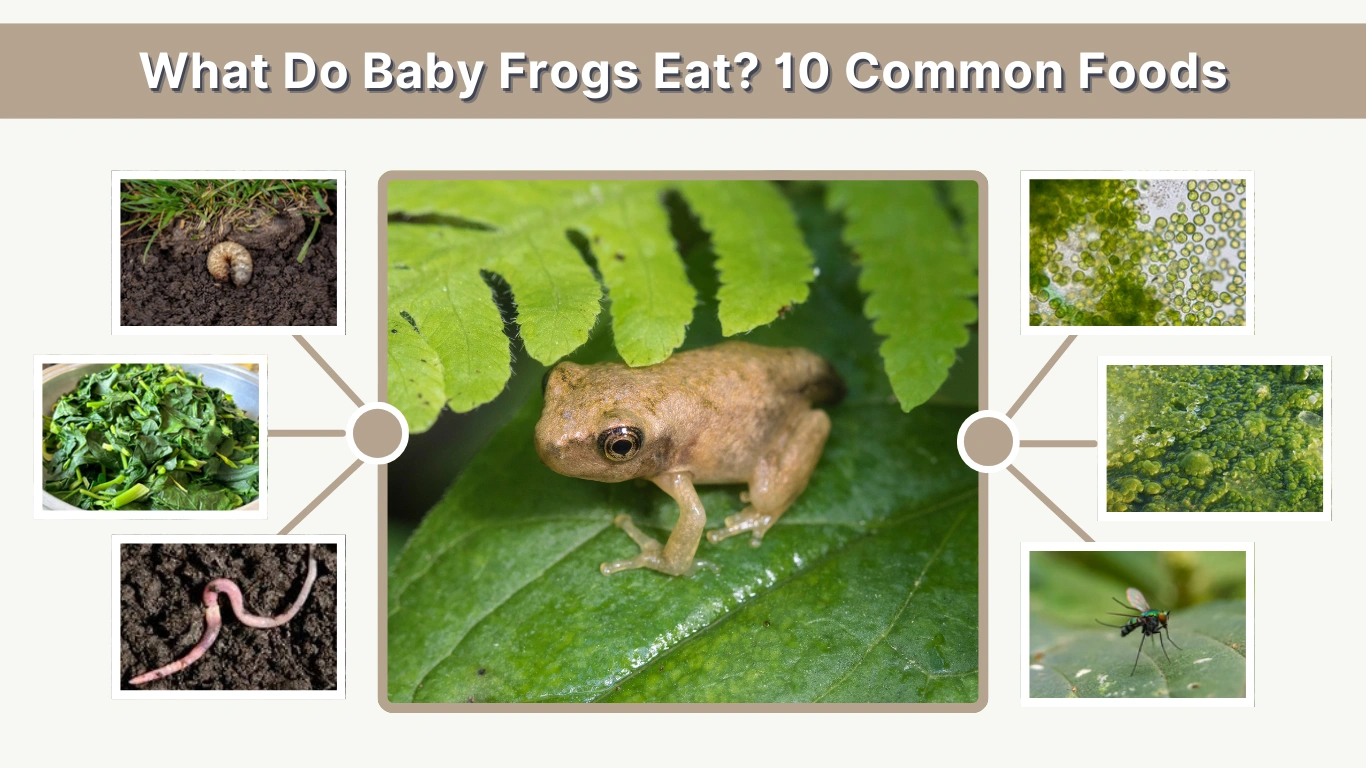
Baby frogs, including tadpoles and young froglets, have very different eating habits compared to adult frogs. In their early stages, they rely mostly on plant-based and microscopic foods found in water. As they grow and develop legs, their diet slowly shifts toward small insects and animal-based foods. Understanding what baby frogs eat is important for learning how they grow, survive, and adapt to their environment. Their diet also plays a key role in keeping pond and wetland ecosystems healthy and balanced.
1. Algae

Algae are the most important and common food for baby frogs, especially tadpoles. In the earliest stage of life, tadpoles depend heavily on algae because it is soft, easy to digest, and widely available in ponds, lakes, and slow-moving water.
Baby frogs feed on algae by grazing along surfaces such as rocks, plants, and the pond floor. Tadpoles use their small mouthparts to scrape and suck algae from these surfaces throughout the day. This constant feeding helps support their rapid growth.
Algae provide essential nutrients like carbohydrates, proteins, and vitamins that fuel development. This food source gives tadpoles the energy they need to grow, develop tails and limbs, and prepare for the transition into froglets.
Eating algae also benefits the environment. By consuming excess algae, baby frogs help keep water clean and balanced, preventing harmful algal overgrowth in aquatic ecosystems.
2. Phytoplankton
Phytoplankton are tiny, microscopic plants that float in water and serve as an important food source for very young tadpoles. These organisms are especially vital during the earliest stages of a baby frog’s life when larger food is difficult to eat.
Baby frogs consume phytoplankton by filtering water as they swim. Tadpoles take in small amounts of water and extract the microscopic plant particles for nutrition. This gentle feeding method allows them to eat continuously without much effort.
Phytoplankton provide essential nutrients such as proteins, fatty acids, and vitamins that support early growth and development. These nutrients help strengthen the tadpole’s body and prepare it for later stages of transformation.
By feeding on phytoplankton, baby frogs help maintain water quality and balance the microscopic life within aquatic ecosystems.
3. Aquatic Plants
Aquatic plants are another common food for baby frogs, particularly tadpoles in later stages of development. Soft plant parts and decaying leaves are easier for them to digest and provide steady nutrition.
Baby frogs eat aquatic plants by nibbling on tender leaves and plant debris found in shallow water. Tadpoles use their mouths to scrape and tear small pieces from plants as they move along the pond floor.
Aquatic plants supply fiber, vitamins, and minerals that support healthy digestion and growth. This plant-based diet helps tadpoles develop strong bodies as they prepare to become froglets.
Feeding on aquatic plants also helps recycle nutrients in ponds, contributing to a healthy and balanced aquatic environment.
4. Biofilm

Biofilm is a thin, slimy layer made up of algae, bacteria, and microorganisms that forms on rocks, plants, and pond surfaces. It is a natural and nutritious food source for baby frogs, especially young tadpoles.
Baby frogs feed on biofilm by scraping it off surfaces as they swim along rocks and plants. This grazing behavior allows them to eat continuously throughout the day without needing to hunt.
Biofilm provides a mix of proteins, carbohydrates, and beneficial microorganisms that support healthy growth and digestion. It is especially helpful during early development when tadpoles need easily digestible food.
By consuming biofilm, baby frogs help keep pond surfaces clean and maintain balance in aquatic ecosystems.
5. Detritus
Detritus consists of decaying plant material, dead organisms, and organic debris found at the bottom of ponds and streams. It is an important food source for baby frogs in natural environments.
Baby frogs eat detritus by foraging along the pond floor and swallowing small particles of organic matter. Tadpoles often feed slowly and continuously, taking in nutrients as they move.
Detritus provides essential nutrients and energy that support steady growth. Although it may seem unappealing, it plays a key role in a tadpole’s diet.
Feeding on detritus also helps recycle nutrients in water, keeping aquatic habitats healthy and balanced.
6. Boiled Lettuce
Boiled lettuce is a common supplemental food for baby frogs in captivity, especially tadpoles. It is not usually eaten in the wild but is often used by frog keepers because it is soft and easy to digest.
Baby frogs eat boiled lettuce when it is finely chopped or torn into small pieces and placed in the water. Tadpoles graze on the soft leaves just as they would on natural plant matter.
Boiled lettuce provides fiber and some essential vitamins that support digestion and overall health. It helps keep tadpoles well-fed when natural food sources are limited.
This food should be given in moderation and removed if uneaten to maintain clean water conditions.
7. Boiled Spinach

Boiled spinach is another nutritious plant-based food used for baby frogs in captivity. It is richer in nutrients than lettuce and supports healthy development.
Baby frogs feed on boiled spinach by nibbling on small, softened pieces placed in the water. Tadpoles slowly graze on it throughout the day.
Spinach provides vitamins, minerals, and antioxidants that support growth and strengthen the immune system. It is especially helpful during rapid development stages.
Like lettuce, boiled spinach should be offered in small amounts and removed promptly to prevent water contamination.
8. Small Insects
Small insects become an important food source once baby frogs develop into froglets and begin leaving the water. At this stage, their diet starts shifting from plant-based foods to animal-based prey.
Baby frogs hunt small insects by using their developing vision and quick reflexes. Froglets wait for tiny insects like fruit flies, gnats, and ants to move nearby, then catch them using their small, sticky tongues.
Small insects provide high-quality protein needed for muscle growth, strength, and energy. This protein-rich diet helps young frogs grow stronger and more active as they mature.
Eating insects also helps baby frogs learn hunting skills they will rely on as adults.
9. Insect Larvae
Insect larvae, such as mosquito larvae, are a common food for baby frogs living in or near water. These larvae are slow-moving and easy to catch, making them ideal prey.
Baby frogs eat insect larvae by snapping them up in shallow water or near the water’s surface. Tadpoles and young froglets can both feed on larvae depending on their development stage.
Insect larvae are rich in protein and nutrients that support rapid growth and healthy development. They provide more energy than plant-based foods.
By feeding on insect larvae, baby frogs help control mosquito populations and maintain a balanced aquatic ecosystem.
10. Tiny Worms
Tiny worms are a nutritious and easy-to-eat food for baby frogs, especially during the transition from tadpoles to froglets. These worms are commonly found in moist soil and shallow water.
Baby frogs hunt tiny worms by sensing movement in the water or on damp ground. Froglets quickly snap them up using their small mouths or sticky tongues, while larger tadpoles may swallow very small worms whole.
Tiny worms are rich in protein and moisture, which support muscle development, energy, and hydration. This food helps baby frogs grow stronger as they adapt to life outside the water.
Eating tiny worms also helps young frogs develop natural hunting skills and supports a healthy, balanced diet during early growth stages.
FAQs
1. Do baby frogs eat the same food as adult frogs?
No, baby frogs eat different foods depending on their stage of growth. Tadpoles mainly eat algae and plant-based foods, while froglets begin eating small insects and worms.
2. How often do baby frogs eat?
Baby frogs usually eat every day. Tadpoles feed almost constantly, while froglets eat small amounts once or twice daily.
3. Can baby frogs eat fish food?
Yes, in captivity, tadpoles can eat small amounts of high-quality fish flakes, but natural foods like algae and boiled vegetables are healthier.
4. When do baby frogs start eating insects?
Baby frogs start eating insects after they develop legs and begin living on land as froglets.
5. What foods should never be given to baby frogs?
Baby frogs should not be fed bread, processed foods, or large insects. These foods are hard to digest and can be harmful to their health.
