
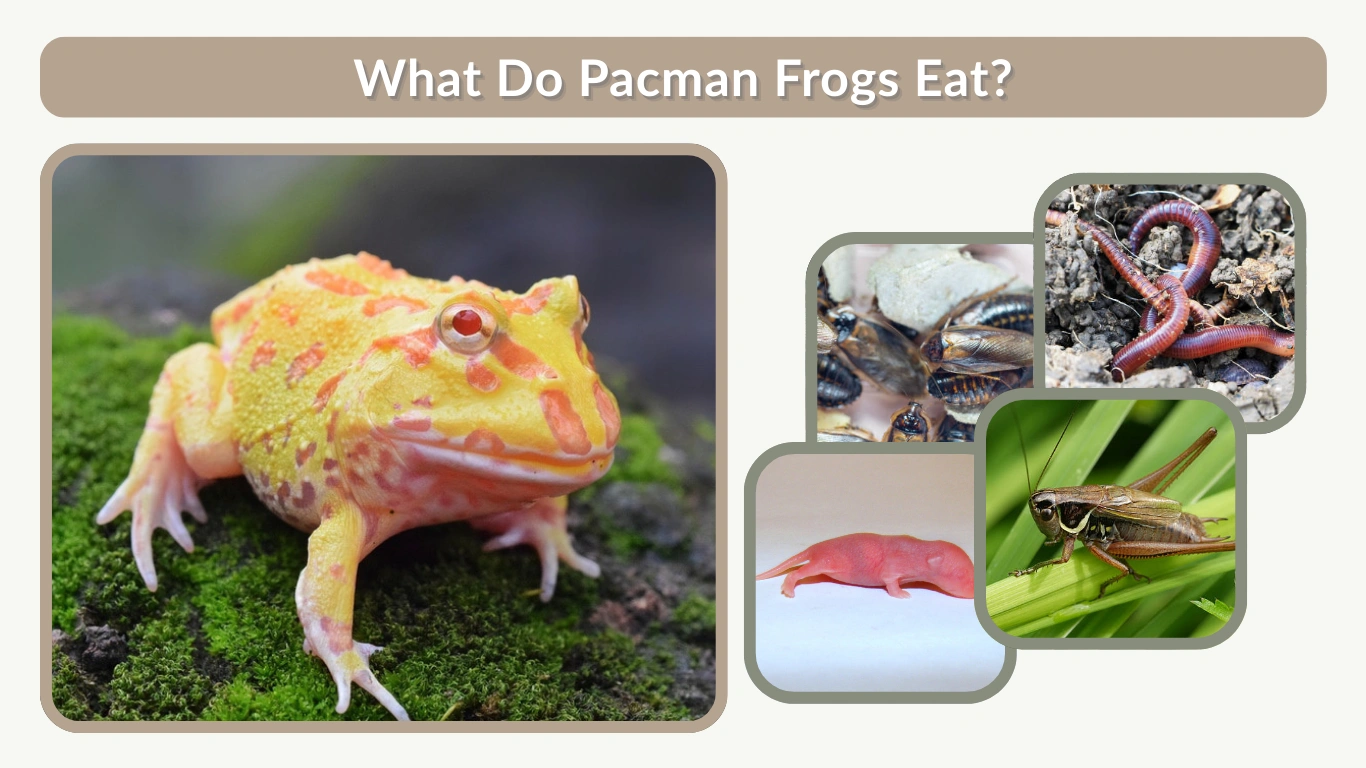
Pacman frogs are famous for their massive mouths and aggressive feeding behavior. These round, sit-and-wait predators will attempt to eat almost anything that moves and fits inside their mouths. Because of this, many new owners often ask: what do pacman frogs eat, and how can they be fed safely in captivity?
Understanding a Pacman frog’s diet is essential for its growth, health, and long lifespan. In this guide, we’ll explore Pacman frog eating behavior, what they eat in the wild, and the best foods to offer in captivity.
Understanding Pacman Frog Eating Behavior
Pacman frogs are ambush predators by nature. Unlike active hunters, they spend most of their time buried in substrate, waiting for prey to come close enough to strike.
Why Pacman Frogs Are Such Aggressive Eaters
One of the most noticeable traits of Pacman frogs is their intense feeding response. Their mouths are extremely large compared to their body size, which allows them to swallow prey whole. This trait often leads them to attempt eating animals that are too large or unsafe.
Pacman frogs rely on instinct rather than judgment. If something moves and triggers their feeding response, they will likely try to eat it. This explains why Pacman frog eating behavior can sometimes appear reckless or even dangerous without proper supervision.
How Pacman Frogs Eat Their Food
Pacman frogs do not chew. Instead, they lunge forward, grab prey with their mouths, and swallow it whole. They may use their front legs to push food into their mouths. Because of this feeding style, prey size is critical. Food that is too large can cause choking, impaction, or injury.
A general rule is to never feed prey wider than the distance between the frog’s eyes. Following this rule greatly reduces feeding-related risks.
What Do Pacman Frogs Eat in the Wild

In their natural habitat in South America, Pacman frogs have a varied and opportunistic diet. They live in warm, humid environments where food availability changes with the seasons.
In the wild, Pacman frogs eat whatever prey is readily available and easy to ambush. This includes insects, small mammals, reptiles, and even other amphibians. Their ability to consume a wide range of prey helps them survive in unpredictable conditions.
Natural Prey Found in the Wild
Wild Pacman frogs commonly eat:
- Insects such as beetles and grasshoppers
- Small rodents
- Lizards and snakes
- Other frogs and amphibians
This diverse diet contributes to their rapid growth, but it also exposes them to parasites and diseases, which is why wild feeding behaviors should not be fully replicated in captivity.
Why Wild Diet Shouldn’t Be Fully Replicated in Captivity
While Pacman frogs eat a wide range of animals in the wild, captive feeding should prioritize safety and nutrition. Feeding wild-caught prey increases the risk of parasites, pesticides, and bacteria. Captive diets should focus on clean, controlled feeder insects and prey that are nutritionally balanced.
What Do Pacman Frogs Eat in Captivity

A captive Pacman frog’s diet should be varied but carefully managed. The goal is to provide enough nutrition without encouraging dangerous eating behavior or obesity.
Best Staple Foods for Pacman Frogs
Staple foods should make up the majority of a Pacman frog’s diet. These foods are nutritious, easy to digest, and safe when sourced properly.
Common staple foods include:
- Crickets – widely available and easy to gut load
- Dubia roaches – high in protein and low in fat
- Earthworms and nightcrawlers – excellent nutrition and hydration
Earthworms are often considered one of the best foods for Pacman frogs because they are soft-bodied and easy to digest.
Occasional and Treat Foods
Some foods should only be offered occasionally due to higher fat content or lower nutritional value.
These include:
- Waxworms
- Mealworms (fed sparingly due to hard exoskeletons)
- Hornworms
Treat foods should never replace staple feeders and should be offered in moderation.
Can Pacman Frogs Eat Mice?
Pacman frogs can eat mice, but only under strict conditions. Pinky mice (newborn mice) may be offered occasionally to adult Pacman frogs. Feeding mice too often can lead to obesity, fatty liver disease, and shortened lifespan.
For most Pacman frogs, mice should be treated as an occasional supplement rather than a regular food source.
Pacman Frog Eating Frog — Is It Safe?
Pacman frogs are known for their aggressive feeding instincts, and this sometimes leads owners to wonder whether a Pacman frog eating another frog is natural or safe. While this behavior does occur, it is not recommended in captivity.
Do Pacman Frogs Eat Other Frogs?
In the wild, Pacman frogs will eat other frogs if the opportunity arises. This includes smaller amphibians and, in some cases, members of their own species. This cannibalistic behavior is driven purely by instinct rather than nutritional need.
In captivity, Pacman frogs may attempt to eat tank mates, including other frogs housed in the same enclosure. This is why Pacman frogs should always be kept alone.
Why Feeding Frogs to Pacman Frogs Is Not Recommended
Feeding frogs to Pacman frogs carries serious risks. Other amphibians can transmit parasites, bacteria, and fungal infections that may not be visible to the naked eye. Even captive-bred frogs can carry pathogens that are harmful to Pacman frogs.
There are also ethical and legal concerns in many regions regarding the feeding of live vertebrates. For these reasons, intentionally feeding frogs to Pacman frogs should be avoided.
What to Do If It Happens Accidentally
If a Pacman frog eats another frog accidentally, monitor it closely over the following days. Watch for signs of illness such as lethargy, loss of appetite, swelling, or unusual behavior. If symptoms appear, contact a reptile or amphibian veterinarian as soon as possible.
Baby vs Adult Pacman Frog Diet

Pacman frog dietary needs change significantly as they grow. Feeding the right foods at the right stage is essential for healthy development.
What Do Baby Pacman Frogs Eat?
Baby Pacman frogs require smaller prey and more frequent feeding. Their rapid growth demands consistent nutrition.
Suitable foods for baby Pacman frogs include:
- Small crickets
- Chopped earthworms
- Small dubia roaches
Baby Pacman frogs should typically be fed every day or every other day, depending on appetite and size.
Adult Pacman Frog Diet Differences
Adult Pacman frogs eat less frequently but consume larger prey. Overfeeding adults can quickly lead to obesity.
Adult feeding usually includes:
- Larger earthworms
- Adult dubia roaches
- Occasional pinky mice
Most adult Pacman frogs do well when fed two to three times per week.
Pacman Frog Feeding Schedule

Establishing a consistent feeding schedule helps maintain a healthy weight and reduces digestive problems.
How Often Should You Feed a Pacman Frog?
Feeding frequency depends on age and size:
- Babies: daily or every other day
- Juveniles: every 2–3 days
- Adults: 2–3 times per week
During colder months or brumation-like periods, appetite may decrease temporarily.
Signs Your Pacman Frog Is Hungry or Overfed
A hungry Pacman frog may become more active or respond aggressively to movement. An overfed frog may appear overly round, lethargic, or refuse food for extended periods.
Monitoring body condition is more important than sticking rigidly to a schedule.
Foods Pacman Frogs Should Never Eat
Some foods are dangerous or inappropriate for Pacman frogs and should always be avoided.
Unsafe and Dangerous Foods
Avoid feeding:
- Wild-caught insects (risk of pesticides and parasites)
- Human food
- Prey that is too large to swallow safely
- Fish or feeder animals not meant for amphibians
These foods can cause digestive issues, toxicity, or serious health complications.
Common Feeding Mistakes to Avoid
Common mistakes include overfeeding, feeding prey that is too large, and offering too many fatty foods like mice or waxworms. Consistency and moderation are key to long-term health.
Supplements and Nutrition
Even with a varied diet, supplementation is essential for captive Pacman frogs.
Calcium and Vitamin D3 Needs
Calcium deficiency can lead to metabolic bone disease. Feeder insects should be dusted with calcium powder regularly, and vitamin D3 should be provided according to veterinary recommendations.
Gut Loading Feeder Insects
Gut loading involves feeding insects a nutritious diet before offering them to your frog. This improves the nutritional value of each meal and supports overall health.
FAQs
Why Is My Pacman Frog Not Eating?
Loss of appetite can be caused by stress, improper temperatures, shedding, or illness. Check enclosure conditions first before assuming a health issue.
Can Pacman Frogs Overeat?
Yes. Pacman frogs will continue eating even when full, which can lead to obesity and organ problems if not controlled.
Can Two Pacman Frogs Live Together?
No. Pacman frogs are solitary and highly cannibalistic. Housing them together often results in injury or death.
Conclusion
Pacman frogs are fascinating amphibians with powerful feeding instincts. Understanding what pacman frogs eat and how to manage their diet safely is key to responsible ownership. By offering appropriate staple foods, maintaining a proper feeding schedule, and avoiding risky feeding practices, you can ensure your Pacman frog remains healthy and thrives in captivity for many years.
