
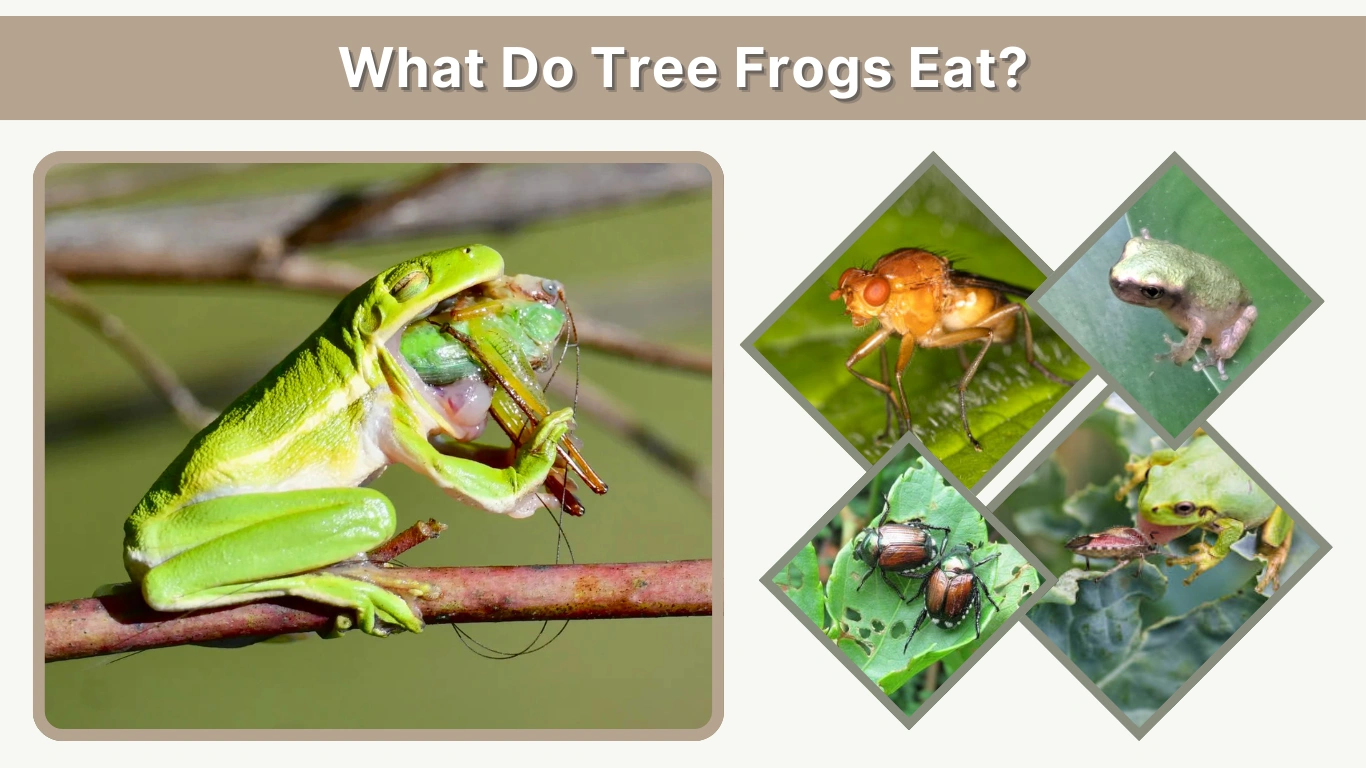
Tree frogs are small, agile amphibians best known for their climbing ability and nighttime activity. Whether found in the wild or kept as pets, their health depends heavily on a proper diet. Many new keepers ask a simple but important question: what do tree frogs eat?
Tree frogs are primarily insectivores, but their exact diet can vary by species, age, and environment. In this guide, we’ll explore tree frog eating behavior, what they eat in the wild, and the best foods to offer in captivity.
Understanding Tree Frog Eating Behavior
Tree frogs are active hunters that rely on movement to detect prey. Unlike ground-dwelling frogs, they often feed while perched on leaves, branches, or enclosure walls.
How Tree Frogs Hunt Their Food
Tree frogs use their long, sticky tongues to catch prey in a fraction of a second. Once the prey is caught, it is swallowed whole. Because they do not chew, prey size plays a critical role in safe feeding.
Most tree frogs will only eat live, moving food. Prey that does not move is usually ignored, which is why feeding frozen or dead insects is rarely successful.
What Time of Day Do Tree Frogs Eat?
Most tree frog species are nocturnal. They become active at night, when they hunt insects and explore their surroundings. In captivity, tree frogs usually show the strongest feeding response in the evening or shortly after lights are turned off.
Feeding at night better matches their natural rhythm and encourages healthy eating behavior.
What Do Tree Frogs Eat in the Wild

In the wild, tree frogs eat a wide range of small invertebrates. Their diet depends on what is available in their environment, including forests, wetlands, and tropical regions.
Wild tree frogs are opportunistic feeders. They will eat almost any insect they can catch and swallow, making them effective natural pest controllers.
Natural Diet of Wild Tree Frogs
Common prey items in the wild include:
- Flies
- Moths
- Beetles
- Ants
- Spiders
Larger tree frog species may occasionally eat very small vertebrates, such as tiny lizards or other frogs, though insects remain their primary food source.
Seasonal and Habitat-Based Diet Changes
Tree frog diets can change with the seasons. During warmer months, insect populations increase, allowing frogs to feed more frequently. In colder or drier periods, feeding activity may slow down as insects become less abundant.
What Do Tree Frogs Eat in Captivity

A captive tree frog’s diet should closely resemble its natural insect-based feeding habits while avoiding the risks associated with wild prey.
Best Staple Foods for Tree Frogs
Staple foods should make up the majority of a tree frog’s diet. These feeders are easy to source, nutritious, and safe when properly prepared.
Common staple foods include:
- Crickets – widely used and easy to gut load
- Fruit flies – ideal for small or juvenile tree frogs
- Dubia roaches – nutritious and low in fat
These insects should always be appropriately sized, generally no larger than the width of the frog’s head.
Occasional and Treat Foods
Some insects are higher in fat or have tougher exoskeletons and should only be offered occasionally.
Treat foods include:
- Waxworms
- Mealworms (fed sparingly)
- Silkworms
These foods can add variety but should not replace staple feeders.
Do Tree Frogs Eat Flies and Mosquitoes?
Tree frogs do eat flies, especially small species such as fruit flies. While mosquitoes are part of their natural diet in the wild, feeding wild-caught insects in captivity is risky due to pesticide exposure and parasites. Captive-bred feeder insects are always the safer option.
Baby vs Adult Tree Frog Diet

Tree frog dietary needs change as they grow. Feeding the right food at each life stage helps prevent health problems and supports proper development.
What Do Baby Tree Frogs Eat?
Baby tree frogs, also known as froglets, require very small prey and frequent meals. Because of their size, they can only eat insects that are easy to swallow.
Suitable foods for baby tree frogs include:
- Flightless fruit flies
- Pinhead crickets
- Very small roaches
Baby tree frogs should be fed daily or every other day. Leftover insects should be removed to prevent stress or injury.
Adult Tree Frog Feeding Needs
Adult tree frogs can eat larger insects and do not need to be fed as often. Overfeeding adults is a common mistake and can lead to obesity.
Typical foods for adult tree frogs include:
- Medium-sized crickets
- Dubia roaches
- Occasional treat insects
Most adult tree frogs do well when fed two to three times per week.
Tree Frog Feeding Schedule
Establishing a consistent feeding routine helps maintain good health and reduces feeding-related stress.
How Often Should You Feed a Tree Frog?
Feeding frequency depends on age and species:
- Babies: daily or every other day
- Juveniles: every 2–3 days
- Adults: 2–3 times per week
Feeding is best done in the evening when tree frogs are most active.
Signs a Tree Frog Is Hungry or Overfed
A hungry tree frog may become more active, track movement closely, or strike quickly at prey. An overfed frog may appear bloated, lethargic, or refuse food for extended periods.
Maintaining a healthy body shape is more important than sticking strictly to a schedule.
Foods Tree Frogs Should Never Eat

Not all insects or foods are safe for tree frogs. Feeding inappropriate prey can lead to serious health problems.
Unsafe or Harmful Foods
Avoid feeding:
- Wild-caught insects
- Fireflies or brightly colored insects
- Human food of any kind
- Prey that is too large to swallow
Fireflies are especially dangerous, as they contain toxins that can be fatal to frogs.
Common Feeding Mistakes
Common mistakes include feeding oversized prey, offering too many fatty insects, and failing to remove uneaten insects. These errors can cause stress, injury, or digestive issues.
Supplements and Nutrition
Captive tree frogs require supplementation to prevent nutritional deficiencies.
Calcium and Vitamin D3 Requirements
Calcium deficiency can cause metabolic bone disease. Feeder insects should be lightly dusted with calcium powder, and vitamin D3 should be provided according to species needs and lighting conditions.
Gut Loading Feeder Insects
Gut loading involves feeding insects nutritious foods before offering them to your frog. This improves the nutritional value of each meal and supports long-term health.
FAQs
What Do Tree Frogs Eat Besides Insects?
Most tree frogs primarily eat insects. Larger species may occasionally consume very small vertebrates, but insects should remain the main part of their diet.
Why Is My Tree Frog Not Eating?
Loss of appetite can be caused by stress, improper temperature or humidity, shedding, or illness. Always check enclosure conditions first.
Can Tree Frogs Overeat?
Yes. While less prone to overeating than Pacman frogs, tree frogs can still become overweight if fed too frequently or given too many fatty foods.
Conclusion
Tree frogs are active, insect-eating amphibians that thrive on a well-planned diet. Understanding what tree frogs eat and feeding them appropriately at each life stage is essential for their health and longevity. By offering the right insects, maintaining a proper feeding schedule, and avoiding unsafe foods, you can ensure your tree frog remains healthy and active in captivity.
