
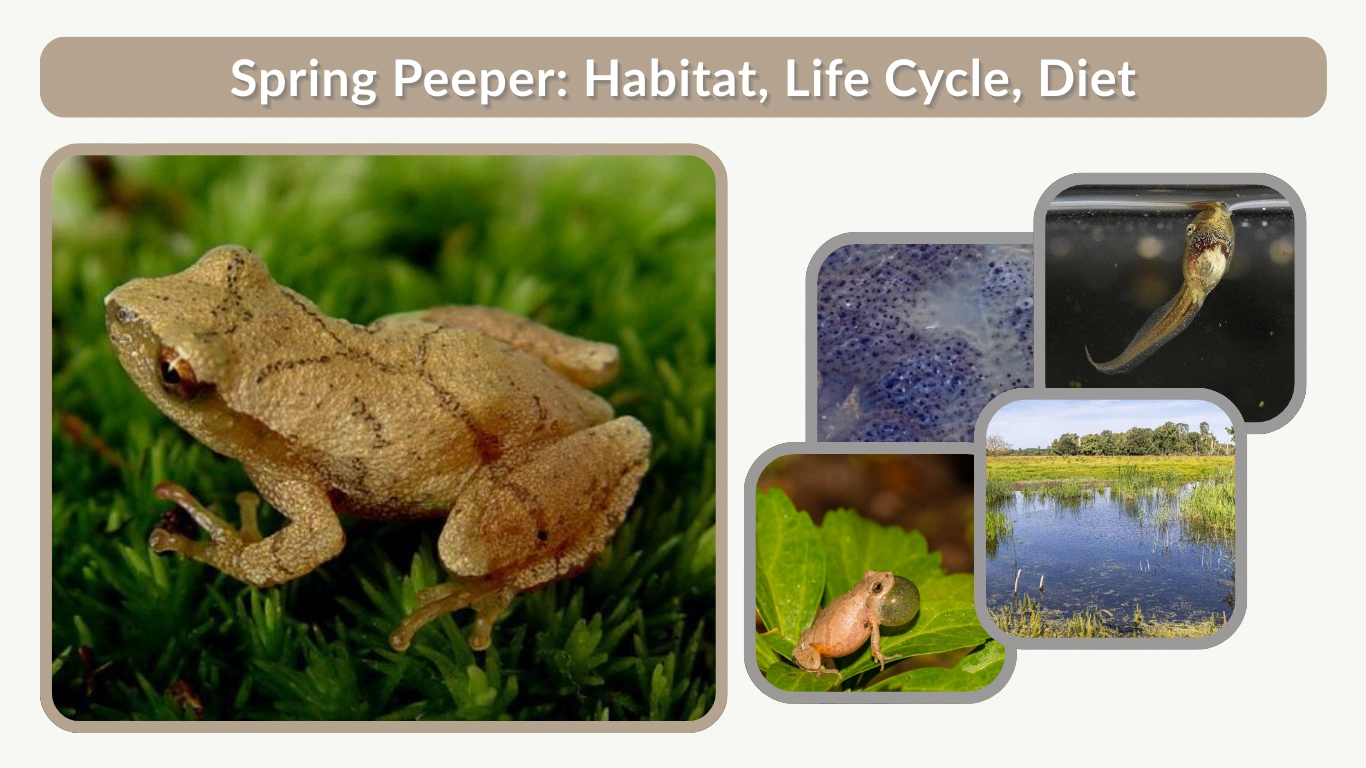
The spring peeper is a tiny frog with an unexpectedly powerful voice. Though it measures only about an inch long, its high-pitched “peep” can fill entire wetlands during early spring evenings. Native to eastern North America, this small amphibian is often one of the first signs that winter is ending. From its freeze-resistant body to its remarkable breeding choruses, the spring peeper is full of fascinating traits. In this guide, we’ll explore its habitat, life cycle, eggs, diet, and the unique features that make it such an important part of the ecosystem.
What Is a Spring Peeper?

Scientific Classification and Species Name
The spring peeper’s scientific name is Pseudacris crucifer. It belongs to the Hylidae family, which includes tree frogs. Despite being grouped with tree frogs, spring peepers are often found on the ground or in low vegetation rather than high in trees. Their species name, crucifer, refers to the cross-like marking commonly seen on their backs.
Physical Appearance and Identification
Spring peepers are small, typically growing to about 1 to 1.5 inches (2.5 to 3.8 cm) in length. Their coloring ranges from light brown and tan to gray, allowing them to blend easily into leaf litter and bark. The most recognizable feature is the dark “X” marking on their back, though in some individuals it may appear faint or broken.
They have smooth skin and slightly enlarged toe pads that help them grip vegetation. While they are capable climbers, they are more commonly found near ground level compared to many other tree frog species.
Why Are They Called Spring Peepers?
The name “spring peeper” comes from their distinctive call. During breeding season, males produce a sharp, high-pitched “peep” sound to attract females. When dozens or even hundreds call together, the result is a loud chorus that can be heard from far away.
These calls usually begin in late winter or early spring, sometimes even while snow is still on the ground. For many people, hearing spring peepers is one of the first natural signs that warmer weather is on the way.
Spring Peeper Habitat and Geographic Range

Where Do Spring Peepers Live?
Spring peepers are widely distributed across eastern North America. Their range extends from eastern Canada down through the eastern and central United States, reaching as far south as northern Florida and west toward Texas and parts of the Midwest.
They are especially common in regions with abundant wetlands and forests. Because of their adaptability, they are considered one of the most widespread frog species in their range.
Preferred Habitat
Spring peepers thrive in moist environments. During the breeding season, they gather around temporary and permanent wetlands such as ponds, marshes, swamps, and woodland pools. These bodies of water provide safe places for laying eggs and developing tadpoles.
Outside of breeding season, spring peepers spend much of their time in damp forests, grassy areas, and under leaf litter. They rely on moist conditions to keep their skin hydrated, as amphibians absorb water and oxygen directly through their skin.
Seasonal Habitat Changes
Their habitat use changes throughout the year. In early spring, adults migrate to shallow water sources to breed. Once breeding is complete, they disperse into nearby forests and fields. During summer and fall, they live mostly on land, hiding beneath logs, bark, and leaf litter to avoid predators and extreme temperatures.
Winter Survival Strategy
One of the most remarkable spring peeper facts is their ability to survive freezing temperatures. During winter, they hibernate under logs or buried in leaf litter. Unlike many animals that avoid freezing, spring peepers can tolerate having a portion of their body water turn to ice.
They produce special compounds in their bodies that act like natural antifreeze. These substances protect their cells and vital organs from damage while their heart rate and breathing slow dramatically. When temperatures rise in spring, they thaw and resume normal activity.
Spring Peeper Life Cycle

Breeding Season
Spring peepers begin breeding in late winter to early spring, depending on the climate. Males arrive at breeding sites first and start calling to attract females. They usually call at night, creating loud choruses that can continue for hours.
Females choose mates based on the quality and intensity of the male’s call. Once a pair forms, mating takes place in the water.
Egg Stage
After mating, females lay their eggs in shallow water. Spring peeper eggs are typically attached to submerged vegetation or debris. Unlike some frog species that lay large clumps of eggs, spring peepers often lay them singly or in small clusters.
A female can lay several hundred to over a thousand eggs in a single breeding season. The eggs are small, jelly-like, and transparent, allowing developing embryos to be seen inside under close observation.
Tadpole Development
Spring peeper eggs usually hatch within a few days to two weeks, depending on water temperature. Once hatched, the tadpoles live entirely in water. They feed on algae, tiny plant material, and organic debris.
Over several weeks, the tadpoles grow and gradually develop hind legs, followed by front legs. As they mature, their tails begin to shrink.
Metamorphosis
By late spring or early summer, the tadpoles complete metamorphosis. Their tails are absorbed, lungs become functional, and they transition from aquatic to terrestrial life. These tiny froglets leave the water and begin living among vegetation and leaf litter.
This transformation marks the beginning of their life on land, where they will continue growing until reaching adulthood.
Spring Peeper Eggs

Spring peeper eggs are small, round, and surrounded by a clear, jelly-like coating. This gelatinous layer helps protect the developing embryo from minor physical damage and keeps the egg moist. Unlike some frog species that lay large floating masses, spring peepers typically attach their eggs singly or in small clusters to submerged vegetation.
A single female may lay several hundred to over a thousand eggs during one breeding season. The exact number depends on her size, age, and environmental conditions. Because the eggs are attached to plants underwater, they are somewhat hidden from predators, but they are still vulnerable.
The incubation period usually lasts between 6 and 14 days. Warmer water speeds up development, while colder temperatures slow it down. However, many eggs do not survive to hatching. Fish, insects, salamanders, and other aquatic predators feed on frog eggs. Fluctuating water levels in temporary pools can also threaten developing embryos if water dries up too quickly.
Despite these challenges, laying a large number of eggs increases the chances that at least some offspring will survive to adulthood.
Spring Peeper Diet

What Do Tadpoles Eat?
During the tadpole stage, spring peepers are mostly herbivorous. They feed on algae, microscopic plant matter, and organic debris found in the water. By grazing on algae, tadpoles help maintain balance in aquatic ecosystems and contribute to nutrient cycling.
As they grow, tadpoles may also consume small particles of decaying plant and animal material. Their diet supports rapid growth during this short but important stage of development.
What Do Adult Spring Peepers Eat?
Adult spring peepers are carnivorous. Their diet mainly consists of small invertebrates such as:
- Ants
- Beetles
- Spiders
- Flies
- Small caterpillars
Because of their small size, they hunt prey that they can easily overpower. Their sticky tongues allow them to quickly snatch insects from leaves, bark, or the ground.
Hunting Behavior
Spring peepers are primarily nocturnal hunters. They are most active at night when temperatures are cooler and humidity is higher. Using a sit-and-wait strategy, they remain still and strike quickly when prey comes within reach.
Their camouflage coloring helps them avoid detection by both prey and predators. This quiet, patient hunting style allows them to conserve energy while still capturing enough food to survive.
Role in the Ecosystem
Spring peepers play an important ecological role. By feeding on insects, they help control pest populations. In turn, they serve as food for larger animals such as snakes, birds, raccoons, and larger frogs.
Because amphibians are sensitive to pollution and environmental changes, healthy spring peeper populations often indicate a healthy ecosystem.
Spring Peeper Lifespan
The average spring peeper lifespan in the wild is around 3 to 4 years, although some individuals may live slightly longer under favorable conditions. Survival rates vary widely due to predation and environmental factors.
Young frogs face many threats, especially during the egg and tadpole stages. Only a small percentage survive to adulthood. Even adult spring peepers must avoid predators such as snakes, birds, fish, and small mammals.
Habitat loss, pollution, and climate change also affect lifespan. Wetland destruction and contamination can reduce breeding success and survival rates. Despite these challenges, spring peepers remain widespread and are currently not considered endangered.
Spring Peepers vs Tree Frogs

Because spring peepers belong to the tree frog family, they are often confused with other tree frog species. However, there are clear differences.
Physical Differences
Spring peepers are generally smaller than many other tree frogs. They typically grow to about 1 to 1.5 inches long. Their most distinctive feature is the dark “X” marking on their back, which helps distinguish them from similar species.
Other tree frogs may have brighter green coloration or different patterns, depending on the species.
Differences in Calls
The call of a spring peeper is a short, high-pitched “peep.” In contrast, other tree frogs may produce trills, chirps, or longer musical sounds. During breeding season, the chorus of spring peepers creates a sharp, ringing sound that is easy to recognize once familiar.
Habitat Comparison
While many tree frogs spend considerable time in trees and shrubs, spring peepers are more often found in low vegetation, shrubs, or on the forest floor. They can climb, but they typically stay closer to ground level than some of their relatives.
Behavioral Differences
Spring peepers are best known for their early breeding season. They are among the first frogs to call in spring, often before other species begin breeding. This early activity helps reduce competition for breeding sites.
Interesting Spring Peeper Facts
Spring peepers may be tiny, but they are among the loudest frogs relative to their body size. A large chorus can sound almost deafening when standing near a breeding pond.
One of the most fascinating spring peeper facts is their freeze tolerance. Few vertebrates can survive having ice form inside their bodies, yet spring peepers do so each winter and recover in spring.
They are also considered indicator species. Because amphibians are sensitive to pollution, a decline in spring peeper populations can signal environmental problems in wetlands and forests.
Finally, their early spring calls have cultural significance for many communities. For countless people across North America, the sound of spring peepers marks the true beginning of spring.
Conclusion
The spring peeper may be small, but it plays a big role in nature. From its remarkable freeze resistance to its loud spring chorus, this tiny frog is both resilient and ecologically important. Its life cycle—from egg to tadpole to adult—highlights the delicate balance of wetland ecosystems. By understanding spring peeper habitat, diet, lifespan, and behavior, we gain a deeper appreciation for these early signs of spring. Protecting wetlands and natural habitats ensures that future generations will continue to hear the unmistakable “peep” that signals winter’s end.
