
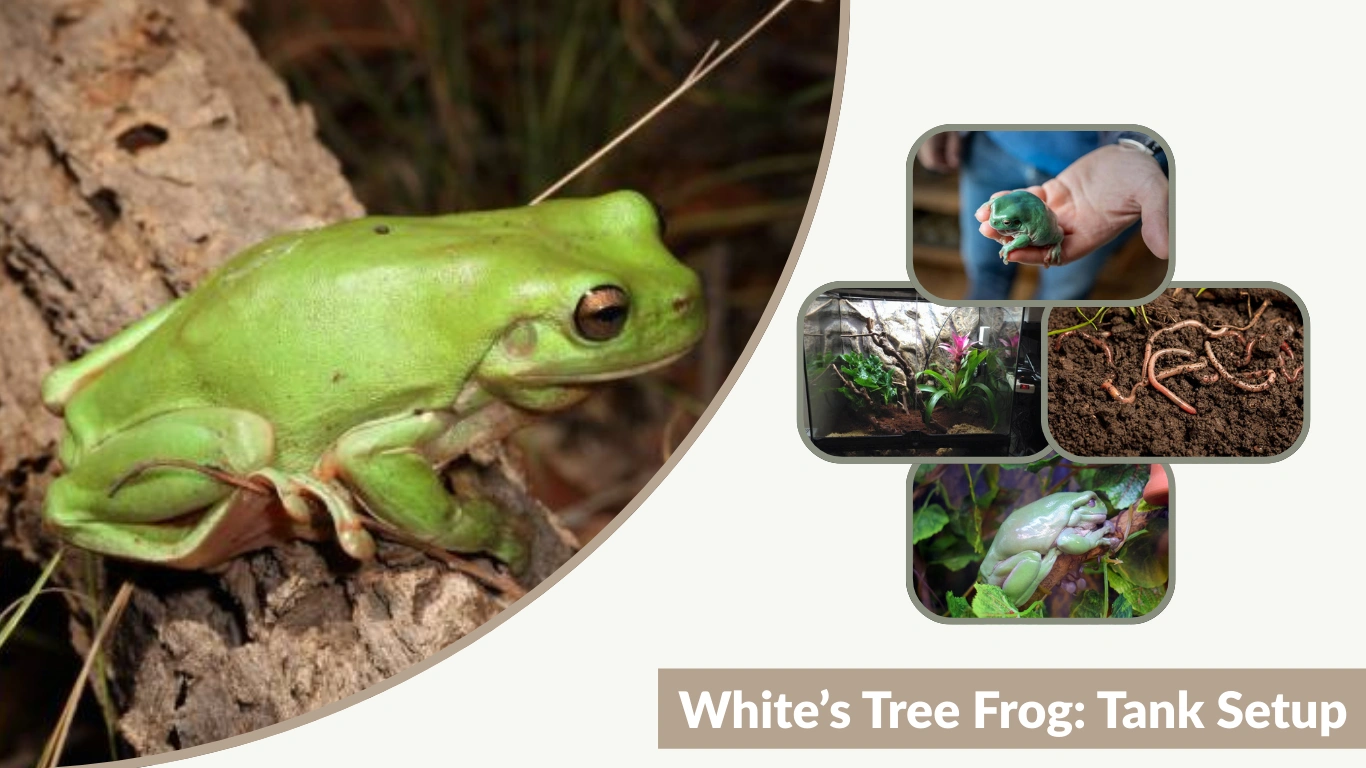
White’s tree frog (Ranoidea caerulea) is one of the most popular pet amphibians in the world. Also known as the dumpy tree frog or Australian green tree frog, this species is loved for its calm personality, adorable “smiling” expression, and relatively easy care requirements. Native to Australia and New Guinea, White’s tree frogs are hardy, adaptable, and beginner-friendly compared to many other amphibians.
If you’re considering owning one—or already have one—this guide will walk you through everything you need to know, including habitat, lifespan, temperament, and proper tank setup.
White’s Tree Frog Overview
Natural Habitat and Origin
White’s tree frogs are native to northern and eastern Australia, as well as parts of New Guinea. In the wild, they live in warm, humid environments such as forests, woodlands, and wetlands. Because they are highly adaptable, they are also commonly found near human homes, gardens, and even inside buildings.
These frogs are arboreal, meaning they spend most of their time climbing trees and shrubs. Their large toe pads allow them to grip branches, glass, and other surfaces with ease. They are nocturnal animals, becoming active at night to hunt and explore.
Physical Appearance and Size
White’s tree frogs are easily recognized by their plump bodies, smooth waxy skin, and gentle facial expression. Their coloration typically ranges from bright green to bluish-green, though some individuals may appear olive or slightly brown depending on temperature and mood.
Adult frogs usually grow between 3 and 5 inches long, with females often being slightly larger than males. Their sticky toe pads and horizontal pupils give them excellent climbing and night vision abilities. Over time, well-fed frogs can become quite chunky, which adds to their “dumpy” nickname.
White’s Tree Frog Lifespan

One of the biggest advantages of owning a White’s tree frog is its long lifespan. In the wild, they generally live around 7 to 10 years. However, in captivity—when provided with proper care—they can live 15 to 20 years or even longer.
Several factors influence their longevity, including:
- Consistent temperature and humidity levels
- A balanced, properly supplemented diet
- Clean living conditions
- Access to veterinary care when needed
Because they can live for nearly two decades, owning a White’s tree frog should be considered a long-term commitment.
Are White’s Tree Frogs Good Pets?
Temperament and Behavior
White’s tree frogs are known for their calm and docile nature. Unlike many amphibians that are easily stressed, this species tends to tolerate minimal handling better than others. However, handling should still be limited because frogs have sensitive, absorbent skin.
They are nocturnal, meaning they sleep during the day and become active at night. In the evening, you may notice your frog climbing, hunting, or soaking in its water dish. Males may also croak during breeding season, producing a low, humorous call.
White’s Tree Frog Tank Setup

Creating the right environment is one of the most important aspects of White’s tree frog care. A proper enclosure mimics their natural habitat and keeps them healthy for years to come.
Ideal Tank Size
For one adult White’s tree frog, the minimum recommended enclosure size is 18x18x24 inches. Because they are arboreal, vertical height is more important than floor space. Tall enclosures allow them to climb, rest on branches, and feel secure.
If you plan to keep more than one frog, you will need a larger enclosure to prevent crowding and feeding competition.
Substrate Options
Choosing the right substrate helps maintain humidity and hygiene. Popular options include:
- Coconut fiber (retains moisture well)
- Paper towels (ideal for beginners or quarantine setups)
- Bioactive soil systems (naturalistic and self-sustaining)
Avoid gravel, small bark chips, or loose substrates that could be accidentally swallowed during feeding.
Temperature Requirements
White’s tree frogs thrive in warm environments. During the day, temperatures should range between 75°F and 85°F. At night, temperatures can safely drop to around 65°F to 75°F.
A temperature gradient within the tank allows your frog to regulate its body temperature naturally. Heating can be provided with a low-wattage heat lamp or ceramic heat emitter placed outside the enclosure. Always monitor temperatures with a reliable thermometer to prevent overheating.
Humidity Levels
Maintaining proper humidity is essential for a White’s tree frog’s health. These frogs thrive in moderate humidity levels between 50% and 70%. While they do not require extremely high humidity like some tropical amphibians, their skin must remain moist to function properly.
Light misting once or twice daily is usually enough to maintain appropriate levels. Use dechlorinated or treated water to avoid exposing your frog to harmful chemicals. Proper ventilation is equally important—too much moisture without airflow can lead to mold growth or respiratory issues. A digital hygrometer will help you monitor humidity accurately.
Lighting and UVB
White’s tree frogs require a consistent 12-hour light and 12-hour dark cycle to maintain a healthy rhythm. While they are nocturnal and do not bask heavily, providing low-level UVB lighting can be beneficial for calcium metabolism and overall health.
Some keepers debate whether UVB is strictly necessary, but many experts recommend a low-output UVB bulb to reduce the risk of metabolic bone disease. Be careful not to place lights too close to the enclosure, as overheating can quickly stress your frog.
Tank Decorations
Decorating the enclosure properly provides enrichment and reduces stress. Since White’s tree frogs are climbers, vertical branches, cork bark, and sturdy vines are essential.
Include hiding spots such as hollow logs or leafy plants where your frog can rest during the day. Both live and artificial plants work well, though live plants can help regulate humidity naturally. A shallow water dish should always be available for soaking. Make sure the water is changed daily and treated to remove chlorine.
White’s Tree Frog Diet

A proper diet is key to keeping your frog healthy and preventing common issues like obesity.
What Do White’s Tree Frogs Eat?
White’s tree frogs are insectivores. In captivity, their diet typically includes:
- Crickets (main staple food)
- Dubia roaches
- Earthworms
- Occasional waxworms or hornworms as treats
Avoid feeding wild-caught insects, as they may carry pesticides or parasites. Food size should be no larger than the space between your frog’s eyes to prevent choking.
Feeding Schedule
Juvenile frogs grow quickly and should be fed daily. Adult frogs, however, only need to be fed two to three times per week. Overfeeding is one of the most common mistakes owners make.
White’s tree frogs have big appetites and will often eat whenever food is offered. Monitoring portion sizes helps prevent unhealthy weight gain.
Supplements
In captivity, feeder insects may lack essential nutrients. Dust insects with calcium powder two to three times per week. A vitamin supplement containing vitamin D3 should also be used periodically, especially if UVB lighting is minimal.
Gut-loading insects—feeding them nutritious foods before offering them to your frog—further improves dietary quality.
Handling and Care Tips

Although White’s tree frogs tolerate handling better than many amphibians, it should still be limited. Their skin absorbs oils, soaps, and chemicals easily, which can harm them.
Always wash your hands thoroughly before and after handling. Even better, wear powder-free gloves dampened with dechlorinated water. Keep handling sessions short and gentle to reduce stress.
Routine enclosure cleaning is essential. Spot-clean waste daily and perform a deeper clean monthly, depending on your setup. Clean water should be provided every day.
Common Health Issues
Like all pets, White’s tree frogs can experience health problems if their care is not consistent.
Obesity
Obesity is one of the most common issues in this species. A frog that appears excessively round with fat rolls over its ears may be overweight. Reducing feeding frequency and monitoring portion sizes can correct this problem.
Metabolic Bone Disease
Metabolic bone disease results from calcium deficiency or lack of vitamin D3. Symptoms may include weak limbs, difficulty climbing, or deformities. Providing proper supplementation and optional UVB lighting greatly reduces this risk.
Skin Infections
Poor hygiene or incorrect humidity can lead to bacterial or fungal skin infections. Signs include discoloration, sores, or lethargy. If symptoms appear, consult an exotic veterinarian promptly.
White’s Tree Frog Morphs
Selective breeding has produced several attractive morphs of White’s tree frogs. While the standard coloration is bright green, some popular variations include:
- Blue phase: A bluish tint instead of classic green
- Snowflake morph: White spots scattered across the body
- High-color variations: Brighter or more vibrant shades
Care requirements remain the same regardless of morph.
Can White’s Tree Frogs Live Together?
White’s tree frogs can sometimes be housed together, provided they are similar in size. Large size differences may lead to accidental cannibalism.
If keeping multiple frogs, increase tank size and provide multiple feeding areas to prevent competition. Always monitor behavior closely when introducing new frogs.
FAQs
How long do White’s tree frogs live?
In captivity, they commonly live 15 to 20 years with proper care. Good nutrition, clean housing, and stable environmental conditions greatly improve lifespan.
Do White’s tree frogs need UVB lighting?
While they can survive without UVB if properly supplemented, low-level UVB lighting is generally recommended to support calcium metabolism and overall health.
How often should you mist the tank?
Light misting once or twice daily usually maintains humidity between 50% and 70%. Always monitor levels with a hygrometer.
Why is my White’s tree frog turning brown?
Color changes are often normal and can occur due to temperature shifts, stress, or lighting changes. Persistent dark coloration combined with lethargy may indicate a health issue.
Are White’s tree frogs noisy at night?
Males can croak, especially during breeding season. Their call is low and somewhat comical but may be noticeable in quiet rooms.
Conclusion
White’s tree frogs are hardy, charming amphibians that make excellent pets for beginners and experienced keepers alike. With proper tank setup, balanced nutrition, and consistent humidity and temperature control, they can thrive for decades.
While they are relatively low-maintenance compared to other exotic pets, they still require careful attention and long-term commitment. By providing the right environment and responsible care, you can enjoy the company of this fascinating, gentle frog for many years.
