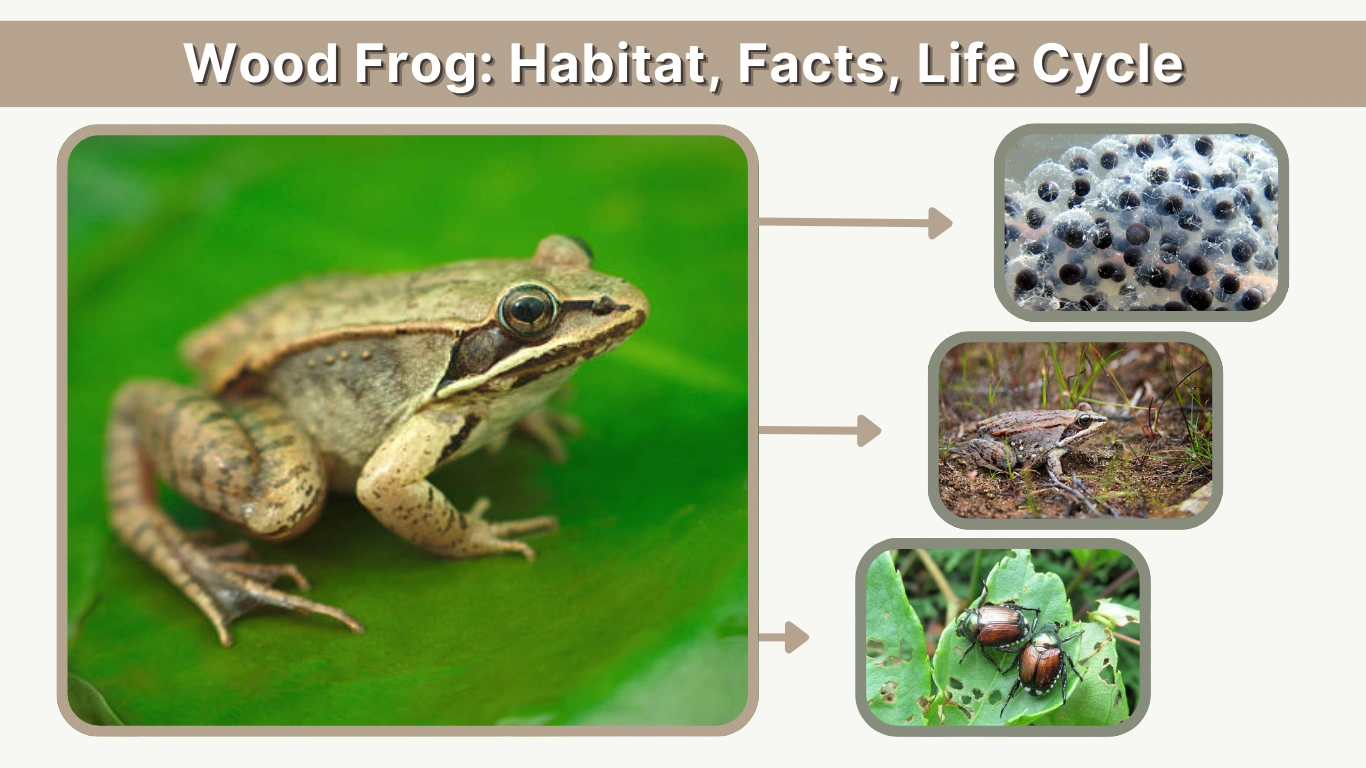
The wood frog (Lithobates sylvaticus) is one of North America’s most fascinating amphibians. Known for its incredible ability to survive freezing winter temperatures, this small forest-dwelling frog has adapted to some of the harshest climates on the continent. Found from the southeastern United States to Alaska and across much of Canada, the wood frog thrives in woodland ecosystems. In this guide, you’ll learn about wood frog habitat, identification, life cycle, diet, and some remarkable facts that make this species truly unique.
What Is a Wood Frog?
The wood frog is a medium-sized amphibian belonging to the family Ranidae, commonly known as the “true frogs.” Its scientific name, Lithobates sylvaticus, reflects its strong association with forests—“sylvaticus” means “of the woods.”
Unlike many frogs that remain near permanent water sources, wood frogs spend most of their lives on land. They are highly adaptable and can tolerate colder climates better than most other amphibians. In fact, they are one of the few frog species found north of the Arctic Circle.
Their resilience, early breeding habits, and freeze tolerance make them one of the most studied amphibians in North America.
Wood Frog Habitat

Geographic Range
Wood frogs have one of the widest distributions of any North American frog. They are found throughout:
- Most of Canada
- The northeastern and northern United States
- Parts of the Midwest
- The Appalachian Mountains
- Alaska
They are especially common in boreal forests and temperate woodlands. Their ability to survive extreme cold allows them to live much farther north than most amphibians.
Preferred Habitats
As their name suggests, wood frogs prefer forested environments. They are typically found in:
- Moist deciduous forests
- Mixed woodlands
- Forest floors covered in leaf litter
- Areas near wetlands and marshes
Although they live primarily on land, they rely heavily on temporary pools of water for breeding. These shallow, seasonal bodies of water—called vernal pools—form in spring from melting snow and rainfall. Because vernal pools dry up later in the year, they contain fewer fish predators, making them ideal for laying eggs.
Seasonal Habitat Changes
Wood frogs change habitats depending on the season:
- Spring: They migrate to temporary woodland pools to breed.
- Summer: Adults return to the forest floor, where they feed and shelter under leaves, logs, and vegetation.
- Winter: They burrow into leaf litter or shallow soil and enter a remarkable state of freeze tolerance.
This seasonal movement allows them to take advantage of different environments throughout the year.
Wood Frog Identification Guide

Identifying a wood frog is relatively easy once you know its key features. Although it may look similar to other small brown frogs, a few distinctive markings and physical traits make it stand out. Wood frogs are well-camouflaged for life on the forest floor, blending into leaves and soil. Below is a quick overview followed by simple identification points you can use in the field.
Key Identification Features
- Dark eye mask: Black or dark brown band stretching from the nose through the eye (most distinctive trait).
- Body color: Tan, brown, rust, or grayish-brown.
- Size: Typically 1.5 to 3 inches long.
- Belly color: Pale white or light cream underside.
- Skin texture: Smooth and moist, not warty.
- Body shape: Slender body with long hind legs for jumping.
- Back markings: May have subtle ridges (dorsolateral folds) running along the back.
Male vs. Female Differences
- Males: Smaller in size, may appear darker during breeding season.
- Females: Slightly larger and fuller-bodied.
- Breeding males: Enlarged thumbs for gripping during mating.
How to Tell It Apart from Similar Frogs
- Lacks the large dark spots seen on leopard frogs.
- Does not have bold stripes like many chorus frogs.
- The facial “mask” is the easiest and most reliable identifier.
If you spot a small brown frog in a woodland area with a clear dark mask across its eyes—especially in early spring—it is very likely a wood frog.
Wood Frog Life Cycle

The wood frog life cycle follows the typical amphibian pattern but is closely tied to seasonal changes.
Breeding Season
Wood frogs are among the earliest breeding amphibians in North America. As soon as snow begins to melt in early spring, they migrate to vernal pools. In many areas, this happens in March or April.
Males gather in shallow water and produce short, duck-like quacking calls to attract females. Unlike the long trills of other frog species, the wood frog’s call sounds more like the clucking of a chicken or a soft quack.
Breeding activity usually lasts only a few weeks, making timing critical.
Egg Stage
After mating, females lay clusters of eggs attached to submerged vegetation. A single female can lay hundreds to over a thousand eggs at once.
These gelatinous egg masses float near the water’s surface, where sunlight helps speed up development. The eggs typically hatch within two to three weeks, depending on temperature.
Because vernal pools are temporary and lack fish, eggs and tadpoles face fewer aquatic predators—one of the reasons wood frogs rely on these seasonal habitats.
Tadpole Stage
Once the eggs hatch, wood frog tadpoles begin a fully aquatic phase of life. At this stage, they have gills, long tails, and no legs. Tadpoles remain in the vernal pool where they feed and grow rapidly.
Wood frog tadpoles primarily eat:
- Algae
- Decaying plant material (detritus)
- Microscopic organic matter
Because vernal pools are temporary, tadpoles must develop quickly before the water dries up. This fast growth period typically lasts one to two months. Warm temperatures speed up development, while cooler conditions can slow it down.
During this stage, tadpoles are vulnerable to predators such as aquatic insects, salamander larvae, and birds.
Metamorphosis and Juvenile Stage
As development continues, tadpoles undergo metamorphosis—a dramatic transformation into froglets.
Key changes include:
- Growth of hind legs, followed by front legs
- Gradual absorption of the tail
- Development of lungs for breathing air
Once metamorphosis is complete, the young frogs leave the water and move into the surrounding forest. These tiny froglets are only about the size of a fingernail and must quickly learn to survive on land.
Juvenile wood frogs feed on very small invertebrates and continue growing over the next one to two years until they reach sexual maturity.
Adult Stage
Adult wood frogs live primarily on land, except during the spring breeding season. They spend much of their time hidden beneath:
- Leaf litter
- Fallen logs
- Dense vegetation
They are most active during warm, moist conditions and are especially common after rainfall.
Wood frogs typically reach reproductive maturity between one and two years of age. From then on, they return each spring to breeding pools, often migrating back to the same general area where they were born.
Wood Frog Diet

Adult Wood Frog Diet
Adult wood frogs are carnivorous and feed mainly on small invertebrates. Their diet includes:
- Beetles
- Ants
- Flies
- Spiders
- Worms
- Other small insects
They are opportunistic feeders and will eat almost any prey they can capture and swallow.
Tadpole Diet
Unlike adults, tadpoles are mostly herbivorous or detritivorous. They feed on algae, plant matter, and organic debris found in the water. This diet supports rapid growth during their short aquatic stage.
Feeding Behavior
Wood frogs use a sit-and-wait hunting strategy. They remain still and rely on camouflage to avoid detection. When prey comes within range, they quickly flick out their sticky tongue to capture it.
Their quick reflexes and ability to blend into the forest floor make them efficient predators despite their small size.
Fascinating Wood Frog Facts
Freeze Tolerance Ability
One of the most remarkable wood frog facts is its ability to survive freezing solid during winter.
As temperatures drop in late fall, wood frogs burrow into leaf litter on the forest floor. When freezing temperatures arrive:
- Their heart stops beating
- They stop breathing
- Ice crystals form in parts of their body
To survive this process, wood frogs produce high levels of glucose in their blood. This glucose acts as a natural antifreeze, protecting vital organs and cells from damage.
When spring temperatures rise, the frog thaws, its heart begins beating again, and it resumes normal activity. Few vertebrates on Earth have this ability.
Early Spring Activity
Wood frogs are often the first amphibians to emerge after snowmelt. Their early breeding strategy gives their tadpoles a head start before predators become more active later in the season.
Their distinctive quacking call is one of the first sounds of spring in many northern forests.
Ecological Importance
Wood frogs play an important role in forest ecosystems. They:
- Help control insect populations
- Serve as prey for birds, snakes, and mammals
- Act as indicator species for environmental health
Because amphibians are sensitive to pollution and habitat changes, declining wood frog populations can signal environmental problems.
Wood Frog Lifespan

In the wild, wood frogs typically live between 3 and 6 years. Some individuals may live slightly longer under favorable conditions.
Natural Predators
Throughout their life cycle, wood frogs face numerous predators:
- Birds such as herons and crows
- Snakes
- Raccoons and other small mammals
- Larger amphibians
Eggs and tadpoles are especially vulnerable to aquatic predators.
Environmental Threats
In addition to natural predators, wood frogs face environmental challenges, including:
- Habitat destruction from development
- Loss of wetlands and vernal pools
- Pollution
- Climate change
Changes in temperature and precipitation patterns can disrupt breeding cycles and reduce suitable habitats.
Conservation Status
Currently, wood frogs are listed as a species of Least Concern in most parts of their range. Their populations remain relatively stable, largely due to their wide distribution.
However, they depend heavily on healthy forests and seasonal wetlands. Protecting vernal pools and woodland habitats is essential for maintaining strong populations.
Conservation efforts that preserve natural landscapes benefit not only wood frogs but many other species that share the same ecosystem.
Conclusion
The wood frog is a remarkable amphibian known for its adaptability, early spring breeding, and extraordinary ability to survive freezing temperatures. From its forest habitat and distinctive eye mask to its complex life cycle and insect-based diet, this small frog plays a significant role in North American ecosystems. While populations are currently stable, protecting forests and vernal pools remains crucial. Understanding and appreciating species like the wood frog helps support conservation efforts and preserve the delicate balance of woodland environments.
