
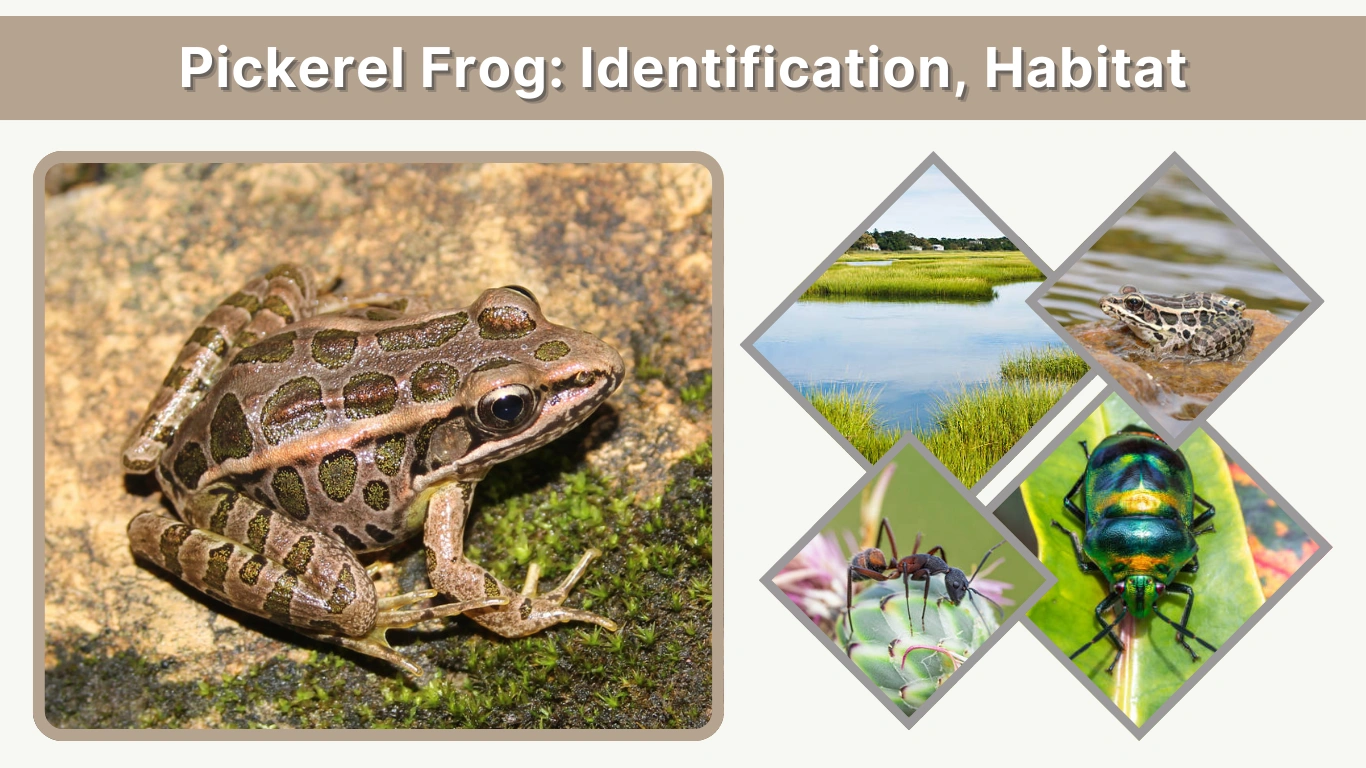
The pickerel frog is a striking amphibian native to eastern North America, known for its square-shaped spots and preference for cool, clear water. Often mistaken for the leopard frog, this species has several distinctive features that make identification easier once you know what to look for. Beyond its appearance, the pickerel frog plays an important ecological role in freshwater habitats. In this guide, we’ll explore pickerel frog identification, habitat, diet, and some fascinating facts about this unique amphibian.
What Is a Pickerel Frog?
The pickerel frog (Lithobates palustris) is a member of the Ranidae family, commonly known as true frogs. It is a medium-sized frog species found primarily in the eastern United States and parts of southeastern Canada. Like other true frogs, it has long hind legs, smooth skin, and strong swimming abilities.
The name “pickerel frog” is believed to come from its association with waters inhabited by pickerel fish. These frogs are frequently found near cool, permanent bodies of water such as streams and spring-fed ponds—habitats that also support certain freshwater fish species.
Pickerel frogs are especially important in freshwater ecosystems. As both predator and prey, they help control insect populations while also serving as a food source for birds, snakes, and mammals. Their presence often indicates a healthy aquatic environment, as they are sensitive to pollution and habitat disturbance.
Pickerel Frog Identification

Proper pickerel frog identification is important because this species is often confused with the closely related leopard frog. At first glance, both frogs share similar colors and body shapes. However, the pickerel frog has several clear visual traits that make it stand out once you know what to look for. Paying attention to spot shape, body markings, and leg coloration can quickly help you tell the difference.
Below is a quick overview of the key identifying features:
- Size: Medium-sized frog, typically 1.5–3.5 inches long
- Body Color: Tan, light brown, or grayish-brown
- Spot Pattern: Two neat rows of square or rectangular dark spots on the back
- Dorsolateral Ridges: Prominent raised ridges running down each side of the back
- Inner Thigh Color: Bright yellow or orange flash coloration
- Belly: Cream or pale white underside
- Snout Shape: Slightly pointed with a dark facial stripe
The most reliable identification feature is the square-shaped spots arranged in two parallel rows. This organized pattern clearly separates the pickerel frog from leopard frogs, which have more rounded and irregularly scattered spots.
Pickerel Frog Habitat

Understanding pickerel frog habitat preferences helps explain where and why these frogs thrive.
Preferred Natural Habitats
Pickerel frogs prefer cool, clean, and permanent bodies of water. They are commonly found near:
- Spring-fed ponds
- Clear streams
- Marshes
- Woodland wetlands
- Lake edges with abundant vegetation
Unlike some frog species that tolerate murky or stagnant water, pickerel frogs are strongly associated with oxygen-rich environments. They are rarely found in heavily polluted or temporary water sources.
During warmer months, they may move short distances onto land but typically remain close to water. Dense vegetation, rocks, and shoreline plants provide shelter from predators.
Geographic Range
The pickerel frog’s geographic range includes much of the eastern United States, stretching from the Midwest to New England and southward into parts of the Appalachian region. They are also found in southeastern Canada.
However, they are less common in the deep southern coastal plains, where warmer temperatures and different habitat conditions limit their distribution.
Environmental Requirements
Pickerel frogs depend on stable environmental conditions. Key habitat requirements include:
- Permanent water sources for breeding
- Clean water with minimal pollution
- Aquatic vegetation for egg attachment
- Shoreline cover for protection
Because they are sensitive to environmental changes, pickerel frogs are sometimes considered indicator species. A decline in their population can signal problems such as water contamination or habitat destruction.
Pickerel Frog Diet

Understanding the pickerel frog diet helps explain its role in maintaining balance within freshwater ecosystems. These frogs are opportunistic carnivores, feeding on a wide variety of small prey.
What Do Pickerel Frogs Eat?
If you’re wondering what pickerel frogs eat, their primary diet consists of small invertebrates. Common food sources include:
- Beetles
- Ants
- Flies
- Grasshoppers
- Spiders
- Small crustaceans
Pickerel frogs rely on movement to detect prey. When an insect comes within range, the frog quickly extends its long, sticky tongue to capture it. This rapid strike happens in a fraction of a second.
Because they consume many insects, pickerel frogs help control pest populations around wetlands and forest edges.
Tadpole Diet
The diet of pickerel frog tadpoles differs significantly from that of adults. Tadpoles are primarily herbivorous and feed on:
- Algae
- Decaying plant material
- Organic debris
- Microscopic aquatic organisms
As they grow and undergo metamorphosis, their digestive system changes, allowing them to shift from a plant-based diet to a carnivorous one.
Hunting Behavior
Pickerel frogs are sit-and-wait predators. Rather than actively chasing prey, they remain still and rely on camouflage. Their spotted pattern helps them blend into leaf litter, mud, and shoreline vegetation.
They are most active during the evening and at night, especially in warm weather. Seasonal changes also influence feeding behavior. During colder months, their metabolism slows, and feeding decreases significantly before winter dormancy.
Behavior and Adaptations
Pickerel frogs have developed several adaptations that help them survive in the wild.
One of their most notable features is their mildly toxic skin secretion. When threatened, they release chemicals from their skin that can irritate predators. While not dangerous to humans with casual contact, these toxins can deter or harm smaller predators.
Another important adaptation is their strong swimming ability. When startled, pickerel frogs often leap into water and quickly dive to safety. Their long hind legs provide powerful propulsion both on land and in water.
Seasonally, pickerel frogs move between aquatic and terrestrial habitats. During the breeding season, they remain near water. In summer, they may venture into nearby woodlands while still staying within reach of permanent water sources.
In winter, pickerel frogs overwinter underwater. They typically rest at the bottom of ponds or streams, where oxygen levels remain sufficient to sustain them through the cold months.
Pickerel Frog Life Cycle

Like most frogs, pickerel frogs undergo a complete metamorphosis from egg to adult.
Breeding Season
Breeding usually occurs in early spring, often between March and May, depending on the region. Males gather near shallow water and produce low, snore-like calls to attract females.
After mating, females lay egg masses attached to submerged vegetation. Each mass can contain hundreds or even thousands of eggs.
Tadpole Stage
Eggs hatch into tadpoles within a few weeks. The tadpole stage lasts several months, during which they grow rapidly while feeding on algae and plant matter.
As they mature, they gradually develop hind legs, followed by front legs. Their tails shrink as their lungs develop, preparing them for life on land.
Adult Stage
By late summer, young frogs complete metamorphosis and leave the water. They reach sexual maturity within one to two years.
In the wild, pickerel frogs may live up to five years, though survival depends on environmental conditions and predation.
Interesting Pickerel Frog Facts
- Pickerel frogs are one of the few native North American frogs with noticeable skin toxins.
- The bright yellow or orange coloring on their inner thighs may serve as a warning signal to predators.
- They are considered indicators of good water quality because they thrive only in clean, oxygen-rich habitats.
- Unlike some frog species, they rarely inhabit temporary rain pools.
- Their square-shaped spots make them one of the easiest frogs to identify once you know the pattern.
FAQs
Are pickerel frogs poisonous?
Pickerel frogs produce mild skin toxins that help protect them from predators. These secretions can irritate the mouths of animals that attempt to eat them. While they are not dangerous to humans through brief contact, it is best to wash your hands after handling one.
Where do pickerel frogs live?
Pickerel frogs live in eastern North America, including much of the eastern United States and southeastern Canada. They prefer cool, clear streams, spring-fed ponds, marshes, and wooded wetlands with permanent water sources.
What do pickerel frogs eat?
Pickerel frogs eat insects such as beetles, ants, flies, grasshoppers, and spiders. They also consume small invertebrates and crustaceans. Tadpoles feed primarily on algae and decaying plant material before transitioning to a carnivorous diet as adults.
How can you identify a pickerel frog?
You can identify a pickerel frog by its two neat rows of square or rectangular dark spots along its back and the bright yellow or orange coloration on its inner thighs. These features distinguish it from the similar-looking leopard frog.
Conclusion
The pickerel frog is a fascinating amphibian known for its distinctive square spots, bright inner thigh coloration, and preference for cool, clean water habitats. From its insect-based diet to its mildly toxic skin secretions, this species is uniquely adapted to life near freshwater ecosystems. By understanding pickerel frog identification, habitat, and diet, we gain a deeper appreciation for its ecological role and the importance of protecting the healthy wetlands it depends on.
