
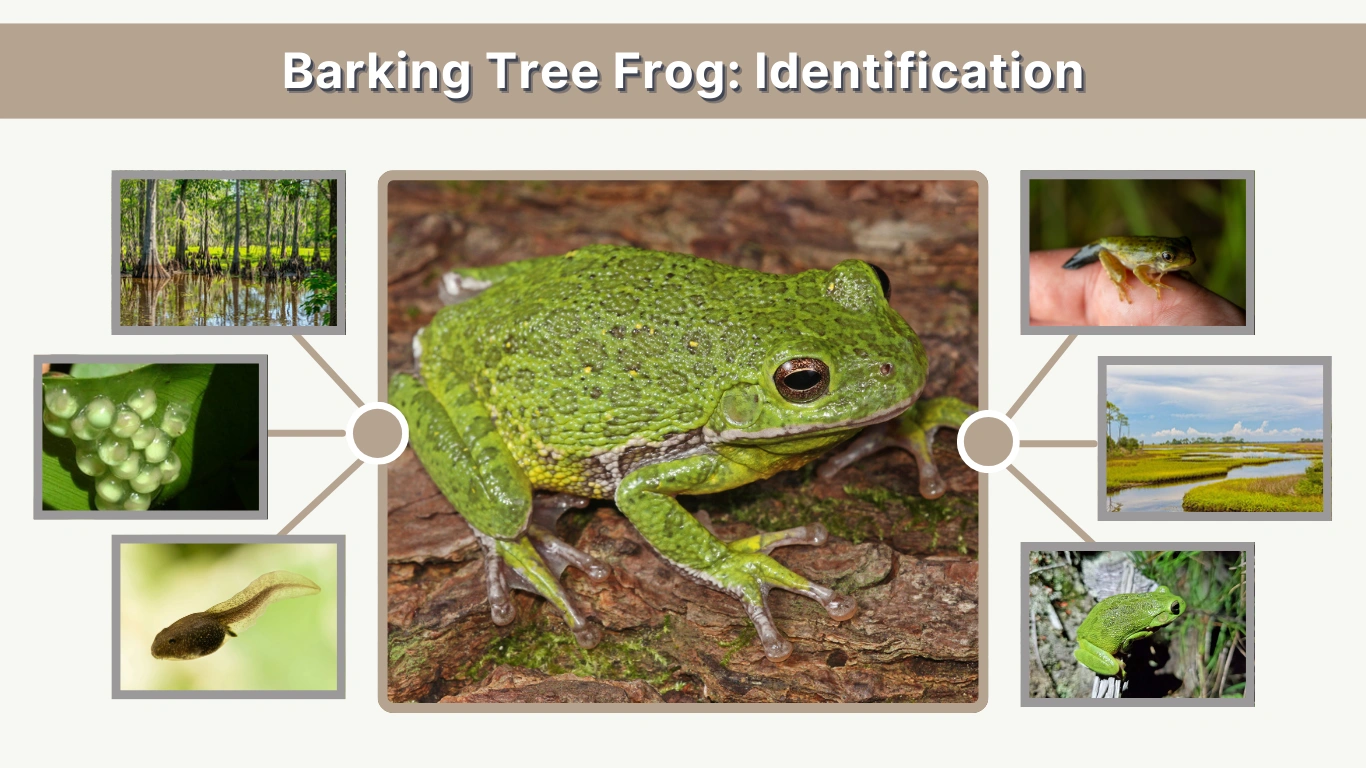
The barking tree frog (Hyla gratiosa) is one of the most distinctive amphibians in the southeastern United States. Known for its loud, dog-like call, this species stands out both for its size and its unique vocalizations. In fact, it is the largest native tree frog in its range. Found in forests, wetlands, and near temporary ponds, the barking tree frog plays an important role in local ecosystems. In this guide, we’ll explore how to identify it, what its call sounds like, and where it lives.
What Is a Barking Tree Frog?
The barking tree frog is a member of the Hylidae family, commonly known as tree frogs. Its scientific name is Hyla gratiosa. This species is native to the southeastern United States and is especially common in warm, humid environments.
Unlike many smaller tree frogs, the barking tree frog has a noticeably plump body and a deeper, louder call. Its name comes directly from its vocalization, which resembles the sharp bark of a small dog.
Barking tree frogs are important insect predators. By feeding on insects and other small invertebrates, they help maintain balance in wetland and forest ecosystems. Because amphibians are sensitive to environmental changes, their presence often indicates healthy habitats.
Barking Tree Frog Identification

Correctly identifying a barking tree frog is easier once you know its key features. Its size, body shape, and markings make it stand out among other tree frogs.
Size and Body Structure
The barking tree frog is the largest native tree frog in the southeastern U.S. Adults typically measure between 2 and 2.8 inches in length.
Key physical characteristics include:
- Plump, rounded body
- Large, prominent eyes
- Long hind legs built for jumping
- Expanded toe pads for climbing
Those large toe pads help the frog grip tree bark, branches, and vegetation. Despite being called a tree frog, it does not always stay high in trees. It often spends time near ground-level vegetation or around water sources.
Color and Markings
Barking tree frogs display a variety of colors, including:
- Bright green
- Olive green
- Gray
- Brown
Their backs are marked with irregular dark blotches or spots, which vary from frog to frog. This blotchy pattern is one of the most noticeable identification features.
Other distinguishing markings include:
- A pale or creamy white underside
- A light stripe running along the jaw
- Slightly rough or grainy-looking skin
Their coloration provides excellent camouflage among leaves, tree bark, and forest debris.
How to Distinguish It from Similar Species
Several other tree frogs live in the same region, but the barking tree frog can be distinguished by:
- Larger size than green or squirrel tree frogs
- Distinct dark blotches on its back
- A much deeper, louder call
The call is often the easiest way to confirm identification, especially at night when frogs are most active.
What Does a Barking Tree Frog Sound Like?
The barking tree frog is famous for its unique call.
Description of the Call
The call is a short, sharp, explosive “bark” that closely resembles the sound of a small dog. It is deeper and louder than the high-pitched trills or chirps of many other tree frogs.
The sound is typically repeated at steady intervals, creating a rhythmic pattern during breeding season. When several males call at once, the effect can be surprisingly loud for such small animals.
When Do They Call?
Barking tree frogs call primarily:
- From late spring through summer
- During warm, humid nights
- After heavy rainfall
- Near breeding ponds
They are nocturnal, meaning they are most active after sunset. During the day, they often hide in tree cavities, vegetation, or sheltered areas.
Why They Call
Male barking tree frogs call for two main reasons:
- To attract females during breeding season
- To establish territory among other males
The loud, distinctive bark helps females locate calling males across wetlands and forest edges.
Barking Tree Frog Habitat

Understanding barking tree frog habitat preferences helps explain where you are most likely to hear or see one.
Preferred Natural Environments
Barking tree frogs favor:
- Pine forests
- Cypress swamps
- Freshwater wetlands
- Temporary rain-filled ponds
- Marsh edges
They rely on shallow bodies of water for breeding but may spend much of their time in surrounding forests. Temporary ponds are especially important because they often lack fish, which would otherwise prey on eggs and tadpoles.
Geographic Range
The barking tree frog is native to the southeastern United States. Its range includes:
- Florida
- Georgia
- South Carolina
- Coastal North Carolina
- Alabama
- Mississippi
It thrives in warm, humid climates with access to both forest cover and freshwater breeding sites.
Barking Tree Frog Diet

The barking tree frog is a carnivorous amphibian that feeds on a variety of small invertebrates. Like most frogs, it is an opportunistic predator, meaning it eats whatever suitable prey is available in its environment.
What Do Barking Tree Frogs Eat?
Adult barking tree frogs typically consume:
- Crickets
- Beetles
- Moths
- Ants
- Spiders
- Other small insects
They use a sit-and-wait hunting strategy. Remaining still and well-camouflaged, they wait for prey to move within range. When the moment is right, they rapidly extend their sticky tongue to capture the insect in a fraction of a second.
Because they feed on many insects, barking tree frogs help control pest populations in forests and wetlands.
Tadpole Diet
During the tadpole stage, their diet is very different. Barking tree frog tadpoles are mostly herbivorous or omnivorous. They feed on:
- Algae
- Decaying plant matter
- Organic debris
- Microscopic aquatic organisms
As they grow and undergo metamorphosis, their digestive system changes, allowing them to transition into carnivorous adults.
Life Cycle of the Barking Tree Frog

Like all frogs, barking tree frogs undergo complete metamorphosis, progressing through egg, tadpole, and adult stages.
Breeding Season
Breeding usually occurs from late spring through mid-summer. After heavy rains, males gather near shallow ponds and begin calling. Their loud barking calls attract females to the breeding site.
Once mating occurs, females lay clusters of eggs in shallow water, often attached to vegetation. Temporary ponds are ideal because they reduce the risk of fish predation.
Tadpole Development
Eggs hatch into tadpoles within a few days to weeks, depending on water temperature. Barking tree frog tadpoles are relatively large compared to those of other tree frogs.
Over several weeks, they develop:
- Hind legs
- Front legs
- Lungs for breathing air
As their bodies change, their tails gradually shrink until they fully transform into young frogs.
Adult Stage and Lifespan
Young frogs leave the water once metamorphosis is complete. They reach sexual maturity in about one year. In the wild, barking tree frogs can live for several years, although survival depends on environmental conditions and predation.
Behavior and Adaptations

Barking tree frogs have several adaptations that help them survive in changing environments.
One notable defense behavior is inflating their bodies when threatened. By puffing up, they appear larger and more intimidating to predators.
Their coloration provides excellent camouflage among leaves, bark, and forest debris. This helps them avoid detection during the day when they are resting.
Although they are tree frogs, they are not strictly arboreal. They may shelter in:
- Tree cavities
- Under loose bark
- Dense vegetation
- Underground burrows during dry periods
During drought conditions, barking tree frogs may burrow into sandy soil to retain moisture and avoid extreme heat.
Interesting Barking Tree Frog Facts
- It is the largest native tree frog in the southeastern United States.
- Its call sounds like a small dog barking.
- It has large toe pads that act like suction cups for climbing.
- Males are typically smaller than females.
- It can survive dry spells by burrowing underground.
- It is most active at night during warm, humid weather.
Conservation Status and Threats
Currently, barking tree frog populations are considered stable in much of their range. However, like many amphibians, they face certain threats.
Major concerns include:
- Habitat loss due to urban development
- Wetland drainage
- Pollution and pesticide use
- Climate change affecting breeding ponds
Because they rely on temporary wetlands for reproduction, protecting these habitats is essential for their long-term survival. Maintaining healthy forest and wetland ecosystems helps ensure stable populations of barking tree frogs.
FAQs
Why is it called a barking tree frog?
It is called a barking tree frog because its call sounds like the sharp bark of a small dog. The loud, explosive sound is used by males during breeding season to attract females and establish territory.
Where do barking tree frogs live?
Barking tree frogs live in the southeastern United States, including Florida, Georgia, the Carolinas, Alabama, and Mississippi. They prefer pine forests, swamps, wetlands, and temporary ponds for breeding.
What does a barking tree frog sound like?
The call of a barking tree frog is a short, sharp, dog-like bark repeated at steady intervals. It is deeper and louder than the calls of most other tree frog species in the same region.
How big do barking tree frogs get?
Adult barking tree frogs typically grow between 2 and 2.8 inches long, making them the largest native tree frog species in the southeastern United States.
Conclusion
The barking tree frog is a fascinating amphibian known for its large size and unmistakable dog-like call. Native to the southeastern United States, it thrives in forests and wetlands where it plays an important role in controlling insect populations. With its blotchy markings, strong climbing ability, and loud vocalizations, this species stands out among other tree frogs. Protecting wetlands and forest habitats ensures that the unique bark of this remarkable frog continues to echo through southern nights.
