
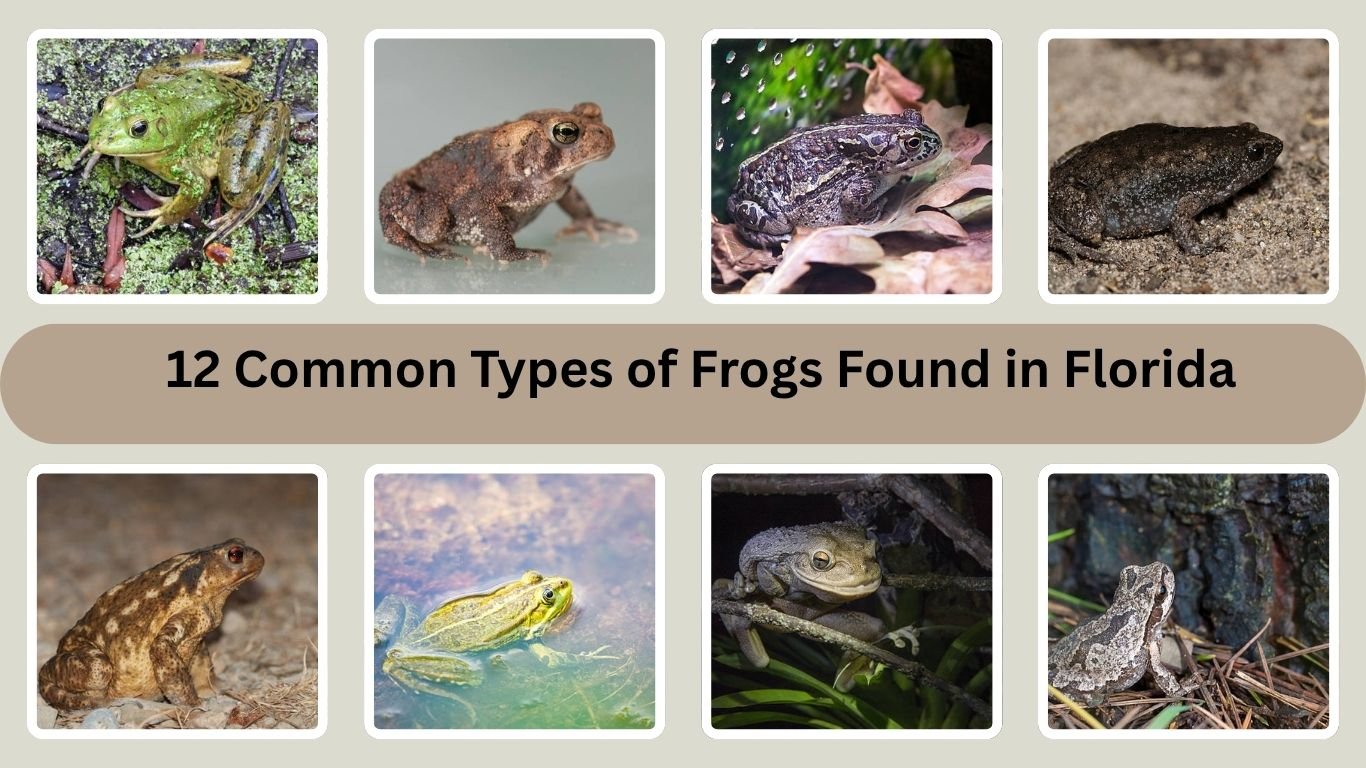
Florida is home to a rich diversity of frog species, thanks to its warm climate, abundant wetlands, and varied ecosystems. From tiny grass frogs hidden in marshes to large bullfrogs thriving in lakes, these amphibians play an important role in maintaining ecological balance. Some species are native and essential to the environment, while others, like the Cuban Treefrog, are invasive and impact local wildlife.
In this guide, you’ll discover 12 common types of frogs found in Florida, along with key details to help you recognize and understand each one.
1. American Bullfrog

The American Bullfrog is one of the largest and most well-known frogs found in Florida. Commonly seen in ponds, lakes, and slow-moving waters, it is famous for its deep, resonant call that sounds like a low-pitched “jug-o-rum.” This species is highly adaptable and plays an important role in the ecosystem as both predator and prey.
Identification
- Large size, typically 3.5 to 6 inches long
- Green to olive-brown coloration with darker mottling
- Prominent eardrum (tympanum) behind the eye, often larger in males
- Lacks dorsolateral ridges (folds) along the back
- Powerful hind legs adapted for jumping and swimming
Habitat
American Bullfrogs prefer permanent bodies of water such as lakes, marshes, ponds, and slow rivers. They thrive in warm, freshwater environments with abundant vegetation along the edges. These frogs are rarely found far from water, as they rely on it for breeding, feeding, and protection from predators.
Behavior
This species is mostly active at night but can often be seen during the day basking near the water’s edge. Bullfrogs are opportunistic feeders, consuming insects, fish, small birds, and even other frogs. They are known for their aggressive hunting style, using their strong jaws to capture prey.
Breeding
Breeding season in Florida typically occurs from late spring through summer. Males establish territories and call loudly to attract females. Females lay thousands of eggs in shallow water, which hatch into tadpoles. These tadpoles may take over a year to fully develop into adult frogs.
2. Southern Leopard Frog

The Southern Leopard Frog is a medium-sized frog commonly found throughout Florida. It is easily recognized by its distinctive spotted pattern and is often heard before it is seen, thanks to its unique chuckling call. This frog is highly adaptable and can live in a variety of wetland habitats.
Identification
- Medium size, about 2 to 3.5 inches long
- Light green to brown color with dark, rounded spots
- Two distinct dorsolateral ridges running down the back
- White underside with some mottling
- Slender body with long legs
Habitat
Southern Leopard Frogs inhabit freshwater environments such as ponds, marshes, ditches, and grassy wetlands. They are often found near shallow water with plenty of vegetation. Unlike some frogs, they may wander short distances from water, especially during wet conditions.
Behavior
These frogs are mostly active at night but may also be seen during the day, especially after rain. They are quick jumpers and rely on their agility to escape predators. Their diet mainly consists of insects, spiders, and other small invertebrates.
Breeding
Breeding can occur almost year-round in Florida, especially during cooler, wetter months. Males call from shallow water to attract females. Eggs are laid in clusters attached to vegetation, and tadpoles develop relatively quickly compared to other frog species.
3. Green Treefrog

The Green Treefrog is Florida’s official state amphibian and a familiar sight in gardens, wetlands, and even around homes. Known for its bright color and sticky toe pads, this frog is an excellent climber and often found on vegetation or windows at night.
Identification
- Bright green body, sometimes with yellowish tones
- Distinct white or pale stripe running along each side
- Smooth skin and slender build
- Large toe pads for climbing
- Typically 1.5 to 2.5 inches long
Habitat
Green Treefrogs prefer moist environments such as swamps, ponds, marshes, and lakes. They are often found in vegetation near water but can also adapt to urban areas, especially where outdoor lighting attracts insects.
Behavior
These frogs are nocturnal and are commonly seen clinging to plants, walls, or glass surfaces at night. They feed mainly on insects, making them beneficial for controlling pests. Their sticky toe pads allow them to climb efficiently.
Breeding
Breeding season usually occurs from spring through summer. Males call with a loud, nasal “quonk” to attract females. Eggs are laid in floating clusters, and tadpoles develop in water before transforming into adult frogs.
4. Barking Treefrog

The Barking Treefrog is one of the largest treefrogs in Florida and gets its name from its loud, dog-like barking call. This species is less commonly seen but is widespread in suitable habitats, especially in wooded wetlands and near temporary water sources.
Identification
- Large treefrog, about 2 to 2.8 inches long
- Green, gray, or brown coloration with irregular dark spots
- Rough, warty skin compared to other treefrogs
- Yellow or orange coloration on the inner thighs
- Prominent toe pads for climbing
Habitat
Barking Treefrogs are typically found in forests, swamps, and wetlands. They prefer areas with temporary pools or rain-filled depressions for breeding. Outside the breeding season, they may be found hiding in tree cavities, under bark, or even in burrows.
Behavior
These frogs are primarily nocturnal and are more often heard than seen. Their distinctive barking call can be quite loud and carries over long distances. They are good climbers but also spend time on the ground, especially in moist conditions.
Breeding
Breeding usually occurs during warmer months after heavy rains. Males call from shallow water or nearby vegetation to attract females. Eggs are laid in temporary pools, and tadpoles develop quickly before the water dries up.
5. Pine Woods Treefrog

The Pine Woods Treefrog is a small, slender species commonly found in Florida’s pine flatwoods and coastal areas. Although not always easy to spot, it is often detected by its soft, musical call during the breeding season.
Identification
- Small size, about 1 to 1.5 inches long
- Brown to reddish-brown body color
- Distinct dark stripe running from nose through the eye
- Light underside
- Small toe pads suited for climbing
Habitat
This species prefers pine flatwoods, grassy areas, and coastal regions. It is commonly found near shallow ponds, ditches, and temporary pools, especially during the rainy season. It often stays hidden in vegetation when not active.
Behavior
Pine Woods Treefrogs are mostly nocturnal and secretive. They spend much of their time concealed in grasses or low vegetation. Their diet consists mainly of small insects and other tiny invertebrates.
Breeding
Breeding typically takes place during the warmer months, especially after rainfall. Males gather around temporary pools and produce a soft, whistling call to attract females. Eggs are laid in shallow water, and tadpoles develop rapidly in these short-lived habitats.
6. Cuban Treefrog

The Cuban Treefrog is a large, invasive species in Florida known for its adaptability and impact on native wildlife. Originally from the Caribbean, it has spread widely across the state and is often found around homes and buildings.
Identification
- Large size, typically 3 to 5 inches long
- Color varies from gray to green or brown, often changing to match surroundings
- Warty skin with a rough texture
- Very large toe pads for climbing
- Bulging eyes and a wide head
Habitat
Cuban Treefrogs thrive in urban and suburban areas as well as natural habitats. They are commonly found near lights, gardens, ponds, and even inside buildings. They prefer warm, moist environments but are highly adaptable.
Behavior
These frogs are nocturnal and are often seen on walls, windows, and outdoor structures at night. They are aggressive predators, feeding on insects, other frogs, and small animals. Their presence can negatively affect native frog populations.
Breeding
Breeding occurs mainly during the warm, rainy season. Males call loudly from near water sources such as ponds, ditches, and containers. Females lay large numbers of eggs in water, and tadpoles develop quickly.
7. Little Grass Frog

The Little Grass Frog is the smallest frog in North America and is commonly found in Florida’s wetlands. Despite its tiny size, it is quite abundant and often heard making high-pitched calls during the breeding season.
Identification
- Very small size, about 0.5 to 0.75 inches long
- Brown to green coloration with a dark stripe along the side
- Smooth skin and a slender body
- Pointed snout
- Small toe pads for limited climbing
Habitat
Little Grass Frogs inhabit marshes, wet meadows, and grassy edges of ponds and swamps. They prefer areas with dense vegetation and shallow water. They are rarely found far from moist environments.
Behavior
These frogs are active both day and night, especially during warm, wet conditions. They are quick and agile, often hiding among grasses to avoid predators. Their diet consists of tiny insects and other small invertebrates.
Breeding
Breeding usually takes place in late winter through summer. Males produce a high-pitched, insect-like call from grassy areas near water. Eggs are laid in shallow water, and tadpoles develop rapidly into miniature frogs.
8. Squirrel Treefrog

The Squirrel Treefrog is a highly adaptable and common species in Florida, often found in both natural and urban environments. Known for its variable coloration and active nature, it is frequently seen around homes, gardens, and wetlands.
Identification
- Small to medium size, about 1.5 to 2.5 inches long
- Color varies widely: green, brown, or gray
- Smooth skin with occasional blotches
- Light-colored underside
- Large toe pads for climbing
Habitat
Squirrel Treefrogs live in a wide range of habitats including forests, wetlands, gardens, and suburban areas. They are often found near water sources such as ponds and ditches but can also thrive away from permanent water.
Behavior
These frogs are nocturnal and very active climbers. They are commonly seen on windows, walls, and vegetation at night. Their diet mainly consists of insects, making them beneficial in controlling pest populations.
Breeding
Breeding occurs during the warmer months, especially after rainfall. Males call with a raspy, duck-like sound near shallow water. Eggs are laid in clusters, and tadpoles develop in temporary or permanent water bodies.
9. Eastern Narrow-mouthed Toad

The Eastern Narrow-mouthed Toad is a small, secretive amphibian often mistaken for a frog. Despite its name, it is technically a toad and is known for its pointed snout and preference for feeding on ants.
Identification
- Small size, about 1 to 1.5 inches long
- Gray to brown body with darker mottling
- Narrow, pointed head with a small mouth
- Smooth, moist skin
- Fold of skin across the back of the head
Habitat
This species prefers moist environments such as forests, wetlands, and grassy areas. It is often found under logs, leaf litter, or debris, especially during dry conditions. It stays close to areas with high insect activity.
Behavior
Eastern Narrow-mouthed Toads are mostly nocturnal and spend much of their time hidden. They specialize in eating ants and termites, using their sticky tongue to capture prey. When threatened, they may secrete a substance that deters predators.
Breeding
Breeding usually occurs during warm, rainy periods. Males produce a high-pitched, nasal call near shallow water. Eggs are laid in temporary pools, and tadpoles develop quickly before metamorphosing into adults.
10. Oak Toad

The Oak Toad is the smallest toad species in North America and is commonly found in Florida’s sandy and pine habitats. Despite its small size, it is easily recognized by its distinctive appearance and high-pitched call.
Identification
- Very small size, about 1 to 1.3 inches long
- Light gray to black body with tiny bumps
- Distinct white or pale stripe running down the center of the back
- Short legs and compact body
- Reddish or orange warts on the back
Habitat
Oak Toads prefer sandy environments such as pine flatwoods, oak scrub, and open woodlands. They are often found near temporary pools or ditches used for breeding. Outside of breeding season, they may roam farther from water than many other amphibians.
Behavior
These toads are active both day and night, especially after rain. They are often seen hopping in open areas rather than hiding. Their diet mainly consists of small insects and other invertebrates.
Breeding
Breeding usually occurs during the warmer months following rainfall. Males gather in shallow, temporary pools and produce a high-pitched peeping call. Eggs are laid in strings, and tadpoles develop quickly in these short-lived water sources.
11. Southern Toad

The Southern Toad is a common and widespread species in Florida, often found in forests, gardens, and suburban areas. It is easily recognized by its rough skin and prominent ridges on the head.
Identification
- Medium size, about 2 to 4 inches long
- Brown, reddish, or gray coloration
- Warty skin with prominent parotoid glands behind the eyes
- Two raised ridges (cranial crests) on the head
- Light-colored belly
Habitat
Southern Toads inhabit a variety of environments including woodlands, wetlands, and residential areas. They are often found in moist soil, under logs, or in garden beds, staying hidden during the day.
Behavior
These toads are primarily nocturnal and emerge at night to feed. They consume insects, spiders, and other small invertebrates. They are slow-moving compared to frogs and rely on camouflage and toxins for defense.
Breeding
Breeding typically occurs from spring through summer, especially after heavy rains. Males call from shallow water with a long, trill-like sound. Females lay long strings of eggs in water, where tadpoles develop before transforming into toads.
12. Pig Frog

The Pig Frog is a large aquatic frog found primarily in the southeastern United States, including Florida. It gets its unusual name from its snore-like call, which resembles the grunting of a pig. This species is closely associated with water and is rarely seen far from it.
Identification
- Large size, typically 3 to 6 inches long
- Olive-green to brown coloration
- Smooth skin with a robust body
- Fully webbed hind feet for strong swimming
- Lacks prominent dorsolateral ridges
Habitat
Pig Frogs are almost always found in permanent bodies of water such as lakes, ponds, marshes, and slow-moving rivers. They prefer areas with abundant vegetation, which provides cover and feeding opportunities. They are highly aquatic and seldom venture onto land.
Behavior
These frogs are mostly nocturnal and are excellent swimmers. They spend much of their time in the water, often floating with only their eyes above the surface. Their diet includes insects, small fish, and other aquatic organisms.
Breeding
Breeding typically occurs during late spring and summer. Males produce a deep, snore-like call to attract females. Eggs are laid in large masses in shallow water, and tadpoles develop in aquatic environments before transforming into adult frogs.
FAQs
1. What is the most common frog in Florida?
The Green Treefrog is one of the most common and recognizable frogs in Florida, often seen around homes, gardens, and wetlands.
2. Are there any poisonous frogs in Florida?
Florida does not have dangerously poisonous frogs like those found in tropical rainforests. However, some species, such as toads, can secrete mild toxins that may irritate predators or pets.
3. Which is the largest frog in Florida?
The American Bullfrog is the largest frog species in Florida and can grow up to 6 inches long.
4. What is an invasive frog species in Florida?
The Cuban Treefrog is an invasive species that can harm native frog populations by competing for food and habitat.
5. When are frogs most active in Florida?
Most frogs in Florida are most active at night and during warm, rainy seasons, especially in spring and summer when breeding occurs.
