
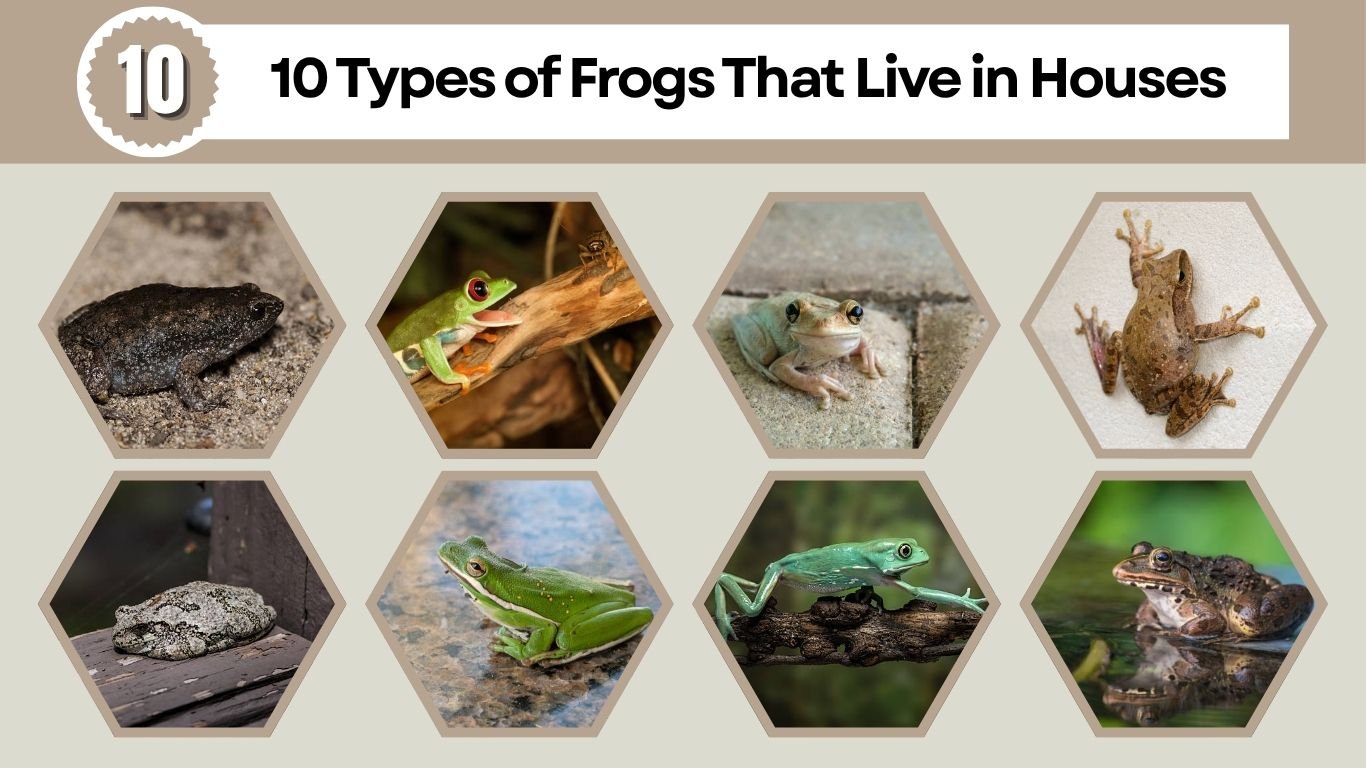
Frogs are commonly found living near or inside human homes, especially in warm and humid regions. These small amphibians are harmless and actually beneficial because they help control insects like mosquitoes, flies, and ants. From tiny tree frogs that climb walls to larger toads hiding in gardens, many species adapt easily to human environments. Below is a list of 10 types of frogs that are often seen around houses.
1. Common House Frog

The Common House Frog is one of the most frequently seen frogs living near human homes. It is small, adaptable, and often found in gardens, bathrooms, drains, and damp corners. These frogs are harmless to humans and actually help control insects like mosquitoes and flies, making them useful around the house.
Identification
- Small-sized body, usually 2–5 cm long
- Light brown, grey, or slightly greenish color
- Smooth or slightly rough skin
- Long hind legs for jumping
- Big eyes with a horizontal pupil
Habitat
The Common House Frog prefers moist environments and is often found in areas with water sources. Around homes, it lives in bathrooms, kitchens, drains, potted plants, and shaded garden areas. During the rainy season, they become more active and may enter houses more frequently.
Behavior
These frogs are mostly active at night (nocturnal). They come out to hunt insects when it is dark and quiet. They move quickly and can jump short distances. When disturbed, they may hide in small cracks or under objects. Their soft croaking sound is sometimes heard during the evening.
Diet
The Common House Frog feeds mainly on small insects. Its diet includes mosquitoes, flies, ants, and tiny bugs found around lights and damp areas. This makes them beneficial for reducing pests inside and around homes.
2. Asian Common Toad

The Asian Common Toad is a widely found amphibian that often lives close to human settlements. It is larger than many house frogs and has a rough, warty appearance. Despite its looks, it is harmless and plays an important role in controlling insects. It can survive in a variety of environments, including gardens, yards, and even inside homes during wet weather.
Identification
- Medium to large size compared to frogs
- Dry, rough, and warty skin
- Brown, dark brown, or olive color
- Short legs compared to frogs
- Prominent glands behind the eyes
Habitat
The Asian Common Toad prefers damp but not fully aquatic environments. Around homes, it is often found in gardens, near drains, under pots, and in shaded corners. It can tolerate drier conditions than many frogs, which helps it live easily near human houses.
Behavior
This toad is mostly active at night. It moves slowly compared to frogs and often walks instead of jumping. When threatened, it may stay still or release a mild toxin from its skin as a defense. It is not aggressive and usually avoids humans.
Diet
The Asian Common Toad feeds on a variety of insects and small invertebrates. It eats beetles, ants, termites, and other pests found around homes. This makes it very helpful for natural pest control in gardens and living areas.
3. Indian Bullfrog

The Indian Bullfrog is a large and noticeable frog that is sometimes found near houses, especially in areas close to water. It is famous for its bright color during the breeding season. Although it prefers ponds and fields, it may enter gardens or homes during heavy rains. It is harmless and helps control insects.
Identification
- Large body size
- Yellow or greenish color (bright yellow in breeding season)
- Smooth, moist skin
- Strong hind legs
- Males have blue vocal sacs
Habitat
The Indian Bullfrog mainly lives near ponds, lakes, and flooded fields. However, during the rainy season, it can be seen in gardens, yards, and sometimes near houses. It prefers places with water but can travel short distances on land.
Behavior
This frog is active mostly during the night. It is a strong jumper and swimmer. During the breeding season, males become bright yellow and make loud calls to attract females. It may hide during the day under plants or in moist soil.
Diet
The Indian Bullfrog eats insects, worms, and even small animals. It feeds on mosquitoes, flies, and beetles, helping reduce pests around homes and nearby areas.
4. Skittering Frog

The Skittering Frog is commonly seen near water and sometimes around homes, especially where there are wet surfaces. It gets its name from the way it quickly moves or “skitters” across water when disturbed. It is active, fast, and harmless to humans.
Identification
- Medium-sized frog
- Brown or grey color with dark spots
- Smooth skin
- Long legs for jumping and swimming
- Slender body shape
Habitat
This frog prefers areas near water such as ponds, drains, and wet gardens. Around houses, it can be found in bathrooms, near water tanks, or damp outdoor spaces. It thrives in moist environments.
Behavior
The Skittering Frog is very active and alert. It quickly jumps into water when threatened. It is mostly nocturnal and comes out at night to hunt. During the day, it hides in cool, damp places.
Diet
Its diet mainly includes insects like mosquitoes, flies, and small bugs. By eating these pests, the Skittering Frog plays a helpful role in keeping the surroundings clean and insect-free.
5. Tree Frog

Tree Frogs are small, agile frogs that are often found around homes, especially in areas with plants and moisture. They are known for their ability to climb walls, windows, and trees using their sticky toe pads. These frogs are harmless and are commonly seen near lights where insects gather.
Identification
- Small and slender body
- Green, brown, or grey color
- Smooth skin
- Sticky pads on toes for climbing
- Large eyes
Habitat
Tree Frogs prefer places with vegetation and moisture. Around homes, they are often found on walls, windows, potted plants, and gardens. They like areas where insects are abundant, especially near lights at night.
Behavior
These frogs are excellent climbers and are mostly active at night. They can stick to vertical surfaces and move quickly. During the day, they hide under leaves or in cool, shaded areas. Their soft croaking sounds are often heard in the evening.
Diet
Tree Frogs feed mainly on insects such as mosquitoes, flies, and moths. They are very useful for controlling insects around homes.
6. Cuban Tree Frog

The Cuban Tree Frog is a larger type of tree frog that can sometimes be found in and around houses. It is known for its strong climbing ability and adaptability. Although not native everywhere, it often lives near human settlements where food and shelter are available.
Identification
- Medium to large size for a tree frog
- Light brown, grey, or green color
- Warty or slightly rough skin
- Large toe pads for climbing
- Bulging eyes
Habitat
The Cuban Tree Frog prefers warm and humid environments. Around homes, it can be found on walls, ceilings, bathrooms, and gardens. It often hides in pipes, drains, and other damp places during the day.
Behavior
This frog is nocturnal and very active at night. It climbs walls and ceilings with ease and may enter houses in search of food. It is quiet most of the time but can make loud calls during the breeding season.
Diet
The Cuban Tree Frog eats a wide range of insects and even small animals. Its diet includes mosquitoes, flies, spiders, and other small creatures, helping reduce pests around homes.
7. American Green Tree Frog

The American Green Tree Frog is a bright and attractive frog often found near homes in warm, humid areas. It is known for its vivid green color and gentle nature. These frogs are commonly seen on windows, walls, and plants, especially at night when insects are active.
Identification
- Bright green body color
- Smooth skin
- White or yellow stripe along the side
- Sticky toe pads
- Medium-sized body
Habitat
This frog prefers moist environments with plenty of vegetation. Around homes, it is often found in gardens, near water sources, and on walls or windows. It is especially attracted to areas with lights because of the insects.
Behavior
The American Green Tree Frog is nocturnal and spends most of the day resting in shaded areas. At night, it becomes active and climbs surfaces easily. It has a soft, repeated call that can often be heard during warm evenings.
Diet
It mainly eats insects such as flies, mosquitoes, and moths. By feeding on these pests, it helps keep the environment around homes cleaner and more comfortable.
8. Grey Tree Frog

The Grey Tree Frog is a well-camouflaged frog that can change its color to blend with its surroundings. It is commonly found near houses, especially in areas with trees and gardens. Despite its name, it can appear grey, green, or brown.
Identification
- Grey, green, or brown color (can change color)
- Rough or slightly bumpy skin
- Sticky toe pads
- Bright orange or yellow on inner legs
- Medium size
Habitat
Grey Tree Frogs prefer wooded and moist areas. Around homes, they are found on tree bark, walls, fences, and garden plants. They often stay hidden during the day and come out at night.
Behavior
These frogs are excellent climbers and mostly active at night. They use their camouflage to avoid predators. When threatened, they may stay still to blend in or quickly jump away. Their musical trill-like call is common in the evening.
Diet
The Grey Tree Frog feeds on insects like beetles, flies, moths, and spiders. It plays an important role in controlling insect populations around homes.
9. Cricket Frog

The Cricket Frog is a small, active frog commonly found near homes, especially in damp areas. It gets its name from its call, which sounds like the chirping of crickets. These frogs are quick movers and can jump rapidly to escape danger.
Identification
- Very small size
- Brown, grey, or tan color
- Rough or slightly warty skin
- Long legs for quick jumping
- Dark markings or patterns on the body
Habitat
Cricket Frogs prefer areas near water such as ponds, drains, and wet gardens. Around homes, they can be found in damp corners, near water containers, and in grassy areas. They thrive in moist environments.
Behavior
These frogs are highly active and mostly nocturnal. They move quickly and can make fast, short jumps. When threatened, they escape rapidly into water or hidden spots. Their chirping call is often heard in the evening.
Diet
Cricket Frogs feed on tiny insects such as ants, mosquitoes, and small flies. They help control insect populations around homes and gardens.
10. Narrow-mouthed Frog

The Narrow-mouthed Frog is a small and unique frog often found around homes, especially during the rainy season. It has a pointed snout and a rounded body, giving it a distinct appearance. It is harmless and spends much of its time hidden.
Identification
- Small, round body
- Narrow, pointed mouth
- Smooth, shiny skin
- Dark brown or black color
- Short legs
Habitat
This frog prefers moist and sheltered environments. Around homes, it is often found under pots, logs, leaf litter, and in damp soil. It appears more frequently during rainy weather.
Behavior
The Narrow-mouthed Frog is mostly nocturnal and secretive. It spends the day hidden and comes out at night to feed. It moves slowly compared to other frogs and prefers to stay concealed.
Diet
It mainly eats ants and termites. This specialized diet helps control small insects that can be pests around homes.
FAQs
What attracts frogs to houses?
Frogs are attracted to houses mainly because of food and moisture. Areas with water sources, damp corners, and lights that attract insects make homes ideal for frogs. They come to feed on mosquitoes and other small insects, especially during the night or rainy season.
Are house frogs harmful to humans?
No, most frogs found in houses are completely harmless to humans. They do not bite or attack people. In fact, they are beneficial because they eat insects that can spread diseases, making them helpful for maintaining a cleaner and healthier environment.
Why do frogs come inside during rain?
During heavy rain, frogs often enter houses to avoid flooding and strong water flow outside. Rain also increases insect activity, which attracts frogs closer to homes. Damp indoor areas provide them with temporary shelter and easy access to food.
How can I prevent frogs from entering my house?
To keep frogs away, reduce moisture around your home by fixing leaks and improving drainage. Keep doors and windows closed or use screens. Also, reduce insects by turning off unnecessary lights at night and keeping surroundings clean and dry.
Do frogs live permanently inside houses?
Most frogs do not live permanently inside houses. They usually enter temporarily in search of food or shelter, especially during rainy weather. Once conditions change or food becomes scarce, they typically return to outdoor environments like gardens or water sources.
