
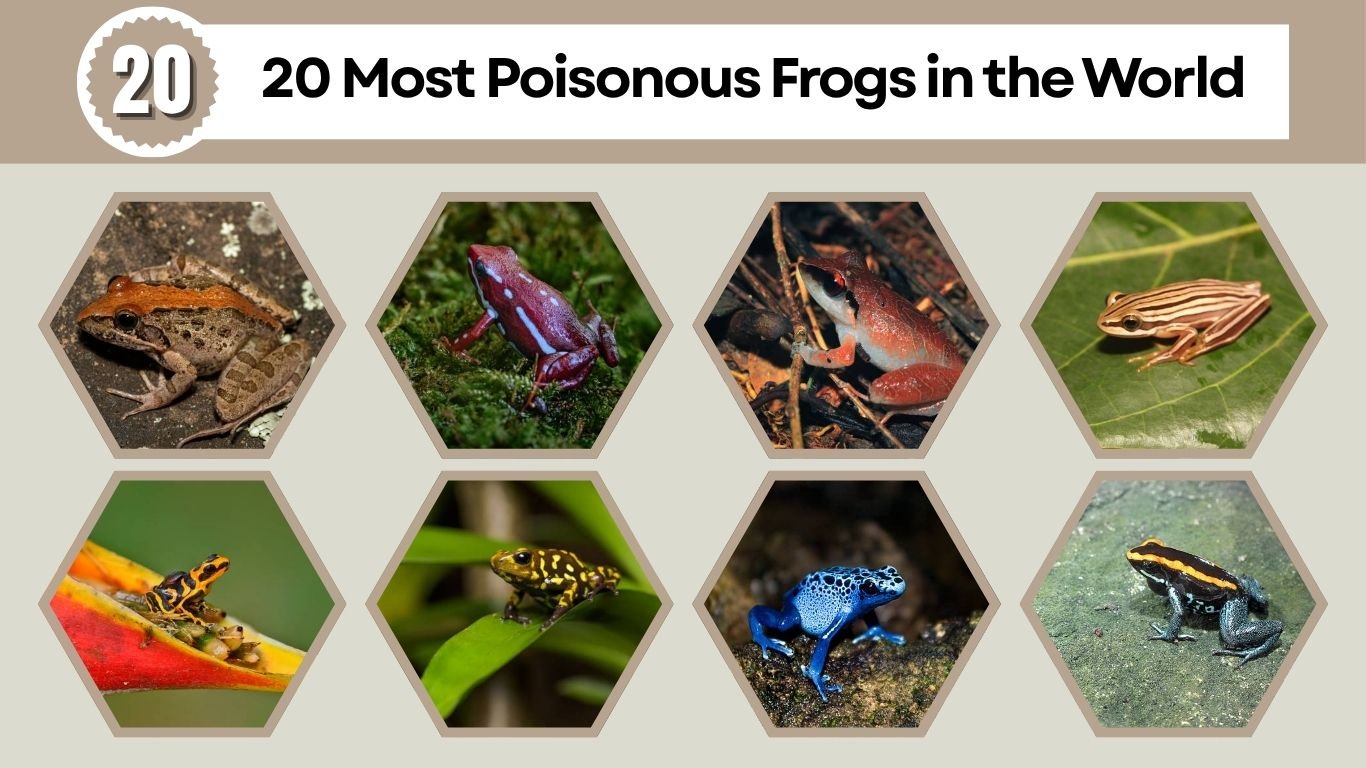
Poisonous frogs are among the most fascinating yet dangerous creatures on Earth. Known for their bright colors and tiny size, these amphibians use powerful toxins as a defense against predators. Found mainly in Central and South America, many of these frogs carry enough poison to cause serious harm or even death.
This list highlights 20 of the most poisonous frogs, exploring their unique features, habitats, toxicity levels, and conservation risks.
1. Golden Poison Frog

The Golden Poison Frog is considered the most toxic frog in the world. Native to Colombia, this small but deadly amphibian carries enough poison to kill multiple humans, making it one of the most dangerous animals on Earth.
Identification
- Bright golden-yellow coloration (sometimes orange or pale green)
- Smooth, shiny skin
- Small size (about 4–5 cm long)
- Slender body with long limbs
- No visible patterns, usually solid-colored
Habitat
The Golden Poison Frog lives in the tropical rainforests of western Colombia. It prefers humid, lowland forest areas with plenty of leaf litter. These frogs are often found near small streams or moist ground where they can stay hydrated.
Dangerous
This frog secretes a powerful toxin called batrachotoxin through its skin. Even touching it can be extremely harmful. The toxin affects the nervous system, causing paralysis or death. Indigenous people have historically used its poison on blow darts for hunting.
Risk
The species is currently endangered due to habitat loss and illegal collection. Deforestation and human activities are reducing its natural environment, putting its survival at serious risk despite its deadly defense.
2. Blue Poison Dart Frog

The Blue Poison Dart Frog is a striking amphibian known for its vivid blue color and black spots. Native to South America, it is less toxic than the Golden Poison Frog but still highly dangerous to predators.
Identification
- Bright blue body with black spots
- Smooth, slightly shiny skin
- Medium size (about 3–5 cm long)
- Rounded head with sturdy limbs
- Each frog has a unique spot pattern
Habitat
This species is mainly found in the tropical rainforests of Suriname and northern Brazil. It prefers humid environments with dense vegetation and is often located near streams or moist forest floors. Despite being a rainforest species, it can tolerate slightly less humid microhabitats compared to other poison frogs.
Dangerous
The Blue Poison Dart Frog secretes toxic alkaloids through its skin, which can deter or harm predators. While its poison is not as deadly as that of the Golden Poison Frog, it is still potent enough to cause serious effects such as muscle paralysis or irritation if handled improperly.
Risk
Although not critically endangered, this species faces threats from habitat destruction and illegal pet trade. Deforestation and environmental changes can reduce its population over time, making conservation efforts important for its long-term survival.
3. Strawberry Poison Dart Frog

The Strawberry Poison Dart Frog is a small but colorful species famous for its bright red body and contrasting blue or black limbs. It is widely recognized for its variation in colors across different regions.
Identification
- Bright red body with blue, black, or spotted legs
- Smooth and slightly glossy skin
- Small size (around 2–3 cm long)
- Slender body with short limbs
- Color patterns vary depending on location
Habitat
This frog is commonly found in Central America, especially in Costa Rica and Panama. It lives in humid tropical forests, often near the forest floor, among leaf litter, or on low vegetation. It thrives in warm, moist environments where food sources like ants and small insects are abundant.
Dangerous
The Strawberry Poison Dart Frog produces mild to moderate toxins compared to other poison frogs. Its bright coloration serves as a warning to predators. The toxins can cause irritation or discomfort, but they are generally not lethal to humans unless consumed in large amounts.
Risk
This species is currently not highly endangered, but local populations can be affected by habitat loss, climate change, and collection for the pet trade. Conservation of rainforest ecosystems is essential to ensure its continued survival.
4. Yellow-Banded Poison Dart Frog

The Yellow-Banded Poison Dart Frog is a bold and brightly colored species known for its black body marked with vivid yellow or orange bands. It is one of the larger poison dart frogs and is highly toxic in the wild.
Identification
- Black body with bright yellow or orange bands
- Smooth, slightly glossy skin
- Larger size (about 4–6 cm long)
- Thick body with strong limbs
- Band patterns vary between individuals
Habitat
This species is native to the rainforests of northern South America, including Venezuela, Brazil, and Colombia. It prefers humid, tropical environments and is commonly found on the forest floor or among leaf litter. It thrives in areas with consistent moisture and dense vegetation.
Dangerous
The Yellow-Banded Poison Dart Frog produces powerful toxins in its skin derived from its diet. These toxins can cause severe harm to predators and may lead to paralysis. While not usually deadly to humans through casual contact, handling should be avoided.
Risk
Although still relatively common, this species faces threats from habitat destruction and deforestation. The pet trade also impacts wild populations. Protecting rainforest habitats is essential for maintaining stable populations.
5. Green and Black Poison Dart Frog

The Green and Black Poison Dart Frog is one of the most recognizable poison frogs, known for its striking green patterns on a black background. It is popular in the pet trade but still carries toxic defenses in the wild.
Identification
- Bright green patterns on a black body
- Smooth and slightly shiny skin
- Medium size (about 3–5 cm long)
- Slender body with long limbs
- Pattern shapes vary widely among individuals
Habitat
This frog is found in Central America, particularly in countries like Costa Rica, Nicaragua, and Panama. It inhabits tropical rainforests and is often seen climbing on plants or hiding in leaf litter. It prefers moist environments with access to small water sources.
Dangerous
The Green and Black Poison Dart Frog secretes toxins that can deter predators. While its toxicity is lower than some other dart frogs, it can still cause irritation or mild poisoning. Its bright coloration serves as a warning signal in the wild.
Risk
This species is not currently at high risk of extinction, but habitat loss and environmental changes remain concerns. Additionally, collection for the pet trade can affect local populations if not properly managed.
6. Dyeing Poison Dart Frog

The Dyeing Poison Dart Frog is a colorful and moderately toxic species known for its artistic patterns and bright coloration. It gets its name from indigenous use in body decoration.
Identification
- Blue or black body with yellow stripes or spots
- Rough, slightly textured skin
- Medium size (about 4–5 cm long)
- Stout body with relatively short limbs
- Highly variable color patterns
Habitat
This species is found in the rainforests of northern South America, including Brazil, French Guiana, and Suriname. It prefers humid, tropical environments and is commonly seen on the forest floor or climbing low vegetation. It thrives in areas with high rainfall and dense plant cover.
Dangerous
The Dyeing Poison Dart Frog produces skin toxins that can deter predators. While not as deadly as some other poison frogs, its toxins can still cause irritation or harmful effects if ingested. Its bright colors act as a warning signal in nature.
Risk
This species is generally stable in the wild but faces threats from habitat destruction and deforestation. The exotic pet trade can also impact certain populations, making conservation awareness important.
7. Phantasmal Poison Frog

The Phantasmal Poison Frog is a small but highly toxic species known for its pale or ghost-like appearance. Despite its size, it carries powerful toxins that can be dangerous.
Identification
- Pale yellow, cream, or light green coloration
- Smooth, glossy skin
- Small size (around 2–3 cm long)
- Slender body with delicate limbs
- Minimal or no visible patterns
Habitat
This frog is native to Ecuador, where it lives in tropical and subtropical forests. It prefers humid environments and is often found near streams or moist forest floors. It depends on stable, damp conditions for survival.
Dangerous
The Phantasmal Poison Frog produces potent toxins that affect the nervous system. Even though it is tiny, its chemical defenses are strong enough to deter predators effectively. Direct contact should be avoided due to potential harmful effects.
Risk
This species is considered at risk due to habitat loss and environmental changes. Deforestation and human activities threaten its natural habitat, making conservation efforts essential for its long-term survival.
8. Kokoe Poison Frog

The Kokoe Poison Frog is one of the most toxic frogs in the world and is closely related to the Golden Poison Frog. It is known for its bright coloration and extremely potent toxins.
Identification
- Bright yellow, orange, or green coloration
- Smooth and shiny skin
- Medium size (about 4–5 cm long)
- Slender body with long limbs
- Usually solid-colored without patterns
Habitat
This species is found in the Pacific coastal rainforests of Colombia. It prefers very humid, tropical environments with dense vegetation. The Kokoe Poison Frog is typically seen on the forest floor or among leaf litter in lowland rainforest areas.
Dangerous
The Kokoe Poison Frog produces batrachotoxin, one of the most powerful natural toxins known. This toxin interferes with nerve function and can cause paralysis or death. Even minimal contact can be dangerous, making it one of the most feared amphibians.
Risk
Although still present in the wild, this species faces threats from habitat destruction and deforestation. Human activities and environmental changes continue to reduce its natural habitat, posing risks to its population.
9. Golfodulcean Poison Frog

The Golfodulcean Poison Frog is a lesser-known but highly toxic species found in Central America. It is recognized for its dark coloration and subtle markings.
Identification
- Dark brown or black body with lighter markings
- Smooth skin with a slightly glossy look
- Small to medium size (around 3–4 cm long)
- Slender build with long limbs
- Pattern may include faint stripes or spots
Habitat
This frog is native to Costa Rica, particularly in the Golfo Dulce region. It inhabits tropical rainforests and prefers moist, shaded environments. It is often found near streams, leaf litter, or low vegetation in dense forest areas.
Dangerous
The Golfodulcean Poison Frog secretes toxic compounds through its skin that can deter predators. While not as lethal as some South American species, its toxins can still cause irritation and harmful effects if handled or ingested.
Risk
This species faces potential threats from habitat loss and environmental changes. Although not widely studied, deforestation and human encroachment could impact its population over time, making conservation efforts important.
10. Splash-Backed Poison Frog

The Splash-Backed Poison Frog is a visually striking species known for its contrasting colors and spotted patterns. It is a small but toxic amphibian commonly found in Central American forests.
Identification
- Dark body with bright spots or “splash-like” markings
- Smooth, slightly shiny skin
- Small size (around 2–3 cm long)
- Slender body with long limbs
- Distinctive spotted pattern across the back
Habitat
This frog is found in Central America, especially in Panama and nearby regions. It inhabits humid tropical forests and is often seen on leaves, tree trunks, or near water sources. It prefers shaded areas with consistent moisture.
Dangerous
The Splash-Backed Poison Frog produces skin toxins that act as a defense against predators. While not among the most lethal species, its toxins can still cause irritation or mild poisoning. Its bright markings serve as a warning signal in the wild.
Risk
This species is not currently considered highly endangered, but habitat destruction and climate changes pose ongoing threats. Preservation of tropical forest ecosystems is essential for maintaining its population.
11. Variable Poison Dart Frog

The Variable Poison Dart Frog is known for its incredible diversity in color and pattern. As its name suggests, individuals can look very different depending on their location.
Identification
- Highly variable colors (yellow, orange, green, black combinations)
- Smooth and glossy skin
- Small size (about 2–3 cm long)
- Slender body with delicate limbs
- Patterns range from stripes to spots or solid colors
Habitat
This species is found in the Amazon Basin across countries like Peru, Ecuador, and Brazil. It lives in humid tropical rainforests and is often found among leaf litter or low vegetation. It depends on moist environments for survival.
Dangerous
The Variable Poison Dart Frog secretes toxic alkaloids through its skin. These toxins can deter predators and may cause harmful effects if ingested or handled. Its bright coloration warns potential threats of its toxicity.
Risk
Although widespread, this species faces threats from deforestation and environmental changes. Habitat loss remains the biggest concern, along with the impact of the illegal pet trade in certain regions.
12. Lehmann’s Poison Frog

Lehmann’s Poison Frog is a rare and highly toxic species known for its vibrant coloration and limited distribution. It is considered one of the most visually striking poison frogs in the world.
Identification
- Bright red, orange, or yellow body with black markings
- Smooth and glossy skin
- Small size (around 3–4 cm long)
- Slender body with long limbs
- Distinct bold color patterns
Habitat
This species is native to a small region in Colombia’s tropical rainforests. It prefers humid, lowland forest environments with dense vegetation. It is usually found on the forest floor or climbing low plants in moist areas.
Dangerous
Lehmann’s Poison Frog produces potent skin toxins that can deter predators effectively. While not as deadly as the Golden Poison Frog, its toxins are still strong enough to cause serious harm. Direct contact should be avoided.
Risk
This species is critically endangered due to habitat loss and illegal collection for the pet trade. Its very limited range makes it especially vulnerable, and conservation efforts are crucial for its survival.
13. Harlequin Poison Frog

The Harlequin Poison Frog is a colorful and moderately toxic species known for its unique patterns and contrasting colors. It is smaller than many other poison frogs but still well-defended.
Identification
- Bright combination of yellow, orange, black, or green patterns
- Smooth, slightly shiny skin
- Small size (around 2–3 cm long)
- Slender body with delicate limbs
- Irregular and artistic pattern designs
Habitat
This frog is found in Central and South America, particularly in tropical rainforests. It prefers humid environments and is often seen on the forest floor or low vegetation. It thrives in areas with abundant moisture and shelter.
Dangerous
The Harlequin Poison Frog secretes toxins that can deter predators. Its toxicity is moderate compared to other dart frogs, but still effective enough to provide protection. Bright colors act as a warning signal.
Risk
This species is not currently highly endangered, but habitat destruction and environmental changes pose risks. Conservation of rainforest ecosystems remains important for maintaining healthy populations.
14. Granular Poison Frog

The Granular Poison Frog is a small but toxic species known for its rough-textured skin and subtle coloration. Despite its less flashy appearance, it still possesses chemical defenses to protect itself.
Identification
- Brown, black, or dark-colored body with a granular (bumpy) texture
- Rough skin compared to other smooth poison frogs
- Small size (around 2–3 cm long)
- Compact body with short limbs
- Less яркий coloration than many dart frogs
Habitat
This species is found in Central and South America, particularly in tropical forests. It prefers humid environments and is usually located on the forest floor among leaf litter. It thrives in shaded areas with consistent moisture.
Dangerous
The Granular Poison Frog produces mild to moderate toxins through its skin. While not extremely dangerous to humans, it can still deter predators effectively. Contact may cause irritation or mild toxic effects.
Risk
This species is generally stable but faces threats from habitat destruction and environmental changes. Deforestation and human activity may reduce its population over time, making habitat protection important.
15. Andinobates Bombetes

Andinobates Bombetes is a brightly colored and toxic frog species native to Colombia. It is known for its striking contrast of colors and small size.
Identification
- Bright orange or red body with dark markings
- Smooth and slightly glossy skin
- Very small size (around 2 cm long)
- Slender body with delicate limbs
- Bold and contrasting color patterns
Habitat
This frog is found in the Andean regions of Colombia, particularly in tropical forests. It prefers humid environments and is often seen among leaf litter or low vegetation. It depends on moist conditions for survival.
Dangerous
Andinobates Bombetes secretes toxic compounds through its skin that help deter predators. Although small, its toxins are effective in providing defense. Direct handling should be avoided.
Risk
This species is considered at risk due to habitat loss and limited distribution. Deforestation and environmental changes threaten its survival, making conservation efforts essential.
16. Ranitomeya Reticulata

Ranitomeya Reticulata is a small but vividly colored poison frog known for its intricate patterns and bright warning colors. Despite its tiny size, it carries toxic defenses that help protect it from predators.
Identification
- Bright orange, yellow, and black reticulated (net-like) pattern
- Smooth, glossy skin
- Very small size (around 1.5–2 cm long)
- Slender body with delicate limbs
- Complex, web-like pattern across the body
Habitat
This species is found in the Amazon rainforest, particularly in Peru and surrounding regions. It prefers humid environments and is often seen climbing on plants or staying near water-filled tree holes. It thrives in dense vegetation with high moisture levels.
Dangerous
Ranitomeya Reticulata produces toxic alkaloids in its skin. While its toxicity is not extremely high compared to larger dart frogs, it is still effective in deterring predators. Its bright coloration acts as a warning signal in nature.
Risk
This species faces threats from habitat destruction and environmental changes. Although not critically endangered, deforestation and climate shifts may impact its population over time.
17. Ameerega Trivittata

Ameerega Trivittata, also known as the Three-Striped Poison Frog, is a moderately toxic species recognized for its distinctive striped pattern and active behavior.
Identification
- Dark body with three light-colored stripes along the back
- Smooth skin with a slight shine
- Medium size (about 3–5 cm long)
- Slender body with long limbs
- Clear, linear stripe patterns
Habitat
This frog is widely distributed in the Amazon Basin, including Brazil, Peru, and Bolivia. It inhabits tropical rainforests and is commonly found near streams or on the forest floor. It prefers humid, shaded environments.
Dangerous
Ameerega Trivittata secretes skin toxins that can deter predators. Its toxicity is moderate compared to other poison frogs but still effective. Direct contact may cause irritation or mild toxic effects.
Risk
This species is relatively widespread, but habitat loss remains a concern. Deforestation and environmental disturbances can impact local populations, making conservation important for long-term stability.
18. Ameerega Bilinguis

Ameerega Bilinguis is a brightly colored poison frog known for its contrasting patterns and moderate toxicity. It is commonly found in parts of the Amazon and is recognized for its alert behavior.
Identification
- Dark body with bright stripes or spots (often yellow or blue)
- Smooth and slightly glossy skin
- Small to medium size (around 2–3 cm long)
- Slender body with long limbs
- Distinct color contrast along the sides
Habitat
This species is found in the Amazon regions of Ecuador, Peru, and Colombia. It inhabits tropical rainforests and is usually seen on the forest floor or near small streams. It prefers humid, shaded environments with plenty of leaf litter.
Dangerous
Ameerega Bilinguis produces skin toxins that help defend against predators. While not extremely lethal, its toxins can still cause irritation or mild poisoning. Its bright coloration serves as a warning signal in the wild.
Risk
This species is not currently highly endangered, but habitat destruction and environmental changes pose ongoing threats. Protecting rainforest ecosystems is important for maintaining its population.
19. Epipedobates Anthonyi

Epipedobates Anthonyi, also known as Anthony’s Poison Frog, is a small but toxic species famous for its role in scientific research, particularly in painkiller development.
Identification
- Brown or reddish body with light-colored stripes
- Smooth skin with a slight shine
- Small size (around 2–3 cm long)
- Slender body with relatively short limbs
- Clear stripe running along the sides
Habitat
This frog is native to Ecuador and Peru, where it lives in tropical dry and moist forests. It can be found near streams, forest edges, and leaf litter. It adapts to both humid and slightly drier environments compared to other poison frogs.
Dangerous
Epipedobates Anthonyi produces a toxin known as epibatidine, which affects the nervous system. While dangerous in the wild, this compound has been studied for medical use. Direct contact should still be avoided due to potential harmful effects.
Risk
This species faces threats from habitat loss and environmental changes. Although not critically endangered, ongoing deforestation and human activity may impact its natural populations over time.
20. Silverstoneia Nubicola

Silverstoneia Nubicola is a small poison frog species known for its subtle coloration and relatively lower toxicity compared to other dart frogs. Despite its less vibrant appearance, it still uses chemical defenses for protection.
Identification
- Brown or dark-colored body with lighter markings
- Smooth skin with a slightly dull appearance
- Very small size (around 1.5–2 cm long)
- Slender body with delicate limbs
- Often has faint stripes or subtle patterns
Habitat
This species is found in parts of Central and South America, especially in Colombia and Panama. It inhabits humid tropical forests and is commonly seen on the forest floor among leaf litter. It prefers shaded, moist environments for survival.
Dangerous
Silverstoneia Nubicola produces mild toxins compared to more dangerous poison frogs. While not highly lethal, these toxins still help deter predators. It is generally not dangerous to humans unless handled improperly.
Risk
This species is not currently considered highly endangered, but habitat destruction and environmental changes remain concerns. Protecting forest ecosystems is important to ensure its continued survival.
FAQs
What makes poison frogs toxic?
Poison frogs become toxic mainly through their diet, which includes ants, mites, and other small insects containing alkaloids. These toxins accumulate in their bodies and are secreted through their skin, providing a powerful defense mechanism against predators in the wild.
Are all colorful frogs poisonous?
Not all colorful frogs are poisonous, but many use bright colors as a warning signal (aposematism). Some non-toxic species mimic poisonous frogs to avoid predators. Therefore, bright coloration often indicates danger, but it is not always a guarantee of toxicity.
Can poison frogs harm humans by touch?
Some highly toxic species, like the Golden Poison Frog, can be dangerous even with simple contact. However, most poison frogs pose little threat unless handled excessively or ingested. It is always safest to avoid touching any wild frog.
Why are poison frogs not toxic in captivity?
In captivity, poison frogs lose their toxicity because they are not exposed to their natural diet of toxin-producing insects. Without these dietary sources, they cannot produce or store the same harmful chemicals in their skin.
Are poison frogs endangered?
Many poison frog species are threatened or endangered due to habitat loss, climate change, and illegal pet trade. Since they rely heavily on specific rainforest environments, deforestation and environmental disruption significantly impact their survival.
