
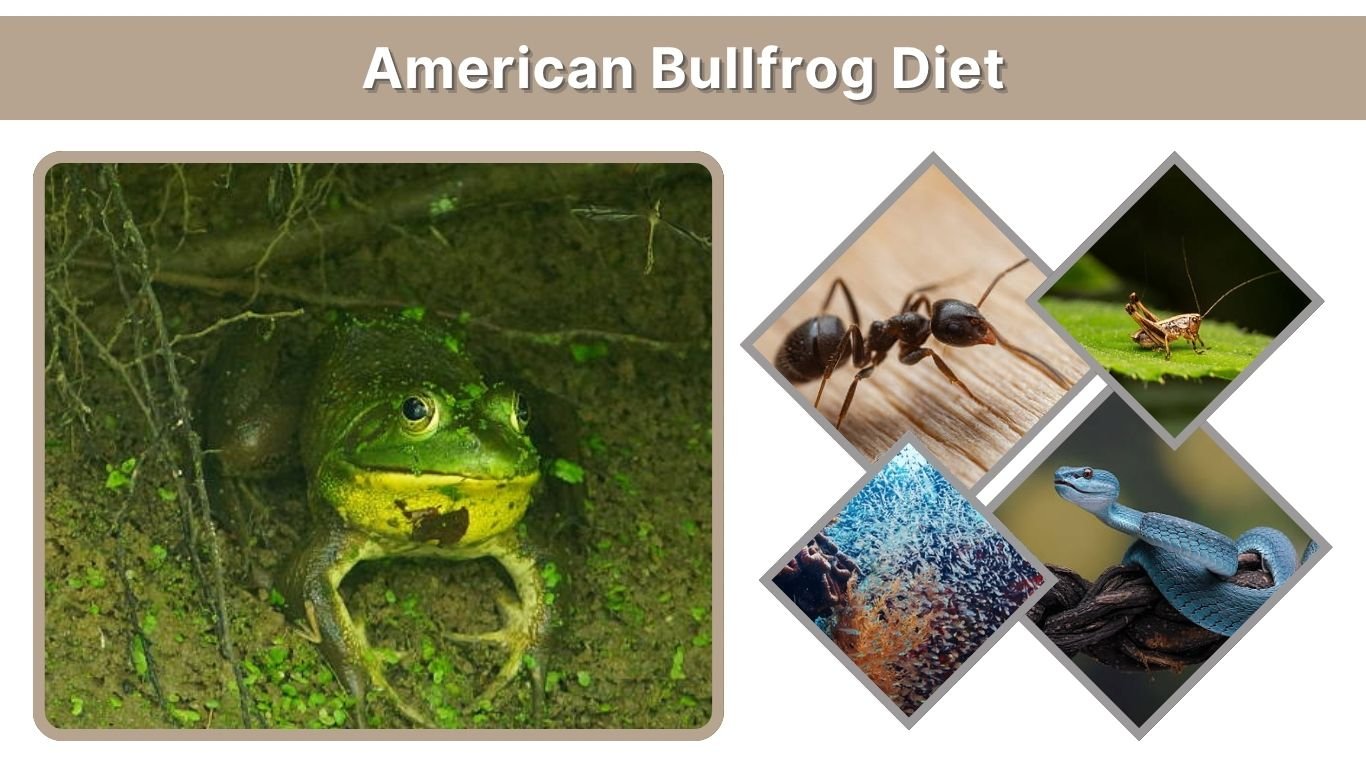
American bullfrogs are opportunistic carnivores, meaning they eat almost anything they can catch and swallow. Their diet is incredibly diverse and depends largely on what is available in their environment. In simple terms, if it moves and fits in their mouth, it is likely to become prey.
These frogs are known for their aggressive feeding behavior and are considered top predators in many freshwater ecosystems. From tiny insects to small mammals, the American bullfrog has one of the most varied diets among amphibians.
American Bullfrog Diet Overview
The American bullfrog (Lithobates catesbeianus) is not a picky eater. Instead, it follows a generalist diet, which allows it to survive in a wide range of habitats. This adaptability is one of the reasons why the species has spread so successfully across different parts of the world.
Unlike animals that specialize in one type of food, bullfrogs take advantage of whatever prey is available. This includes both aquatic and terrestrial animals. Their feeding behavior is often described as “eat first, think later,” because they will attempt to consume almost anything that moves nearby.
Their role in the ecosystem is significant. As predators, they help control populations of insects and small animals. However, in non-native areas, this same trait can make them harmful to local wildlife.
What Animals Do American Bullfrogs Eat?

American bullfrogs have a wide-ranging diet that includes many different types of animals. Their strong jaws and large mouths allow them to capture and consume surprisingly large prey.
Insects and Small Invertebrates
Insects make up a large portion of a bullfrog’s diet, especially for younger individuals. Common prey includes beetles, flies, grasshoppers, and dragonflies. They also eat worms, spiders, and other small invertebrates found near water.
These smaller prey items are easier to catch and provide a steady source of energy. Bullfrogs often wait quietly near the water’s edge until an insect comes within reach.
Fish and Aquatic Animals
Bullfrogs are also skilled at catching aquatic prey. They frequently eat small fish, tadpoles, snails, and crustaceans such as crayfish (also known as crawdads).
Because they spend much of their time in or near water, they have many opportunities to hunt these animals. Their quick reflexes and stealth make them effective aquatic predators.
Amphibians (Including Cannibalism)
One of the more surprising aspects of their diet is their tendency to eat other amphibians. This includes frogs, salamanders, and even other bullfrogs.
Cannibalism is not uncommon, especially in crowded environments where competition for food is high. Bullfrogs have been known to eat smaller individuals of their own species, which can impact population dynamics.
Reptiles and Snakes
American bullfrogs are capable of eating small reptiles, including snakes and lizards. Although this may sound unusual, their large mouths and strong grip allow them to overpower these animals.
Encounters like these typically occur near water, where snakes may be hunting or resting. If the snake is small enough, the bullfrog will attempt to consume it whole.
Birds and Mammals
Perhaps the most shocking part of a bullfrog’s diet is its ability to eat birds and mammals. They have been observed catching small birds near the water’s edge and even consuming rodents such as mice.
These events are less common than eating insects or fish, but they highlight just how powerful and opportunistic these frogs can be. Their feeding strategy allows them to take advantage of any opportunity, no matter how unusual it may seem.
Do American Bullfrogs Eat Everything?
It often seems like American bullfrogs eat everything, and in many ways, that perception is accurate. However, there is one important limitation: prey size.
Bullfrogs can only eat animals that they can fit into their mouths. This “mouth-size rule” is the main factor that determines what they can and cannot eat. Within that limit, their diet is extremely flexible.
Their willingness to eat such a wide variety of animals is a key reason for their success as a species. It allows them to adapt to new environments and survive even when food sources change.
How American Bullfrogs Hunt Their Food
American bullfrogs are highly effective hunters, using a combination of patience, speed, and precision to catch their prey.
Sit-and-Wait Strategy
Bullfrogs typically use a sit-and-wait approach. They remain motionless, often partially submerged in water, until prey comes close. This strategy helps them conserve energy while increasing their chances of a successful attack.
Lightning-Fast Tongue Strike
When prey is within range, the bullfrog strikes with incredible speed. Its sticky tongue shoots out and pulls the prey back into its mouth in a fraction of a second.
Swallowing Prey Whole
Bullfrogs do not chew their food. Instead, they swallow prey whole using strong jaws and throat muscles. Larger prey may take longer to consume, but once captured, escape is rare.
What Do American Bullfrog Tadpoles Eat?
Unlike adult bullfrogs, tadpoles have a very different diet. During this early life stage, they are mostly herbivorous, meaning they feed on plant-based materials rather than animals.
Bullfrog tadpoles primarily eat algae, aquatic plants, and organic debris found in the water. They use specialized mouthparts to scrape food from surfaces such as rocks and vegetation. This diet helps them grow steadily over a long developmental period, which can last from 1 to 3 years.
As they mature, their diet gradually shifts. By the time they begin developing legs and transitioning into froglets, they start consuming small animal matter, preparing for their fully carnivorous adult life.
What Do Baby American Bullfrogs Eat?
Baby bullfrogs (also called froglets) represent a transition stage between tadpoles and adults. At this point, they begin to adopt a more carnivorous diet.
They typically eat small insects such as ants, flies, and tiny beetles. Because of their smaller size, they target prey that is easy to catch and swallow. As they grow, they gradually move on to larger prey like worms, small fish, and other amphibians.
This shift in diet is essential for their development, as protein-rich food supports rapid growth and increased strength.
What Do American Bullfrogs Eat in Captivity?

When kept as pets, American bullfrogs require a diet that closely mimics what they would eat in the wild. Providing a proper diet is important for their health and longevity.
Pet Diet Options
Common foods for captive bullfrogs include:
- Crickets
- Mealworms
- Earthworms
- Small fish
Some owners may also offer occasional treats like pinky mice, but this should be done sparingly.
Feeding Frequency
Young bullfrogs should be fed daily because they are still growing. Adult bullfrogs, on the other hand, can be fed every 2–3 days.
Safety Tips
It is important not to overfeed bullfrogs, as obesity can become a problem in captivity. Food should be appropriately sized, and live or fresh prey is generally better than processed alternatives.
What Eats American Bullfrogs? (Natural Predators)
Although American bullfrogs are powerful predators, they are also part of the food chain and have their own natural enemies.
Predators of Tadpoles
Bullfrog tadpoles are vulnerable to many predators, including fish, aquatic insects, and birds. Because they spend long periods in the water, they face constant threats during early development.
Predators of Adult Bullfrogs
Adult bullfrogs have fewer predators due to their size, but they are still hunted by:
- Snakes
- Herons and other large birds
- Raccoons and other mammals
- Humans
Despite their strength, they are not invincible, especially when caught off guard.
Can You Eat American Bullfrogs?
Yes, American bullfrogs are commonly eaten by humans. In fact, they are one of the main sources of frog legs, a popular dish in many parts of the world.
Frog legs are often described as having a mild flavor similar to chicken. They are especially popular in Southern United States cuisine, as well as in countries like France and China.
Due to their large size, American bullfrogs are particularly valued for food, which is one reason they have been introduced to different regions globally.
American Bullfrog Eating Behavior (Real Examples)
American bullfrogs are known for dramatic and sometimes surprising feeding behavior. Observations in the wild and online videos have shown them consuming a wide variety of animals.
They have been seen:
- Eating other frogs, including their own species
- Catching and swallowing small birds
- Consuming mice and even young rats
- Attacking and eating small snakes
These examples highlight their opportunistic nature. While such events may seem unusual, they are simply a result of the bullfrog taking advantage of available prey.
Why American Bullfrogs Are Such Aggressive Eaters
Several factors contribute to the bullfrog’s reputation as an aggressive eater.
First, their large mouth size allows them to target a wide range of prey. Second, they lack selective feeding habits, meaning they will attempt to eat almost anything that moves.
Finally, their feeding strategy is based on opportunity. In the wild, food availability can be unpredictable, so bullfrogs have evolved to take advantage of every chance to eat.
This combination of traits makes them highly effective predators and helps explain their success in both native and invasive environments.
FAQs
What do American bullfrogs eat the most?
American bullfrogs mostly eat insects, fish, and smaller amphibians. These are the most common and easily available food sources in their natural habitat, although they will also eat larger prey when the opportunity arises.
Do American bullfrogs eat other frogs?
Yes, they frequently eat other frogs, including their own species. This cannibalistic behavior is common and helps them compete for food and territory in crowded environments.
What eats American bullfrogs?
American bullfrogs are eaten by snakes, birds like herons, raccoons, and humans. Tadpoles are especially vulnerable and are often eaten by fish and aquatic insects.
What do bullfrog tadpoles eat?
Bullfrog tadpoles mainly eat algae, plant material, and organic debris. They are mostly herbivorous during this stage before becoming carnivorous as adults.
Can American bullfrogs eat mammals?
Yes, they can eat small mammals such as mice if the prey is small enough to fit in their mouth. This behavior shows how adaptable and opportunistic they are as predators.
