
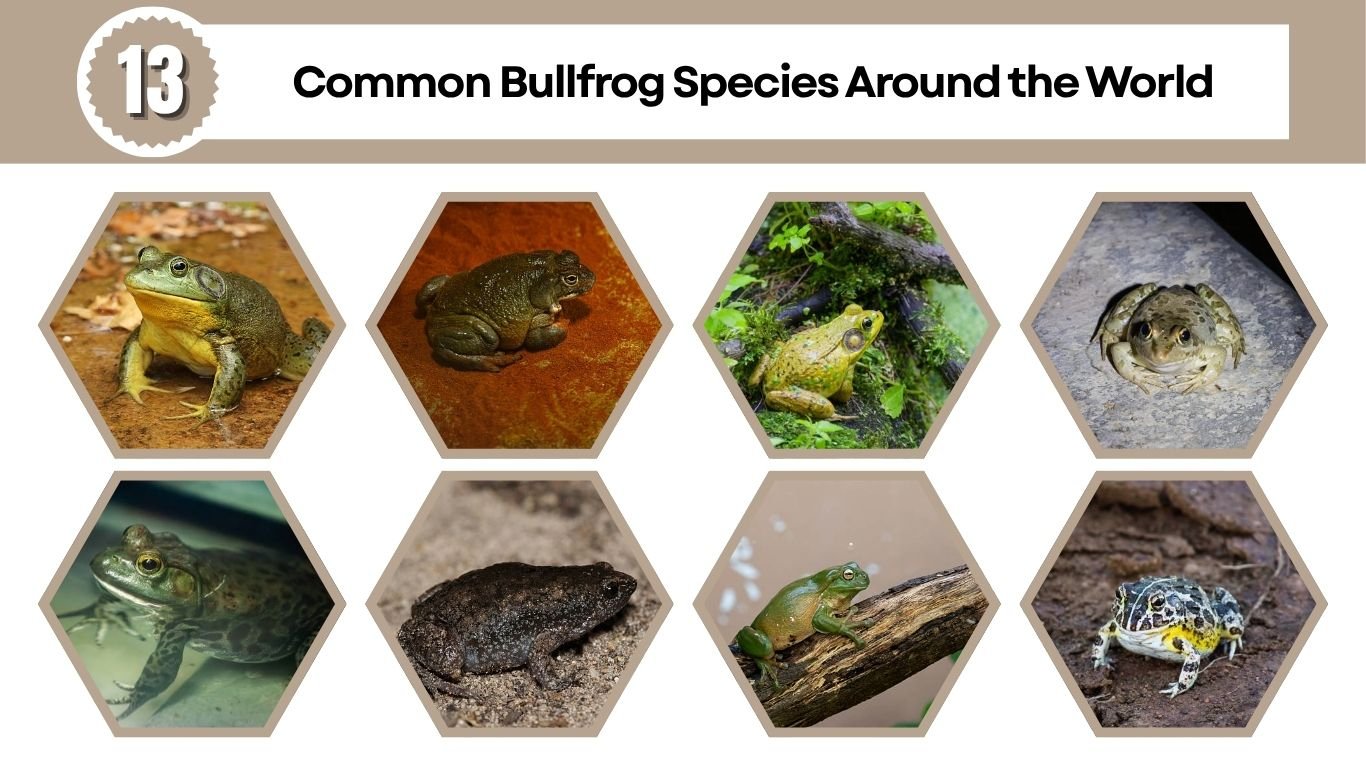
Bullfrogs are large, powerful frogs known for their deep calls and strong predatory behavior. The term “bullfrog” is not limited to a single species but is used for several large frogs found across different continents, including North America, Africa, Asia, and Australia.
These frogs share common traits such as robust bodies, loud vocalizations, and adaptability to various environments. Some species live in permanent water bodies, while others survive in dry regions by burrowing underground. Together, bullfrogs represent a diverse group of amphibians with unique behaviors and habitats across the world.
1. American Bullfrog

The American bullfrog is one of the largest and most well-known frog species in the world. Native to North America, it is famous for its deep, booming call that sounds like a cow’s moo. This species is highly adaptable and has spread to many other regions globally.
Identification
- Scientific name: Lithobates catesbeianus
- Size: Can grow up to 20 cm (8 inches) in length
- Color: Green to olive with a pale underside
- Distinct feature: Large eardrum (tympanum) behind the eyes
- Call: Deep, loud “jug-o-rum” sound
- Lifespan: Around 7–10 years in the wild
Habitat
The American bullfrog prefers freshwater environments such as ponds, lakes, marshes, and slow-moving rivers. It thrives in warm climates but can also survive colder regions by hibernating in mud during winter. Because of its adaptability, it has been introduced to many countries outside its native range.
Behavior
This frog is mostly active at night and is a strong swimmer. It is known for being territorial, especially during the breeding season. Males call loudly to attract females and defend their space from rivals. The bullfrog is also an opportunistic predator, feeding on insects, fish, birds, and even other frogs.
Reproduction
Breeding typically occurs in late spring to summer. Females lay thousands of eggs in water, which hatch into tadpoles. These tadpoles may take one to two years to fully develop into adult frogs. The long larval stage is one reason the species is so successful in stable aquatic habitats.
2. African Bullfrog

The African bullfrog is one of the largest frog species in Africa, known for its aggressive nature and powerful bite. It is commonly found in sub-Saharan regions and is well adapted to survive harsh, dry environments.
Identification
- Scientific name: Pyxicephalus adspersus
- Size: Up to 25 cm (10 inches) long
- Color: Olive green to brown with yellow markings
- Distinct feature: Stocky body and large mouth
- Call: Deep croaking sound
- Lifespan: Around 15–20 years
Habitat
African bullfrogs live in savannas, grasslands, and seasonal wetlands. They prefer temporary pools formed during rainy seasons. During dry periods, they burrow underground and form a cocoon to retain moisture, allowing them to survive drought.
Behavior
This species is highly territorial and aggressive. It will attack almost anything it can overpower, including birds, rodents, and other frogs. It uses its strong jaws and sharp tooth-like structures to catch prey. Males also guard their young, which is unusual among frogs.
Reproduction
Breeding occurs during heavy rains. Females lay thousands of eggs in shallow water. Males often protect the tadpoles and may even dig channels to help them reach deeper water if their pool begins to dry.
3. Edible Bullfrog

The edible bullfrog is a large African species valued in some regions as a food source. It is similar in appearance to the African bullfrog but generally smaller and less aggressive.
Identification
- Scientific name: Pyxicephalus edulis
- Size: Around 12–15 cm (5–6 inches)
- Color: Brown or olive with lighter underside
- Distinct feature: Smoother skin compared to larger bullfrogs
- Call: Low croaking sound
- Lifespan: Approximately 10–12 years
Habitat
This species inhabits grasslands, floodplains, and temporary wetlands in southern and eastern Africa. It depends heavily on seasonal rains to create breeding pools and suitable living conditions.
Behavior
The edible bullfrog is mostly nocturnal and spends much of its time hidden during the day. It feeds on insects and small animals. Like other bullfrogs, it can burrow underground to escape dry conditions and remain inactive until rains return.
Reproduction
Breeding is triggered by rainfall. Females lay eggs in shallow water bodies, where tadpoles develop quickly before the water dries up. Rapid growth is essential for survival in these temporary habitats.
4. Calabresi’s Bullfrog

Calabresi’s bullfrog is a lesser-known African species that shares many characteristics with other large bullfrogs but is more regionally distributed. It is adapted to warm climates and seasonal water availability.
Identification
- Scientific name: Pyxicephalus obbianus
- Size: Medium to large-sized frog
- Color: Greenish or brown with darker patterns
- Distinct feature: Broad head and strong limbs
- Call: Deep croaking sound
- Lifespan: Not well documented
Habitat
This species is found in parts of West and Central Africa. It prefers savannas, floodplains, and temporary pools that form during the rainy season. Like other bullfrogs, it depends on seasonal water sources for survival and breeding.
Behavior
Calabresi’s bullfrog is mostly nocturnal and spends dry periods hidden underground. It emerges during rains to feed and reproduce. Its diet includes insects and small animals, making it an effective predator in its ecosystem.
Reproduction
Breeding occurs during rainy seasons when temporary pools are available. Females lay eggs in shallow water, and tadpoles develop quickly. Fast development helps ensure survival before the water dries up.
5. Crowned Bullfrog

The crowned bullfrog is a large African frog known for its distinctive appearance and strong adaptation to wet environments. It is widely distributed across parts of Africa.
Identification
- Scientific name: Hoplobatrachus occipitalis
- Size: Up to 15 cm (6 inches)
- Color: Brown or olive with darker markings
- Distinct feature: Prominent ridges on the head (“crowned” look)
- Call: Loud croaking call
- Lifespan: Around 8–10 years
Habitat
This species is commonly found near rivers, lakes, and wetlands in West and Central Africa. It prefers permanent or semi-permanent water bodies where it can remain active for longer periods.
Behavior
The crowned bullfrog is an active predator that feeds on insects, small fish, and other amphibians. It is generally more aquatic than some other bullfrog species and is often seen near water edges.
Reproduction
Breeding takes place during the rainy season. Eggs are laid in water, and tadpoles develop in aquatic environments. Compared to species that rely on temporary pools, this frog benefits from more stable water sources.
6. Indian Bullfrog

The Indian bullfrog is a large and colorful species found across South Asia. It is especially noticeable during the breeding season when males turn bright yellow, making them easy to identify.
Identification
- Scientific name: Hoplobatrachus tigerinus
- Size: Up to 17 cm (7 inches)
- Color: Yellow (breeding males), otherwise brown or olive
- Distinct feature: Inflatable blue vocal sacs
- Call: Loud croaking sound
- Lifespan: Around 8–12 years
Habitat
This species is commonly found in ponds, rice fields, marshes, and slow-moving water bodies. It thrives in warm, humid climates and is often seen near agricultural areas where water is abundant.
Behavior
The Indian bullfrog is mostly active during the night. It feeds on insects, small fish, and other small animals. During dry periods, it may burrow into the ground to conserve moisture and survive until conditions improve.
Reproduction
Breeding occurs during the monsoon season. Males call loudly and display bright colors to attract females. Eggs are laid in water, and tadpoles develop quickly in these aquatic environments.
7. Chinese Bullfrog

The Chinese bullfrog, also known as the East Asian bullfrog, is widely distributed in East and Southeast Asia. It is often farmed for food due to its size and adaptability.
Identification
- Scientific name: Hoplobatrachus rugulosus
- Size: Around 12–18 cm (5–7 inches)
- Color: Brown or gray with dark spots
- Distinct feature: Rough, warty skin
- Call: Deep croaking sound
- Lifespan: Approximately 6–10 years
Habitat
This species lives in ponds, wetlands, rice paddies, and slow-moving streams. It prefers warm climates and is commonly found in rural and farming regions.
Behavior
The Chinese bullfrog is nocturnal and spends most of the day hiding in mud or vegetation. It is a strong predator, feeding on insects, fish, and small vertebrates. It is also known for adapting well to human-modified environments.
Reproduction
Breeding takes place during warm, rainy periods. Females lay eggs in shallow water, where tadpoles grow rapidly. Due to favorable conditions, this species can reproduce efficiently and maintain large populations.
8. Jerdon’s Bullfrog

Jerdon’s bullfrog is a South Asian species that is less well-known but shares many characteristics with other bullfrogs, including strong adaptability and a preference for warm environments.
Identification
- Scientific name: Hoplobatrachus crassus
- Size: Medium-sized frog
- Color: Brown or olive with darker patches
- Distinct feature: Robust body and smooth skin
- Call: Low croaking sound
- Lifespan: Not well documented
Habitat
This species is found in parts of India and surrounding regions. It prefers wetlands, ponds, and flooded fields, especially during the rainy season. It relies on seasonal water bodies for survival and breeding.
Behavior
Jerdon’s bullfrog is mainly nocturnal and spends daytime hidden in vegetation or mud. It feeds on insects and small animals. Like other bullfrogs, it can burrow into the soil during dry conditions to avoid dehydration.
Reproduction
Breeding occurs during monsoon rains. Eggs are laid in shallow water, and tadpoles develop quickly. Rapid growth is important for survival in temporary aquatic habitats.
9. Giant Bullfrog

The giant bullfrog is a general name often used for very large bullfrog species, especially those found in Africa. It typically refers to frogs with exceptional size and strong predatory behavior.
Identification
- Scientific name: Often refers to Pyxicephalus adspersus
- Size: Can exceed 25 cm (10 inches)
- Color: Olive green or brown
- Distinct feature: Extremely large body and wide mouth
- Call: Deep, powerful croak
- Lifespan: Up to 20 years
Habitat
Giant bullfrogs are usually found in savannas, grasslands, and temporary wetlands. They depend on seasonal rains to create breeding pools and suitable living conditions.
Behavior
These frogs are aggressive predators capable of eating a wide range of prey, including small vertebrates. They are known for their strength and defensive behavior, often biting when threatened.
Reproduction
Breeding is triggered by heavy rains. Eggs are laid in shallow pools, and males may guard the tadpoles. In some cases, males help protect the young by ensuring they remain in water as conditions change.
10. Giant African Bullfrog

The giant African bullfrog is one of the largest frog species in the world and is widely recognized for its strength and aggressive behavior. It is closely related to the African bullfrog but often highlighted for its impressive size.
Identification
- Scientific name: Pyxicephalus adspersus
- Size: Up to 25 cm (10 inches) or more
- Color: Olive green with lighter underside
- Distinct feature: Massive head and powerful jaws
- Call: Deep booming croak
- Lifespan: Around 15–20 years
Habitat
This species inhabits savannas, grasslands, and seasonal wetlands across southern Africa. It relies on temporary rain-filled pools for breeding and spends dry periods buried underground to conserve moisture.
Behavior
The giant African bullfrog is highly aggressive and territorial. It preys on insects, reptiles, birds, and small mammals. Its strong bite and defensive nature make it one of the most formidable amphibians in its range.
Reproduction
Breeding occurs during heavy rains. Females lay large numbers of eggs in shallow pools. Males often guard the tadpoles and may even help them survive drying conditions by modifying their environment.
11. Australian Bullfrog

The Australian bullfrog is a name commonly used for several large frogs in Australia, particularly those adapted to dry and variable climates. These frogs are known for their resilience and burrowing behavior.
Identification
- Scientific name: Often refers to Limnodynastes species
- Size: Medium to large
- Color: Brown, gray, or olive with patterns
- Distinct feature: Strong limbs for digging
- Call: Loud croaking or grunting sound
- Lifespan: Around 5–10 years
Habitat
These frogs are found in arid and semi-arid regions, as well as wetlands and floodplains. They often inhabit areas where water is temporary, such as rain-filled depressions.
Behavior
Australian bullfrogs are excellent burrowers and can remain underground during dry periods. They emerge after rainfall to feed and breed. Their diet includes insects and other small animals.
Reproduction
Breeding is triggered by rainfall. Eggs are laid in temporary pools, and tadpoles develop rapidly. This quick life cycle helps them survive in environments where water does not last long.
12. Southern Bullfrog

The southern bullfrog is a name sometimes used for large bullfrog-like species found in southern regions, particularly in Africa and parts of Asia. It generally refers to frogs adapted to warm climates and seasonal rainfall.
Identification
- Scientific name: Varies by region (often related to Pyxicephalus species)
- Size: Medium to large
- Color: Brown, olive, or greenish tones
- Distinct feature: Broad body and strong legs
- Call: Deep croaking sound
- Lifespan: Not clearly documented
Habitat
This frog is typically found in warm, southern climates, including savannas, wetlands, and seasonal floodplains. It depends on temporary water bodies formed during rainy seasons for breeding and survival.
Behavior
The southern bullfrog is mostly nocturnal and spends dry periods hidden underground. It feeds on insects and small animals. Its ability to burrow helps it survive extreme heat and drought conditions.
Reproduction
Breeding is triggered by rainfall. Eggs are laid in shallow water, and tadpoles develop quickly. Rapid development is essential because their aquatic habitats may dry up quickly.
13. East Asian Bullfrog

The East Asian bullfrog is a widely distributed species in East and Southeast Asia and is often associated with farming and food production due to its size and adaptability.
Identification
- Scientific name: Hoplobatrachus rugulosus
- Size: Around 12–18 cm (5–7 inches)
- Color: Brown or gray with dark spots
- Distinct feature: Rough, warty skin
- Call: Deep croaking sound
- Lifespan: Approximately 6–10 years
Habitat
This species lives in wetlands, rice paddies, ponds, and slow-moving streams. It prefers warm, humid environments and is commonly found in agricultural areas.
Behavior
The East Asian bullfrog is nocturnal and hides during the day. It is an opportunistic predator, feeding on insects, fish, and small vertebrates. It adapts well to human-modified habitats.
Reproduction
Breeding occurs during warm and rainy seasons. Eggs are laid in shallow water, and tadpoles grow quickly. Its efficient reproduction contributes to its widespread presence.
FAQs
What is a bullfrog?
A bullfrog is not a single species but a common name used for large frogs with deep, loud calls. These frogs are found in different parts of the world and belong to various scientific groups, but they share similar size, behavior, and habitat preferences.
How many bullfrog species are there?
There are roughly 10–15 species worldwide commonly referred to as bullfrogs. The exact number varies because “bullfrog” is a general name used for different large frog species across multiple regions.
Where are bullfrogs found?
Bullfrogs are found on several continents, including North America, Africa, Asia, and Australia. They typically live near water sources such as ponds, lakes, marshes, and temporary rain pools.
What do bullfrogs eat?
Bullfrogs are carnivorous and eat a wide variety of prey. Their diet includes insects, fish, small mammals, birds, and even other frogs. They are opportunistic predators and will eat almost anything they can catch.
Are bullfrogs dangerous to humans?
Bullfrogs are not dangerous to humans. While some species can bite if threatened, they are generally harmless. However, they can be aggressive toward other animals and may impact local ecosystems if introduced outside their native range.
