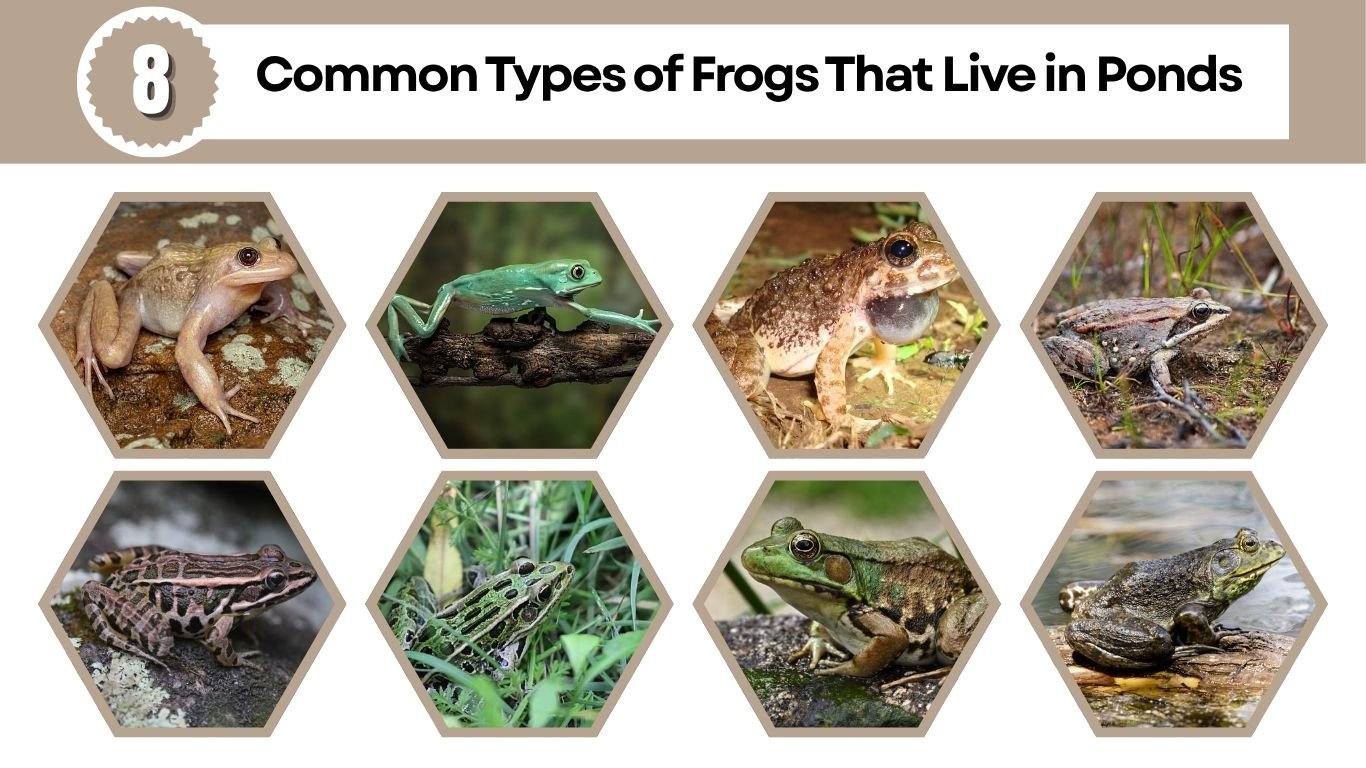
Ponds are rich freshwater habitats that support many types of frogs. These environments provide water for breeding, food for survival, and shelter from predators. From large bullfrogs to small tree frogs, each species plays an important role in maintaining the balance of the pond ecosystem. In this guide, you will learn about eight common types of frogs that live in ponds and how they adapt to life in and around water.
1. Bullfrog

The bullfrog is one of the largest and most common frogs found in ponds. It thrives in calm, freshwater environments and is well known for its deep, loud call that sounds like a bull. Bullfrogs are highly adaptable and can live in many types of pond ecosystems.
Identification
- Large, heavy-bodied frog
- Green to olive color with darker spots
- Long hind legs for strong jumping
- Prominent eardrum (tympanum) behind the eye
- Males have a yellowish throat
Diet
Bullfrogs are opportunistic feeders in pond environments. They eat insects, small fish, tadpoles, and even other frogs. Sometimes, they will also consume small birds or rodents if available. Their sit-and-wait hunting style helps them catch prey near the water’s edge.
Habitat
Bullfrogs prefer permanent ponds with still or slow-moving water. They are often found along muddy banks, among aquatic plants, or partially submerged near the shoreline. Warm, shallow areas of ponds are especially important for their breeding and daily activities.
Life Cycle & Survival
Bullfrogs lay eggs in pond water, where tadpoles develop over time. The tadpole stage can last longer than other frogs, sometimes up to two years. They survive by staying close to water, using camouflage to avoid predators, and quickly diving into the pond when threatened.
2. Green Frog

The green frog is a common pond-dwelling species known for its bright coloration and strong connection to freshwater habitats. It is often seen sitting at the edges of ponds and quickly jumping into the water when disturbed.
Identification
- Medium-sized frog
- Bright green to brownish-green color
- Distinct ridge (dorsolateral fold) along the back
- Smooth, moist skin
- Males often have a yellow throat
Diet
Green frogs mainly feed on insects such as flies, beetles, and mosquitoes found around ponds. They may also eat small fish, tadpoles, and worms. Their diet helps control insect populations, making them important for maintaining pond ecosystem balance.
Habitat
Green frogs live in ponds, lakes, and slow-moving streams. They prefer areas with plenty of vegetation where they can hide and hunt. They stay close to water throughout their lives and are rarely found far from pond edges.
Life Cycle & Survival
Green frogs lay eggs in pond water, where tadpoles hatch and grow. The tadpole stage usually lasts about one year. To survive, they rely on camouflage, quick escape into water, and staying near dense vegetation to avoid predators like birds and snakes.
3. Leopard Frog

The leopard frog is a well-known pond species recognized for its spotted body and graceful movement. It is commonly found near freshwater ponds and is active both in and around the water, making it easy to observe.
Identification
- Medium-sized, slender body
- Green or brown color with dark round spots
- Light-colored underside
- Long, powerful hind legs
- Smooth skin with a glossy appearance
Diet
Leopard frogs feed mainly on insects such as ants, beetles, and flies found near ponds. They also eat worms, spiders, and small aquatic creatures. Their excellent jumping ability helps them catch prey both on land and near the water surface.
Habitat
Leopard frogs prefer clean, freshwater ponds with grassy edges and aquatic plants. They are often seen in shallow water or sitting on the banks. These frogs need both land and water, so ponds with nearby vegetation are ideal for them.
Life Cycle & Survival
Leopard frogs lay eggs in clusters in pond water. Tadpoles hatch and grow quickly, usually transforming within a few months. They survive by using their spotted pattern as camouflage and quickly leaping into the pond to escape predators.
4. Pickerel Frog

The pickerel frog is a pond-dwelling species known for its neat rows of dark spots and preference for cool, clean water. It is often found near the edges of ponds where vegetation provides shelter and protection.
Identification
- Medium-sized frog
- Light brown or tan body
- Two rows of dark square-shaped spots on the back
- Smooth skin
- Strong hind legs for jumping
Diet
Pickerel frogs mainly eat insects such as beetles, ants, and flies found around pond areas. They may also consume spiders and small aquatic organisms. Their feeding helps keep insect populations under control in pond ecosystems.
Habitat
Pickerel frogs prefer cool, clear ponds with plenty of plants and grassy edges. They are usually found near the shoreline or in shallow water. Unlike some other frogs, they avoid warm or polluted ponds and need a clean environment to thrive.
Life Cycle & Survival
Pickerel frogs lay eggs in pond water, often attached to aquatic plants. Tadpoles develop and grow in the pond before turning into adult frogs. They survive by staying near water, using camouflage, and secreting a mild toxin from their skin to deter predators.
5. Wood Frog

The wood frog is a unique species that can live in and around ponds, especially in cooler regions. It is known for its ability to survive freezing temperatures and is often active early in the year near pond habitats.
Identification
- Medium-sized frog
- Brown, tan, or reddish color
- Dark mask-like marking across the eyes
- Smooth skin
- Slender body with long legs
Diet
Wood frogs feed on insects such as beetles, flies, and ants found near ponds. They also eat small invertebrates like worms and spiders. Their diet depends on what is available around the pond and nearby forest floor.
Habitat
Wood frogs prefer shallow ponds, especially temporary or seasonal ponds in wooded areas. They are often found near pond edges with leaf litter and vegetation. These frogs do not stay in water all year but return to ponds mainly for breeding.
Life Cycle & Survival
Wood frogs lay eggs in clusters in shallow pond water during early spring. Tadpoles grow quickly before the pond dries up. They survive by freezing during winter and thawing in spring, along with using camouflage to blend into their surroundings.
6. Cricket Frog

The cricket frog is a small, active frog often found around pond edges. It is named for its sharp, clicking call that sounds like crickets. Despite its size, it is quick and alert, making it well adapted to pond life.
Identification
- Small-sized frog
- Brown, gray, or green color
- Dark triangle marking between the eyes
- Rough skin texture
- Long legs for jumping
Diet
Cricket frogs mainly eat small insects such as mosquitoes, flies, and ants found near ponds. They may also consume tiny aquatic organisms. Their diet plays an important role in controlling pests around pond environments.
Habitat
Cricket frogs prefer shallow ponds with muddy or sandy edges. They are commonly seen along the shoreline, especially in sunny areas. These frogs stay close to water but often move quickly along the ground or vegetation.
Life Cycle & Survival
Cricket frogs lay eggs in pond water, where tadpoles develop and grow. The life cycle is relatively short, allowing them to mature quickly. They survive by using their speed, quick jumps, and ability to blend into their surroundings to escape predators.
7. Tree Frog

Tree frogs are small, agile frogs that often live near ponds, especially where there are plants and trees. Although they can climb well, they stay close to pond environments for moisture and breeding.
Identification
- Small and lightweight body
- Green, brown, or gray color
- Sticky toe pads for climbing
- Smooth skin
- Large eyes
Diet
Tree frogs mainly eat insects such as flies, mosquitoes, and moths found around ponds. They may also eat small spiders and other tiny invertebrates. Their feeding helps reduce insect populations in pond areas, especially at night.
Habitat
Tree frogs live in vegetation around ponds, such as reeds, bushes, and low tree branches. They prefer moist environments and stay near water sources. Ponds with plenty of plants provide ideal shelter and breeding grounds for them.
Life Cycle & Survival
Tree frogs lay eggs in pond water or on plants above the water. Tadpoles hatch and develop in the pond before becoming adult frogs. They survive by climbing to avoid predators, using camouflage, and staying close to moist environments to prevent drying out.
8. Marsh Frog

The marsh frog is a large water-loving species commonly found in ponds and wetlands. It is known for its loud croaking sound and strong swimming ability, making it well suited to pond environments.
Identification
- Large-sized frog
- Bright green or olive color with dark markings
- Light stripe along the back (sometimes)
- Smooth, shiny skin
- Strong, webbed hind feet
Diet
Marsh frogs eat a wide range of prey found in and around ponds. Their diet includes insects, small fish, tadpoles, and even smaller frogs. They are active hunters and often catch prey both in water and along the pond edge.
Habitat
Marsh frogs prefer warm ponds with plenty of vegetation and shallow areas. They are often seen floating in water or resting on the edges. These frogs rarely move far from ponds, as they depend heavily on water for survival.
Life Cycle & Survival
Marsh frogs lay eggs in pond water, where tadpoles develop before becoming adults. The tadpoles grow in warm, shallow areas of the pond. They survive by staying in water, using strong swimming skills, and hiding among plants to avoid predators.
FAQs
What types of frogs are commonly found in ponds?
Many frogs live in ponds, including bullfrogs, green frogs, leopard frogs, and tree frogs. These species prefer freshwater habitats because ponds provide food, shelter, and safe places for breeding. Each type has unique features but all depend on water to survive.
Why do frogs live near ponds?
Frogs need moisture to survive and reproduce, which ponds provide. They lay their eggs in water, where tadpoles develop. Ponds also offer plenty of insects and small prey, making them ideal living environments for frogs throughout their life cycle.
What do pond frogs eat?
Pond frogs mainly eat insects like flies, mosquitoes, and beetles. Some larger frogs also eat small fish, tadpoles, or even other frogs. Their diet helps control insect populations and keeps the pond ecosystem balanced.
How do frogs survive in ponds?
Frogs survive by staying close to water, using camouflage, and quickly escaping predators. Many can jump or swim fast, while others hide in plants or mud. Their moist skin also helps them absorb oxygen and stay hydrated in pond environments.
Do all frogs stay in ponds all year?
Not all frogs stay in ponds year-round. Some only return to ponds for breeding, while others live there most of the time. During cold or dry seasons, many frogs move to nearby land or burrow into mud to survive until conditions improve.
