
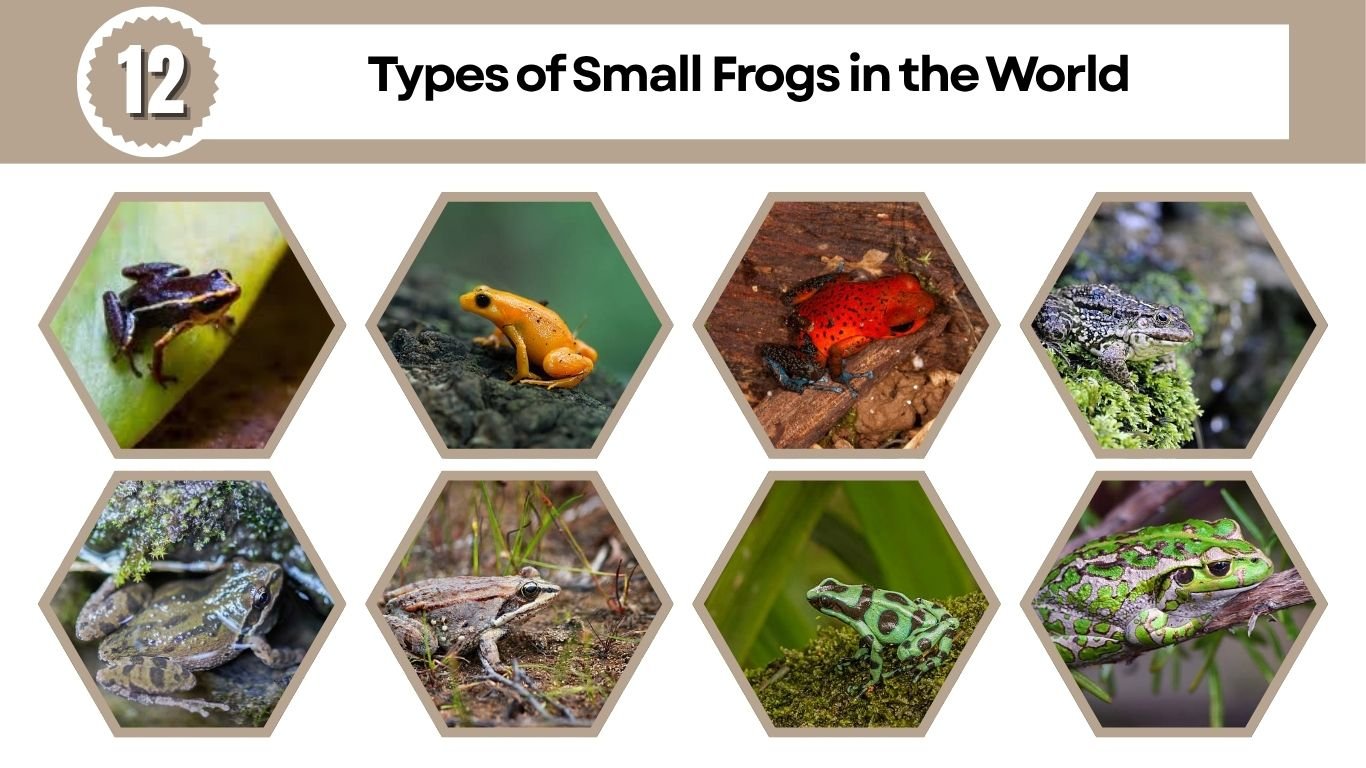
Small frogs may be tiny in size, but they are incredibly diverse and fascinating. Found in forests, wetlands, and even underground habitats, these frogs have unique colors, behaviors, and survival strategies. Despite their small bodies, many of them play an important role in maintaining ecological balance.
In this article, you will discover 12 types of small frogs from around the world, each with distinct features, habitats, and lifestyles that make them truly remarkable.
1. Spring Peeper

The spring peeper is a tiny tree frog famous for its loud, high-pitched calls that signal the arrival of spring. Despite its small size, it is one of the most commonly heard frogs in North America.
Identification
- Very small body, about 1–1.5 inches long
- Light brown or tan color
- Dark “X” mark on its back
- Smooth skin
- Large toe pads for climbing
Habitat
Spring peepers live in forests, wetlands, and marshy areas across North America. They prefer moist environments and are often found near ponds, swamps, or temporary pools where they can breed and stay hydrated.
Behavior
These frogs are mostly nocturnal and become very active during the breeding season in early spring. Males gather near water and produce loud peeping calls to attract females, often forming large, noisy groups.
Diet
Spring peepers feed on small insects such as ants, beetles, and flies. They hunt at night, using their quick movements and sticky tongue to capture prey efficiently.
2. Cricket Frog

The cricket frog is a very small and active frog known for its quick movements and chirping call that sounds like a cricket. It is commonly found in North America and is easy to recognize by its jumping ability and tiny size.
Identification
- Small, slender body
- Color varies from gray, brown, to green
- Dark triangle mark between the eyes
- Warty skin texture
- Long hind legs for powerful jumps
Habitat
Cricket frogs usually live near water bodies such as ponds, lakes, streams, and marshes. They prefer areas with muddy or sandy edges where they can easily hide. These frogs are often seen basking in the sun near the water during the day and quickly jumping into the water when disturbed.
Behavior
This species is known for its energetic and nervous behavior. Cricket frogs are active during the day and night, but they are especially alert and quick to escape danger. When threatened, they make long, sudden jumps and can change direction rapidly to confuse predators. Their call sounds like the clicking of two stones or a cricket chirp, especially during the breeding season.
Size
Cricket frogs are very small, usually measuring about 0.6 to 1.5 inches (1.5 to 3.8 cm) in length, making them one of the tiniest frogs in North America.
Diet
Cricket frogs feed mainly on small insects such as ants, flies, spiders, and tiny beetles. They use their fast reflexes and sticky tongue to catch prey. Their small size limits them to tiny food, but they are very efficient hunters.
3. Chorus Frog

The chorus frog is a small and secretive frog known for its loud, musical calls that sound like a chorus of voices. Despite its tiny size, it plays an important role in wetland ecosystems.
Identification
- Small, compact body
- Brown, gray, or green color
- Dark stripe running through the eye
- Smooth skin
- Slightly pointed snout
Habitat
Chorus frogs live in grasslands, wetlands, and wooded areas across North America. They prefer shallow water bodies like ponds, ditches, and flooded fields, especially during breeding season. They often hide under leaves, logs, or grass.
Behavior
These frogs are mostly nocturnal but can be active during the day in cooler weather. Males produce loud, repetitive calls during the breeding season, often creating a chorus sound. They are shy and quickly hide when disturbed.
Size
Chorus frogs are very small, typically growing between 0.75 to 1.5 inches (2 to 3.8 cm) in length.
Diet
Chorus frogs feed on small insects such as ants, flies, and spiders. They hunt using quick movements and their sticky tongue, mainly during the night.
4. Narrow-mouthed Frog

The narrow-mouthed frog is a tiny, round-bodied frog known for its small head and pointed snout. It is commonly found in warm regions and has a unique body shape compared to other frogs.
Identification
- Round, plump body
- Narrow, pointed mouth
- Smooth, dark-colored skin (gray or brown)
- Small head compared to body
- Short legs
Habitat
These frogs live in forests, grasslands, and wetlands, often in moist soil or leaf litter. They prefer humid environments and are commonly found in tropical and subtropical regions, especially near water sources.
Behavior
Narrow-mouthed frogs are mostly nocturnal and spend much of their time hidden underground or under debris. They come out at night to feed and during rainy periods. Their movement is slower compared to many other frogs.
Size
Narrow-mouthed frogs are small, usually measuring about 1 to 2 inches (2.5 to 5 cm) long.
Diet
They mainly eat ants and termites, using their specialized tongue to capture prey. Their diet is quite specific, making them important for controlling insect populations in their habitat.
5. Glass Frog

The glass frog is a tiny and unique species known for its transparent skin, especially on its underside. This feature allows you to see its internal organs, making it one of the most fascinating small frogs in the world.
Identification
- Bright green body with translucent underside
- Visible internal organs through the belly
- Smooth skin
- Large forward-facing eyes
- Slender body shape
Habitat
Glass frogs live in tropical rainforests of Central and South America. They are usually found on leaves near streams and rivers, where they lay their eggs. These frogs prefer humid environments with plenty of vegetation.
Behavior
They are mostly nocturnal and spend their time resting on the underside of leaves during the day. At night, they become active and may be seen near water. Males often guard the eggs laid on leaves to protect them from predators.
Size
Glass frogs are very small, typically measuring about 0.8 to 1.2 inches (2 to 3 cm) in length.
Diet
Glass frogs feed on small insects such as flies, ants, and tiny spiders. They hunt at night, using their sticky tongue to catch prey quickly and efficiently.
6. Poison Dart Frog

Poison dart frogs are small, brightly colored frogs known for their toxic skin. Their vibrant colors serve as a warning to predators, making them one of the most eye-catching frog species.
Identification
- Bright colors like blue, yellow, red, or green
- Smooth and shiny skin
- Small, compact body
- Bold patterns or spots
- Slender legs
Habitat
These frogs live in tropical rainforests of Central and South America. They prefer moist environments with plenty of leaf litter and vegetation. They are often found on the forest floor or low plants.
Behavior
Poison dart frogs are active during the day, unlike many other frogs. Their bright colors warn predators of their toxicity. Some species show parental care, carrying tadpoles to water sources after hatching.
Size
Poison dart frogs are small, usually ranging from 0.5 to 2 inches (1.3 to 5 cm) long depending on the species.
Diet
They mainly eat small insects like ants, termites, and mites. Their diet contributes to their toxicity, as certain chemicals from their prey are stored in their skin.
7. Wood Frog

The wood frog is a small, hardy species known for its ability to survive freezing temperatures. It is commonly found in North America and is easily recognized by its dark facial mask.
Identification
- Brown, tan, or reddish body color
- Dark mask-like marking across the eyes
- Smooth skin
- Slender body with long legs
- Light-colored belly
Habitat
Wood frogs live in forests, especially near ponds, swamps, and wetlands. They prefer moist, wooded environments and are often found in leaf litter or under logs. During breeding season, they move to shallow water bodies.
Behavior
These frogs are mostly nocturnal but can be active during the day in cooler weather. They are famous for their ability to freeze during winter and thaw in spring. Males produce duck-like calls during breeding season.
Size
Wood frogs are small, typically measuring about 1.5 to 3 inches (3.8 to 7.6 cm) in length.
Diet
Wood frogs feed on insects, spiders, and other small invertebrates. They hunt using quick tongue strikes and are active feeders during warmer months.
8. Pacific Tree Frog

The Pacific tree frog is a small and adaptable species known for its ability to change color. It is commonly found along the western coast of North America.
Identification
- Color varies from green to brown
- Dark stripe running from nose through the eye
- Smooth skin
- Sticky toe pads for climbing
- Slender body
Habitat
Pacific tree frogs live in a wide range of habitats, including forests, grasslands, and wetlands. They are often found near ponds, lakes, and streams, especially during breeding season.
Behavior
These frogs are mostly nocturnal and are excellent climbers. They are well known for their loud, “ribbit” call, often heard at night. Their ability to change color helps them blend into different environments.
Size
Pacific tree frogs are small, usually about 1 to 2 inches (2.5 to 5 cm) long.
Diet
They feed on small insects such as flies, ants, and beetles. They hunt mainly at night, using their sticky tongue to capture prey quickly and efficiently.
9. Rain Frog

The rain frog is a tiny, round-bodied frog known for its unusual appearance and squeaky call. It is often found in tropical regions and is well adapted to life on land rather than in water.
Identification
- Round, chubby body
- Short limbs
- Smooth or slightly bumpy skin
- Small head with a narrow mouth
- Often dull colors like brown or gray
Habitat
Rain frogs live in tropical forests, grasslands, and sometimes dry regions. They prefer moist soil and are often found burrowing underground or hiding under leaf litter. They do not rely heavily on open water like many other frogs.
Behavior
These frogs are mostly nocturnal and come out at night, especially after rain. They are known for their squeaky, high-pitched calls. Rain frogs are also burrowers and spend much of their time underground to stay safe and moist.
Size
Rain frogs are very small, usually measuring about 0.8 to 2 inches (2 to 5 cm) in length.
Diet
Rain frogs mainly eat small insects such as ants, termites, and beetles. They use their short tongue and quick movements to capture prey close to the ground.
10. Strawberry Dart Frog

The strawberry dart frog is a brightly colored and tiny frog known for its red body and striking appearance. It is one of the most well-known small frogs in tropical regions.
Identification
- Bright red or orange body
- Blue or dark-colored legs
- Smooth skin
- Small, compact body
- Bold and vibrant coloration
Habitat
This frog lives in tropical rainforests of Central America. It prefers humid environments with dense vegetation and is often found on the forest floor or low plants.
Behavior
Strawberry dart frogs are active during the day. Their bright colors warn predators about their toxicity. They also show interesting parental behavior, with adults transporting tadpoles to small water pools.
Size
Strawberry dart frogs are very small, typically around 0.7 to 1 inch (1.8 to 2.5 cm) long.
Diet
They feed on tiny insects such as ants and mites. Their diet contributes to their toxicity, as they store chemicals from their prey in their skin.
11. Golden Mantella

The golden mantella is a tiny, brightly colored frog native to Madagascar. Its vibrant appearance and small size make it one of the most striking small frogs in the world.
Identification
- Bright yellow to orange body
- Smooth skin
- Small, compact shape
- Slender limbs
- Dark eyes
Habitat
Golden mantellas live in tropical forests of Madagascar. They prefer moist environments near streams and forest floors with plenty of leaf litter. These frogs depend on high humidity to survive.
Behavior
They are active during the day and are often seen moving among leaves and plants. Their bright color warns predators of their toxicity. They are social and may be found in small groups.
Size
Golden mantellas are very small, usually about 0.8 to 1 inch (2 to 2.5 cm) long.
Diet
They mainly eat small insects such as ants, termites, and tiny beetles. Their diet helps them develop their mild toxicity.
12. Monte Iberia Eleuth

The Monte Iberia eleuth is one of the smallest frogs in the world. It is extremely rare and found only in a small region of Cuba.
Identification
- Very tiny body
- Brown with lighter stripes or markings
- Smooth skin
- Short limbs
- Pointed snout
Habitat
This frog lives in dense forests of eastern Cuba. It prefers moist leaf litter on the forest floor and requires a very specific environment to survive.
Behavior
Monte Iberia eleuths are mostly active during the day. They are secretive and spend most of their time hidden in leaf litter. Their small size makes them difficult to spot in the wild.
Size
Monte Iberia eleuth is extremely small, measuring only about 0.4 inches (1 cm) in length, making it one of the tiniest frogs on Earth.
Diet
They feed on extremely small insects and tiny invertebrates found in leaf litter. Their diet consists of whatever microscopic prey they can catch in their habitat.
FAQs
What is considered a small frog?
A small frog is generally any species that measures under 2–3 inches in length. Some of the smallest frogs in the world are less than 1 inch long. Their tiny size helps them hide from predators and survive in narrow spaces like leaf litter.
Where do small frogs usually live?
Small frogs live in a variety of habitats including rainforests, wetlands, grasslands, and even underground. Many prefer moist environments, while some species are adapted to drier areas and spend time burrowing in soil.
Are small frogs poisonous?
Not all small frogs are poisonous. However, some species like poison dart frogs have toxic skin. These toxins help protect them from predators. Most small frogs, though, are harmless and safe to observe in the wild.
What do small frogs eat?
Small frogs mainly eat tiny insects such as ants, termites, flies, and mites. Due to their size, they can only consume very small prey. They use their sticky tongues to catch food quickly and efficiently.
Why are small frogs important to the environment?
Small frogs help control insect populations and serve as food for larger animals. They are also sensitive to environmental changes, making them important indicators of ecosystem health and biodiversity.
