
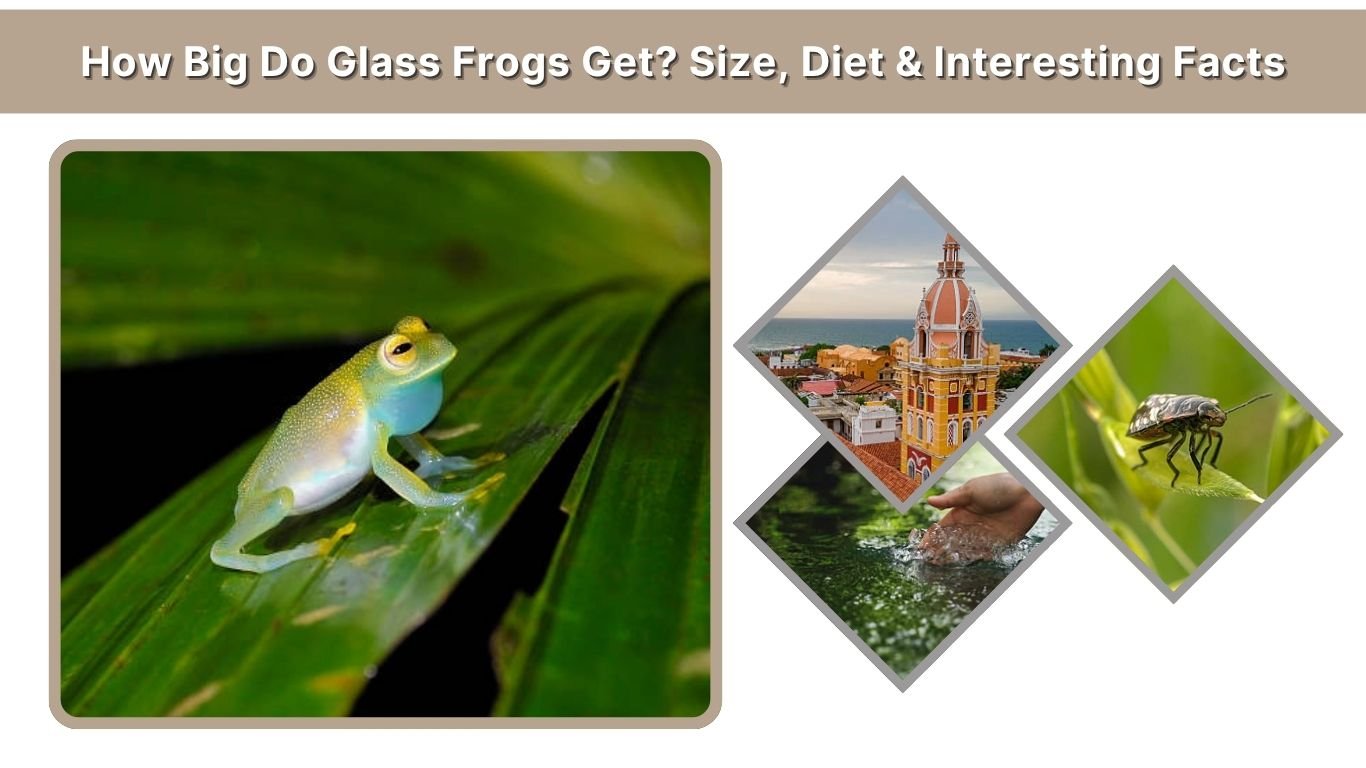
Glass frogs are some of the most unique amphibians in the world, best known for their transparent skin that reveals their internal organs. Found mainly in Central and South American rainforests, these frogs live in humid environments near streams and rivers. While their unusual appearance attracts attention, many people are curious about their size, diet, and behavior.
One of the most common questions is: how big do glass frogs get? In this guide, we’ll explore their size, how they survive, what they eat, and other fascinating facts about these remarkable creatures.
How Big Do Glass Frogs Get?
Glass frogs are relatively small compared to many other frog species. On average, they grow between 1 to 3 inches (2.5 to 7.5 cm) in length.
Most species fall on the smaller end of this range, making them delicate and lightweight amphibians. Their small size is an important adaptation that helps them survive in their natural habitat.
Average Size of Glass Frogs
The majority of glass frogs measure around 1 to 2 inches long. Their slim bodies and lightweight structure make them well-suited for living on leaves and branches above streams.
Because they are so small, they rely on camouflage rather than strength to avoid predators.
Giant Glass Frog Size
Some species, often referred to as “giant glass frogs,” can grow slightly larger—closer to 3 inches in length. While this is still small compared to many frogs, it is noticeably bigger than typical glass frog species.
These larger frogs may be able to consume slightly bigger prey, but their overall behavior remains similar.
Glass Frog Size vs Other Frogs

| Feature | Glass Frogs | Other Frogs |
| Average Size | 1–3 inches | 2–6+ inches |
| Body Type | Slim and delicate | Wide variety |
| Visibility | Transparent underside | Opaque |
| Weight | Very light | Varies widely |
Compared to other frogs, glass frogs are much smaller and lighter. Larger frog species, such as bullfrogs, can grow several inches longer and weigh significantly more.
This size difference affects how glass frogs hunt, move, and defend themselves.
Why Are Glass Frogs So Small?
The small size of glass frogs is not accidental—it is a key survival trait shaped by their environment.
Adaptation to Rainforest Life
Living in dense rainforests requires agility and the ability to move easily through vegetation. Smaller bodies make it easier for glass frogs to climb leaves, branches, and thin stems above water.
Their lightweight structure also helps them remain stable on delicate surfaces without falling.
Camouflage Advantage
Glass frogs rely heavily on camouflage to avoid predators. Their green coloration blends with leaves, while their transparent underside reduces shadows, making them harder to detect.
A smaller body enhances this effect, allowing them to remain almost invisible in their environment.
How Do Glass Frogs Get Their Food?

Glass frogs are skilled hunters despite their small size. They use simple but effective techniques to capture prey.
Hunting Method
Like most frogs, glass frogs use a sticky, extendable tongue to catch food. When an insect comes within range, they quickly flick out their tongue and pull the prey into their mouth.
This ambush-style hunting requires precision and speed, allowing them to capture prey in a fraction of a second.
Where They Find Food
Glass frogs usually hunt on leaves and branches near streams. These areas are rich in insects, especially at night when many small creatures become active.
By staying in these locations, glass frogs have constant access to food.
What Do Glass Frogs Eat?

Glass frogs are carnivores, meaning they eat other animals rather than plants.
- Flies and mosquitoes
- Ants and termites
- Small spiders
- Beetles and moths
- Tiny invertebrates
Their diet consists mainly of small insects that are easy to catch and swallow. Because they are small, they focus on prey that matches their size.
Glass frogs are opportunistic feeders, meaning they eat whatever suitable prey is available in their environment.
How Did Glass Frogs Get Their Name?
The name “glass frog” comes from their most striking feature—their transparent skin.
Origin of the Name
Many glass frogs have translucent bellies that allow you to see their internal organs, including the heart, liver, and digestive system. This glass-like appearance inspired their common name.
Scientific Explanation
The transparency is caused by a lack of pigmentation on the underside of their bodies. This allows light to pass through, reducing shadows and helping them blend into their surroundings.
This unique trait is both visually fascinating and highly functional for survival.
Unique Features of Glass Frogs
Glass frogs have several characteristics that make them stand out among amphibians.
- Transparent skin reveals internal organs
- Live on leaves above streams
- Active mostly at night (nocturnal)
- Sticky toe pads help them climb
- Sensitive to environmental changes
One particularly interesting behavior is that male glass frogs often guard eggs laid on leaves. This helps protect the eggs from predators and dehydration.
Where Can You Find Glass Frogs?

Glass frogs are found in tropical regions where humidity and vegetation are abundant.
Natural Habitat
They live in Central and South America, including countries like Costa Rica, Colombia, Ecuador, and Brazil. Their preferred habitat includes rainforests near rivers and streams.
These areas provide the moisture, shelter, and food they need to survive.
Can You Keep Glass Frogs as Pets?
Glass frogs are not commonly kept as pets. They require very specific environmental conditions, including high humidity, clean water, and a stable temperature.
In addition, some species may be protected by conservation laws, so it’s important to check regulations before considering them as pets.
How to Get Glass Frogs in Pocket Frogs (Game Guide)
For players of the game Pocket Frogs, getting a glass frog involves understanding the breeding system.
- Breed frogs that carry the “Glass” genetic trait
- Combine compatible frogs to unlock new variations
- Trade frogs with other players
- Check the in-game shop for rare types
- Level up to access more breeding options
The “Glass” trait is a special characteristic in the game, and obtaining it often requires patience and experimentation with breeding combinations.
FAQs
How big do glass frogs get?
Glass frogs typically grow between 1 to 3 inches long. Most species are closer to 1–2 inches, while larger “giant” glass frogs can reach around 3 inches.
How do glass frogs get their food?
Glass frogs use a sticky tongue to catch insects. They wait quietly and ambush prey when it comes close enough.
Why are glass frogs called glass frogs?
They are named for their translucent skin, which allows you to see their internal organs, giving them a glass-like appearance.
Where can you find glass frogs?
Glass frogs live in tropical rainforests of Central and South America, usually near streams and rivers.
How do you get glass frogs in Pocket Frogs?
In the game, you can get glass frogs by breeding frogs with the “Glass” trait or trading with other players.
