
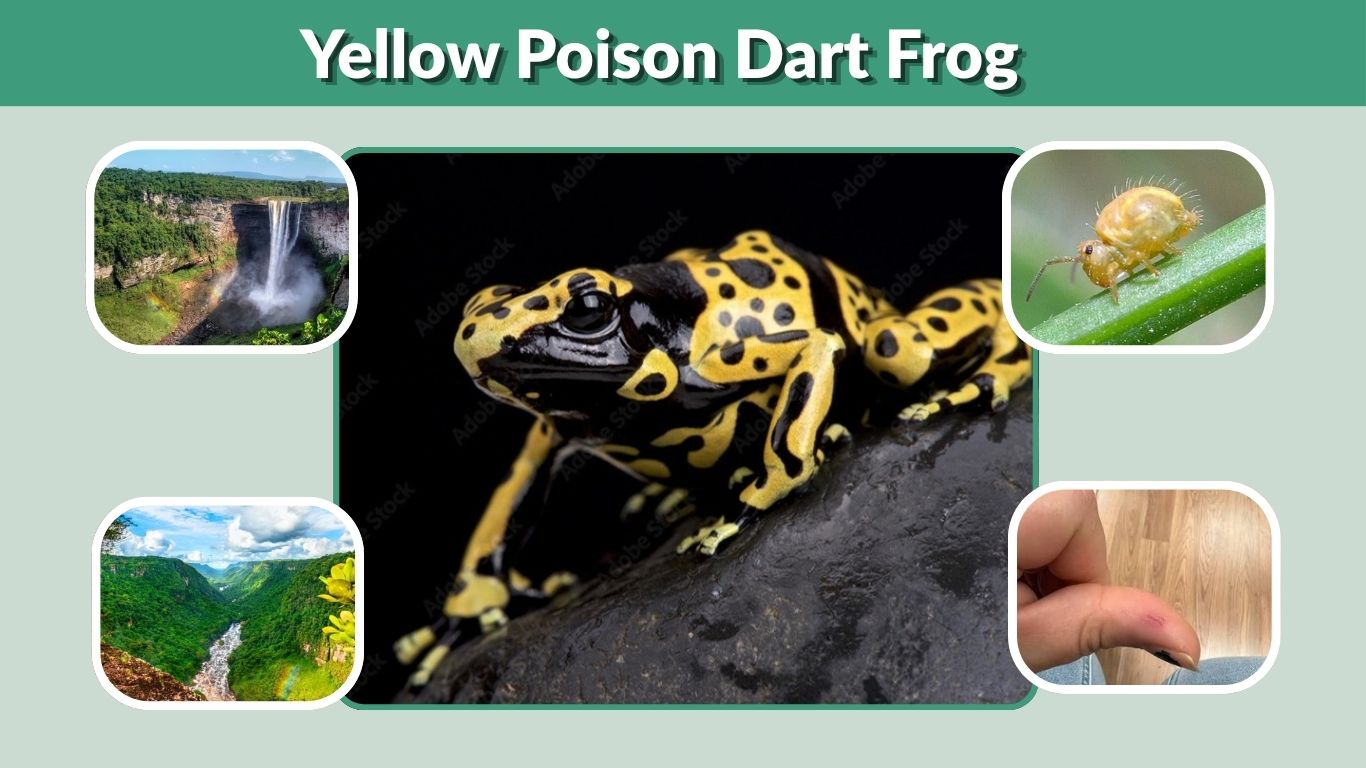
The yellow poison dart frog is one of the most eye-catching frogs in the rainforest. Its bright yellow and black colors make it easy to recognize and help warn predators that it may be toxic. Many searches for “yellow poison dart frog” refer to the yellow-banded poison dart frog, a small but bold amphibian known for its striking pattern, loud call, and fascinating rainforest lifestyle.
What Is a Yellow Poison Dart Frog?
A yellow poison dart frog is not always one single species. People often use this name for any poison dart frog with yellow coloring. However, the most common match is the yellow-banded poison dart frog, also called the bumblebee poison frog.
Its scientific name is Dendrobates leucomelas. This frog belongs to the poison dart frog family, a group of small tropical frogs known for bright colors and toxic skin secretions.
The yellow-banded poison dart frog usually has a black body with bright yellow or yellow-orange bands. Some individuals may have spots or blotches inside the yellow bands, giving them a bold pattern that looks different from frog to frog.
Yellow-Banded Poison Dart Frog Appearance
The yellow-banded poison dart frog is best known for its black and yellow pattern. Its body is usually dark black with thick yellow bands across the back. The legs may also be yellow, orange, or black with irregular spots.
This pattern is one reason people also call it the black and yellow poison dart frog, yellow striped poison dart frog, or bumblebee dart frog. The yellow and black contrast makes it stand out strongly against the dark rainforest floor.
Size and Body Shape
The yellow-banded poison dart frog is small, but it is not weak. Most adults are only around 1 to 2 inches long. Their compact body helps them move through leaf litter, roots, moss, and wet forest surfaces.
They also have toe pads that help them climb. These sticky pads allow them to grip plants, tree trunks, and rocks in their humid rainforest habitat.
Yellow and Black Warning Colors
The frog’s yellow and black colors are not just for beauty. They are part of its defense system. Bright colors tell predators that the frog may be toxic or unpleasant to eat.
This type of warning color is called aposematic coloration. It is common in animals that have poison, venom, or another strong defense. A predator may learn to avoid yellow and black frogs after one bad experience.
Where Do Yellow-Banded Poison Dart Frogs Live?
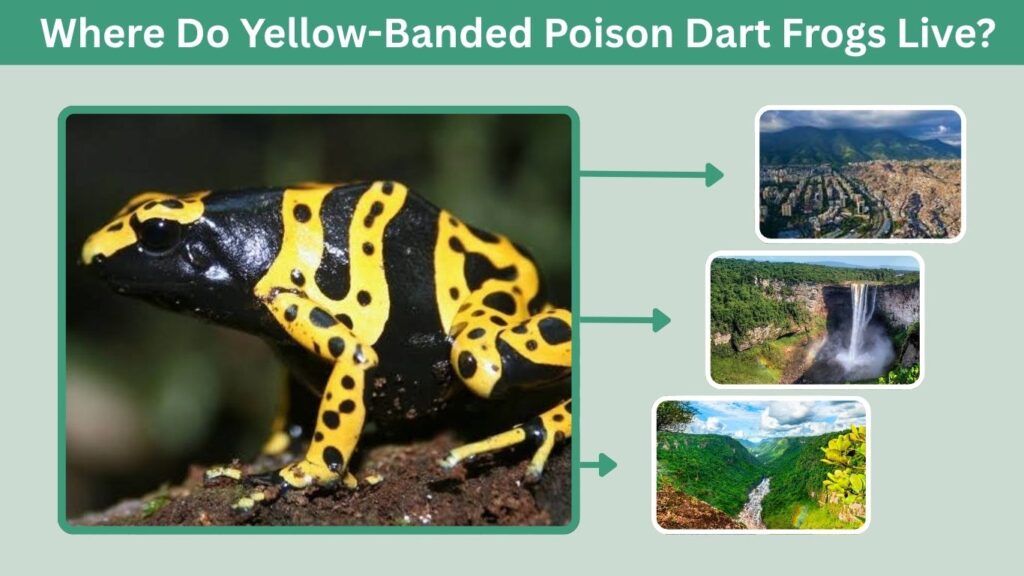
Yellow-banded poison dart frogs live in northern South America. They are found in countries such as Venezuela, Guyana, northern Brazil, and parts of Colombia. They usually live in tropical forests where the environment is warm and humid.
These frogs are often found near moist areas of the forest. They may live among leaf litter, wet rocks, roots, tree trunks, and plants. They are also associated with bromeliads and other plants that can hold small pools of water.
Their habitat gives them several things they need:
- Moisture to keep their skin from drying out
- Small insects and other prey to eat
- Leaf litter and plants for shelter
- Safe places for eggs and tadpoles
- Cover from extreme heat and dryness
Although they prefer humid forests, yellow-banded poison dart frogs are known to handle slightly drier conditions better than some other poison dart frogs. During dry periods, they may hide in damp places such as under logs, rocks, or thick leaf litter.
Yellow Poison Dart Frog Diet
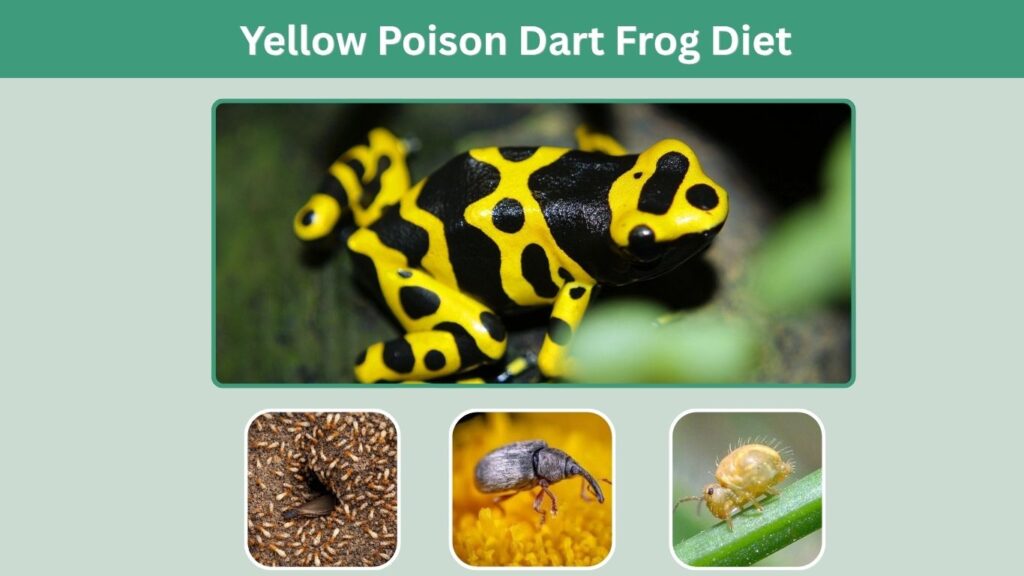
Yellow poison dart frogs are carnivores. They eat small invertebrates, especially tiny insects and arthropods. In the wild, their diet helps support their toxicity because many poison dart frogs get chemical compounds from the prey they eat.
A yellow-banded poison dart frog may eat:
- Ants
- Termites
- Mites
- Small beetles
- Tiny flies
- Springtails
- Other small arthropods
Their small size makes them well suited to hunting tiny prey on the forest floor. They use their quick movements and sticky tongues to catch food.
In captivity, poison dart frogs are usually fed small insects such as fruit flies and springtails. Captive frogs are typically much less toxic than wild frogs because they do not eat the same natural prey that provides alkaloid chemicals.
Is the Yellow Poison Dart Frog Poisonous?
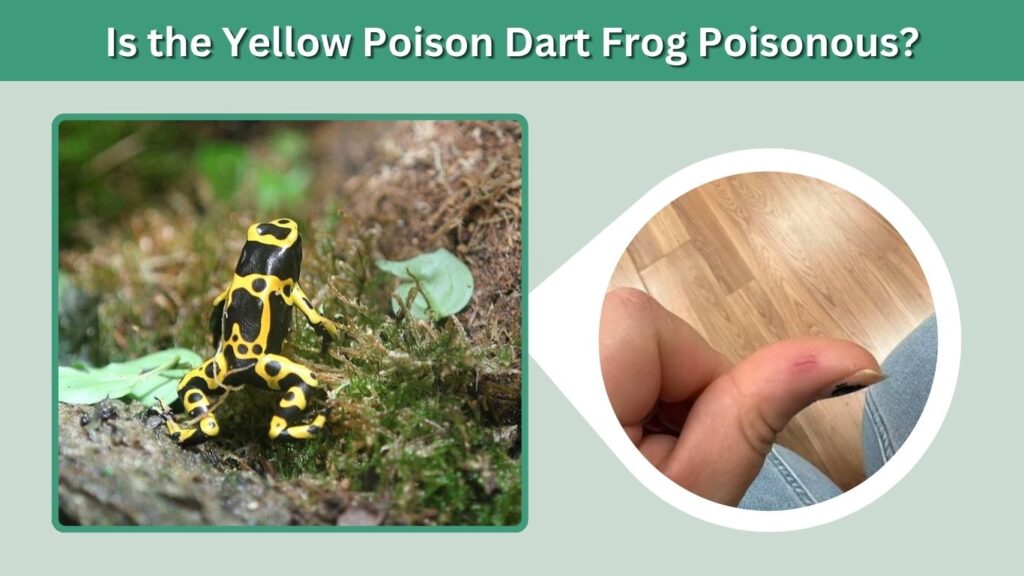
Yes, wild yellow-banded poison dart frogs are poisonous. Their skin can contain toxins that help protect them from predators. These toxins are not used for hunting prey. Instead, they are a defense mechanism.
A predator that tries to eat one may experience a bad reaction. The bright yellow and black pattern helps warn predators before they attack.
However, it is important to understand that not all poison dart frogs are equally dangerous. Some species are much more toxic than others. The golden poison frog is far more famous for extreme toxicity, while the yellow-banded poison dart frog is toxic but not usually described as the deadliest member of the group.
Is It Deadly to Humans?
A wild yellow poison dart frog should never be touched or handled carelessly. Its skin toxins can be harmful, especially if they contact the mouth, eyes, or an open cut.
That said, most danger comes from direct contact with skin secretions. These frogs do not bite people to inject poison, and they are not aggressive toward humans. Their poison is a passive defense.
Captive-bred yellow-banded poison dart frogs are often far less toxic because their diet is different from wild frogs. Still, they should be treated carefully and respectfully.
Yellow-Banded Poison Dart Frog Behavior
Yellow-banded poison dart frogs are active during the day. This daytime behavior is different from many frogs, which are more active at night. Their warning colors help make daytime activity safer because predators can clearly see the signal.
These frogs are also known for being territorial. Males may call to attract females and to warn other males. Their call is part of their communication system in the dense rainforest environment.
Common Behaviors
Yellow-banded poison dart frogs may show several interesting behaviors:
- Calling during the day
- Defending small territories
- Searching leaf litter for insects
- Hiding in damp places during dry periods
- Climbing plants and rocks
- Caring for eggs and tadpoles
Their behavior helps them survive in a habitat where many animals compete for space, food, and breeding areas.
Yellow and Blue Poison Dart Frog Confusion
Some people search for “yellow and blue poison dart frog” or “blue and yellow poison dart frog.” This can refer to different species or color morphs of poison dart frogs.
Not every yellow and blue frog is the yellow-banded poison dart frog. Some poison dart frogs have blue legs, yellow backs, or mixed patterns depending on the species and location. For example, some color forms of other dart frogs may show yellow, blue, black, or green markings.
When identifying a frog, color alone is not always enough. It is better to look at the full pattern, body shape, location, and scientific name.
Yellow-Banded Poison Dart Frog Adaptations
The yellow-banded poison dart frog has several adaptations that help it survive in the rainforest. These adaptations include both body features and behaviors.
| Adaptation | Type | How It Helps |
| Yellow and black color | Physical | Warns predators that the frog may be toxic |
| Toxic skin | Physiological | Helps defend against predators |
| Sticky toe pads | Physical | Helps the frog climb wet plants and surfaces |
| Small body size | Physical | Allows movement through leaf litter and small spaces |
| Daytime activity | Behavioral | Lets the frog search for food while warning colors are visible |
| Territorial calling | Behavioral | Helps attract mates and defend space |
| Damp hiding places | Behavioral | Helps the frog survive dry periods |
These adaptations work together. The frog’s colors warn predators, its toxins provide protection, and its behavior helps it find food and reproduce.
Yellow Poison Dart Frog Predators
Even toxic animals may have predators. Some predators may avoid poison dart frogs because of their bright warning colors, but others may still attack them. Young frogs and eggs can be especially vulnerable.
Possible threats include snakes, birds, spiders, and larger animals that search through leaf litter. However, the frog’s toxins and warning colors reduce the chance of being eaten.
Eggs and tadpoles face different dangers. They may be threatened by insects, other amphibians, or drying water sources. This is one reason protected breeding sites and parental care can be important.
Yellow-Banded Poison Dart Frog Reproduction
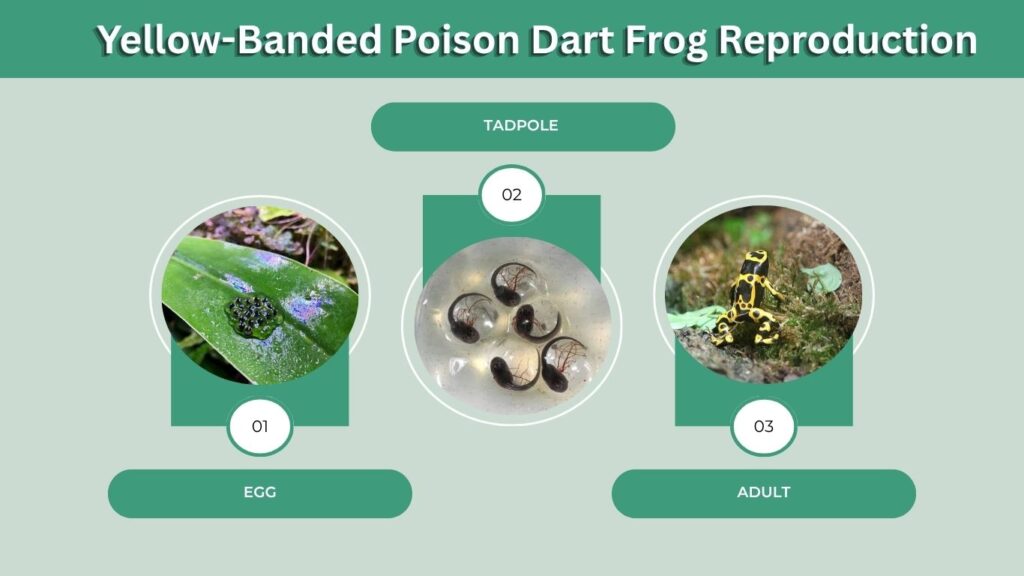
Yellow-banded poison dart frogs reproduce in moist environments. Males call to attract females, and breeding often depends on humidity and suitable places for eggs.
After mating, eggs are laid in safe, damp places. The eggs must stay moist to develop properly. When tadpoles hatch, they need water to continue growing.
In many poison dart frogs, adults show some level of parental care. Tadpoles may be moved to small pools of water in plants or other protected places. This behavior gives young frogs a better chance of survival than if eggs were simply left in open water.
Yellow Poison Dart Frog as a Pet
Some people search for yellow-banded poison dart frogs for sale or care sheets. These frogs are kept by experienced amphibian hobbyists, especially captive-bred individuals.
However, they are not simple pets. They need careful temperature, humidity, food, and habitat control. A proper enclosure must stay moist, clean, and safe. They also need tiny live foods, such as fruit flies or springtails.
Important care needs include:
- High humidity
- Stable warm temperatures
- Clean water sources
- Live insect food
- Plants and hiding spots
- A secure enclosure
- Careful handling limits
Anyone considering a yellow-banded poison dart frog should choose captive-bred frogs from responsible sources and learn proper care before buying one. Wild-caught frogs should be avoided because collecting animals from the wild can harm local populations.
Interesting Facts About the Yellow Poison Dart Frog
The yellow-banded poison dart frog is small, colorful, and full of interesting traits. Its bold appearance makes it one of the most recognizable poison dart frogs.
Here are some quick facts:
- Its scientific name is Dendrobates leucomelas.
- It is also called the bumblebee poison frog.
- Its yellow and black color warns predators.
- It is active during the day.
- It lives in northern South America.
- It eats small insects and arthropods.
- Wild frogs are toxic because of compounds linked to their diet.
- Captive-bred frogs are usually much less toxic.
- It can climb using sticky toe pads.
- It often hides in damp places during dry periods.
These facts make the yellow-banded poison dart frog a great example of rainforest adaptation.
Yellow Poison Dart Frog vs Golden Poison Frog
The yellow poison dart frog and golden poison frog are sometimes confused because both can be yellow. However, they are not the same animal.
The yellow-banded poison dart frog usually has black and yellow bands. The golden poison frog is often more solid yellow, gold, orange, or pale greenish-yellow. The golden poison frog is also famous for being one of the most toxic frogs in the world.
The yellow-banded poison dart frog is toxic, but it is better known for its bold striped pattern and bumblebee-like appearance.
FAQs
What is the scientific name of the yellow-banded poison dart frog?
The scientific name of the yellow-banded poison dart frog is Dendrobates leucomelas. It is also called the bumblebee poison frog because of its bold yellow and black pattern.
Where do yellow-banded poison dart frogs live?
Yellow-banded poison dart frogs live in northern South America. They are found in countries such as Venezuela, Guyana, Brazil, and Colombia. Their natural habitat includes warm, humid tropical forests with leaf litter, plants, wet rocks, and damp hiding places.
What does a yellow poison dart frog eat?
A yellow poison dart frog eats small invertebrates such as ants, termites, mites, tiny beetles, flies, and other small arthropods. In the wild, some of these prey help provide the chemical compounds that make poison dart frogs toxic.
Are yellow poison dart frogs deadly?
Yellow poison dart frogs can be poisonous, especially in the wild, but they are not aggressive. Their toxins are in their skin and are used for defense. People should not touch wild poison dart frogs because their skin secretions can be harmful.
Why is the yellow poison dart frog yellow and black?
The yellow and black color acts as warning coloration. It tells predators that the frog may be toxic or unpleasant to eat. This helps the frog avoid attacks and survive in the rainforest.
