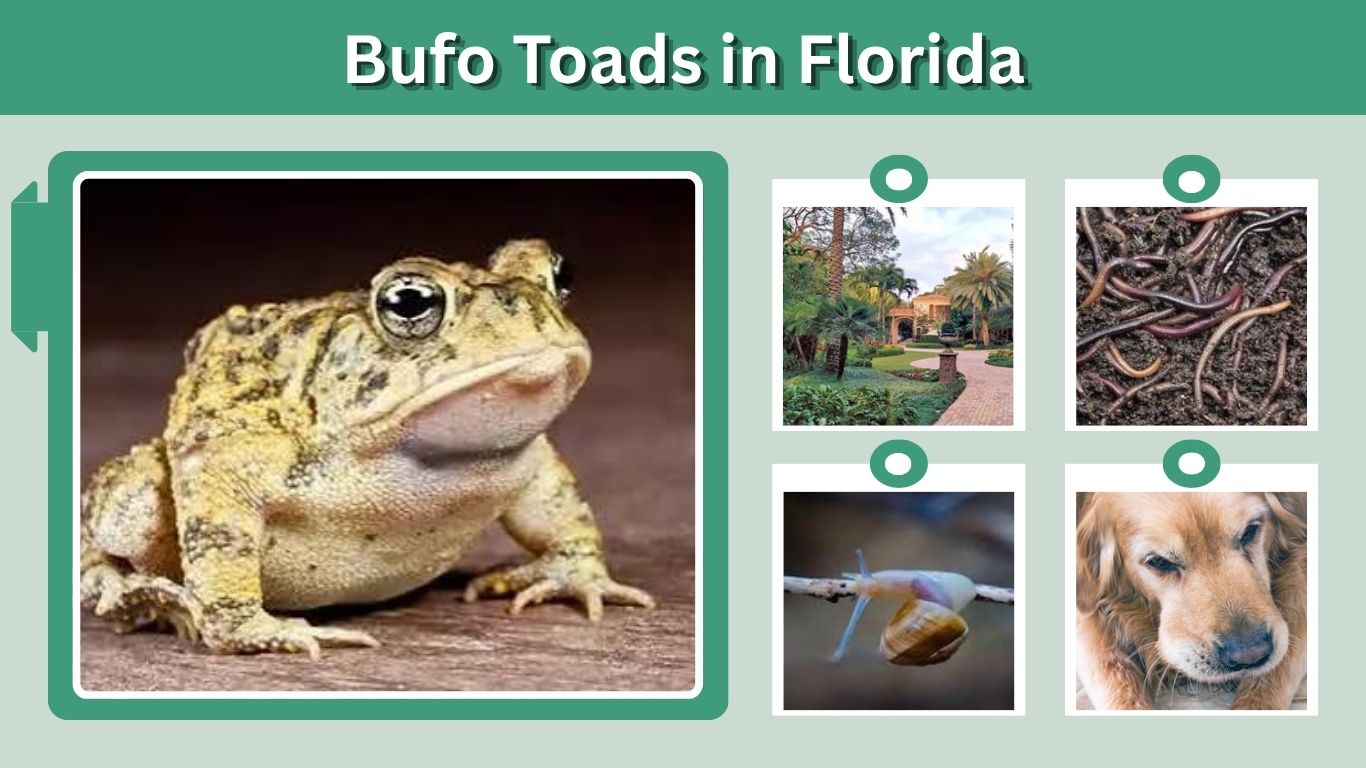
The Florida Bufo toad is more accurately called the cane toad or marine toad. Its scientific name is Rhinella marina, although older sources call it Bufo marinus. This large, nonnative amphibian is established primarily in central and southern Florida. Cane toads are especially concerning because glands behind their heads produce a powerful toxin that can seriously poison dogs and other animals. Learning how to identify a Bufo toad, distinguish it from Florida’s native toads, and reduce encounters around the home can help protect both pets and beneficial wildlife.
What Is a Florida Bufo Toad?
“Bufo toad” is a popular Florida nickname for the invasive cane toad. Scientists formerly placed the species in the genus Bufo, which explains why the old name remains common among homeowners, veterinarians, pest-control professionals, and pet owners.
Cane toads are native to parts of South and Central America. They were introduced into Florida through attempts to control agricultural pests and through accidental releases associated with the pet trade. Established populations are now concentrated in developed areas of central and southern Florida.
The species is highly adaptable. It thrives around houses, canals, golf courses, agricultural land, drainage systems, retention ponds, parks, and suburban neighborhoods. Artificial lights also create productive hunting areas by attracting insects.
Florida Bufo Toad Identification
Correct identification is important because Florida has native toads that should not be mistaken for invasive cane toads. Size is useful, but it should never be the only feature considered.
Size
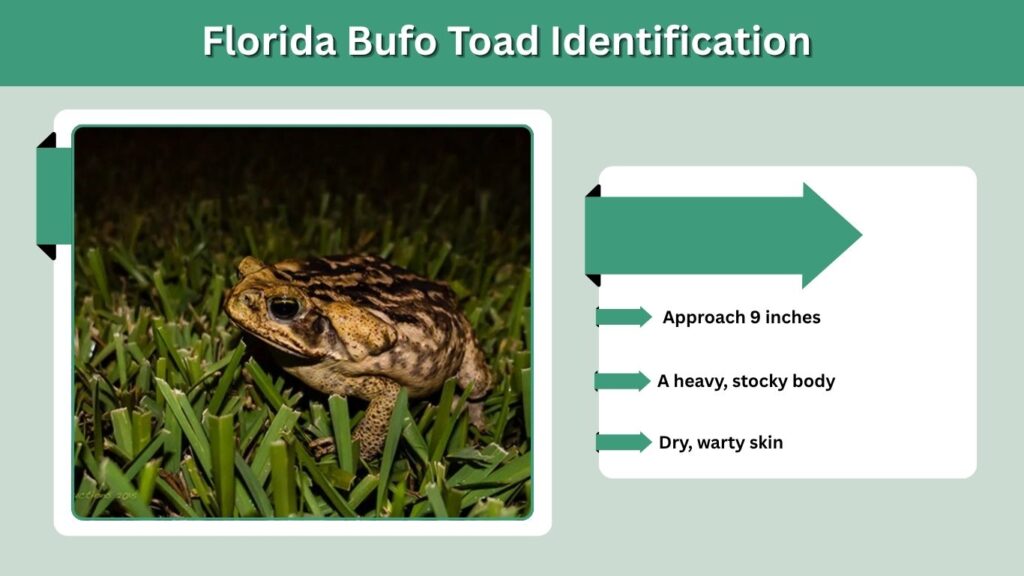
Adult cane toads are much larger than most native Florida toads. Many measure approximately 4–6 inches long, while exceptionally large individuals may approach 9 inches. However, baby and juvenile cane toads can be much smaller, so a small body does not automatically indicate a native species.
Color and Body Shape
Florida Bufo toads commonly have gray, tan, olive-brown, reddish-brown, or dark-brown bodies. Their backs are dry-looking and covered with irregular bumps or warts. The underside is usually pale cream or yellowish and may contain dark spots.
Important identifying features include:
- A broad, relatively flat head
- A heavy, stocky body
- Large triangular glands behind the eyes
- Dry, warty skin
- Short legs and a walking or hopping movement
- No obvious raised knobs between the eyes
- Few or no clearly defined bony ridges on top of the head
The large triangular structures behind the eyes are parotoid glands. They contain the defensive toxin that makes cane toads dangerous to animals that bite or mouth them.
Bufo Toad vs. Native Florida Toad
The native southern toad, Anaxyrus terrestris, is frequently confused with the invasive cane toad. Southern toads are common throughout Florida and provide ecological benefits by eating insects and other small pests. They should not be killed merely because they resemble cane toads.
| Feature | Cane or Bufo toad | Southern toad |
|---|---|---|
| Florida status | Nonnative and invasive | Native |
| Typical adult size | Often over 4 inches | Usually smaller |
| Glands behind eyes | Very large and triangular | Smaller and oval |
| Top of head | Generally lacks raised knobs | Has noticeable knobs or ridges |
| Body build | Broad and heavy | More compact |
| Risk to pets | Potentially life-threatening | Far lower risk |
A southern toad normally has pronounced cranial ridges and enlarged knobs behind or between the eyes. A cane toad usually has a smoother, flatter crown and much larger poison glands over the shoulders.
Do not rely only on color because both species can be brown, gray, tan, or reddish. When identification is uncertain, photograph the animal from above and from the side and contact a local UF/IFAS Extension office or qualified wildlife professional.
Where Are Bufo Toads Found in Florida?
Cane toads are firmly established across much of southern Florida and in parts of central Florida. They are particularly associated with warm, human-modified environments. Their distribution is less continuous in northern Florida, where colder winter temperatures may limit long-term survival.
Common locations include:
- Miami-Dade and Broward counties
- Palm Beach and Collier counties
- Southwest Florida communities
- The Florida Keys
- The Tampa Bay region
- Parts of the Orlando and central Florida area
- Landscaped developments near canals and ponds
Individual sightings outside the best-known established range do not always prove that a reproducing population exists. Unusual sightings can be reported through Florida’s nonnative-species reporting system.
Bufo Toad Habitat Around Florida Homes
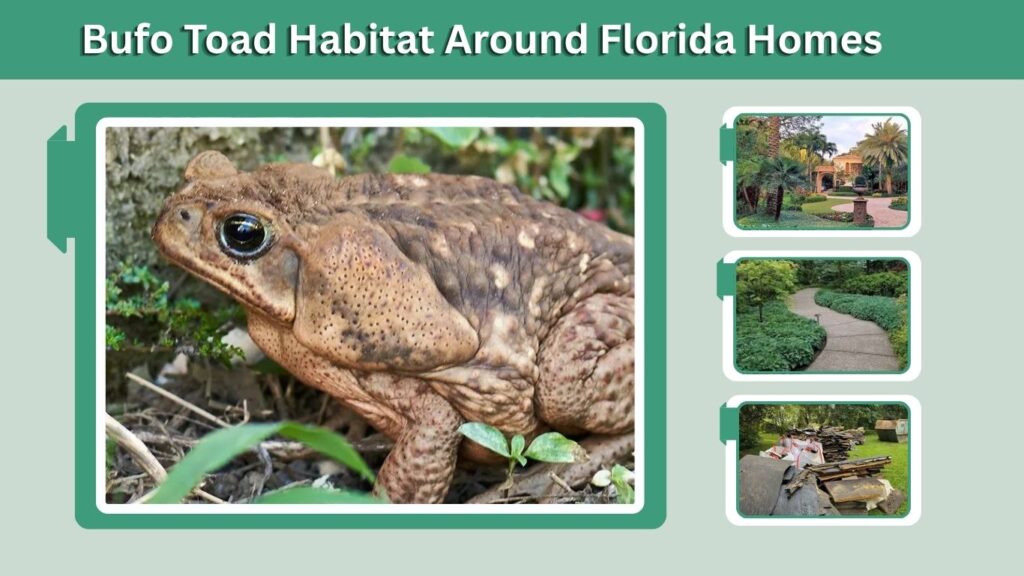
Florida Bufo toads prefer warm, damp places offering food, water, and daytime shelter. They are predominantly nocturnal and often remain hidden during hot daylight hours.
They may shelter beneath:
- Decks and porches
- Air-conditioning units
- Shrubs and ground cover
- Wood or debris piles
- Outdoor furniture
- Plant containers
- Drainage structures
- Sheds and storage areas
At night, cane toads often sit near porch lights, garages, patios, sidewalks, pet bowls, swimming pools, or ponds. These areas may attract insects or provide reliable moisture.
Florida Bufo Toad Season
Cane toads may be encountered throughout the year in the warmest parts of Florida. However, they become particularly noticeable during warm, rainy weather.
Activity and breeding generally increase during spring, summer, and early fall. Heavy rain can stimulate large numbers of toads to emerge and may create temporary pools suitable for egg laying. In cooler weather, they become less active and hide in protected spaces rather than undergoing the prolonged, deep hibernation associated with amphibians in colder climates.
Warm periods during winter may still bring them out, especially in South Florida. For that reason, pet owners should remain cautious year-round.
Diet and Behavior
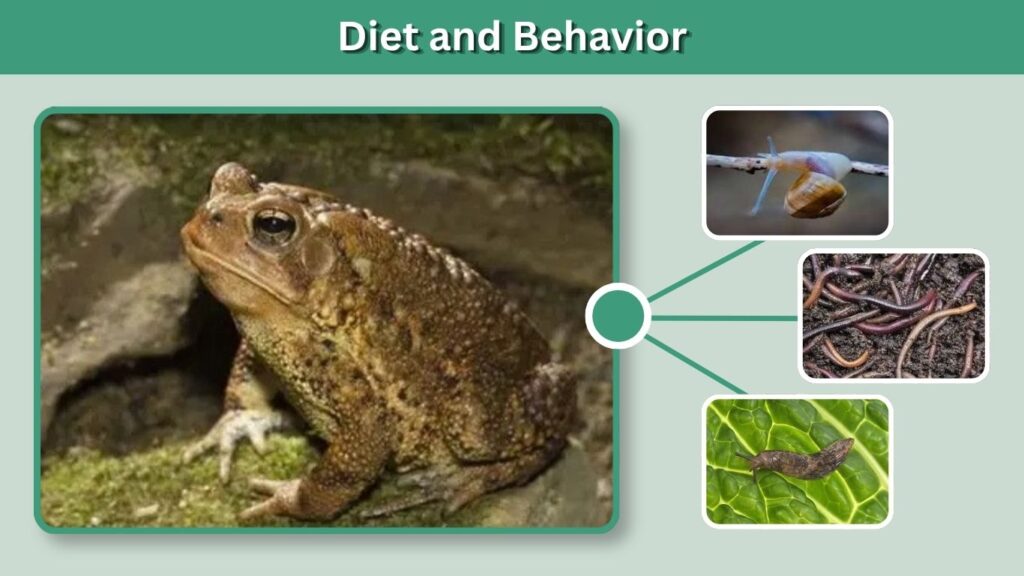
Florida Bufo toads are opportunistic predators. They consume beetles, ants, cockroaches, crickets, moths, worms, snails, slugs, spiders, smaller frogs, lizards, and almost any small animal they can swallow.
They commonly wait near outdoor lights and capture insects attracted to the illumination. Pet food left outside can also draw them into yards. Because cane toads eat such a wide range of animals, they may prey on native wildlife as well as common pests.
Cane toads do not normally chase or attack people or dogs. The danger occurs when an animal bites, licks, mouths, or attempts to swallow one.
Are Florida Bufo Toads Poisonous?
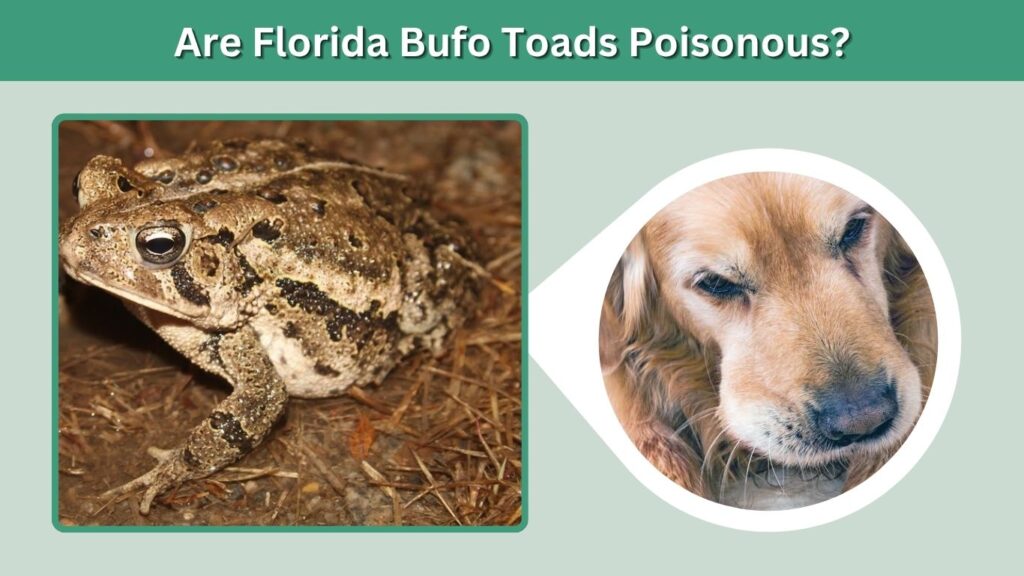
Cane toads are poisonous rather than venomous. They do not have fangs or stingers and cannot inject toxin during an attack. Instead, their parotoid glands release a thick secretion when the animal is threatened or compressed.
A dog’s bite can force this toxin directly into its mouth. The toxin is quickly absorbed through the gums and other oral tissues. Exposure can produce excessive drooling, bright-red gums, pawing at the mouth, head shaking, vomiting, crying, weakness, poor coordination, tremors, seizures, abnormal heart activity, and death in severe cases.
People are much less likely to experience severe poisoning through ordinary contact, but the secretion can irritate the skin and eyes. Gloves and eye protection should be used when handling a suspected cane toad.
What to Do if a Dog Licks a Bufo Toad
Treat exposure as an urgent veterinary emergency.
Immediately wipe the dog’s gums, tongue, and inner cheeks with a wet cloth, repeatedly rinsing the cloth between wipes. Water may also be used carefully to flush the mouth outward, but it should not be forced down the throat or inhaled into the lungs.
Contact a veterinarian or emergency animal hospital immediately, even if the dog initially appears normal. Cleaning the mouth may reduce the amount of toxin, but it is not a substitute for veterinary treatment. UF/IFAS warns that a seriously exposed dog may die without prompt care.
How to Keep Bufo Toads Out of a Florida Yard
No single method permanently eliminates cane toads, but several changes can make a property less attractive:
- Bring pet food and water bowls indoors at night.
- Keep grass trimmed and remove dense ground-level vegetation.
- Clear boards, debris, unused pots, and other hiding places.
- Repair openings beneath fences, sheds, decks, and gates.
- Reduce unnecessary outdoor lighting or use lights that attract fewer insects.
- Remove standing water when possible.
- Keep dogs on short leashes during nighttime walks.
- Inspect the yard with a flashlight before allowing pets outside.
- Install fine mesh around pond or patio areas where practical.
Swimming pools should be checked regularly, and decorative ponds should be monitored for strings of eggs or clusters of small, dark tadpoles. Cane toad eggs and tadpoles also contain toxins.
Is It Legal to Kill Bufo Toads in Florida?
Cane toads are not protected wildlife in Florida. They may be captured and humanely killed on private property throughout the year when the landowner has granted permission. However, Florida’s animal-cruelty laws still apply. Captured cane toads must not be released somewhere else.
Identification must be confirmed before taking action because native Florida toads can look similar. Wear gloves, cover exposed skin, and protect the eyes when capturing a cane toad.
UF/IFAS describes a cooling-then-freezing method for humane euthanasia: place the captured toad in a secure container, cool it in a refrigerator for several hours to render it inactive, and then transfer it to a freezer for at least 24 hours. Homeowners uncomfortable handling the animal should hire a qualified nuisance-wildlife professional.
FAQs
Are Bufo toads native to Florida?
No. Cane toads are native to South and Central America. They were introduced into Florida and are now established mainly in central and southern parts of the state.
Can a Florida Bufo toad kill a dog?
Yes. A dog that bites or mouths a cane toad may receive a potentially fatal dose of toxin. Immediate mouth cleaning and emergency veterinary treatment are essential.
How large do Florida Bufo toads get?
Many adults are 4–6 inches long, but exceptionally large specimens may reach approximately 9 inches. Juvenile cane toads can be considerably smaller.
Do Bufo toads hibernate in Florida?
They may become inactive and hide during cold periods, but they can remain active year-round in warm areas of South Florida. Activity increases during warm, wet weather.
How can I identify a baby Bufo toad?
Baby cane toads are small, dark, and difficult to distinguish from native species. Look at the animal’s head structure and glands rather than size alone, and obtain expert confirmation before removing it.
