
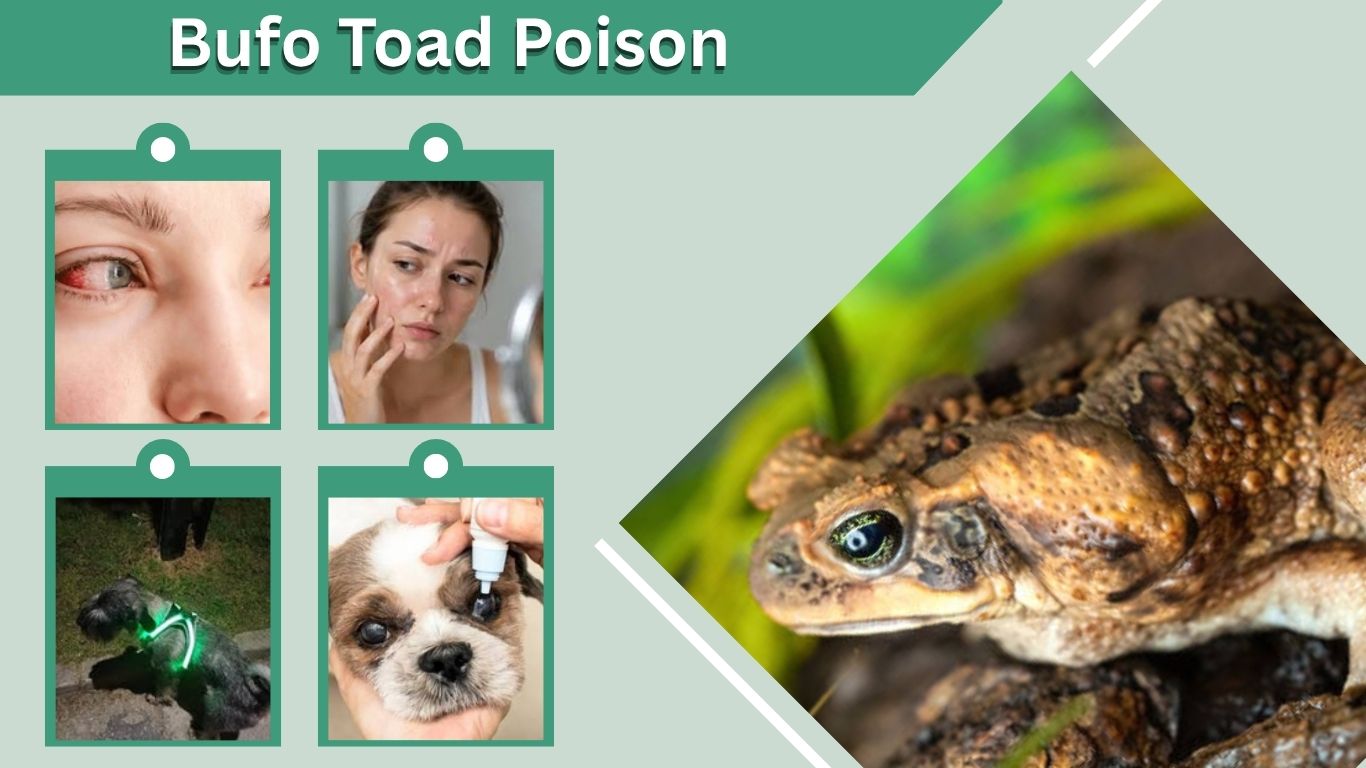
Bufo toad poison can cause a life-threatening emergency when a dog, cat, or wild animal bites or mouths one of these large amphibians. In Florida, “bufo toad” generally refers to the invasive cane toad, scientifically known as Rhinella marina and formerly classified as Bufo marinus. The toad releases a powerful milky secretion from glands behind its eyes. Exposure may cause immediate mouth irritation, drooling, abnormal heart rhythms, seizures, and death without rapid veterinary treatment.
Are Bufo Toads Poisonous?
Yes. Cane toads possess large parotoid glands on their shoulders, directly behind the eyes. When the toad feels threatened or is squeezed in an animal’s mouth, these glands release a thick secretion containing toxic compounds collectively called bufotoxins.
The toxin can affect the heart, nervous system, digestive system, and mucous membranes. Dogs are commonly poisoned because they chase, lick, bite, or pick up moving toads. Cats are exposed less frequently but can also become seriously ill after licking or biting one.
Poisonous Versus Venomous
Bufo toads are generally described as poisonous rather than venomous. They do not inject toxin through fangs or a stinger. Instead, another animal is exposed by biting the toad, swallowing it, or getting its secretion in the mouth, eyes, or an open wound.
Are All Bufo Toads Equally Dangerous?
The name “Bufo” was once used for a large group of true toads, so it does not always refer to one species. Many toads produce defensive skin secretions, but their toxicity varies considerably.
The invasive cane toad is one of the most dangerous species for pets. In Florida, it should not be confused with smaller native toads, which generally present a much lower risk. Cane toads often have large triangular glands behind the eyes, dry warty skin and a broad head. Adults commonly grow much larger than native Florida toads.
Bufo Toad Poisoning in Dogs
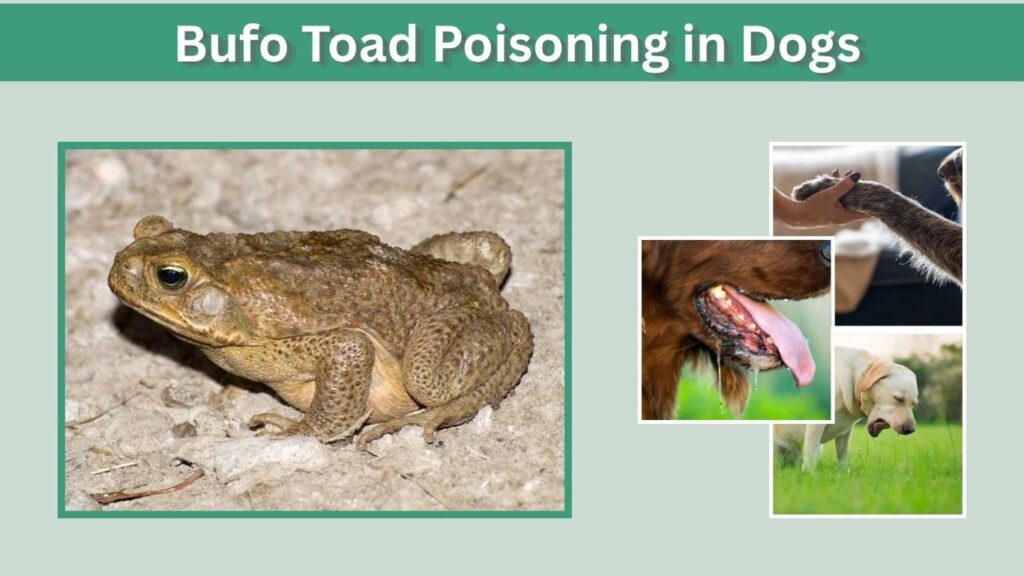
A dog does not have to swallow the entire toad to be poisoned. Licking, biting or briefly holding one in the mouth may transfer toxin onto the gums and tongue. The toxin can be absorbed rapidly through the mouth, so symptoms may begin within minutes.
Early Symptoms
The first signs usually involve severe irritation of the mouth:
- Sudden excessive drooling or foaming
- Bright-red or inflamed gums
- Pawing at the mouth
- Repeated head shaking
- Whining or other signs of pain
- Vomiting or diarrhea
These signs may appear while the dog is still near the toad. Do not wait to see whether the symptoms improve before contacting a veterinarian.
Severe Symptoms
As more toxin is absorbed, symptoms can progress rapidly to:
- Loss of balance or difficulty walking
- Tremors or muscle stiffness
- Abnormal eye movements
- Fast, slow or irregular heartbeat
- Difficulty breathing
- Elevated body temperature
- Seizures
- Paralysis, collapse or coma
Severe cane toad poisoning can be fatal without immediate care. The outcome depends on factors such as the toad species, the amount of toxin, the pet’s size and how quickly treatment begins.
What to Do If Your Dog Licks a Bufo Toad
Treat suspected exposure as an emergency, even when the dog initially appears alert.
| Action | What to Do |
| Remove the dog | Move the dog away from the toad without touching the secretion with bare hands. |
| Call for help | Contact an emergency veterinarian or animal poison-control service immediately. |
| Clean the mouth | Carefully flush or wipe toxin from the gums, tongue and inside of the cheeks. |
| Prevent aspiration | Keep water flowing outward rather than forcing it toward the throat. |
| Travel to a clinic | Continue to the veterinary hospital even if the dog seems to improve. |
Begin decontamination while another person calls the veterinarian when possible. Carefully rinse the mouth with clean running water, directing the water from the side of the mouth outward. A wet cloth can also be used to wipe the gums, tongue and inner cheeks repeatedly.
Do not force water down the animal’s throat, particularly if it is disoriented, trembling or having a seizure. Aerosolized saliva or contaminated water can be inhaled, creating an additional risk.
What Not to Do
Do not induce vomiting. Neurological symptoms can begin quickly, increasing the chance that vomit will enter the lungs. Do not give milk, oil, salt, hydrogen peroxide, human medicine or another supposed home antidote unless a veterinarian specifically directs you to do so. There is no reliable at-home antidote for cane toad poisoning.
Veterinary Treatment for Bufo Toad Poisoning
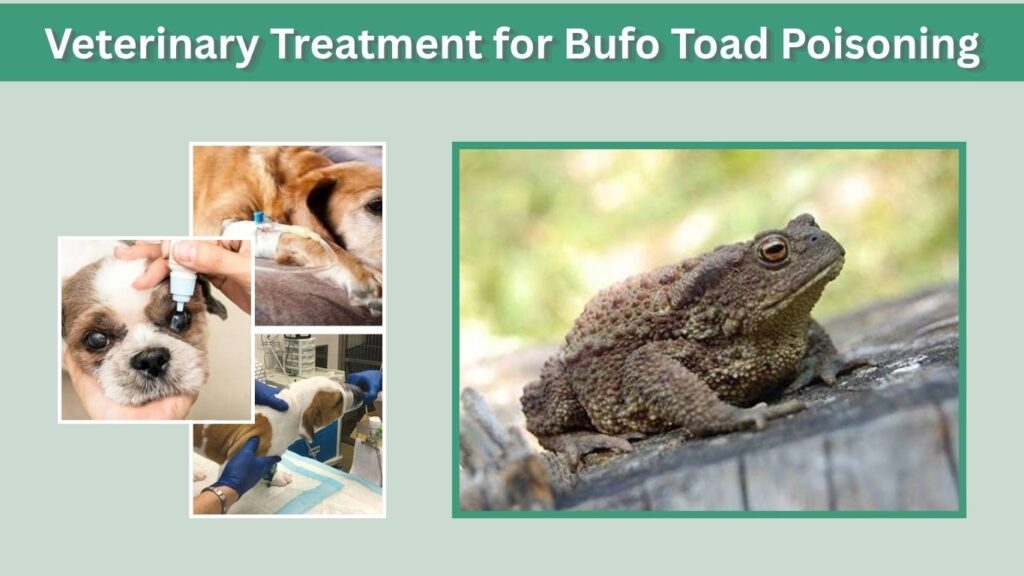
Veterinary treatment depends on the animal’s symptoms and the severity of exposure. There is no single specific antidote, so treatment focuses on removing remaining toxins and supporting the heart, breathing and nervous system.
A veterinarian may provide:
- Additional mouth and eye decontamination
- Intravenous fluids
- Medication to control seizures or tremors
- Oxygen and respiratory support
- Continuous heart-rate and rhythm monitoring
- Medication for dangerous cardiac abnormalities
- Temperature management and other supportive care
Animals with severe symptoms may require hospitalization and intensive monitoring. Pets that receive rapid decontamination and professional treatment have a better chance of recovery.
Can Bufo Toads Poison Cats?
Bufo toad poisoning can affect cats, although reported encounters are less common because cats may be more cautious around large toads. A cat that paws, bites or licks a cane toad can develop drooling, vomiting, red gums, loss of coordination, breathing difficulties, tremors or seizures.
Do not attempt to forcefully rinse an uncooperative cat because doing so may cause injury or aspiration. Contact an emergency veterinarian immediately and follow the clinic’s instructions for safe decontamination and transportation.
Are Bufo Toads Poisonous to Humans?
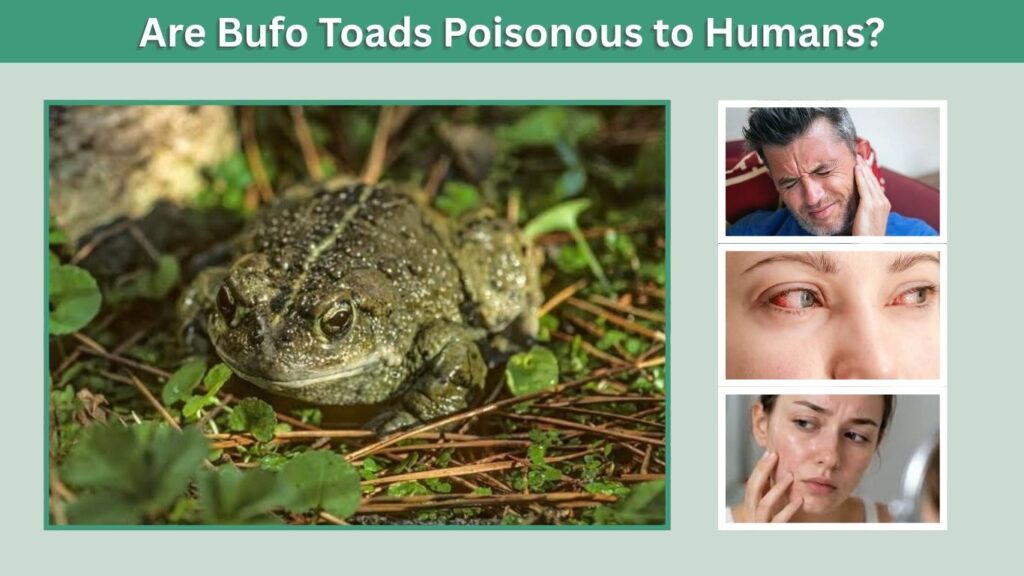
Cane toads do not normally attack people or intentionally spray toxin from a distance. However, their skin secretion can irritate human skin and may cause significant burning if it enters the eyes, mouth, nose or an open wound. Serious human poisoning is uncommon but can occur if toad toxin, tissues or eggs are swallowed.
After skin contact, wash the affected area thoroughly with soap and water. Flush exposed eyes continuously with clean, lukewarm water and seek medical advice if pain, redness, blurred vision or irritation continues. In the United States, Poison Control can be reached at 1-800-222-1222.
Never Smoke or Consume Toad Secretions
Online searches for “smoking bufo toad poison” may refer to psychoactive secretions associated with a different species, commonly called the Sonoran Desert or Colorado River toad. This should not be confused with ordinary handling of Florida cane toads.
Heating, smoking, licking or swallowing any toad secretion is dangerous. Toad toxins can interfere with heart function and cause vomiting, confusion, abnormal heart rhythms, seizures or severe poisoning. No toad secretion should be used recreationally or medicinally without legitimate clinical research and medical oversight.
Are Baby and Dead Bufo Toads Poisonous?
Baby cane toads should be treated as poisonous. Toxic compounds occur throughout the species’ life cycle, including in eggs, tadpoles, young toads and adults. Cane toad eggs can poison animals that consume them.
A dead cane toad should also be considered hazardous. Death does not immediately remove toxins stored in its glands and tissues. Prevent dogs and cats from licking, chewing or eating a dead toad, and use gloves or a shovel when removing one.
How to Protect Pets from Bufo Toad Poisoning
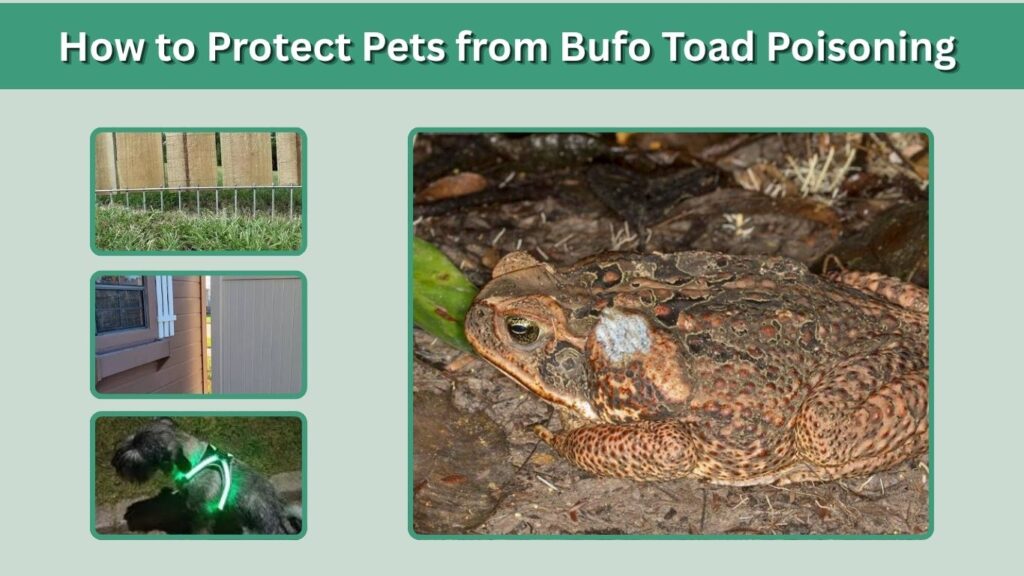
Cane toads are primarily active at night, especially during warm and wet weather. Supervise pets closely during evening bathroom breaks and walks.
Helpful preventive steps include:
- Keep dogs on a short leash after dark.
- Inspect the yard before allowing pets outside.
- Remove outdoor pet food and water overnight.
- Turn off unnecessary outdoor lights that attract insects.
- Trim low shrubs and remove boards, brush and yard debris.
- Block gaps beneath fences, sheds, porches and gates.
- Keep grass short and remove standing water where possible.
- Teach dogs a reliable “leave it” command.
Never allow a pet to investigate a suspected cane toad. Preventing even a few seconds of mouth contact is far safer than trying to manage poisoning afterward.
FAQs
How quickly does Bufo toad poison affect a dog?
Symptoms often begin within minutes of licking or biting a cane toad. Drooling, foaming, red gums and pawing at the mouth may be followed rapidly by tremors, abnormal heart rhythms or seizures. Begin careful mouth decontamination and seek emergency veterinary treatment immediately.
Can a dog survive Bufo toad poisoning?
Yes, particularly when the toxin is removed quickly and veterinary treatment begins before severe heart or neurological complications develop. Survival depends on the dose, dog’s size, underlying health and treatment speed. Severe untreated poisoning can be fatal.
Can touching a Bufo toad poison you?
Brief contact with intact skin is more likely to cause irritation than systemic poisoning. However, secretion transferred to the eyes, mouth, broken skin or food presents a greater danger. Wear gloves, wash exposed skin and avoid touching your face after handling a toad.
Are small Bufo toads poisonous to dogs?
Yes. Young cane toads contain defensive toxins even though they have smaller glands and bodies than adults. A puppy or small dog may also be particularly vulnerable because a relatively small amount of toxin can represent a substantial exposure.
Is a dead Bufo toad poisonous to dogs?
A dead cane toad should be assumed to remain poisonous because toxins may persist in its glands and tissues. Do not allow a pet to lick or eat the carcass. Remove it with gloves or a tool and place it where pets cannot reach it.
