
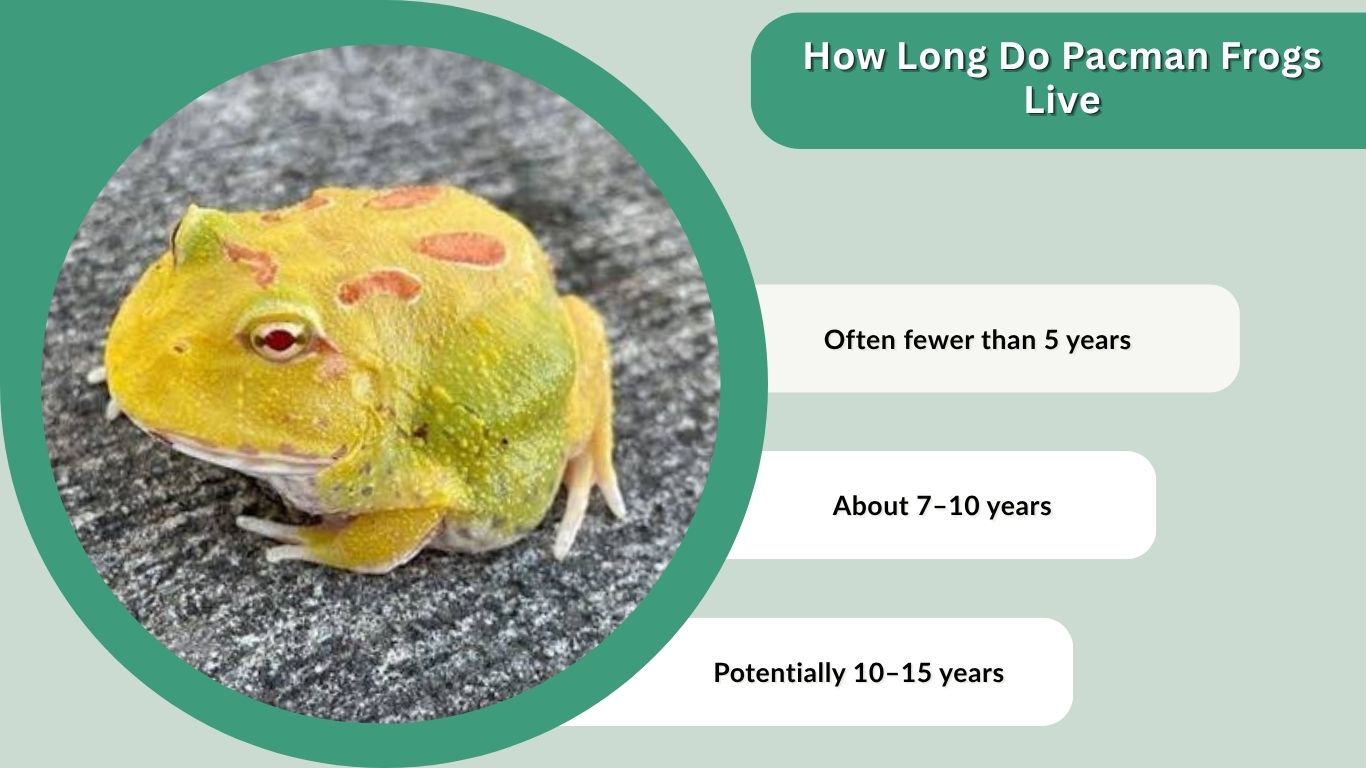
Pacman frogs generally live seven to ten years as pets, although well-cared-for individuals may survive for ten to fifteen years. Their exact lifespan depends on genetics, diet, temperature, humidity, cleanliness, and access to veterinary care. Some sources provide shorter averages because survival varies considerably among species and captive conditions. Understanding normal feeding, burrowing, growth, and brumation behavior can help owners recognize problems early and give their frog the best chance of living a long life.
Average Pacman Frog Lifespan
Pacman frogs are South American horned frogs belonging to the genus Ceratophrys. Several species and captive-bred color morphs are sold as pets, but their basic longevity and care requirements are generally similar.
| Living conditions | Estimated lifespan |
| Poor or inconsistent captive care | Often fewer than 5 years |
| Typical captive care | About 7–10 years |
| Excellent long-term care | Potentially 10–15 years |
| General estimate reported by WWF | About 6 years |
Published estimates vary. WWF lists a general lifespan of about six years, while several captive-care sources report that properly maintained Pacman frogs may reach ten years or longer. The difference reflects variations in species, genetics, recordkeeping, and husbandry quality.
How Long Do Pacman Frogs Live in Captivity?
A healthy captive Pacman frog commonly lives for seven to ten years. Some may reach 15 years when kept under stable conditions throughout their lives. However, reaching the upper end of that range requires more than simply providing food and water.
Owners must maintain suitable temperatures and humidity, provide a varied diet, prevent obesity and impaction, and keep the enclosure sanitary. Annual examinations by an amphibian or exotic-animal veterinarian may also help identify health problems before they become severe.
How Long Do Albino Pacman Frogs Live?
Albino Pacman frogs can have approximately the same lifespan as normally colored frogs. Albinism is a color trait rather than a separate species, so an albino frog may also live around seven to ten years with appropriate care.
Albino frogs have sensitive eyes and may be uncomfortable under intense lighting. Their enclosure should provide shaded areas and hides while still maintaining a normal day-and-night cycle. Individual genetics and husbandry are more important to longevity than color alone.
What Affects a Pacman Frog’s Lifespan?
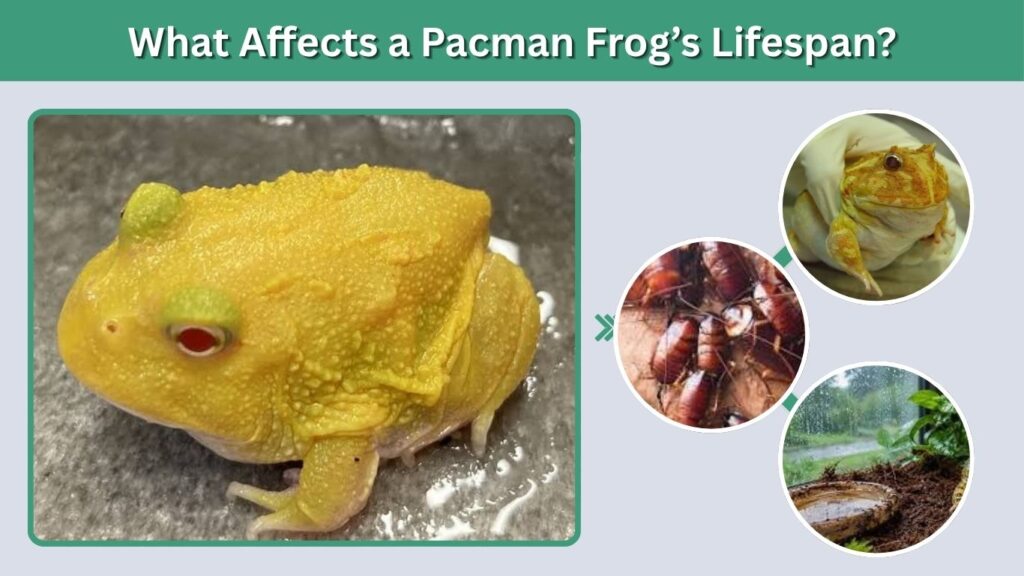
Although owners cannot control genetics, they can control most environmental factors that influence health. Pacman frogs are hardy when their needs are met, but chronic husbandry mistakes may gradually shorten their lives.
Temperature and Humidity
A Pacman frog’s habitat should generally remain around 75–83°F during the day and 70–75°F at night. Humidity should usually stay near 70–80%, with damp—but not waterlogged—substrate. Temperatures should be monitored with thermometers, while humidity should be checked with a hygrometer.
Conditions that are too dry can cause dehydration, inactivity, and shedding problems. Excessively wet, dirty conditions encourage mold and bacterial growth. A shallow bowl of filtered or dechlorinated water should always be available and cleaned daily.
Diet and Feeding
Pacman frogs require varied, appropriately sized prey. Suitable staples include gut-loaded crickets, earthworms, and roaches. Feeding only one type of insect may create nutritional deficiencies, while frequent fatty foods can contribute to obesity.
Juveniles are commonly fed daily because they are growing rapidly. Adults normally eat only once or twice per week. Calcium and vitamin supplementation should follow an amphibian veterinarian’s guidance, as both deficiency and excessive supplementation can cause problems.
Cleanliness and Health Care
Remove uneaten food and waste daily, clean the water dish regularly, and perform complete enclosure maintenance as needed. Poor sanitation can expose frogs to bacterial, fungal, and parasitic problems.
Warning signs include:
- Unexplained weight loss
- Persistent refusal to eat
- Red skin on the legs or underside
- Swelling or bloating
- Open-mouth breathing
- Eye or nasal discharge
- Dry, damaged, or discolored skin
These symptoms require attention from a veterinarian experienced with amphibians.
How Long Can a Pacman Frog Go Without Eating?
There is no single safe fasting period for every Pacman frog. Age, body condition, temperature, illness, stress, and seasonal behavior all affect how long an individual can tolerate food refusal.
A healthy adult may occasionally miss a scheduled feeding without immediate harm because adults are normally offered food only once or twice per week. However, owners should never deliberately test how long a frog can survive without food. Juveniles have fewer reserves and need more frequent meals to support growth.
Adult Pacman Frogs
An adult that refuses one meal but remains alert and maintains its weight may simply not be hungry. Check the enclosure temperature and humidity, remove uneaten prey, and try again at the next normal feeding.
Persistent fasting is more concerning when accompanied by weight loss, bloating, lethargy, abnormal skin, or difficulty passing waste. These signs may indicate dehydration, impaction, infection, stress, or unsuitable habitat conditions.
Baby Pacman Frogs
Baby and juvenile frogs should not be left without food for extended periods. They are typically fed daily, although appetite may vary from one day to another.
A juvenile that repeatedly refuses food should have its temperature, humidity, prey size, and supplementation reviewed promptly. Seek veterinary help when food refusal continues or the frog begins losing weight.
How Long Do Pacman Frogs Stay Buried?
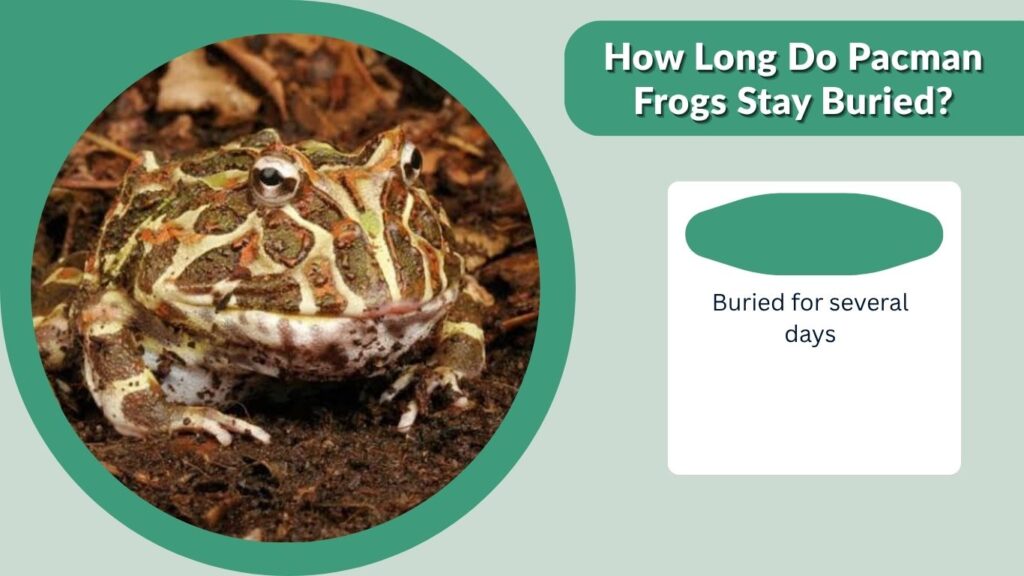
Burrowing is normal Pacman frog behavior. These ambush predators spend much of their time partly or completely covered by substrate while waiting for prey. A frog may remain buried for several days, emerging mainly to eat, soak, or move to a better location.
Provide at least two to four inches of loose, moisture-retaining substrate so the frog can burrow comfortably. Coconut fiber and similar amphibian-safe substrates are commonly used. Avoid gravel or small stones because accidentally swallowing them can cause intestinal obstruction.
A buried frog should still be checked without repeatedly digging it up. Monitor enclosure conditions and look for signs of movement. Prolonged hiding becomes concerning when combined with weight loss, dehydration, foul odors, abnormal skin, or continued refusal to eat.
Do Pacman Frogs Hibernate or Brumate?
Pacman frogs may enter a period of reduced activity during cooler or drier conditions. This behavior is often called brumation, although estivation may be a more accurate description when inactivity is triggered by dry conditions.
During this period, the frog may burrow deeply, stop eating, and develop a protective layer of shed skin that helps reduce moisture loss. There is no universal duration; inactivity may continue until environmental conditions improve.
Captive owners should not intentionally induce brumation unless working under expert veterinary or breeding guidance. Maintain safe temperatures and humidity, and investigate husbandry problems before assuming that a motionless frog is undergoing a normal seasonal rest. Veterinary guidance recommends maintaining humidity and watching closely for illness during inactive periods.
How Long Does It Take a Pacman Frog to Grow?
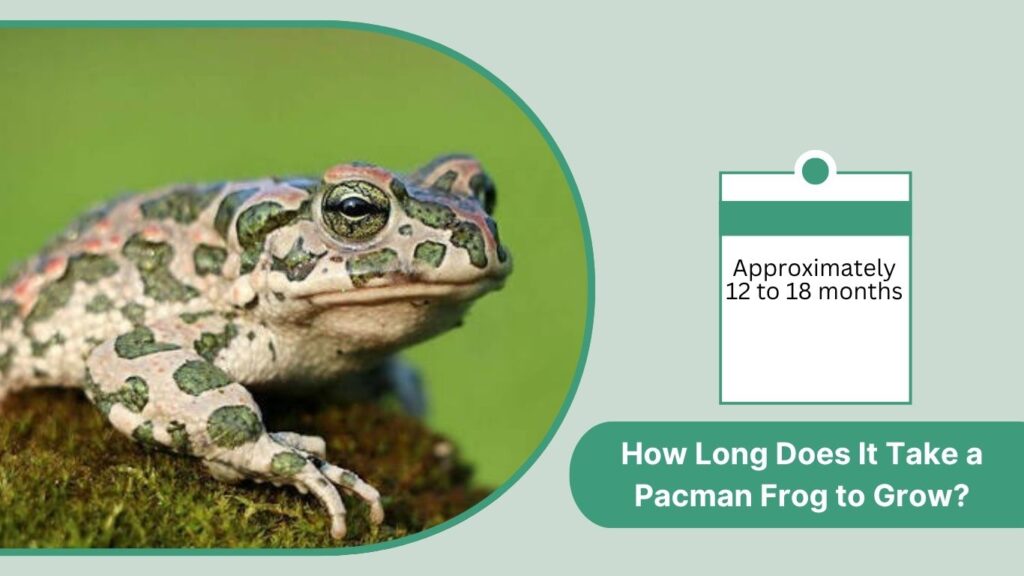
Pacman frogs grow quickly during their first year. Many approach adult size in approximately 12 to 18 months, although growth rate depends on species, sex, diet, temperature, and individual genetics. Females usually become considerably larger than males.
Adult Pacman frogs generally measure around three to eight inches, with females commonly occupying the upper end of the range.
Rapid growth should not be encouraged through overfeeding. Excessive feeding can produce obesity rather than healthy development. Offer appropriately sized, varied prey and track the frog’s body condition instead of trying to reach a particular size by a fixed date.
FAQs
Can Pacman frogs live for 20 years?
Claims of 20-year-old Pacman frogs occasionally appear online, but they are not representative of the usual lifespan. Most commonly cited captive estimates are approximately seven to ten years, with exceptionally well-cared-for frogs potentially reaching ten to fifteen years.
How long can Pacman frogs live without crickets?
Pacman frogs do not need crickets specifically. They can eat earthworms, appropriately sized roaches, and other suitable prey. A varied diet is healthier than relying exclusively on crickets, provided all prey is safe, properly sized, gut-loaded, and supplemented when necessary.
How long can a Pacman frog go without water?
A Pacman frog should never be intentionally deprived of water. Amphibians absorb moisture through their skin and can become dehydrated when humidity is too low. Keep damp substrate and a shallow bowl of clean, dechlorinated water available at all times.
How long does it take a Pacman frog to digest food?
Digestion time varies according to meal size, temperature, age, and health. A large meal takes longer to process than a small insect. Instead of expecting waste on a precise schedule, monitor the frog for bloating, appetite loss, straining, or prolonged absence of bowel movements.
Why is my Pacman frog not eating?
Common causes include low temperature, dehydration, stress, seasonal inactivity, unsuitable prey, impaction, or illness. First verify temperature and humidity and offer appropriately sized prey. Consult an amphibian veterinarian when refusal persists or occurs with weight loss, bloating, lethargy, redness, or breathing problems.
