
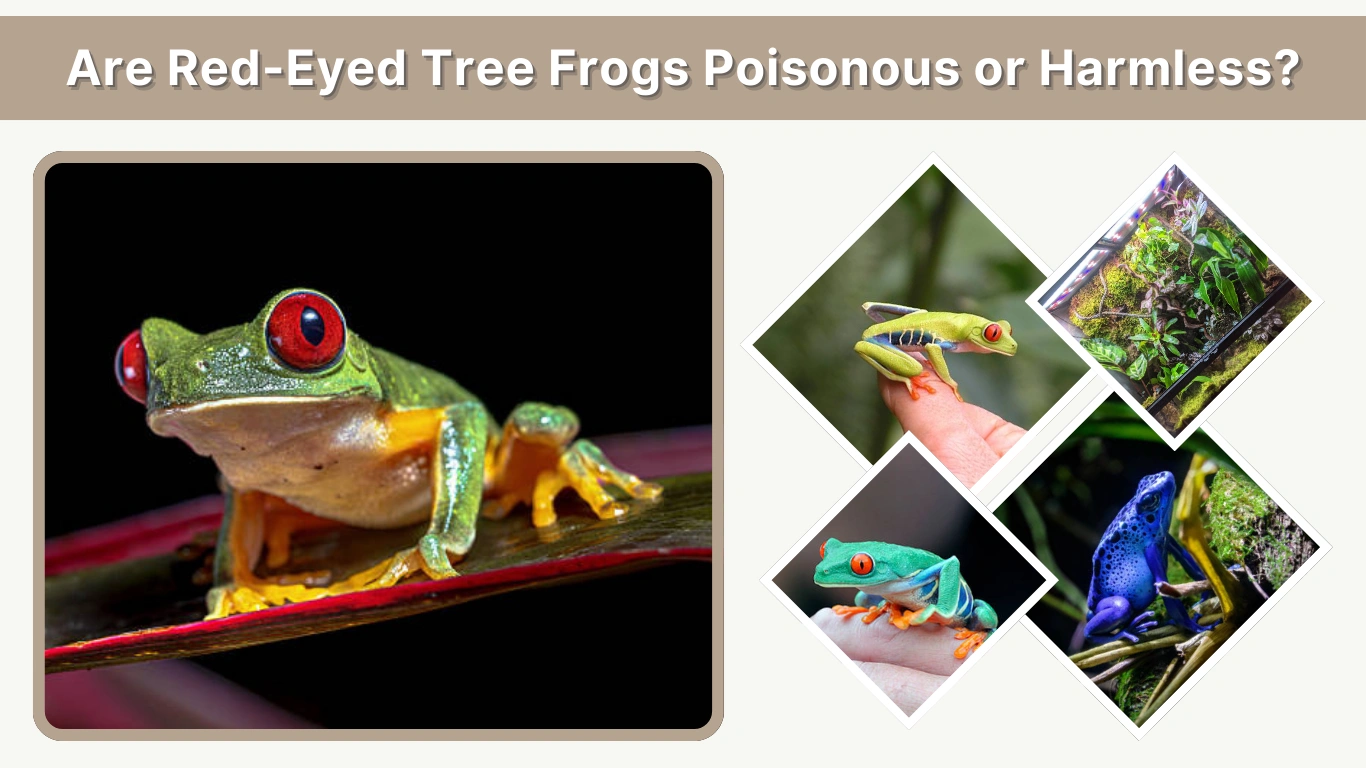
Red-eyed tree frogs are among the most recognizable amphibians in the world, famous for their bright green bodies, blue-and-yellow sides, and striking red eyes. Their vivid colors often make people wonder whether they are dangerous or poisonous, since bright coloration in nature is frequently a warning sign. This curiosity is common among animal lovers, travelers, and pet enthusiasts alike. So, are red-eyed tree frogs actually poisonous, or do they just look the part? Let’s explore the science, myths, and fascinating biology behind these iconic frogs.
What Does “Poisonous” Really Mean?
Before answering the main question, it’s important to clarify what “poisonous” means in a biological sense. An animal is considered poisonous if it produces toxins that cause harm when another animal touches or eats it. This is different from venomous, which refers to animals that actively inject toxins through bites or stings, like snakes or scorpions.
Many amphibians produce skin secretions that can be mildly toxic or irritating. However, the presence of toxins does not automatically mean an animal is dangerous to humans. The strength of the toxin, how it is delivered, and the amount of exposure all matter.
Are Red-Eyed Tree Frogs Poisonous?
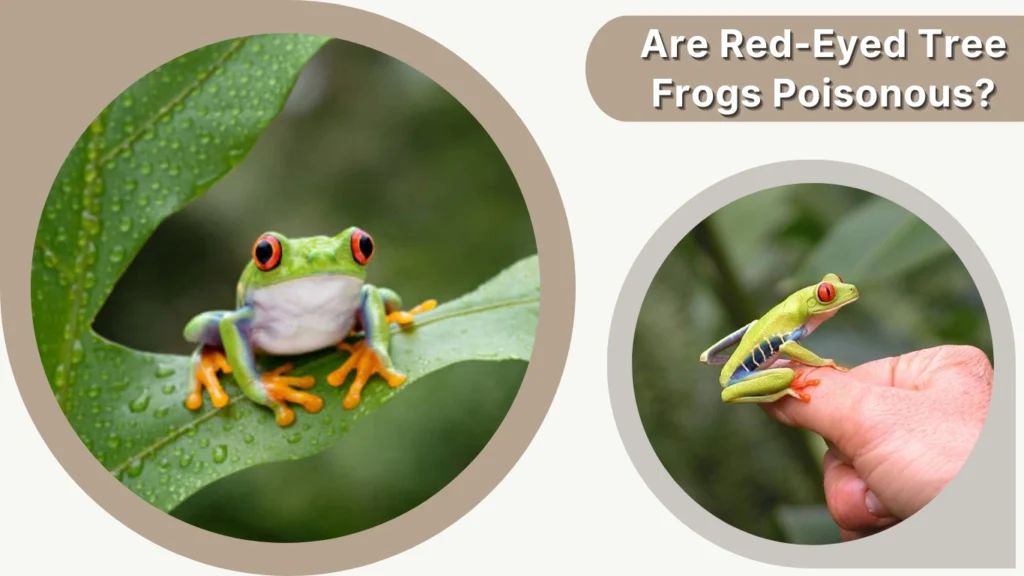
The short answer: no, red-eyed tree frogs are not poisonous to humans.
Red-eyed tree frogs (Agalychnis callidryas) do produce mild skin secretions, as most frogs do, but these substances are not potent toxins. They are primarily meant to discourage predators such as birds, snakes, or small mammals. For humans, these secretions are generally harmless.
If handled gently and infrequently, red-eyed tree frogs pose no serious health risk. At most, sensitive individuals might experience mild skin irritation, especially if they touch their eyes or mouth afterward.
Why Do They Look Dangerous?
This is where things get interesting. Red-eyed tree frogs use a defense strategy called startle coloration, sometimes confused with warning coloration.
Startle Coloration Explained
When resting, these frogs appear mostly green, blending perfectly into leaves. When threatened, they suddenly open their eyes and reveal bright red eyes and colorful blue-and-yellow sides. This sudden flash of color can startle predators just long enough for the frog to escape.
This visual trick can make predators think the frog is toxic, even though it isn’t. It’s a clever form of deception rather than a true warning of poison.
Poisonous Frogs vs. Red-Eyed Tree Frogs
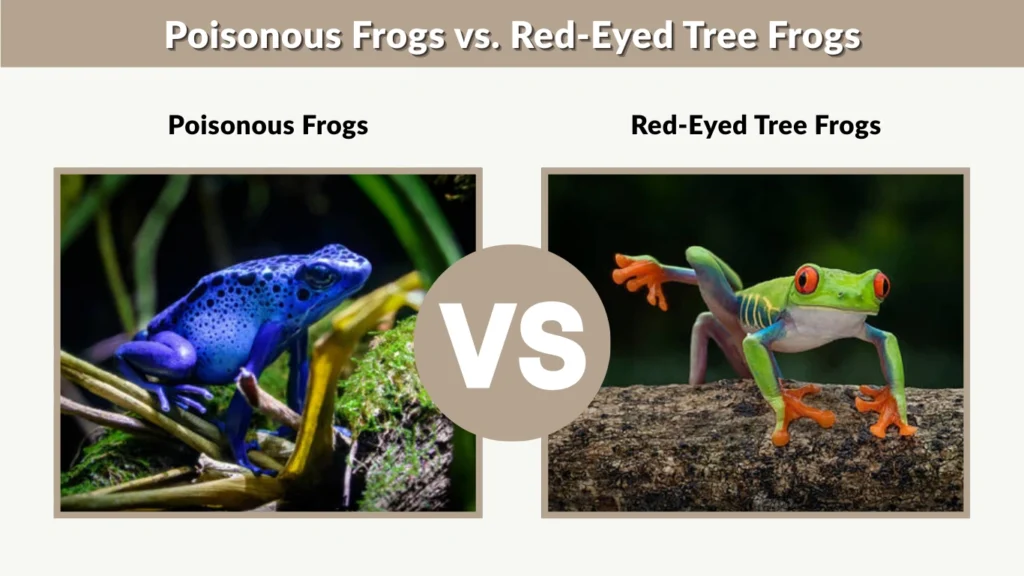
Red-eyed tree frogs are often confused with poison dart frogs, which are highly toxic. However, these two groups are very different.
Key Differences:
- Poison dart frogs secrete powerful toxins that can be lethal.
- Red-eyed tree frogs have only mild, non-lethal skin secretions.
- Poison dart frogs’ bright colors warn predators of real danger.
- Red-eyed tree frogs’ colors are mainly for surprise and escape.
Interestingly, poison dart frogs get their toxins from their diet in the wild, mainly from certain insects. Red-eyed tree frogs do not have this dietary link to toxicity.
Are Red-Eyed Tree Frogs Safe to Touch?
While they are not poisonous, handling them is not recommended—not because they are dangerous to you, but because you can be dangerous to them.
Human skin contains oils, soaps, and chemicals that can harm a frog’s delicate skin. Frogs breathe and absorb water partly through their skin, so even small residues can be harmful or fatal to them.
If handling is absolutely necessary (for example, during a health check), it’s best to:
- Wash hands with water only (no soap).
- Rinse thoroughly.
- Gently wet your hands before touching the frog.
Can Red-Eyed Tree Frogs Be Kept as Pets?
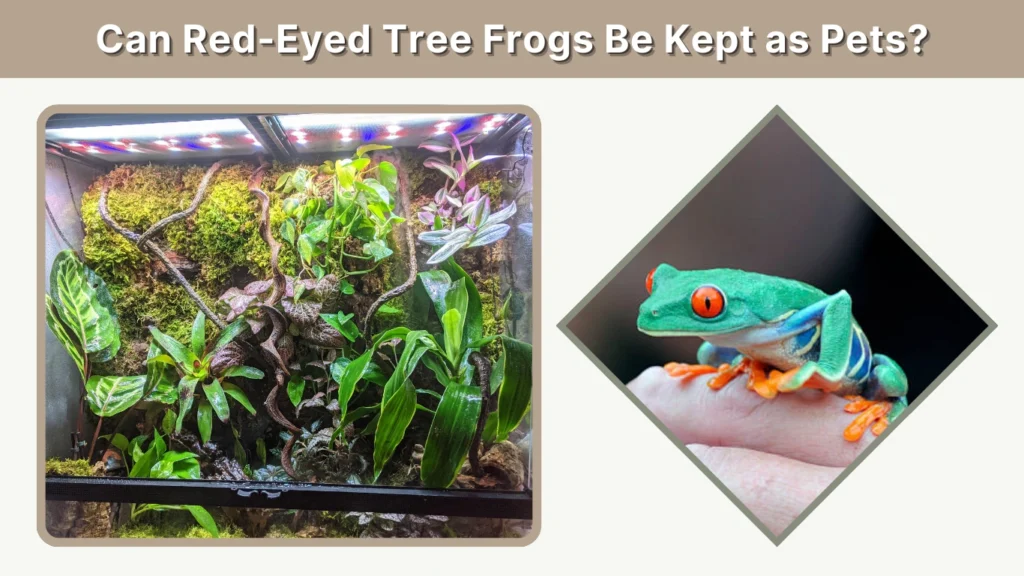
Yes, red-eyed tree frogs are popular pets and are considered safe and non-toxic when properly cared for. However, they are best suited for observation rather than frequent handling.
Pet Safety Tips:
- Wash hands before and after contact.
- Avoid touching your face after handling.
- Keep their enclosure clean and humid.
- Never allow children to handle them unsupervised.
With proper care, they can live up to 5–10 years in captivity.
Are They Dangerous to Other Animals?
For most animals, red-eyed tree frogs are not dangerous, but their mild skin secretions can taste unpleasant. This discourages predators from eating them again in the future.
They rely more on:
- Camouflage
- Quick jumping
- Startle displays
rather than toxins to survive in the wild.
Common Myths About Red-Eyed Tree Frogs
Myth 1: Bright colors always mean poison
Not true. While many poisonous animals are brightly colored, not all colorful animals are toxic. Red-eyed tree frogs are a classic example of this misconception.
Myth 2: Touching one can make you sick
In healthy individuals, this is extremely unlikely. Basic hygiene is enough to prevent any issues.
Myth 3: They are related to poison dart frogs
They are both frogs, but they belong to different families and have very different defense mechanisms.
Why Understanding This Matters
Misunderstanding animals often leads to unnecessary fear or harm. Some people avoid or even kill harmless animals because they look dangerous. Learning that red-eyed tree frogs are not poisonous helps promote conservation and responsible interaction with wildlife.
These frogs play an important role in their ecosystems by controlling insect populations and serving as indicators of environmental health.
Final Verdict: Poisonous or Not?
Red-eyed tree frogs are not poisonous.
They are harmless, fascinating amphibians that rely on clever visual tricks rather than toxins for survival. While they should be treated with respect and care, there is no need to fear them.