
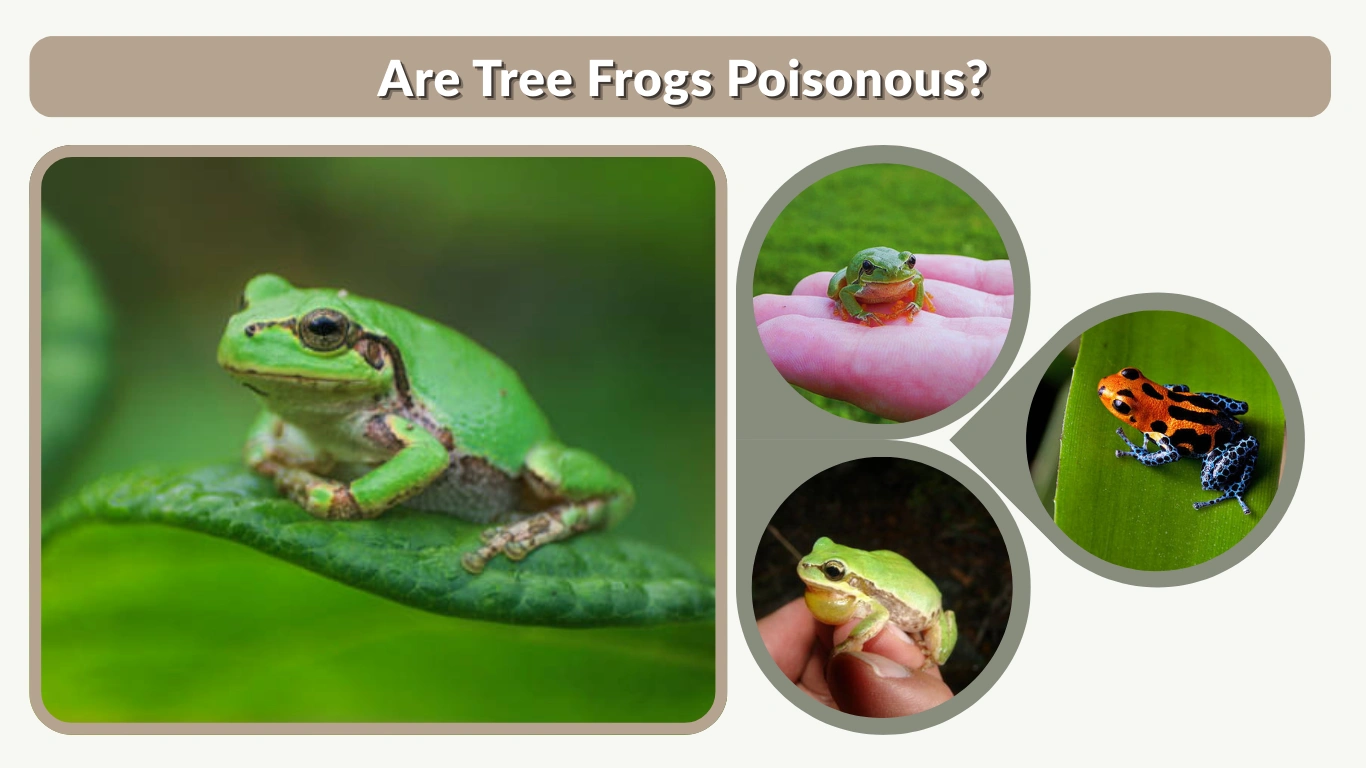
Tree frogs are small, colorful, and often seen clinging to leaves, windows, or tree trunks in warm, humid regions. Because some frogs are famously toxic, many people wonder: are tree frogs poisonous? This question is common among nature lovers, pet owners, and anyone who encounters these frogs in the wild or near their homes. The short answer is that most tree frogs are not poisonous, but the full explanation is more interesting and worth understanding.
What Does “Poisonous” Mean in Frogs?
To understand whether tree frogs are poisonous, it’s important to know what “poisonous” actually means. An animal is considered poisonous if it produces toxins that cause harm when touched, eaten, or absorbed through the skin. Frogs do not inject venom like snakes; instead, some species release toxins through their skin as a defense mechanism.
Many frogs secrete mild chemicals to deter predators, but only a small group—such as poison dart frogs—produce strong toxins that can be deadly. Tree frogs belong to a different group and generally do not rely on poison for survival.
Are Tree Frogs Poisonous to Humans?
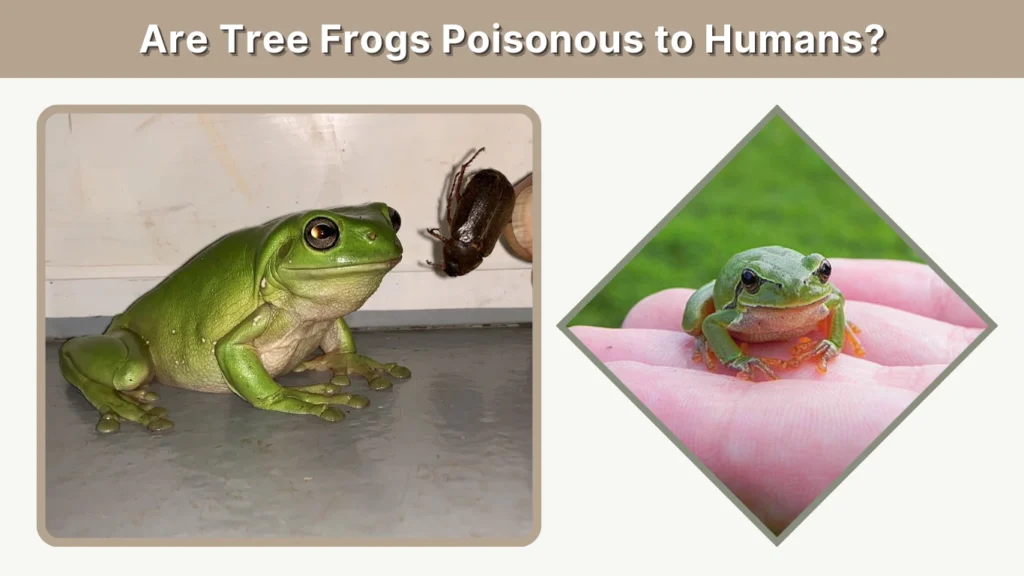
In most cases, tree frogs are not poisonous to humans. Common tree frog species have skin secretions that are either harmless or only mildly irritating. These secretions may taste bad to predators, helping the frog avoid being eaten, but they are not dangerous to people.
Some individuals may experience slight skin irritation or an allergic reaction after handling a tree frog, especially if they have sensitive skin. This is why washing your hands after touching any wild animal is always recommended. Serious health risks from tree frogs are extremely rare.
Types of Tree Frogs and Toxicity
Are Green Tree Frogs Poisonous?
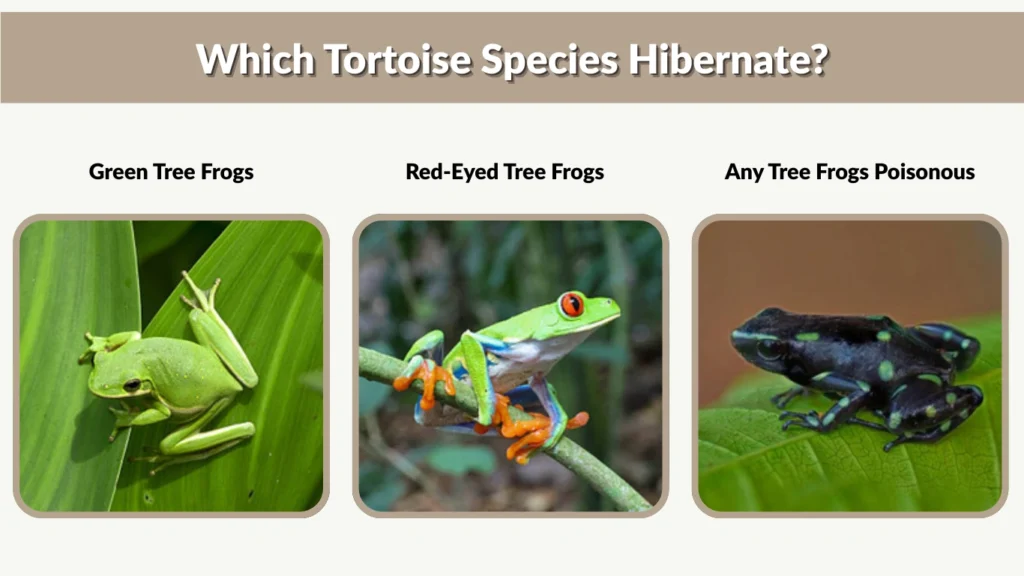
Green tree frogs are one of the most common and well-known tree frog species. They are non-poisonous and harmless to humans. These frogs are often found near houses, gardens, and ponds, especially in warm climates. Their smooth green skin and calm behavior sometimes lead people to pick them up, but while they are safe, handling should be kept to a minimum to protect the frog.
Are Red-Eyed Tree Frogs Poisonous?
Red-eyed tree frogs are famous for their bright red eyes and vivid green bodies. Despite their dramatic appearance, they are not poisonous. Their bold colors can make them look dangerous, but this is mainly used to startle predators rather than warn them of toxins. These frogs rely more on camouflage, jumping ability, and nighttime activity than chemical defense.
Are Any Tree Frogs Poisonous at All?
Almost all tree frog species are non-toxic. While some may have mild skin secretions that can irritate the mouth or eyes of predators, they are nowhere near as dangerous as poison dart frogs. True poison frogs are usually smaller, brighter, and belong to different frog families.
Tree Frogs vs Poison Dart Frogs
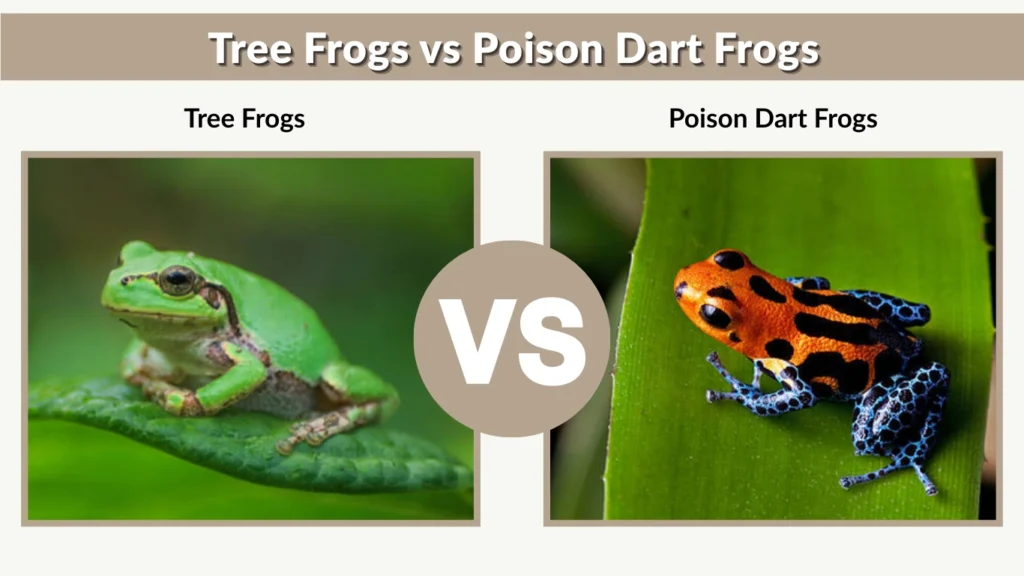
Tree frogs are often confused with poison dart frogs because both live in rainforests and can be brightly colored. However, there are major differences. Poison dart frogs produce powerful toxins that can be deadly, while tree frogs do not. Poison dart frogs get their toxins from their diet of specific insects, whereas tree frogs eat common insects like flies and crickets, which do not provide toxic chemicals.
This difference in diet and biology explains why tree frogs are generally safe while poison dart frogs are not.
Are Tree Frogs Dangerous to Pets?
Tree frogs are usually not dangerous to pets, but there are a few precautions to consider. If a dog or cat mouths a tree frog, the frog’s skin secretions may cause drooling, mild irritation, or temporary discomfort. These reactions are typically not serious and pass quickly.
However, repeated contact should be avoided, as it can stress the frog and irritate the pet. If a pet shows unusual symptoms after contact with a frog, a veterinarian should be consulted.
What Happens If You Touch a Tree Frog?
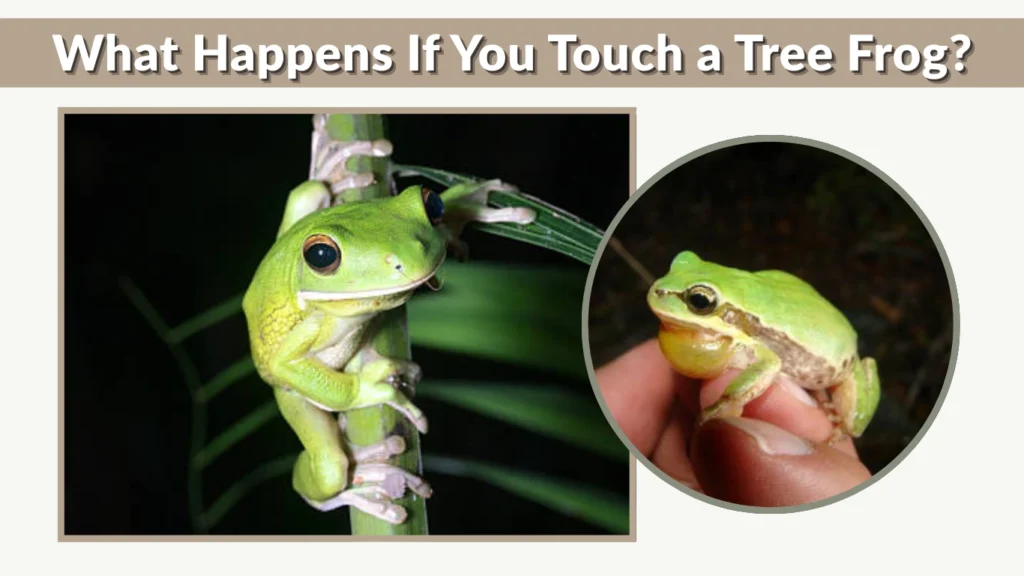
Touching a tree frog is generally safe, but it should be done gently and only when necessary. Human hands can harm frogs because oils, lotions, and soaps can damage their sensitive skin. While the frog is unlikely to poison you, handling it incorrectly can harm the animal.
Washing your hands before and after contact helps protect both you and the frog. Observing tree frogs without touching them is always the best option.
How Tree Frogs Protect Themselves Without Poison
Since tree frogs are not truly poisonous, they rely on other survival strategies to stay safe. One of their main defenses is camouflage. Many tree frogs have green, brown, or patterned skin that blends perfectly with leaves, bark, and branches. This makes them difficult for predators to spot.
Tree frogs are also excellent jumpers and climbers. Their strong legs and sticky toe pads allow them to escape quickly by leaping away or climbing to higher branches. Most species are nocturnal, meaning they are active at night when fewer predators are around.
Should You Handle Tree Frogs?
Although tree frogs are harmless, it is generally best not to handle them unless necessary. Frogs have very sensitive skin that absorbs moisture and chemicals easily. Human contact can dry out their skin or expose them to harmful substances like soap or lotion.
If a tree frog needs to be moved for safety reasons, using clean, wet hands or gloves is recommended. Always wash your hands afterward. Respecting wildlife by observing rather than touching helps keep tree frogs healthy and stress-free.
Common Myths About Tree Frogs
Many people believe that all frogs are poisonous, but this is not true. Another common myth is that brightly colored frogs are always dangerous. While this applies to poison dart frogs, most colorful tree frogs are completely harmless.
Some also think tree frogs bite or attack humans. In reality, tree frogs are shy animals that prefer to escape rather than defend themselves. They are not aggressive and pose no real threat to people.
FAQs
Can tree frogs kill humans?
No, tree frogs cannot kill humans. They do not produce deadly toxins, and there are no recorded cases of tree frogs causing fatal poisoning in people.
Are tree frogs safe to keep as pets?
Some species of tree frogs are commonly kept as pets and are considered safe when properly cared for. However, they require specific habitats, humidity, and diets to stay healthy.
Do tree frogs carry diseases?
Like many wild animals, tree frogs can carry bacteria such as salmonella. Washing your hands after contact greatly reduces any health risk.
Are baby tree frogs poisonous?
Baby tree frogs, also known as froglets, are not poisonous. They have the same harmless skin secretions as adult tree frogs.
Why do tree frogs have sticky skin?
Tree frogs have sticky toe pads that help them climb smooth surfaces and stay attached to leaves, branches, and walls.
Conclusion
Tree frogs may look exotic and mysterious, but they are mostly harmless and non-poisonous animals. Unlike poison dart frogs, they do not rely on strong toxins for defense. Instead, they survive through camouflage, agility, and nighttime activity. While touching a tree frog is unlikely to harm a human, minimizing contact helps protect the frog. Understanding the difference between poisonous and non-poisonous frogs allows people to appreciate tree frogs safely and responsibly in their natural habitats.