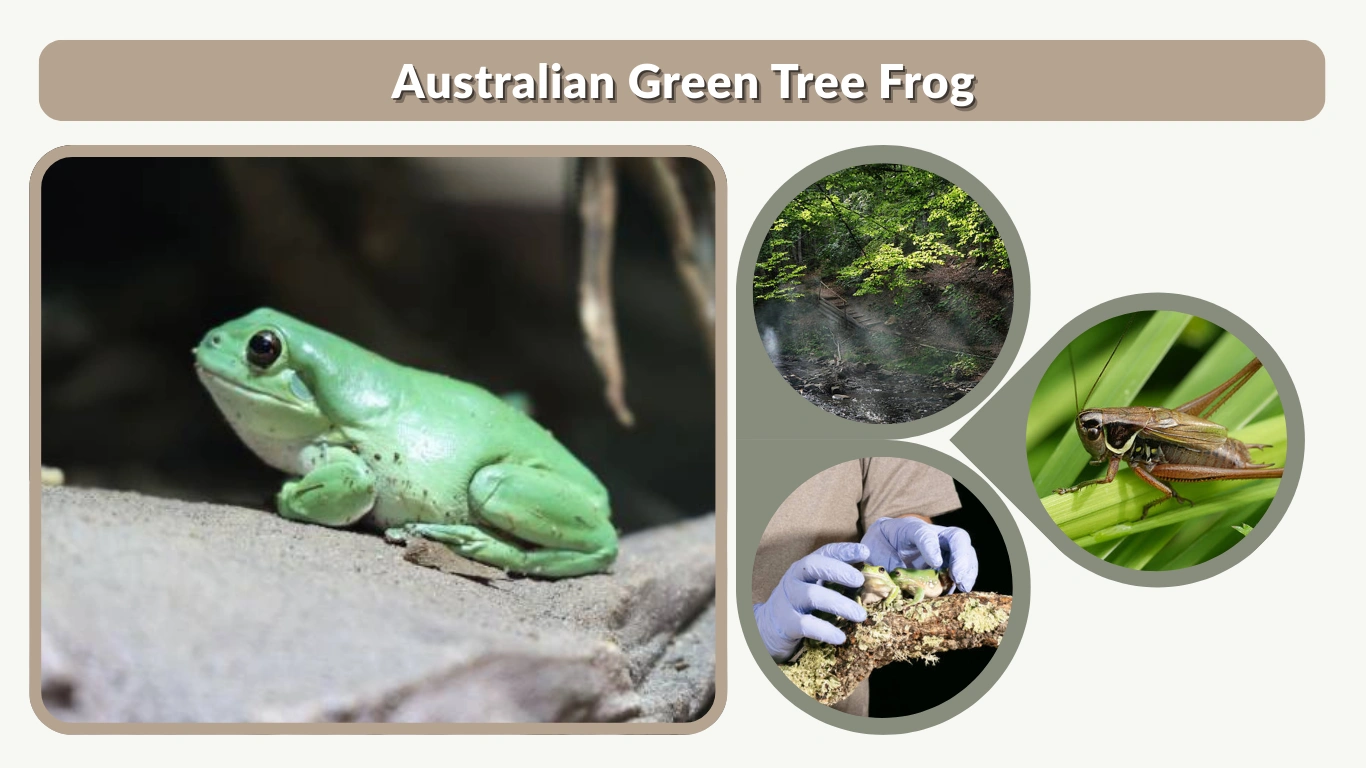
The Australian green tree frog (Litoria caerulea) is one of the most iconic and beloved amphibians in Australia. Known for its calm temperament, vibrant green or blue-tinted skin, and charming expressions, this species has become a popular pet around the world. Native to Australia and New Guinea, it thrives in warm, humid environments and is recognized for its gentle nature, long lifespan, and surprisingly loud calls. This guide covers identification, habitat, adaptations, behavior, sounds, diet, and essential care details.
Identification
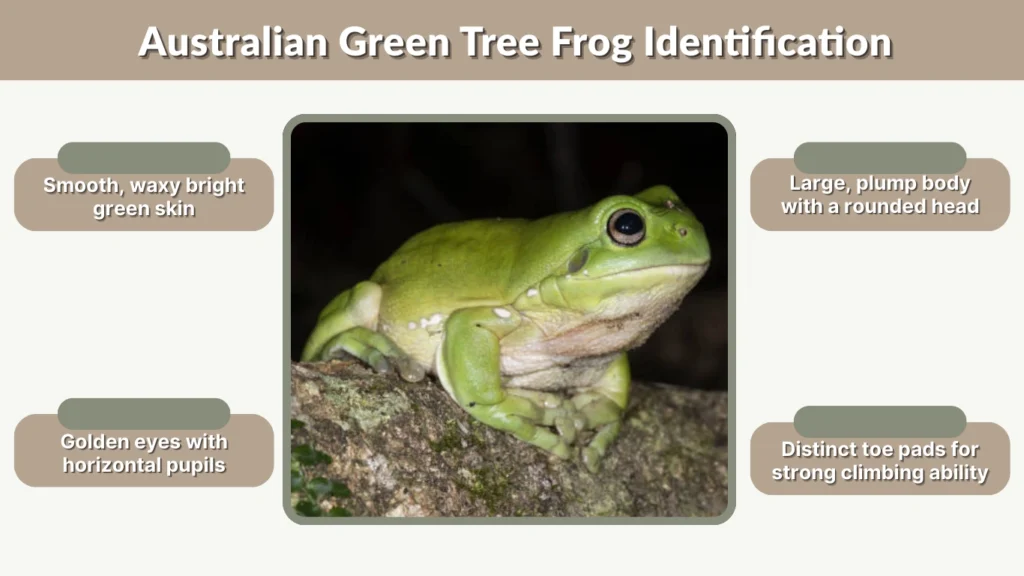
- Smooth, waxy bright green skin (sometimes turquoise or blue)
- Large, plump body with a rounded head
- Golden eyes with horizontal pupils
- Distinct toe pads for strong climbing ability
- Thick fatty skin layer that protects against drying out
- Juveniles slimmer with brighter green coloration
- Males smaller with vocal sac; females larger and rounder
Australian green tree frogs are also known as “White’s tree frogs” in the pet trade, named after John White, who first described the species.
Scientific Name & Classification
The scientific name of the species is Litoria caerulea, belonging to the family Hylidae, the tree frogs. Their order is Anura and class Amphibia. They are closely related to other Australian frogs such as the red-eyed green tree frog and the giant tree frog.
Range, Distribution & Environment
These frogs are native to northern and eastern Australia, thriving in the tropical and subtropical regions of Queensland, the Northern Territory, Western Australia, and parts of New South Wales. They are also found in New Guinea.
Australian green tree frogs often live close to humans and are famous for taking shelter in:
- Bathrooms
- Mailboxes
- Sinks
- Outdoor water tanks
- Sheds and garden areas
Their adaptability allows them to thrive in both forest environments and urban homes.
Habitat & Adaptations
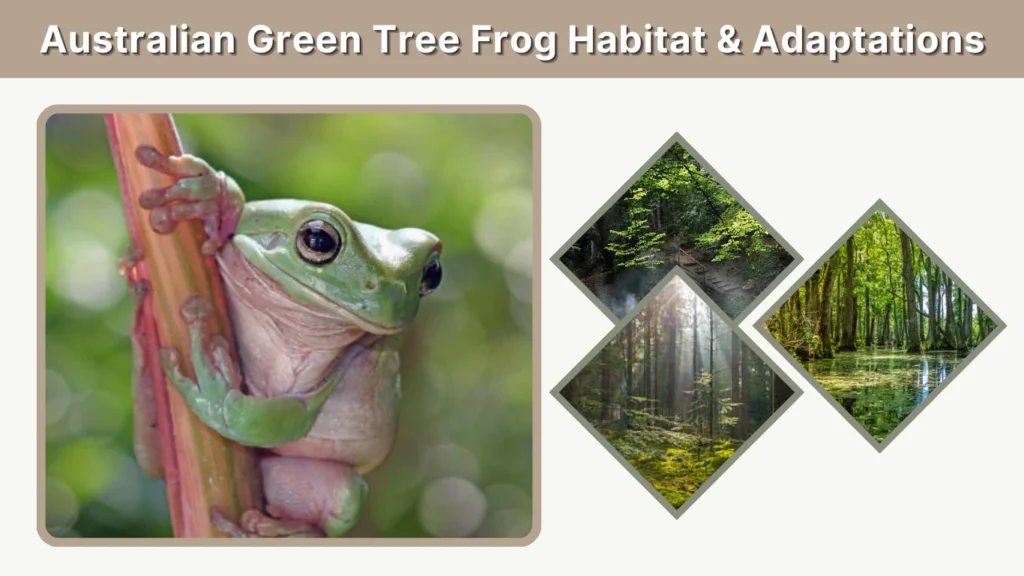
The species prefers humid forests, woodlands, swamps, and rainforests, but they adapt easily to man-made environments. Key adaptations include:
- Waxy skin secretion that prevents dehydration
- Climbing toe pads ideal for smooth surfaces
- Ability to withstand hot, dry periods
- Calm temperament, which helps them coexist near humans
Because of these traits, Australian green tree frogs often appear around porch lights and bathrooms where insects gather.
Appearance, Size & Characteristics
Adult Australian green tree frogs typically measure 3 to 4.5 inches, though exceptionally large individuals may reach 5 inches. Females tend to be larger than males.
Their color ranges from bright green to deep turquoise or even striking blue. Blue frogs result from a genetic pigment deficiency and are highly sought after by collectors.
The species is known for its:
- Chunky, “fat frog” appearance
- Smooth, glossy skin
- Calm and friendly demeanor
- Ability to change shade depending on temperature and mood
With proper care, they can live 12–20 years, making them one of the longest-lived frogs in the world.
Life Cycle & Reproduction
The life cycle of the Australian green tree frog includes:
- Eggs – Laid in still or slow-moving water, attached to vegetation
- Tadpoles – Free-swimming, feeding on algae and plant material
- Metamorphosis – Development of legs and lungs, tail absorption
- Froglet – Small, climbing juvenile
- Adult – Fully developed tree frog
Breeding occurs during warm, wet seasons, and males call loudly to attract females.
Diet & Feeding
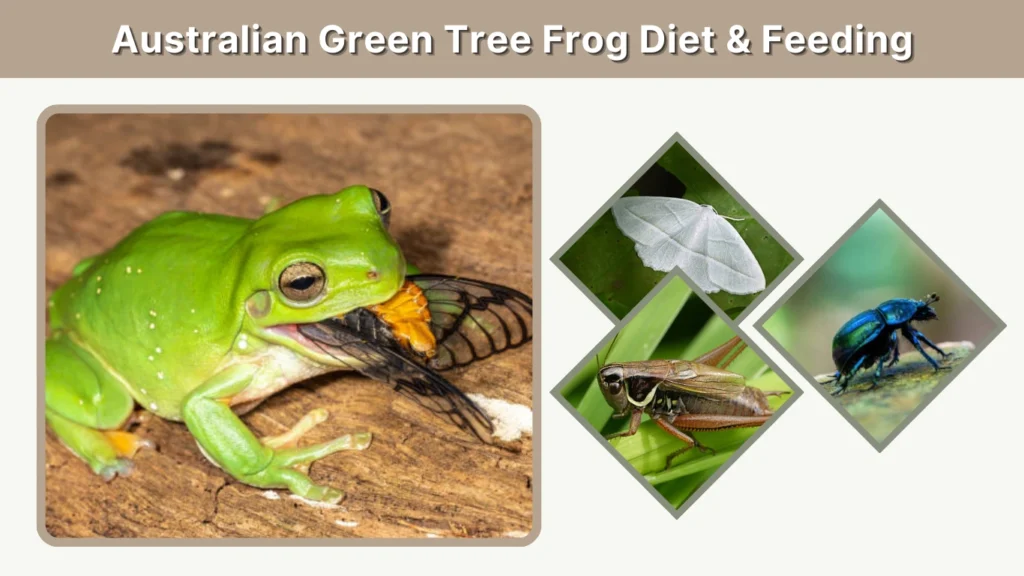
In the wild, these frogs eat a wide variety of insects, including:
- Moths
- Beetles
- Roaches
- Crickets
- Spiders
- Small invertebrates
Captive diets typically include:
- Gut-loaded crickets
- Dubia roaches
- Mealworms and waxworms (treats only)
- Occasional pinky mice for large adults (very rare and not necessary)
Their strong appetite often leads to amusing behavior—some frogs have been seen swallowing small snakes or large insects whole.
Call, Sound & Vocalizations
The Australian green tree frog is famous for its deep, resonant “bellowing” call, often described as a loud “waaark” or “gronk.” Males call most frequently during rain or the breeding season.
They also produce:
- Mating call (deep, rhythmic bellow)
- Distress call
- Scream-like sound when startled
- Rain call before storms
Their vocal range is surprisingly loud for their size and can be heard from long distances during summer nights.
Behavior & Temperament
Australian green tree frogs are known for their calm and friendly temperament, making them one of the most handleable frog species. They are primarily nocturnal, becoming active at night to hunt insects and explore. During the day, they rest in cool, shaded spots or cling to vertical surfaces. Their behavior is often described as curious and relaxed, and they occasionally make soft chirping or clicking noises while moving. While they tolerate gentle handling better than most amphibians, excessive contact should still be avoided to protect their sensitive skin.
Poisonous? Safety for Humans & Pets
Australian green tree frogs are not dangerous to humans, dogs, cats, or other household pets. They do produce mild skin secretions that act as a natural defense, but these are not toxic unless ingested in very large quantities. If a dog or cat mouths one, the pet may drool or gag, but serious reactions are rare. The frog, however, is at far greater risk from scratches or bites. Always wash hands after handling to avoid irritation.
Predators
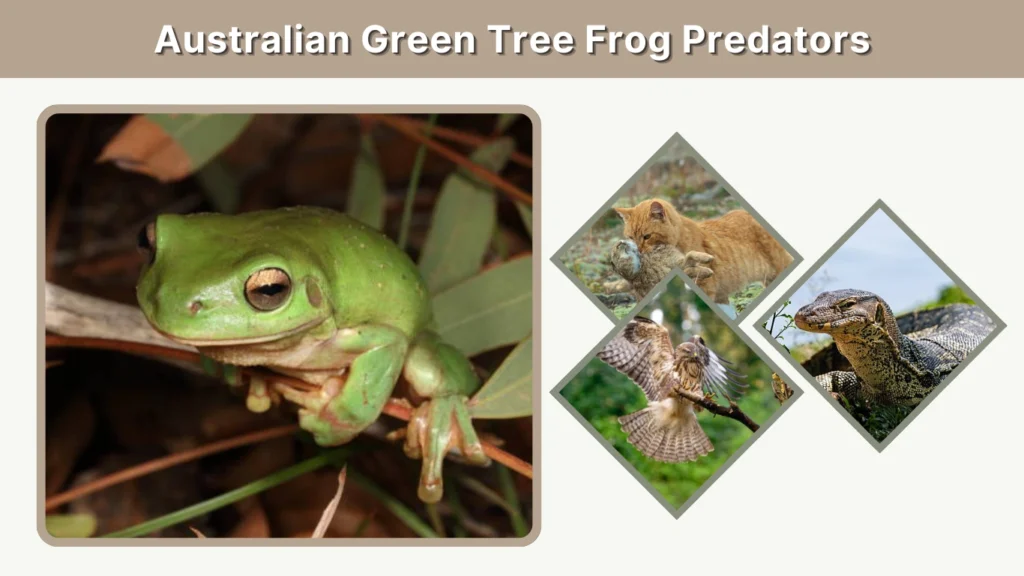
In the wild, Australian green tree frogs face threats from:
- Snakes
- Birds of prey
- Large reptiles
- Feral cats
- Domestic pets
- Cane toads (competition and toxin risk)
Their main defenses include camouflage, sudden jumps, and the ability to climb to high, inaccessible areas.
Australian Green Tree Frog as a Pet
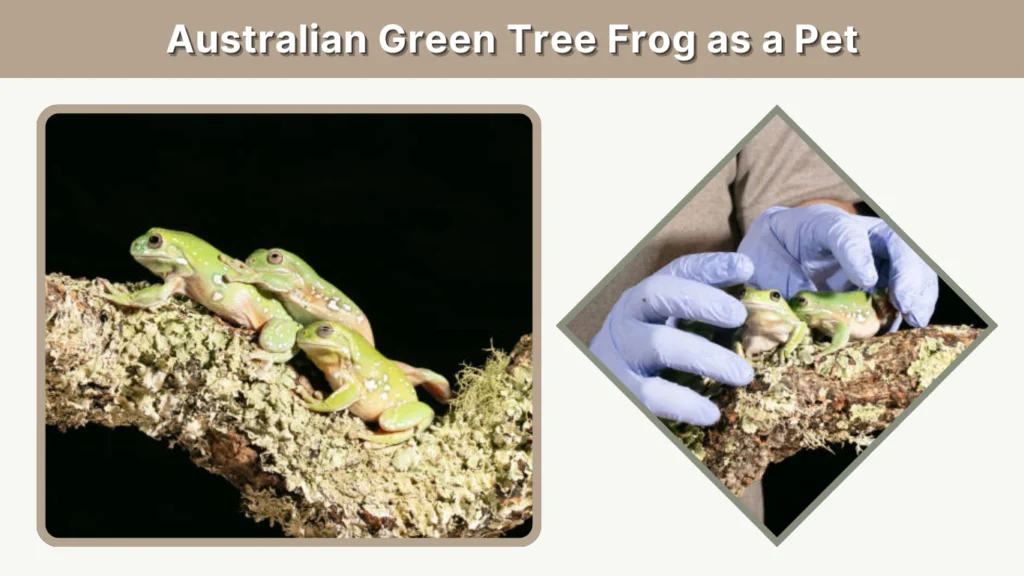
These frogs are widely considered excellent beginner pets because they are hardy, docile, and adaptable. They thrive in captivity when their basic needs—heat, humidity, and clean water—are consistently met. You can find them at exotic reptile stores, breeders, reptile expos, and online sellers. Prices typically range from $20–$60, though blue morphs or large adults may be more expensive.
Pros
- Long lifespan (up to 20 years)
- Easy to care for
- Friendly and calm
- Good for observation-based pet ownership
Cons
- Require consistent humidity
- Can become overweight without portion control
- Noisy during breeding season
- Not ideal for constant handling
Care Guide (Care Sheet)
Enclosure / Tank Setup
A vertical enclosure is ideal since Australian green tree frogs love to climb. Tank recommendations:
- 20 gallons for 1–2 frogs
- 30–40 gallons for groups
- Secure, ventilated lid
- Naturalistic setup with branches, vines, and hides
Include:
- Live plants (pothos, bromeliads, ferns)
- Smooth climbing surfaces
- A shallow water bowl
- Moisture-holding substrate: coco fiber, moss, or bioactive soil
Temperature & Humidity
- Temperature: 75–85°F (24–29°C)
- Night: 70–75°F (21–24°C)
- Humidity: 50–70% (daily misting or automated system)
These frogs tolerate slightly lower humidity better than many species due to their unique fatty skin layer.
Lighting
Although not strictly required, low-level UVB (2–5%) is beneficial for long-term health. Provide a regular 12-hour day/night cycle.
Handling & Stress
Australian green tree frogs tolerate handling more than most amphibians, but best practice includes:
- Wet, clean hands before touching
- Supporting the frog gently
- Keeping sessions short
- Avoiding soaps, lotions, or chemicals
Signs of stress include darkened skin, refusal to climb, or decreased appetite.
Cleaning & Maintenance
- Spot clean daily
- Change water dish daily
- Deep clean monthly
- Bioactive terrariums require less frequent cleaning but need proper upkeep
Breeding in Captivity
To breed Australian green tree frogs:
- Condition adults with a high-quality diet
- Simulate rainy season with increased misting or a rain chamber
- Provide shallow water and plants for egg-laying
- Transfer eggs to a rearing tank
- Feed tadpoles algae wafers or powdered food
Metamorphosis typically occurs in 6–8 weeks.
Health & Diseases
Common health concerns include:
- Chytrid fungus
- Red-leg bacterial infection
- Parasites
- Obesity from overfeeding
- Shedding issues from low humidity
A healthy frog will have clear eyes, smooth skin, strong appetite, and alert behavior.
Tankmates & Compatibility
Australian green tree frogs can be housed together if the enclosure is large enough. However, mixing species is not recommended, especially with smaller frogs, due to disease risk or accidental predation.
VS Similar Species (Comparison Table)
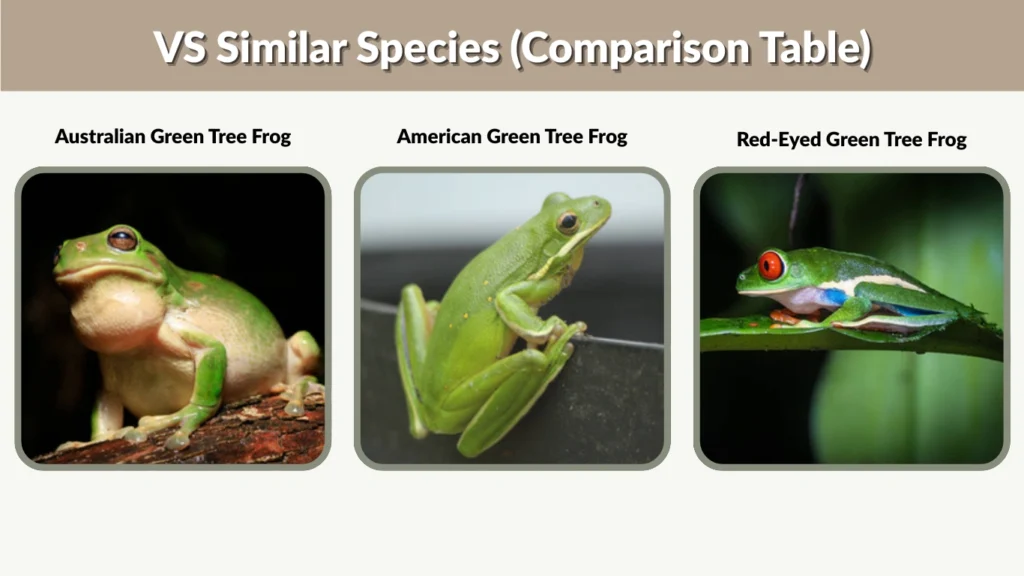
| Feature | Australian Green Tree Frog | American Green Tree Frog | Red-Eyed Green Tree Frog |
| Size | 3–4.5 in | 1.25–2.5 in | 2–3 in |
| Temperament | Calm, handleable | Shy, active | Nervous, sensitive |
| Lifespan | 12–20 yrs | 2–8 yrs | 5–10 yrs |
| Color Variation | Green, teal, blue | Green | Bright green with red eyes |
Interesting Facts
- They sometimes “scream” when startled.
- They often appear in bathrooms or sinks due to moisture.
- Their waxy skin helps them survive droughts.
- Blue morphs occur when yellow pigments are missing.
- They can live up to two decades—one of the longest frog lifespans.
FAQs
Are Australian green tree frogs endangered?
No, they are not endangered. Their adaptability to human environments has helped them remain stable, though local habitat loss can still affect populations.
How long do Australian green tree frogs live?
In captivity, they commonly live 12–20 years with proper care. Wild individuals usually live shorter lives due to predators and environmental hazards.
What do Australian green tree frogs eat?
They eat a variety of insects, including crickets, roaches, moths, and beetles. In captivity, they thrive on gut-loaded feeder insects offered several times a week.
Are Australian green tree frogs poisonous?
Their skin secretions can irritate sensitive mouths or eyes but are not dangerous to humans or pets. They are considered harmless.
Where can I buy an Australian green tree frog?
They are available from breeders, exotic pet stores, reptile expos, and online sellers. Availability varies by region.