
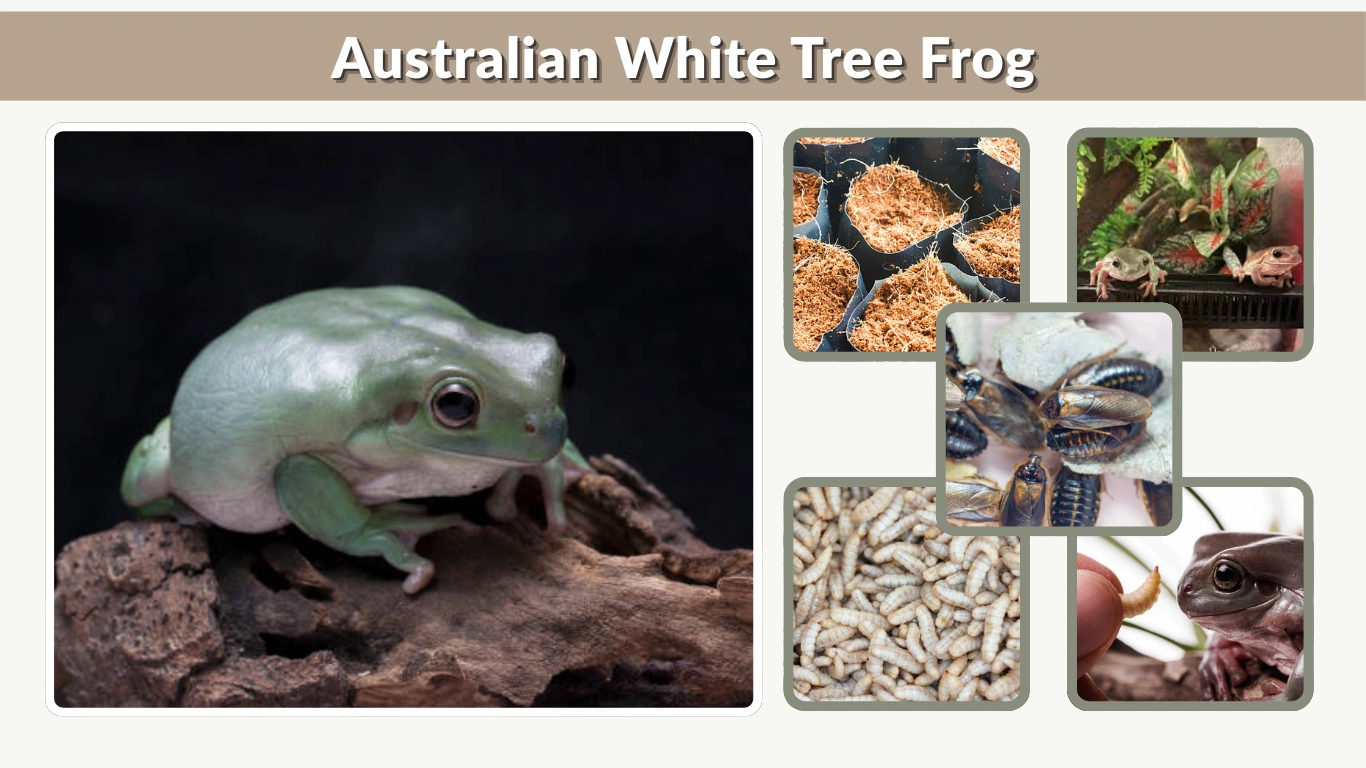
The Australian White Tree Frog, often called the White’s Tree Frog or Dumpy Tree Frog, is one of the most popular amphibians kept as a pet. Known for its chubby body, gentle personality, and adorable expressions, this species is native to Australia and parts of Indonesia. Many enthusiasts love them for their hardiness, calm nature, and unique color phases such as blue-phase and snowflake varieties.
Identification Guide
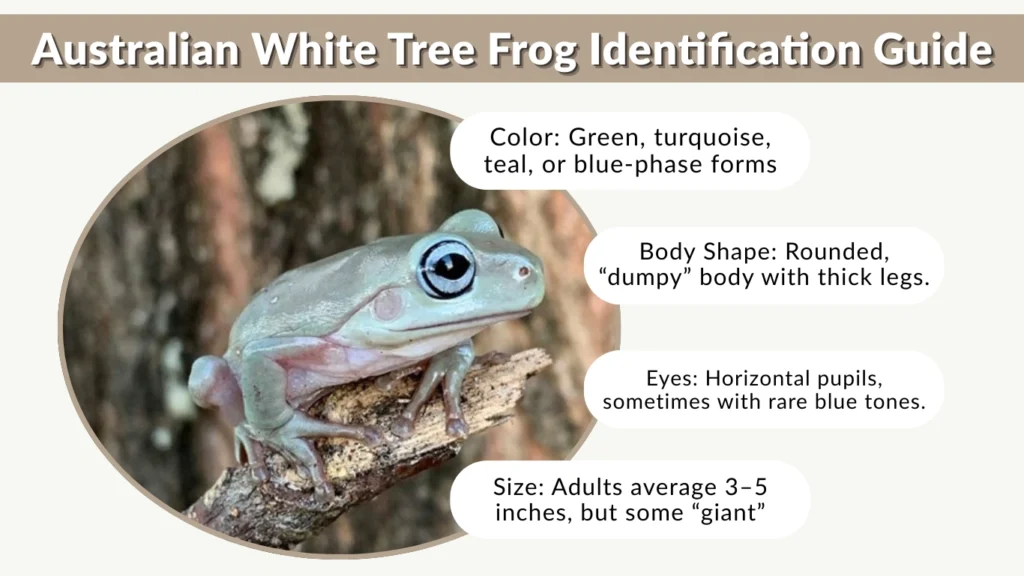
Recognizing an Australian White Tree Frog is simple when you know what to look for. The species has several distinctive features that separate it from similar tree frogs.
Key identification traits:
- Color: Green, turquoise, teal, or blue-phase forms; some display white flecks (snowflake pattern).
- Body Shape: Rounded, “dumpy” body with thick legs.
- Eyes: Horizontal pupils, sometimes with rare blue tones.
- Skin Texture: Smooth and slightly shiny due to secreted waxy coatings.
- Toe Pads: Prominent disks for climbing.
- Size: Adults average 3–5 inches, but some “giant” morphs exceed 5 inches.
Sexing the frogs involves observing size and calling behavior. Males tend to be smaller and are the only ones who croak loudly during breeding seasons. Females are typically larger, with broader heads.
Color changes occur depending on humidity, lighting, and stress levels. A normally green frog may appear teal or dark olive after being misted or placed in cooler environments.
Australian vs Indonesian White’s Tree Frogs
Although the Australian and Indonesian forms are the same species, keepers often distinguish them based on physical and behavioral variations.
Common differences include:
- Size: Indonesian frogs often grow slightly larger, while Australian specimens tend to stay more compact.
- Color: Australians usually display greener tones, while Indonesians may show bluish or darker hues.
- Skin Texture: Indonesians sometimes have rougher skin or thicker dorsal folds.
- Temperament: Both are calm, but Indonesian frogs may be more active at night.
A comparison table in the full article will help visually separate the two types. These differences matter most for breeders or keepers interested in specific morphs.
Australian White Tree Frog Size & Weight
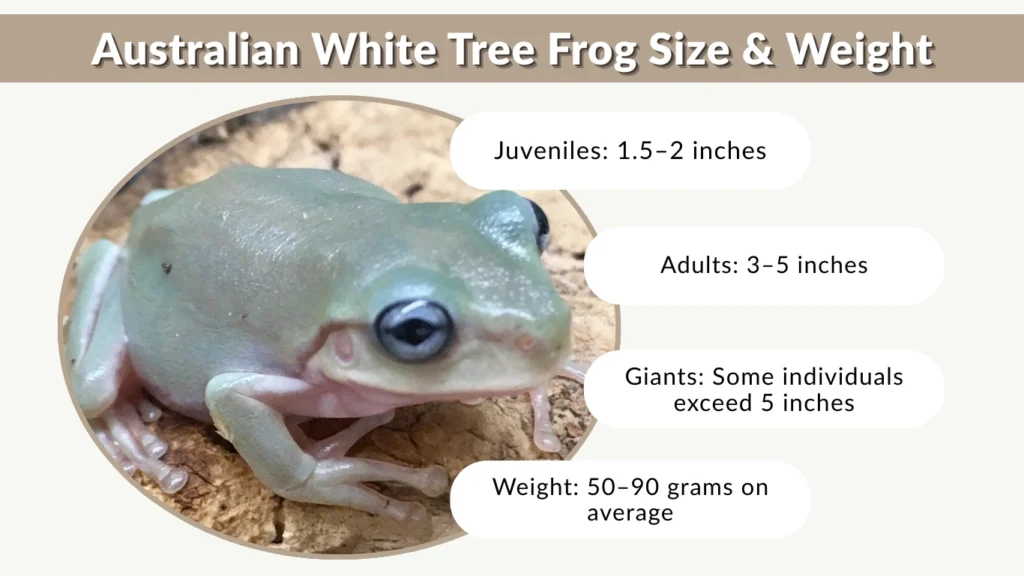
The size of the Australian White Tree Frog is one of its most talked-about traits. Known for their chunky build, these frogs grow steadily from the juvenile stage to adulthood.
Typical measurements include:
- Juveniles: 1.5–2 inches
- Adults: 3–5 inches
- Giants: Some individuals exceed 5 inches, particularly certain Indonesian lineages
- Weight: 50–90 grams on average, but some very large females may reach 100 grams or more
Growth depends heavily on diet, enclosure temperature, and genetics. Frogs that receive balanced nutrition and proper care reach full size within 1–2 years. Because of selective breeding, blue-phase, giant, and snowflake variants may grow slightly differently than standard green forms.
A size chart will be included in the full expanded article so readers can compare age and growth stages easily.
Lifespan, Aging & Growth
Australian White Tree Frogs are known for exceptional longevity. With proper care, they often live far longer than most amphibians kept as pets.
Typical lifespan ranges include:
- In the wild: 7–10 years
- In captivity: 12–20 years
- Longest recorded: Over 25 years
These frogs grow quickly during their first year, transitioning from tadpole to adult in a matter of months. After reaching adult size, growth slows, but they may continue gaining weight gradually throughout their lives.
Aging signs include thicker skin, reduced activity, and slower reactions to stimuli. Older frogs may require modified diets and slightly lower feeding frequency. They remain excellent pets even in advanced age, known for their relaxed and friendly behavior.
Behavior, Sound & Croaking
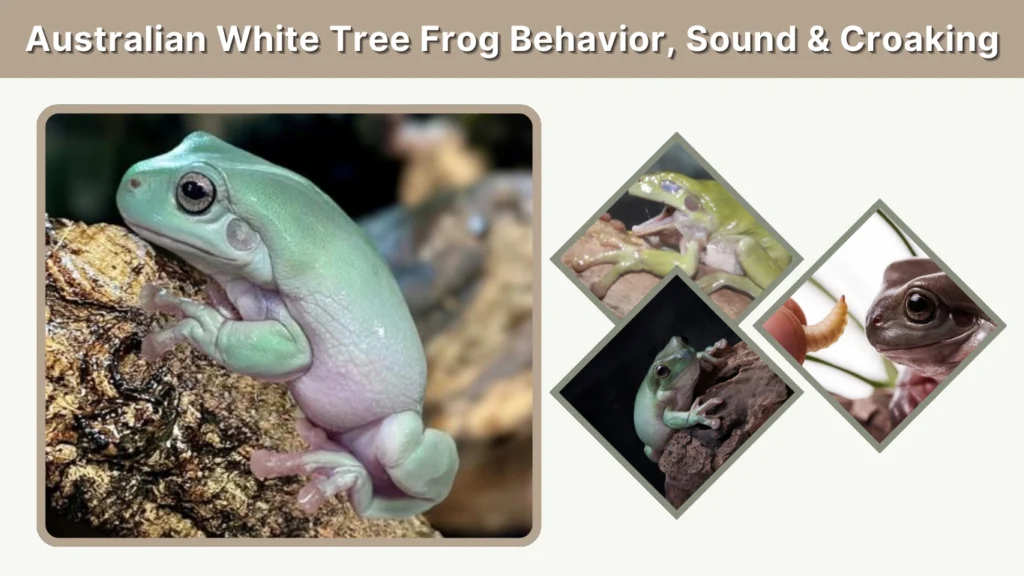
The Australian White Tree Frog is famous for its loud and distinctive croaks. These calls serve several purposes, including attracting mates, marking territory, or reacting to changes in humidity or atmospheric pressure.
Males are the primary vocalizers, producing a deep, resonant “waaahk” or long, growling croak. They may call during storms, warm nights, or even when excited by feeding time.
Key behaviors include:
- Nocturnal Activity: They are most active after dark.
- Calm Temperament: Known as one of the most handleable frogs.
- Color Shifting: Their skin can lighten or darken depending on environment.
- Climbing: Strong toe pads allow them to cling to smooth surfaces.
Their charming, gentle personality and expressive movements are a major reason they’ve become beloved among amphibian keepers worldwide.
Natural Habitat & Enclosure Setup
The Australian White Tree Frog lives in warm, humid environments, often near water sources and dense vegetation. In captivity, recreating this habitat is essential for health and comfort.
Their natural range includes:
- Eastern and northern Australia
- Tropical forests, savannas, and wetlands
- Occasionally suburban areas and houses during rainy seasons
The next section (in the second 50%) will cover enclosure size, substrate, lighting, humidity, tank setups, diet, health, and more.
Enclosure Setup & Habitat Requirements
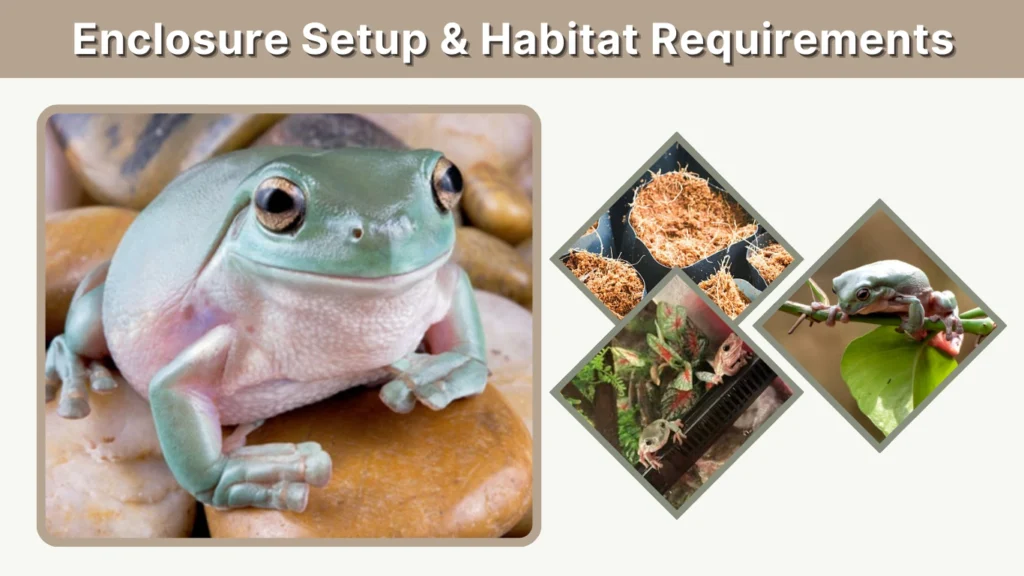
Creating the proper environment for an Australian White Tree Frog is essential for long-term health. Because these frogs come from warm, humid regions of Australia and New Guinea, they require an enclosure that mimics those conditions.
A vertical tank is best, as the species is arboreal and naturally climbs trees, vines, and human-made structures. A single adult can live comfortably in a 20-gallon vertical tank, but larger is always better. For two frogs, a 30-gallon or taller enclosure is recommended to reduce stress and competition.
Important habitat components include:
- Substrate: Coconut fiber, sphagnum moss, and soil mixes help retain humidity.
- Plants: Live or artificial plants create cover and climbing surfaces.
- Hides: Cork flats or half logs offer security.
- Branches: Essential for climbing and enrichment.
- Water dish: Large, shallow bowl with dechlorinated water.
A naturalistic setup not only keeps humidity stable but also encourages healthy movement and exploration. Your frog will appreciate shaded areas, moist spots, and elevated perches.
Lighting & Temperature
Australian White Tree Frogs do not require intense UVB lighting, but low-level UVB can be beneficial for overall health and calcium metabolism. Many keepers use a gentle 5% UVB bulb, ensuring it does not raise temperatures too high.
Temperature guidelines:
- Daytime: 75–82°F (24–28°C)
- Basking spot: Up to 85°F (29°C)
- Night: 70–75°F (21–24°C)
Use a thermostat-controlled heat source and avoid hot rocks, which can burn amphibians. Maintaining consistent temperature is crucial because frogs are sensitive to rapid fluctuations.
Humidity Levels
Humidity plays a major role in hydration and shedding. Target a range of 50–70%, increasing slightly at night or during shedding periods. Mist the enclosure once or twice daily, depending on ventilation. Good ventilation is just as important as humidity—stagnant air encourages mold and bacteria.
Live plants, moisture-retaining substrates, and a large water dish help stabilize humidity levels naturally.
Diet & Feeding
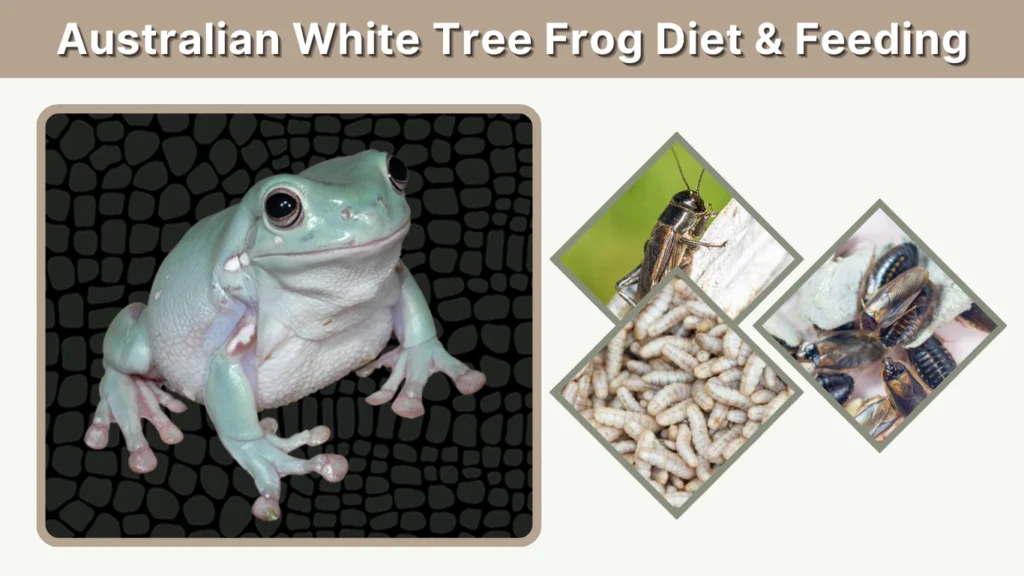
Australian White Tree Frogs are insectivores and enjoy a varied diet that mimics what they consume in the wild.
Staple feeder insects include:
- Crickets
- Dubia roaches
- Black soldier fly larvae
- Silkworms
- Earthworms (for adults)
Occasional treats may include waxworms or hornworms, but these should be limited due to high fat content.
Feeding schedule:
- Juveniles: Daily, small portions
- Adults: 2–3 times per week
- Seniors: Once or twice weekly
Supplementation is essential. Use calcium powder 2–3 times weekly and a multivitamin once weekly. Gut-loading feeder insects 24 hours before feeding provides balanced nutrition.
Always avoid wild-caught insects due to pesticides or parasites.
Care Guide Overview
Daily care tasks include misting, checking water, and removing uneaten insects. Weekly tasks involve cleaning decor, refreshing substrate surfaces, and inspecting for signs of stress or illness. A monthly deep clean keeps the enclosure safe and sanitary.
Key care principles:
- Maintain stable humidity
- Provide fresh, chlorine-free water
- Offer a balanced, varied diet
- Avoid handling when possible, as frogs absorb chemicals through their skin
Routine observation helps detect early signs of health problems.
Common Health Issues
Although hardy, Australian White Tree Frogs can develop health issues if their environment or diet is inadequate.
Common conditions include:
- Obesity: Due to overfeeding or fatty insects
- Dehydration: From low humidity
- Shedding problems: Often caused by dryness
- Red Leg Syndrome: A serious bacterial infection
- Parasites: Usually from contaminated feeders
- Stress: From poor enclosure design or excessive handling
Healthy frogs have bright eyes, smooth skin, regular appetite, and responsive movement. Any lethargy, discoloration, swelling, or refusal to eat should be addressed promptly.
Breeding & Eggs
Breeding Australian White Tree Frogs is possible in captivity but requires strict environmental control.
Basic breeding setup:
- Simulate a “wet season” by lowering temperatures, then gradually increasing humidity and misting frequency
- Provide a large water area for egg-laying
- After mating, females lay large clusters of eggs
- Tadpoles hatch within days and require their own tank
Raising tadpoles involves feeding algae wafers, infusoria, or frog-safe microfoods until metamorphosis.
Selective breeding has produced unique morphs such as blue-phase and snowflake varieties, which are highly sought after by collectors.
Rare & Unique Morphs
Over time, Australian White Tree Frogs have developed or been selectively bred into several morphs and color variations.
Common morphs include:
- Blue Phase: Sky-blue to turquoise tones
- Snowflake: White speckling across the body
- Giant Morph: Larger-than-average size
- Blue-Eyed Form: Frogs with unusual eye pigmentation
These morphs may cost more and require specific lineage tracing to ensure authenticity.
Buying Guide & Price Range
Prices vary widely depending on morph, age, health, and location.
Typical price ranges:
- Standard green form: $40–$80
- Blue phase: $100–$250
- Snowflake: $120–$300
- Giant or specialty lines: $150–$400+
You can buy Australian White Tree Frogs from reptile expos, breeders, pet stores, or verified online sellers. Always choose frogs with clear eyes, smooth skin, and strong climbing behavior.
Avoid sellers offering extremely cheap “giant” frogs—many viral giant frog videos online are staged or altered.
FAQs
How big do Australian White Tree Frogs get?
Most adults reach 3–5 inches, but large females and certain giant lineages may exceed 5 inches. Their size depends heavily on diet, genetics, and overall care, with healthy frogs showing steady growth during their first two years.
What do Australian White Tree Frogs eat?
They primarily eat insects such as crickets, roaches, and larvae. A varied diet with proper supplements ensures strong bones and healthy skin. Avoid wild insects due to pesticide exposure, and limit fatty treats like waxworms.
How long do they live in captivity?
Australian White Tree Frogs typically live 12–20 years with consistent care. Some individuals surpass 20 years, making them one of the longest-lived frogs available in the pet trade.
Are they good pets for beginners?
Yes. Their hardy nature, gentle temperament, and forgiving care requirements make them excellent starter amphibians. They tolerate moderate humidity fluctuations and handle occasional mistakes better than many delicate frog species.
Do they make noise at night?
Males produce loud croaks, especially during warm or humid conditions. They may call at night or during storms. Females are generally quiet and rarely vocalize.