
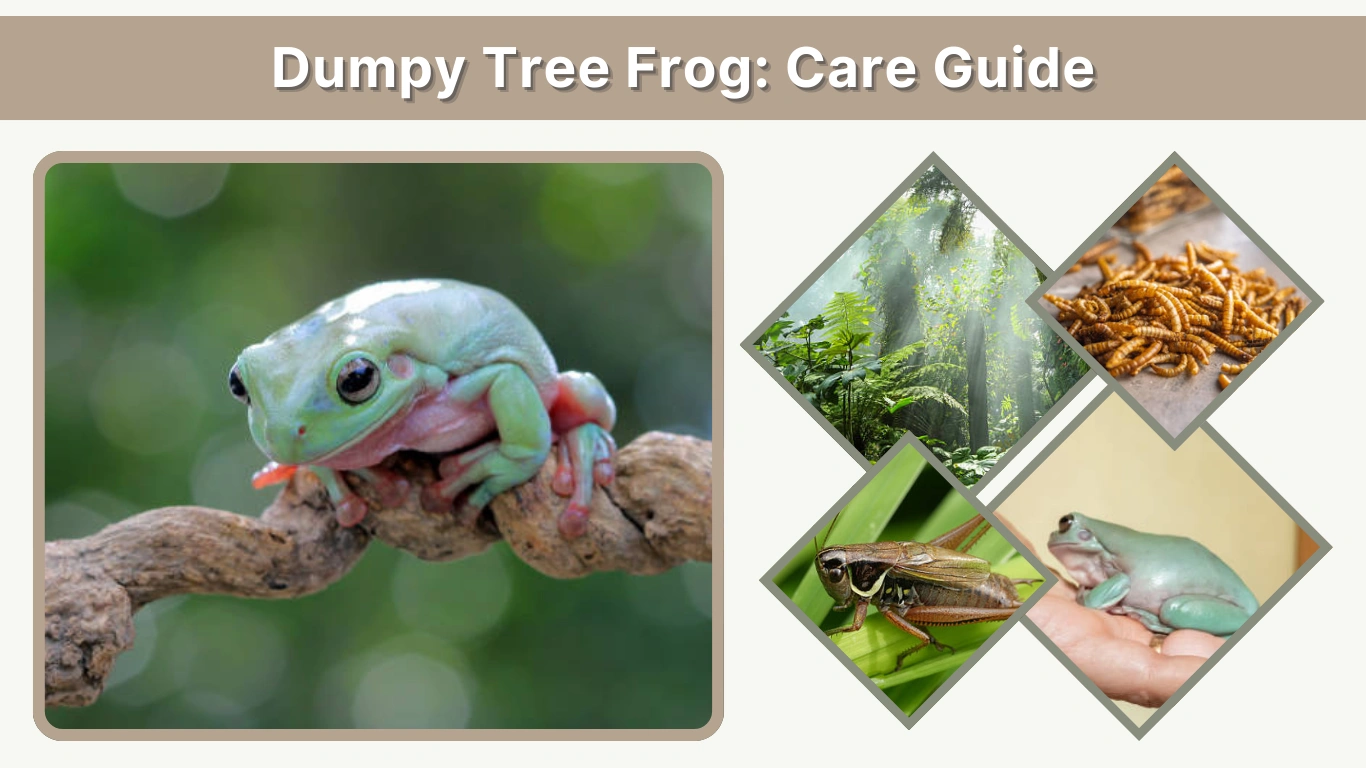
The dumpy tree frog, also known as White’s tree frog, is one of the most popular pet amphibians in the world. Loved for its round body, calm temperament, and expressive appearance, this species is often recommended for beginners. Native to Australia and New Guinea, dumpy tree frogs adapt well to captivity when their basic needs are met. Despite their easygoing nature, they still require proper care, habitat setup, and diet to remain healthy. This guide explores what a dumpy tree frog is, how to identify it, where it comes from, and how its natural behavior influences care.
What Is a Dumpy Tree Frog?
The dumpy tree frog (Litoria caerulea) is a large arboreal frog belonging to the family Pelodryadidae. It is commonly referred to as White’s tree frog, Australian green tree frog, or simply dumpy tree frog due to its chunky body shape. In the wild, this species inhabits forests, woodlands, and areas near water sources.
Dumpy tree frogs are well known for their adaptability. They can survive in a variety of environments and are frequently found near human dwellings in their native range. Their thick skin helps retain moisture, allowing them to tolerate drier conditions than many other frogs. These traits make them particularly well suited to life in captivity.
Dumpy Tree Frog Size and Appearance
How Big Do Dumpy Tree Frogs Get?
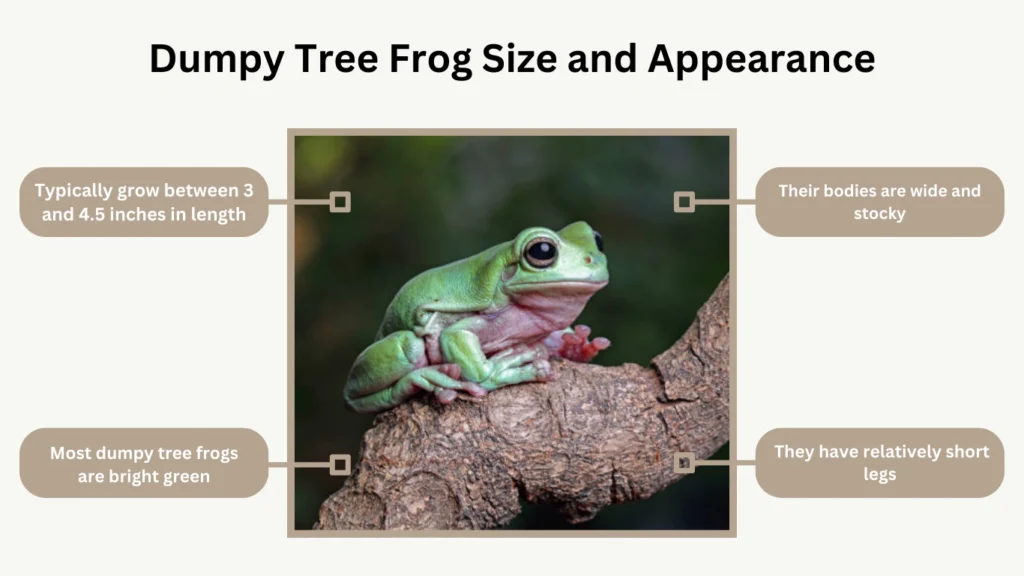
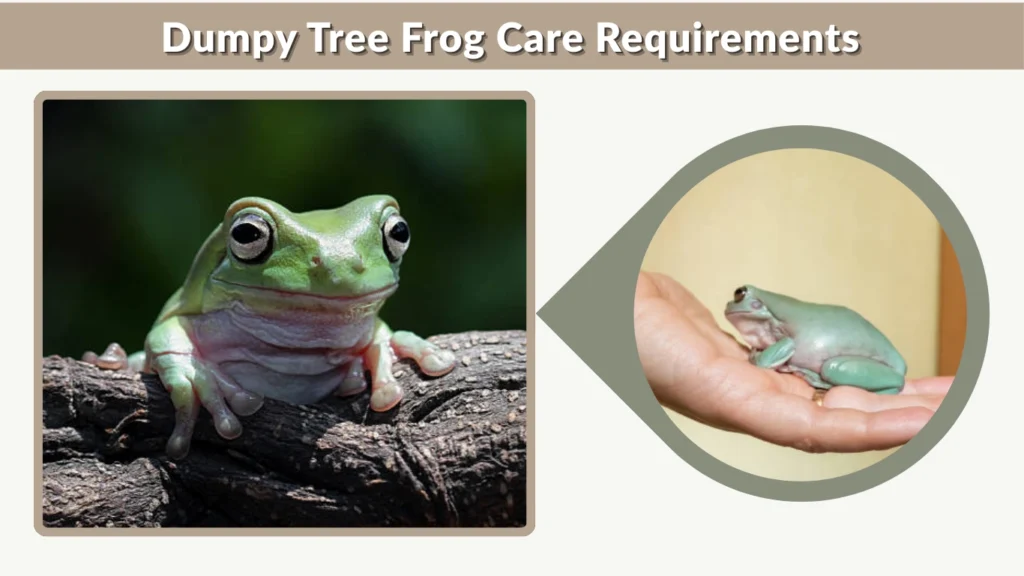
Dumpy tree frogs are considered large tree frogs. Adults typically grow between 3 and 4.5 inches in length, with females usually larger than males. Their bodies are wide and stocky, giving them the “dumpy” appearance that inspired their name. A healthy adult frog should feel firm and muscular rather than overly soft or bloated.
Because these frogs have a tendency to overeat, monitoring size and weight is an important part of responsible care. Obesity is a common issue in captive dumpy tree frogs and can shorten their lifespan if not addressed.
Color, Skin, and Physical Features
Most dumpy tree frogs are bright green, but their color can vary from blue-green to olive or brown, depending on temperature, humidity, and stress levels. Their skin is smooth and slightly waxy, helping prevent moisture loss. This waxy coating is one of their key adaptations to drier environments.
Dumpy tree frogs have large, rounded toe pads that allow them to climb glass, branches, and tank walls with ease. Their eyes are large and expressive, often giving them a friendly or curious appearance. Compared to many other frogs, they have relatively short legs, which contributes to their slower, deliberate movements.
Natural Habitat and Distribution
Where Dumpy Tree Frogs Live in the Wild
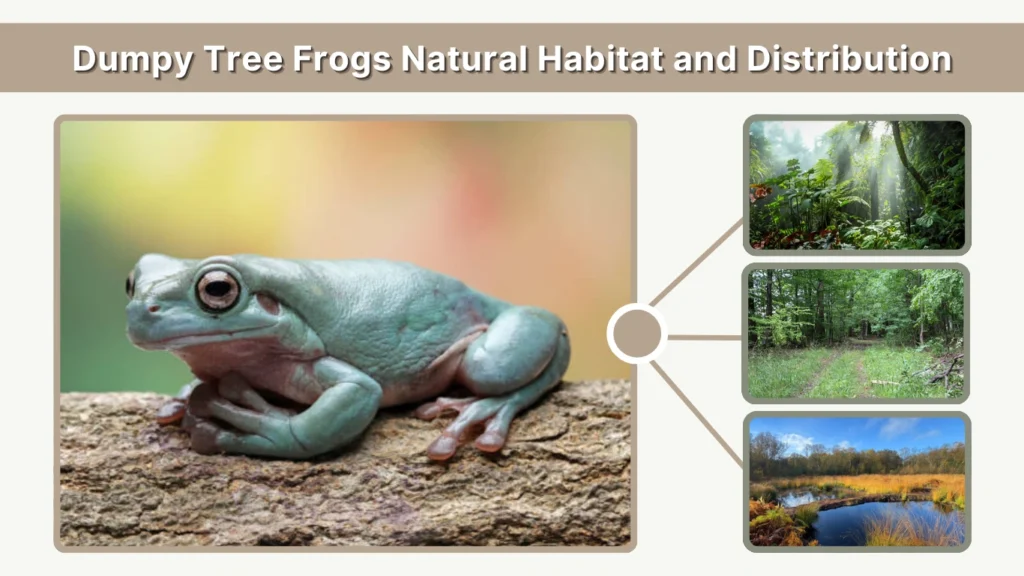
In the wild, dumpy tree frogs are native to Australia, New Guinea, and surrounding islands. They inhabit a wide range of environments, including rainforests, open woodlands, swamps, and grasslands. These frogs are often found near water but do not depend on constant moisture like some amphibian species.
Interestingly, dumpy tree frogs frequently live close to human settlements in their native range. They may be found on windows, walls, and outdoor structures, where insects gather at night. This behavior reflects their adaptability and opportunistic feeding habits.
How Their Habitat Influences Care
Understanding the natural habitat of the dumpy tree frog helps guide proper captive care. Because they are arboreal, they require vertical space for climbing rather than large floor areas. Their ability to tolerate moderate humidity means their enclosure does not need to be constantly wet, but it should still provide adequate moisture.
Dumpy tree frogs are nocturnal and prefer secure hiding spots during the day. Providing branches, plants, and shelters helps reduce stress and encourages natural behavior in captivity.
Dumpy Tree Frog Behavior and Temperament
Dumpy tree frogs are known for their calm and docile temperament. They are primarily nocturnal and become most active in the evening and at night. During the day, they often remain still, resting in shaded or elevated areas of their enclosure.
Unlike many amphibians, dumpy tree frogs tend to tolerate human presence well. While they do not seek interaction, they are generally less skittish and easier to observe than more sensitive species. Their relaxed behavior and manageable care requirements are key reasons they are considered excellent pet frogs.
Dumpy Tree Frog Diet and Feeding
What Do Dumpy Tree Frogs Eat?
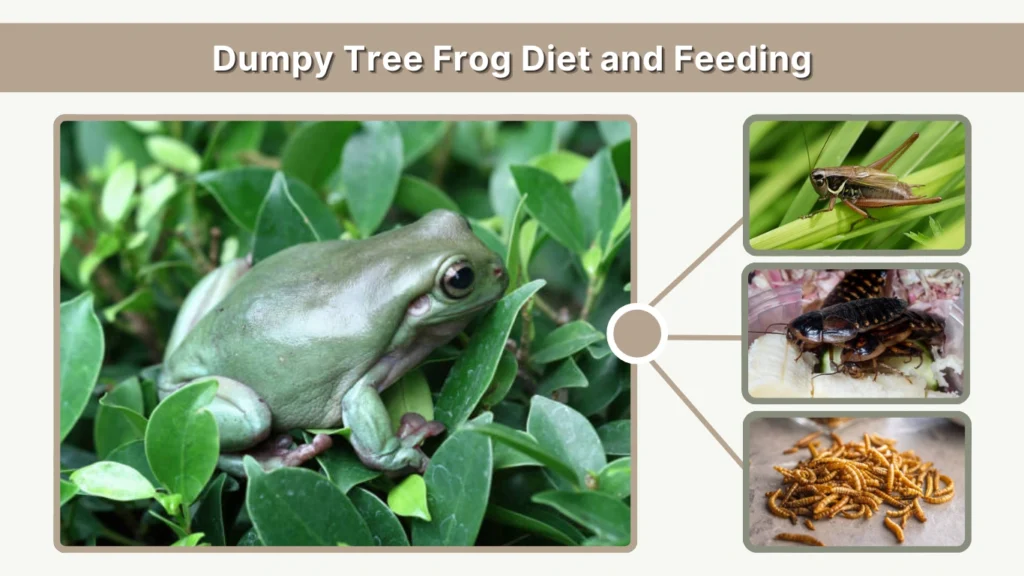
Dumpy tree frogs are insectivores, meaning their diet consists primarily of live insects. In captivity, they commonly eat crickets, dubia roaches, mealworms, and earthworms. These foods should be appropriately sized to prevent choking and ensure easy digestion. Occasional treats, such as waxworms, can be offered but should not make up a large portion of the diet due to their high fat content.
All feeder insects should be gut-loaded with nutritious foods and dusted with calcium and vitamin supplements. Proper supplementation helps prevent nutritional deficiencies and supports strong bones and overall health.
Feeding Schedule and Portion Control
Juvenile dumpy tree frogs require more frequent feedings and should be fed small meals every day or every other day. Adult frogs typically eat two to three times per week. Portion control is important, as dumpy tree frogs are prone to overeating. Overfeeding can lead to obesity, which may cause mobility issues and shorten lifespan.
Dumpy Tree Frog Lifespan
Dumpy tree frogs are long-lived compared to many other amphibians. In the wild, their lifespan usually ranges from 7 to 10 years. With proper care in captivity, they can live 15 years or more. Clean housing, a balanced diet, correct temperature and humidity, and minimal stress all contribute to longevity.
Regular observation helps detect early signs of illness, allowing issues to be addressed before they become serious. Long lifespan means potential owners should be prepared for a long-term commitment.
Dumpy Tree Frog Care Requirements
Enclosure Size and Tank Setup
A vertical enclosure is ideal for dumpy tree frogs due to their climbing behavior. A single adult frog should be housed in at least a 20-gallon tall tank, while multiple frogs require larger enclosures. The tank should include branches, ledges, and plants to encourage climbing and provide resting areas.
Good ventilation is important to prevent stagnant air while still maintaining humidity. Secure lids are essential, as these frogs are skilled climbers and can escape if given the opportunity.
Temperature and Lighting Needs
Dumpy tree frogs thrive in temperatures ranging from 75 to 85°F during the day, with a slight drop at night. They do not require intense UVB lighting but benefit from low-level UVB exposure to support calcium absorption. A consistent day and night cycle helps regulate their natural behavior.
Humidity and Water Requirements
Humidity levels should generally remain between 50 and 70 percent. Light daily misting helps maintain humidity and allows frogs to hydrate through their skin. A shallow water dish with clean, dechlorinated water should always be available.
Substrate, Plants, and Tank Decor
Safe substrate options include coconut fiber, soil mixes designed for amphibians, or paper towels for easy cleaning. Live or artificial plants can be used to create cover and climbing opportunities. Hiding spots and elevated perches help frogs feel secure and reduce stress.
Handling and Interaction
While dumpy tree frogs are tolerant of human presence, they should not be handled frequently. Their skin is sensitive and absorbs oils, soaps, and chemicals from human hands. If handling is necessary, hands should be clean and damp. Limiting handling reduces stress and supports long-term health.
Common Health Issues in Dumpy Tree Frogs
Some of the most common health problems include obesity, skin infections, and metabolic bone disease. Signs of illness may include lethargy, weight loss, swelling, or changes in skin color. Maintaining proper diet, cleanliness, and environmental conditions helps prevent most health issues.
Are Dumpy Tree Frogs Good Pets?
Dumpy tree frogs are excellent pets for both beginners and experienced keepers. They are hardy, calm, and relatively easy to care for compared to many amphibians. However, they still require consistent maintenance and attention. Owners willing to provide proper care will find them rewarding and fascinating companions.
Conclusion
The dumpy tree frog is a charming and adaptable amphibian that thrives in captivity when its needs are met. With proper enclosure setup, a balanced diet, and responsible handling, these frogs can live long and healthy lives. Their calm temperament and unique appearance make them a favorite among amphibian enthusiasts. Understanding their natural behavior and care requirements is the key to successful and enjoyable ownership.
FAQs
How big do dumpy tree frogs get?
Adult dumpy tree frogs usually grow between 3 and 4.5 inches in length. Females are typically larger and heavier than males.
How long do dumpy tree frogs live?
With proper care, dumpy tree frogs can live 10 to 15 years in captivity, and sometimes even longer.
Are dumpy tree frogs good for beginners?
Yes, they are often recommended for beginners because they are hardy, calm, and adaptable, as long as basic care requirements are met.
What do dumpy tree frogs eat?
They eat live insects such as crickets, dubia roaches, mealworms, and earthworms. Insects should be gut-loaded and dusted with calcium supplements.
Do dumpy tree frogs like being handled?
They tolerate limited handling but do not enjoy it. Handling should be kept to a minimum to reduce stress and protect their sensitive skin.