
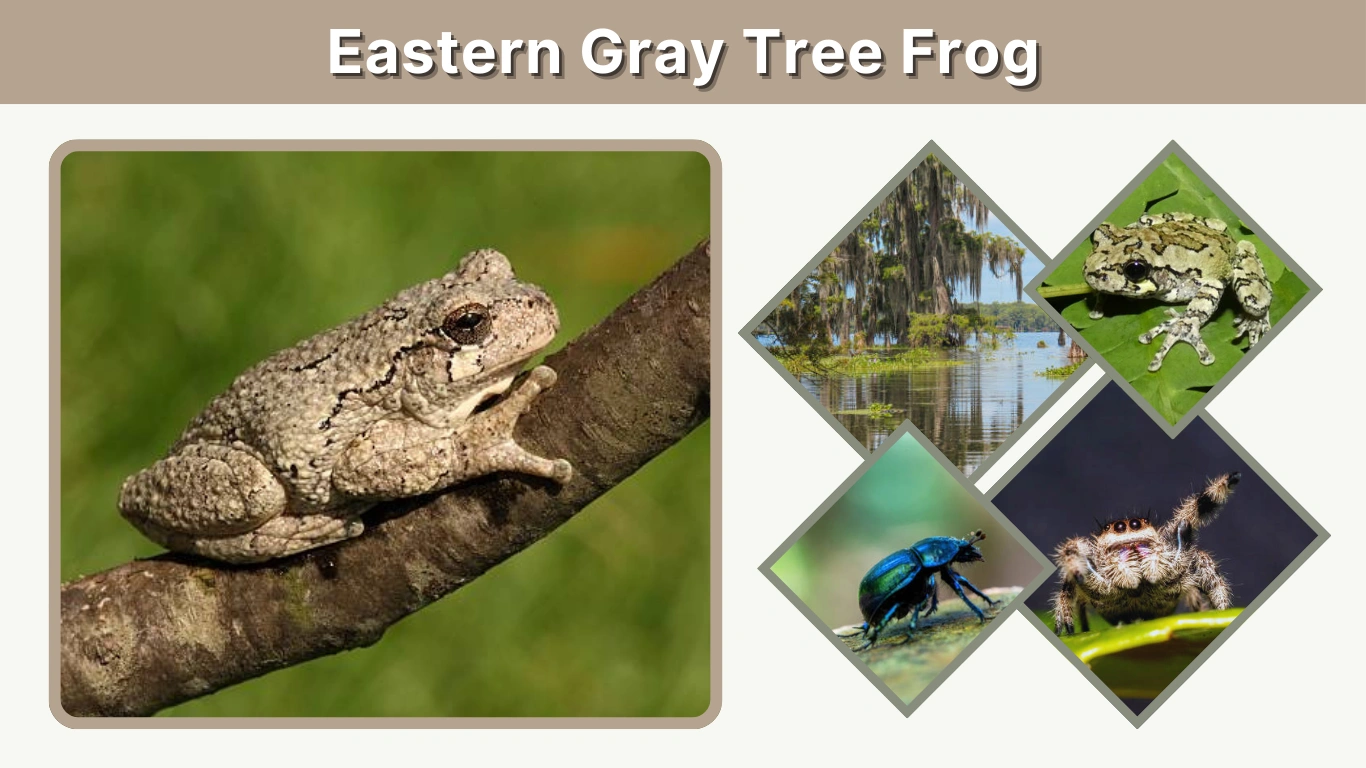
The Eastern Gray Tree Frog (Hyla versicolor) is one of North America’s most fascinating amphibians—famous for its chameleon-like color changes, powerful climbing pads, and nighttime musical trills. Found across the eastern United States and parts of Canada, this species thrives in forests, wetlands, and even suburban neighborhoods. Often confused with Cope’s Gray Tree Frog, the Eastern Gray Tree Frog plays an important ecological role while captivating nature lovers, homeowners, and herpetology enthusiasts.
Identification of the Eastern Gray Tree Frog
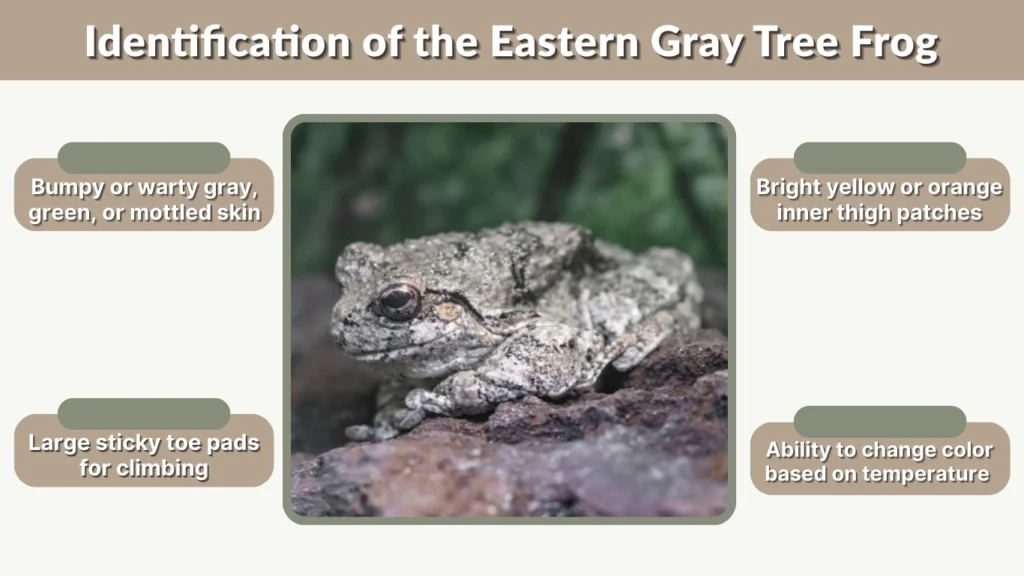
Because these frogs vary widely in appearance, proper identification is essential. Key features include:
- Bumpy or warty gray, green, or mottled skin
- Bright yellow or orange inner thigh patches
- Large sticky toe pads for climbing
- Ability to change color based on temperature and surroundings
- Slower, more melodic call compared to Cope’s Gray Tree Frog
These traits make the species highly adaptive and often difficult for beginners to distinguish from its close relative.
Description & Scientific Classification
The scientific name of the Eastern Gray Tree Frog is Hyla versicolor, referring to its remarkable ability to shift coloration. Adults typically measure 1.25 to 2 inches in length, although females tend to be slightly larger. Their color spectrum ranges from pale green to dark gray, depending on light, humidity, and background surfaces.
Juveniles are generally lighter in tone with less pronounced spotting. Adults show thicker, more textured skin and more vivid thigh markings—an essential clue in field identification. Though small, they possess muscular limbs ideal for climbing bark, leaves, and even smooth surfaces.
Range & Habitat
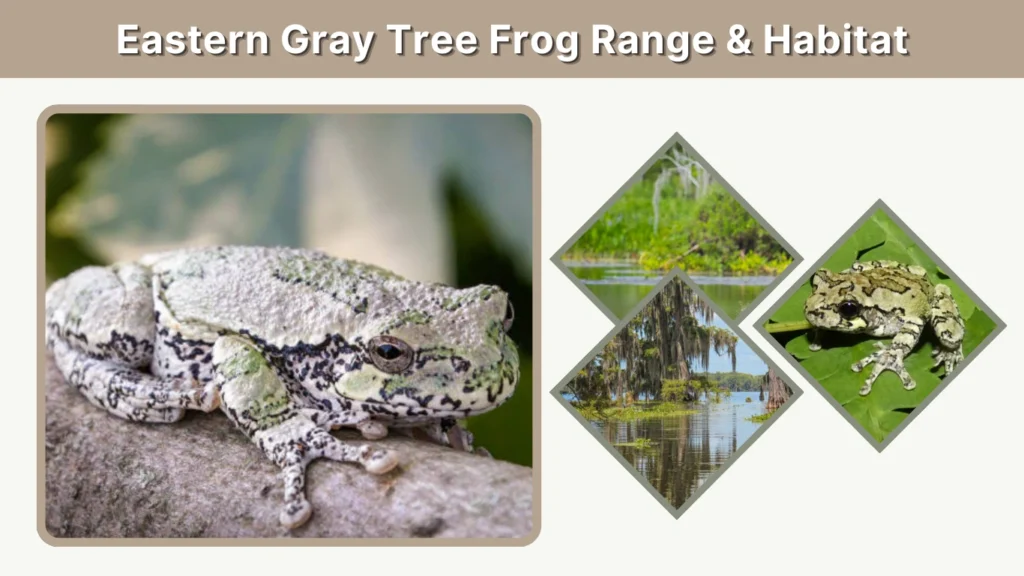
Eastern Gray Tree Frogs have a wide geographic range, inhabiting:
- Michigan
- Indiana
- Pennsylvania
- Wisconsin
- South Dakota
- Kansas (including Lawrence)
- Eastern New York
- Urban zones such as Cincinnati neighborhoods
Their preferred environment includes wooded areas, marsh edges, swamps, backyard gardens, and moist forests. These frogs rarely stray far from trees or shrubs, and they favor locations with available water for breeding. A habitat map typically shows dense concentrations across the Great Lakes, Midwest, and northeastern U.S., extending into southeastern Canada.
Behavior & Adaptations
The Eastern Gray Tree Frog is nocturnal and spends daylight hours hiding in tree cavities, under bark, or beneath leaves. At night, they emerge to hunt insects and call during the breeding season.
Their adaptations include:
- Color-changing ability for camouflage and temperature regulation
- Freeze tolerance that allows them to survive winter hibernation
- Strong toe pads for gripping vertical surfaces
- Powerful jumping muscles, enabling impressive leaps for their size
These features allow them to occupy ecological niches that many other frogs cannot.
Call & Sound
The call of the Eastern Gray Tree Frog is one of its most distinctive characteristics. Males produce a slow, musical trill that differs significantly from the rapid, higher-pitched trill of Cope’s Gray Tree Frog. During warm, humid nights in late spring and summer, their calls become especially noticeable.
People often describe the sound as:
- Melodic and flute-like
- Slower than similar species
- Repetitive and rising in intensity
Recordings of the call help homeowners and naturalists distinguish this frog from others sharing the same territory.
Diet & Feeding
What They Eat in the Wild
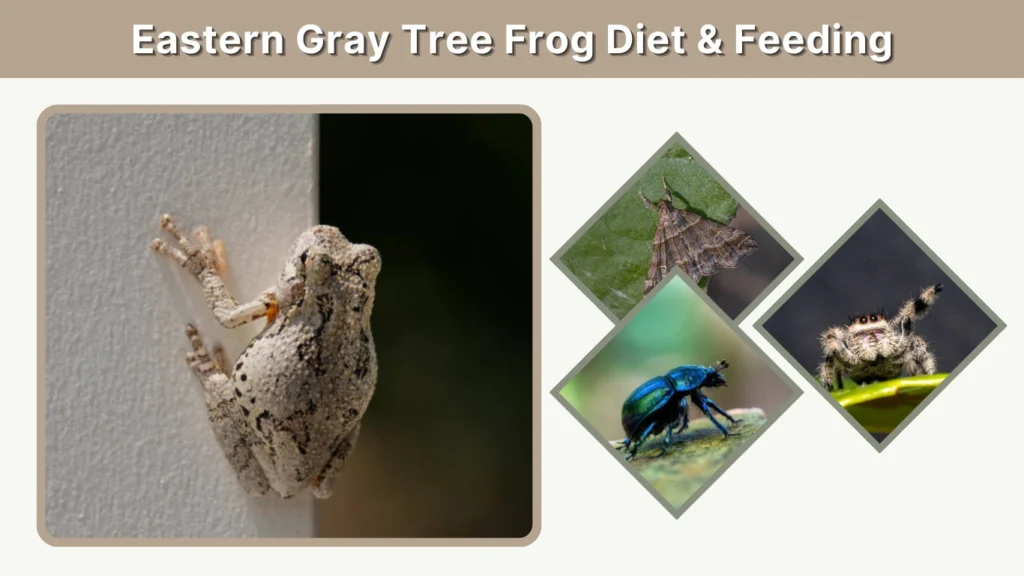
In nature, Eastern Gray Tree Frogs are opportunistic predators. Their diet typically includes:
- Moths
- Beetles
- Spiders
- Flies
- Small caterpillars
Tadpoles, by contrast, feed on algae, detritus, and microorganisms until metamorphosis.
Captive Diet
When kept in captivity, they require a varied insect-based diet. While mealworms and waxworms can be offered occasionally, they should not be the primary food source. Live crickets, small roaches, and fruit flies better match their nutritional needs. Feeding frequency depends on age, but adults usually eat every two to three days.
Life Cycle & Reproduction
Eastern Gray Tree Frogs follow a classic amphibian life cycle, beginning with breeding during warm, rainy nights in late spring and early summer. Males gather near ponds, wetlands, or temporary pools and produce their characteristic trill to attract females. After mating, females lay clusters of 1,000–2,000 eggs on vegetation or floating debris.
The eggs hatch within days, releasing tadpoles that grow rapidly in warm water. Over several weeks, they develop legs, absorb their tails, and transition into juvenile frogs—miniature versions of adults with lighter coloration. Full maturity is usually reached within two years, depending on climate and food availability.
Lifespan
The typical lifespan of an Eastern Gray Tree Frog in the wild ranges from 5 to 9 years, though many fall prey to predators before reaching maturity. In captivity, with proper care and stable conditions, some individuals live up to 12 years. Their ability to withstand freezing temperatures during winter greatly contributes to their longevity in northern regions.
Eastern Gray Tree Frog vs Cope’s Gray Tree Frog
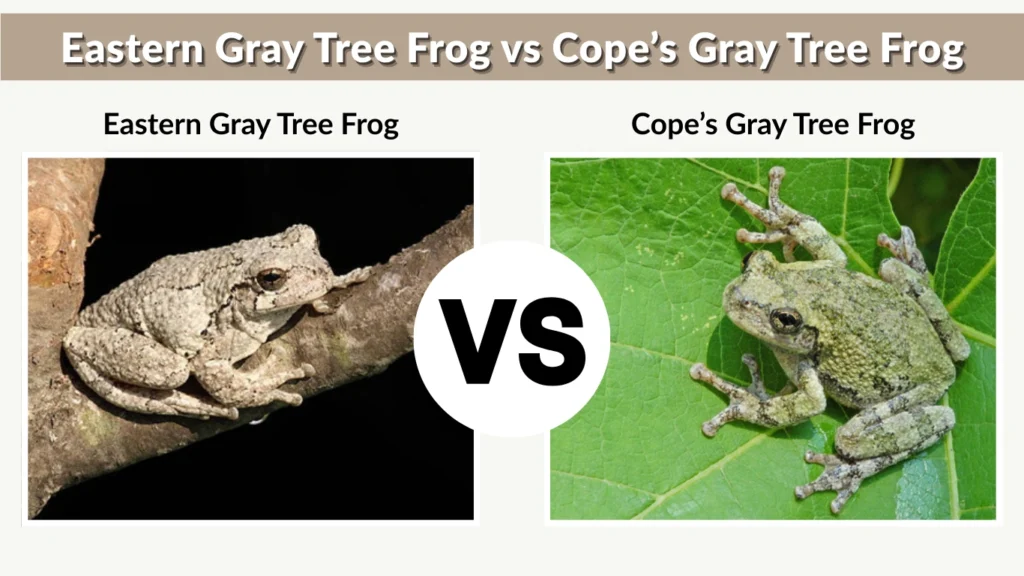
Because these two species appear nearly identical, comparisons help clarify their differences:
| Feature | Eastern Gray Tree Frog (Hyla versicolor) | Cope’s Gray Tree Frog (Hyla chrysoscelis) |
| Call | Slow, musical trill | Faster, higher-pitched trill |
| Chromosomes | Tetraploid | Diploid |
| Range | Overlaps with Cope’s in many areas | Overlaps widely |
| Color & Size | Nearly identical to Cope’s | Nearly identical |
| Identification Difficulty | Very high | Very high |
The call is usually the most reliable way for observers to differentiate the two species without genetic testing.
Predators
Despite their excellent camouflage, Eastern Gray Tree Frogs face threats from various predators, including:
- Snakes such as garter snakes and rat snakes
- Birds like herons and owls
- Small mammals including raccoons
- Larger frogs that occasionally consume smaller species
Tadpoles are also vulnerable to fish, insects, and aquatic invertebrates.
Are Eastern Gray Tree Frogs Poisonous?
Eastern Gray Tree Frogs produce mild skin toxins designed to deter predators. While these secretions are not dangerous to humans, they may cause slight irritation if rubbed into the eyes or mouth. It is recommended to wash hands after handling them. Pets—especially cats and dogs—should not be allowed to mouth or bite frogs, as the toxins can cause drooling or vomiting in some animals.
Eastern Gray Tree Frog as a Pet
Although charming, Eastern Gray Tree Frogs may be subject to local wildlife regulations. Potential keepers should confirm legality before collecting or purchasing one. Captive environments must mimic natural conditions, emphasizing humidity, vertical climbing space, and dense foliage. Handling should remain minimal, as frogs absorb chemicals through their skin and can easily become stressed.
Care Guide
Proper care includes:
- Terrarium Setup: A vertical enclosure with branches, cork bark, and live or artificial plants
- Humidity: Kept between 50–80% with daily misting
- Temperature: Daytime temperatures of 72–78°F and slightly cooler nights
- Diet: Primarily small live insects such as crickets, roaches, and flies
- Water: A shallow, clean water dish for soaking and hydration
A well-maintained habitat helps reduce stress and prolongs lifespan.
Regional Notes
Eastern Gray Tree Frogs thrive across the Midwest, Northeast, and Great Lakes states. They are common in Michigan, Indiana, Wisconsin, Pennsylvania, South Dakota, and New York, appearing in forests, wetlands, suburban yards, and seasonal ponds. Reports from Cincinnati neighborhoods show they adapt well to human-dominated areas with abundant vegetation.
Fun Facts
- They can survive being partially frozen, reviving in spring.
- Their color changes help with camouflage and temperature control.
- Powerful toe pads allow them to cling to glass, bark, and leaves.
- Their call can be heard from over 100 feet away on warm nights.
FAQ
What do Eastern Gray Tree Frog tadpoles eat?
Tadpoles consume algae, decaying plant material, and microorganisms. As they grow, they may also feed on soft detritus and occasionally small aquatic invertebrates. Their diet shifts dramatically once metamorphosis begins, preparing them for an insect-based adult lifestyle.
Where do Eastern Gray Tree Frogs live?
They live in wooded regions, wetland edges, forests, and suburban areas throughout the eastern United States and parts of Canada. They rely on trees and shrubs for shelter and typically remain close to water sources used for breeding.
Is the Eastern Gray Tree Frog endangered?
No, the species is not endangered. It remains widespread and stable across much of its range. However, habitat loss, pollution, and climate changes can affect local populations.
Can Eastern Gray Tree Frogs live on mealworms alone?
No. Mealworms are high in chitin and low in essential nutrients, so they should only be a small supplement. A balanced diet of varied live insects—such as crickets, roaches, and flies—is needed for proper growth and health.
How long do Eastern Gray Tree Frogs live?
Most live 5–9 years in the wild, though many perish earlier due to predation. With proper care, captive individuals may reach 10–12 years, thanks to stable food supplies and controlled environmental conditions.