
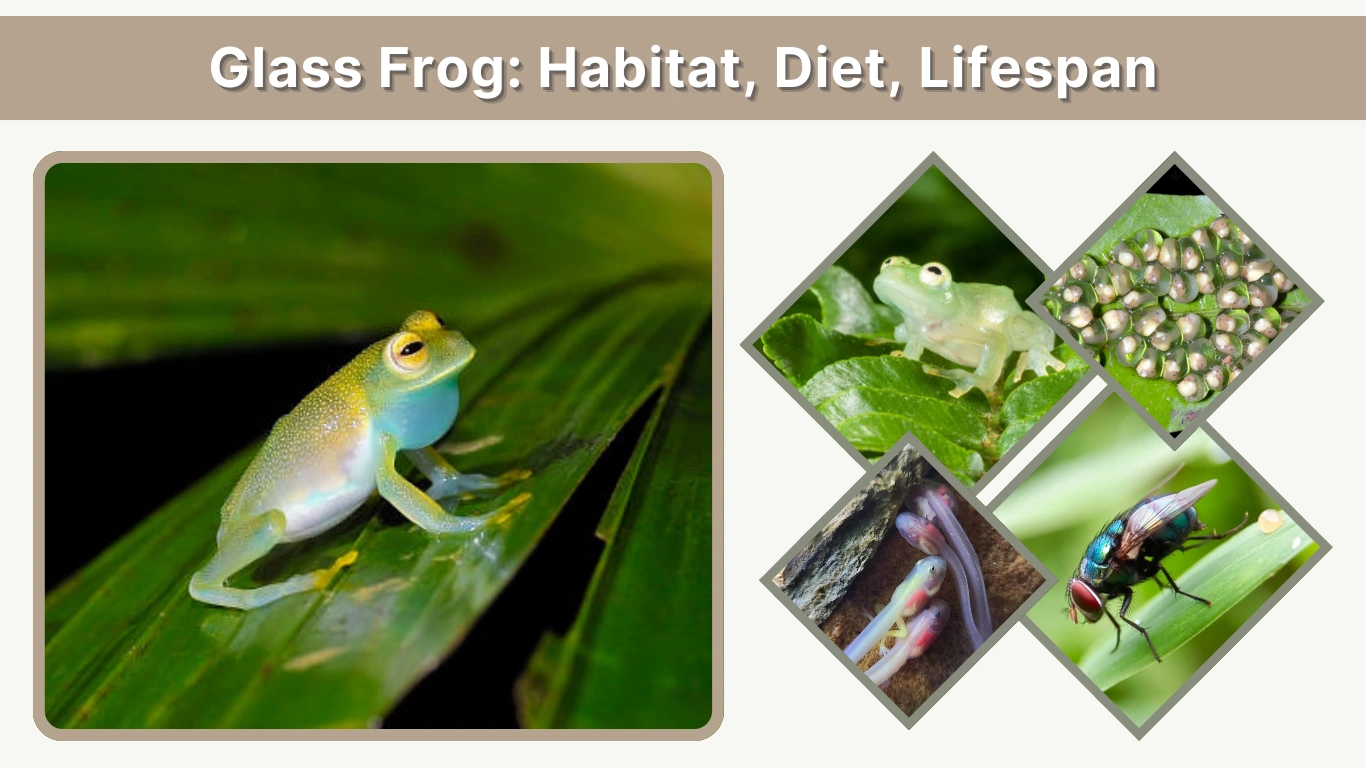
The glass frog is one of the most unusual amphibians in the world, famous for its translucent belly that reveals its internal organs. Found in the rainforests of Central and South America, this small tree-dwelling frog has captured global attention because of its see-through skin and bright green coloring. If you’ve ever wondered what a glass frog is, where it lives, what it eats, and how long it lives, this guide covers the essential facts about this remarkable species.
What Is a Glass Frog?
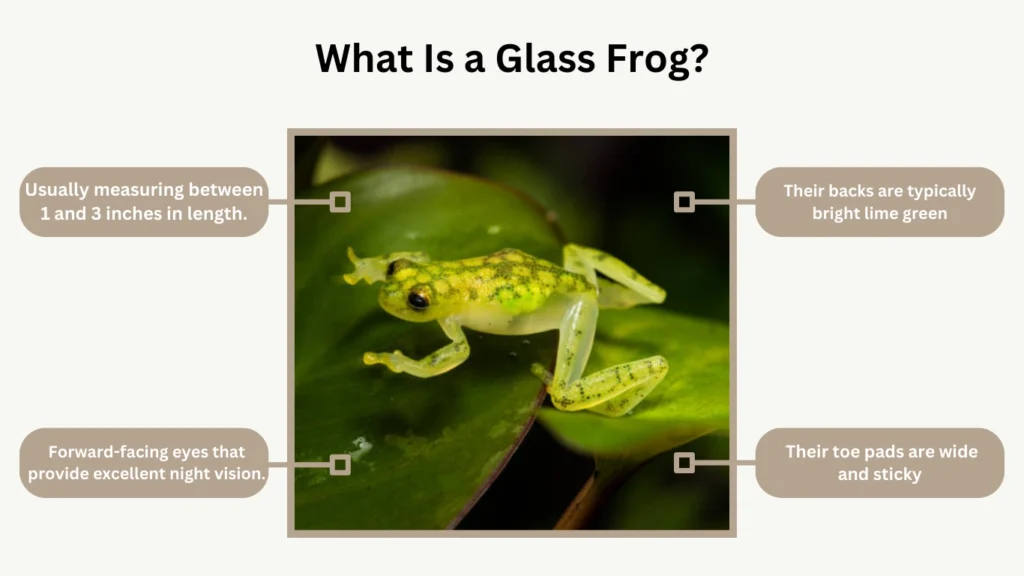
A glass frog belongs to the family Centrolenidae, a group of over 150 species of small, arboreal frogs. These frogs are primarily known for the transparent skin on the underside of their bodies, which makes many of their internal organs visible.
Scientific Classification
Glass frogs are part of the amphibian order Anura (frogs and toads). Within the Centrolenidae family, there are numerous species, each with slight differences in size, coloration, and habitat range. Despite these variations, they share similar traits such as tree-dwelling behavior and translucent skin.
These frogs are considered arboreal, meaning they live in trees and vegetation rather than on the forest floor. Their body structure is perfectly adapted for climbing and life above ground.
Why Is It Called a Glass Frog?
The name “glass frog” comes from the frog’s nearly transparent underside. When viewed from below, you can often see the heart, liver, digestive tract, and other internal organs through the skin. In some species, even the beating heart is visible.
Scientists believe this transparency helps with camouflage. From below, their pale underside blends with the light filtering through leaves, making them harder for predators to detect. This natural adaptation improves their chances of survival in dense rainforest environments.
Physical Characteristics
Glass frogs are relatively small, usually measuring between 1 and 3 inches in length. Their backs are typically bright lime green, sometimes with small yellow or white spots.
They have large, forward-facing eyes that provide excellent night vision. Their toe pads are wide and sticky, allowing them to grip leaves and branches securely. These adaptations make them well-suited to an arboreal lifestyle in humid forests.
Where Does the Glass Frog Live?
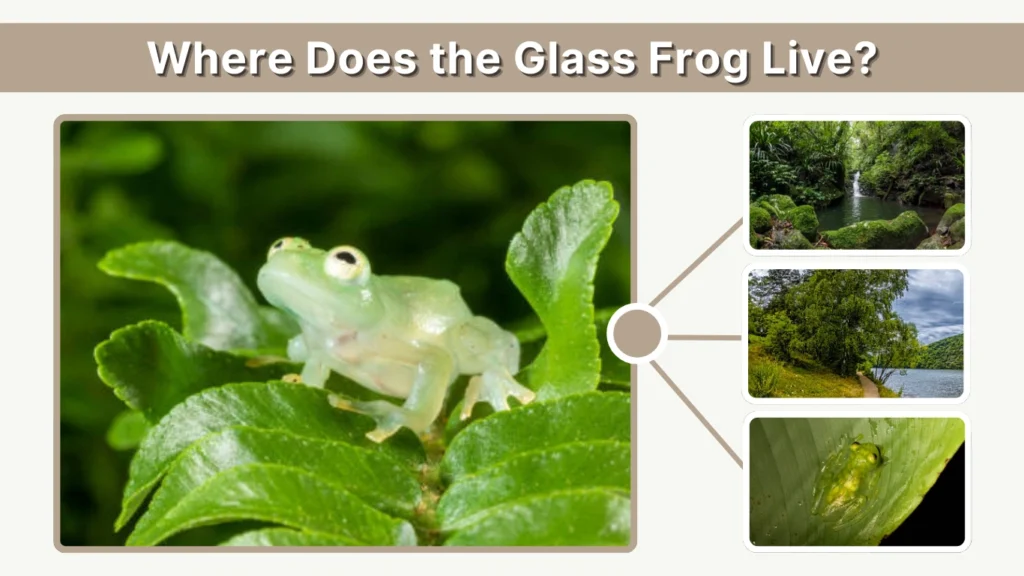
If you’re asking, “Where does the glass frog live?” the answer lies in the tropical regions of the Americas.
Geographic Distribution
Glass frogs are found in Central America and parts of South America. Countries such as Costa Rica, Panama, Colombia, Ecuador, Peru, and Venezuela are home to various species. Each species may have a slightly different range, but most inhabit tropical rainforest ecosystems.
They are especially common in mountainous or cloud forest regions, where moisture levels remain high throughout the year.
Glass Frog Habitat in the Wild
The typical glass frog habitat consists of tropical rainforests and cloud forests near fast-flowing streams. These frogs depend heavily on clean, oxygen-rich water for reproduction.
They are usually found on leaves and branches that overhang streams. This location is critical because their reproductive cycle depends on water below. The dense vegetation provides shelter and camouflage during the day.
Preferred Environmental Conditions
Glass frogs thrive in warm temperatures and high humidity. Rainforest climates offer consistent moisture, which is essential for amphibians because they absorb water through their skin.
The presence of clean streams is equally important. These waterways serve as nurseries for their developing offspring. Pollution or habitat destruction can significantly impact their survival.
Glass Frog Habitat and Behavior
Understanding glass frog habitat also means examining how these frogs behave within it.
Arboreal Lifestyle
Glass frogs spend nearly their entire lives in trees and shrubs. They rarely descend to the forest floor. Their sticky toe pads allow them to cling to smooth leaves even in wet conditions.
Most activity occurs at night. During the day, they remain still on the underside of leaves, conserving energy and avoiding predators. Their green backs blend seamlessly with foliage, while their translucent underside helps conceal them from threats below.
Camouflage and Survival
Camouflage plays a major role in their survival strategy. By remaining motionless and blending with their environment, glass frogs avoid detection from birds, snakes, and other predators.
Recent research has also revealed that some species can temporarily conceal red blood cells in their liver while resting, increasing their transparency. This remarkable adaptation further enhances their camouflage.
Glass Frog Diet
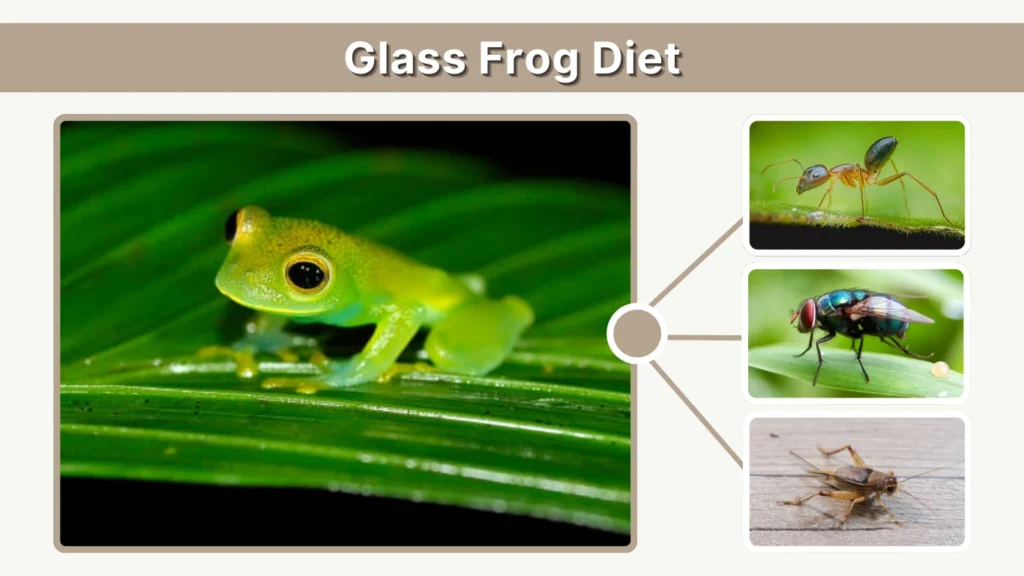
The glass frog diet consists mainly of small insects and other invertebrates.
What Do Glass Frogs Eat?
Glass frogs are carnivorous insectivores. In the wild, they feed on small arthropods that are active in the forest canopy. Because they are nocturnal hunters, most feeding occurs after dark.
They rely on movement to detect prey. Once an insect comes within range, the frog quickly extends its sticky tongue to capture it.
Common Prey
Typical prey items include:
- Ants
- Flies
- Small crickets
- Spiders
- Moths
Their small size limits them to equally small prey. A steady supply of insects in rainforest ecosystems supports their dietary needs.
Glass Frog Lifespan
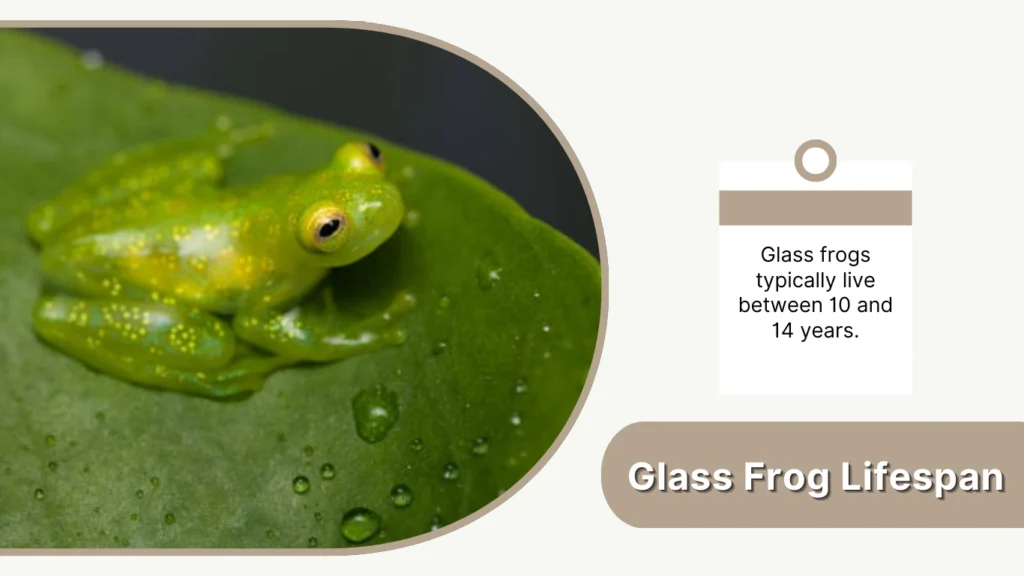
The glass frog lifespan varies depending on species and environmental conditions, but these small amphibians can live surprisingly long lives for their size.
Lifespan in the Wild
In their natural rainforest habitat, glass frogs typically live between 10 and 14 years. However, survival depends heavily on factors such as predation, climate stability, and habitat quality. Young frogs are especially vulnerable during their tadpole stage, when they develop in streams exposed to fish and other aquatic predators.
Environmental threats like deforestation and water pollution can also shorten their lifespan by disrupting breeding grounds and food sources.
Lifespan in Captivity
In captivity, glass frogs can live 10 years or more when provided with expert-level care. However, they are sensitive amphibians that require precise humidity, temperature control, and clean water systems.
Unlike many common pet frogs, glass frogs are not considered beginner-friendly. Their specialized habitat needs make them more suitable for experienced amphibian keepers.
Factors That Affect Lifespan
Several key factors influence how long a glass frog lives:
- Stable humidity and temperature
- Clean, unpolluted water sources
- Protection from predators
- Proper nutrition
- Low stress levels
When rainforest ecosystems remain intact, glass frogs can thrive for many years.
Reproduction and Life Cycle
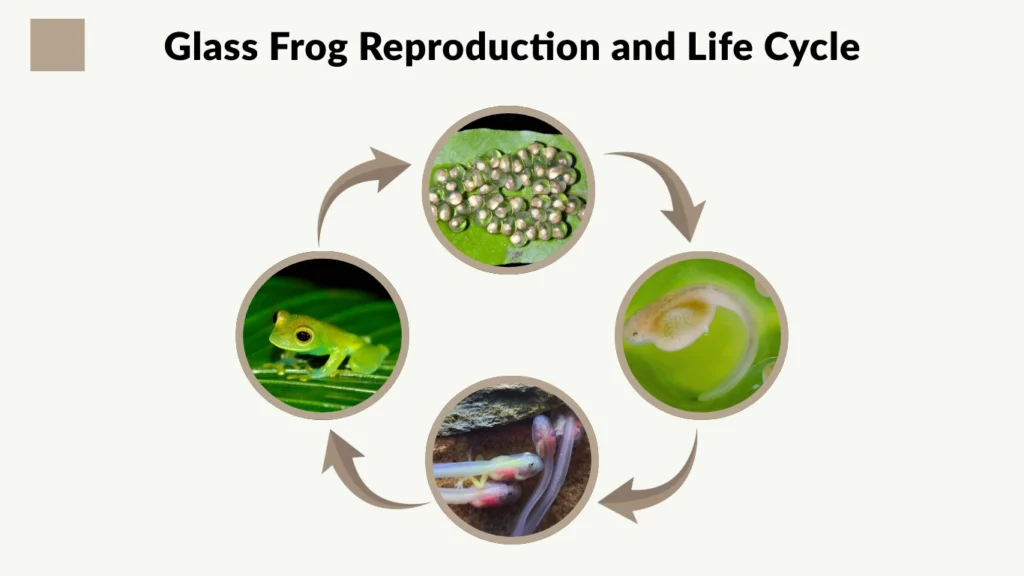
The life cycle of a glass frog is closely tied to flowing rainforest streams.
Mating and Courtship
During the breeding season, male glass frogs call from leaves that hang over streams. Their high-pitched calls attract females and also serve as warnings to rival males. Some species are territorial and will defend their calling sites.
Mating typically occurs on vegetation above water, ensuring that eggs are placed in a safe but strategically positioned location.
Egg-Laying Process
After mating, females lay clusters of eggs on the underside of leaves that overhang streams. This placement protects the eggs from aquatic predators below while keeping them close to water.
In many species, the male guards the eggs until they hatch. He helps keep them moist and may defend them from predators such as insects or other frogs. This level of parental care is relatively rare among amphibians.
Tadpole Stage
When the eggs hatch, the tadpoles drop directly into the stream below. There, they continue their development in the water.
Glass frog tadpoles are fully aquatic and feed on algae, plant material, and small organic particles. They must avoid aquatic predators while growing and undergoing transformation.
Metamorphosis
As tadpoles mature, they gradually develop legs and lungs. Their tails shrink as they transition from aquatic life to an arboreal lifestyle.
Once metamorphosis is complete, young glass frogs climb vegetation near the stream and begin living in the trees, continuing the cycle.
Fascinating Glass Frog Facts
Glass frogs are filled with remarkable adaptations that make them stand out in the amphibian world.
Visible Heartbeat
In some species, the beating heart can be seen clearly through the translucent belly. This unique feature has fascinated scientists and nature enthusiasts alike.
Advanced Camouflage
Recent research suggests that certain glass frogs can hide most of their red blood cells in their liver while resting. This reduces their overall visibility and increases transparency, helping them avoid predators.
Parental Care by Males
Unlike many frog species, male glass frogs often guard eggs until they hatch. This behavior improves survival rates and protects the developing embryos from dehydration and predators.
Nighttime Specialists
Glass frogs are almost entirely nocturnal. Their large eyes provide enhanced vision in low-light conditions, helping them locate prey and navigate forest canopies.
Threats and Conservation
Although many species of glass frogs remain widespread, others face growing threats.
Natural Predators
In the wild, glass frogs are preyed upon by:
- Snakes
- Birds
- Larger amphibians
- Insects (that attack eggs)
Their camouflage helps reduce predation risk, but they are still vulnerable in all life stages.
Environmental Threats
The biggest risks to glass frogs come from habitat destruction and environmental changes. Deforestation removes the trees and vegetation they depend on. Pollution contaminates streams essential for reproduction.
Climate change may also alter rainfall patterns, disrupting breeding cycles and reducing suitable habitat.
Conservation efforts that protect tropical rainforests and freshwater ecosystems are essential for maintaining healthy glass frog populations.
FAQs
What is a glass frog?
A glass frog is a small, tree-dwelling amphibian in the family Centrolenidae, known for its transparent belly that reveals internal organs.
Where does the glass frog live?
Glass frogs live in tropical rainforests and cloud forests of Central and South America, typically near fast-flowing streams.
How long do glass frogs live?
They generally live 10–14 years in the wild and can reach 10 years or more in captivity with expert care.
What do glass frogs eat?
Glass frogs eat small insects and invertebrates such as ants, flies, crickets, spiders, and moths.
Why are glass frogs transparent?
Their translucent underside helps them blend into their environment, reducing visibility to predators from below.
Conclusion
The glass frog is one of nature’s most extraordinary amphibians, combining transparency, camouflage, and unique parental care behaviors. Living high in the rainforest canopy near clear streams, these small frogs play an important role in tropical ecosystems. Understanding what a glass frog is, where it lives, what it eats, and how long it lives highlights the importance of protecting fragile rainforest habitats. Preserving these environments ensures that future generations can continue to marvel at this remarkable species.