
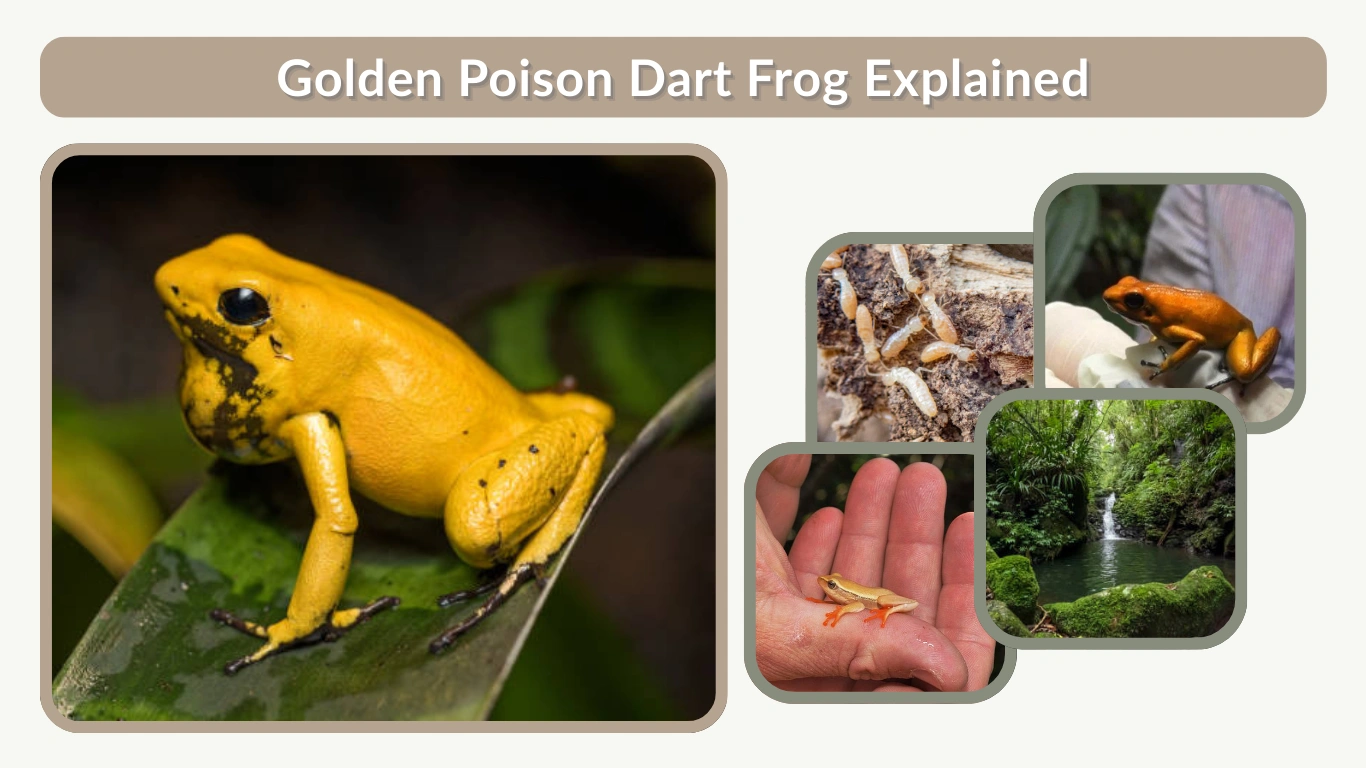
The golden poison dart frog is widely recognized as one of the most dangerous animals on Earth, despite its small size and striking beauty. Found in the rainforests of Colombia, this tiny amphibian carries enough poison to kill multiple humans, making it the most poisonous frog ever discovered. Its vivid golden-yellow coloration serves as a warning to predators, signaling extreme toxicity. Scientists, wildlife enthusiasts, and conservationists have long been fascinated by this frog due to its powerful toxin, unique biology, and ecological importance. In this article, we explore what makes the golden poison dart frog so deadly, where it lives, and how it survives in the wild.
What Is the Golden Poison Dart Frog?
The golden poison dart frog, scientifically known as Phyllobates terribilis, is a species of poison dart frog native to the Pacific coast rainforests of western Colombia. It belongs to the family Dendrobatidae, a group of frogs known for their toxic skin secretions. Unlike many frogs that rely on camouflage, this species uses bright coloration to warn predators of its danger.
Golden poison dart frogs are relatively small, usually measuring about 5 to 6 centimeters in length. Despite their size, they are considered the most toxic of all poison dart frogs. Their toxin is so potent that even minimal contact can be harmful under certain conditions. In the wild, they are active during the day and spend much of their time on the forest floor, where they hunt for small insects.
Scientific Classification
- Kingdom: Animalia
- Phylum: Chordata
- Class: Amphibia
- Order: Anura
- Family: Dendrobatidae
- Genus: Phyllobates
- Species: Phyllobates terribilis
Within the Phyllobates genus, this species stands out due to its extreme toxicity, far surpassing its close relatives.
Why Is the Golden Poison Dart Frog So Poisonous?
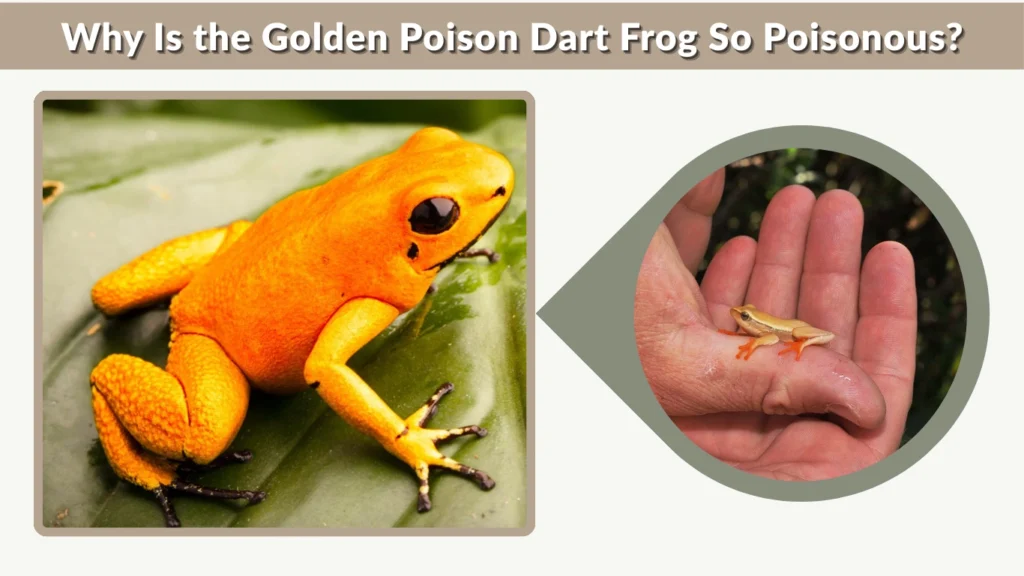
The golden poison dart frog’s reputation comes from its incredibly powerful toxin, which is stored in glands within its skin. This toxin acts as a highly effective defense mechanism, protecting the frog from predators. Even a tiny amount is enough to cause severe harm, making it one of the most lethal natural poisons known.
What makes this frog especially dangerous is that its poison is always present on its skin. Predators that attempt to bite or swallow the frog are quickly affected, often with fatal consequences. This level of toxicity has evolved over time as a survival advantage in a competitive rainforest environment.
What Is Batrachotoxin?
The primary poison found in the golden poison dart frog is batrachotoxin. This neurotoxin interferes with the normal function of nerve and muscle cells by forcing sodium channels to remain open. As a result, nerves cannot reset, leading to paralysis, heart failure, and eventually death.
Batrachotoxin is considered more potent than many synthetic poisons. There is no known antidote, which makes exposure extremely dangerous. This same toxin has also been found in certain birds and beetles, though in much smaller quantities.
How Potent Is the Poison?
A single golden poison dart frog carries enough batrachotoxin to kill up to ten adult humans theoretically. Even microscopic doses can be lethal. Compared to cyanide, batrachotoxin is several times more powerful, making it one of the strongest non-protein toxins in the world.
Habitat and Geographic Distribution
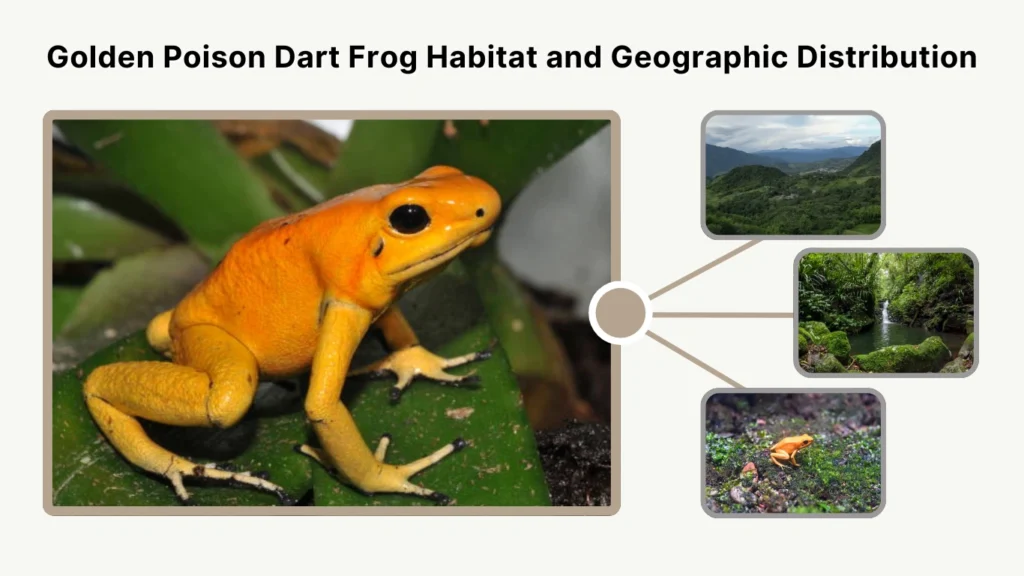
Golden poison dart frogs are found exclusively in a small region of western Colombia, particularly in the lowland rainforests near the Pacific coast. These areas are warm, humid, and receive heavy rainfall throughout the year, creating ideal conditions for amphibians.
They prefer dense forest environments with plenty of leaf litter, fallen logs, and moist soil. This habitat provides shelter, breeding sites, and a steady supply of food. Because their range is so limited, any changes to their environment can have a serious impact on their population.
Rainforest Conditions
High humidity and stable temperatures are essential for the survival of the golden poison dart frog. The rainforest ecosystem also supports the insects that make up the frog’s diet, which indirectly contributes to its toxicity. Disruption of this delicate balance can threaten the species’ long-term survival.
Diet and the Source of Its Toxicity
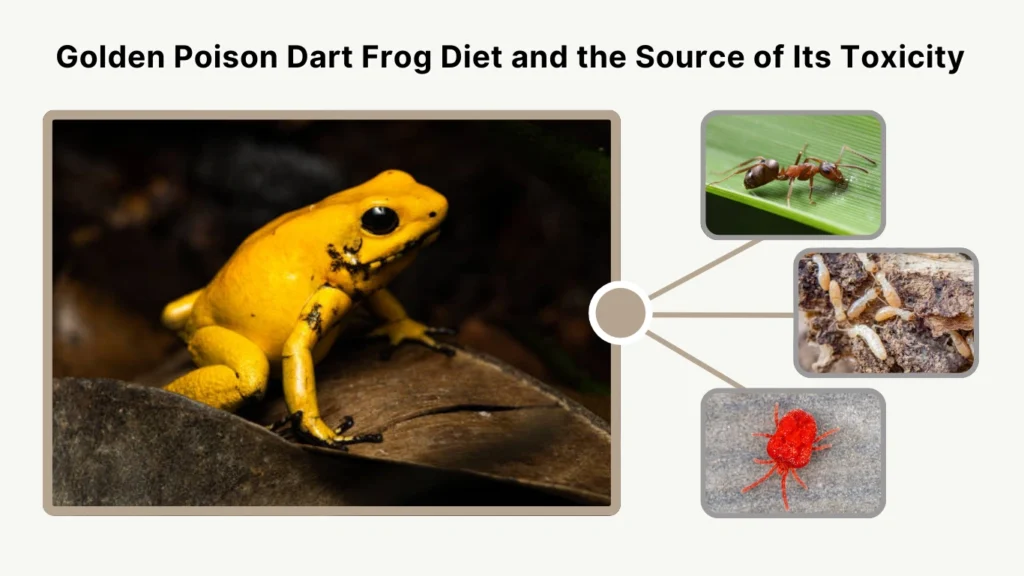
In the wild, golden poison dart frogs feed primarily on small insects such as ants, termites, mites, and beetles. These prey items are believed to be the source of the frog’s toxic compounds. Rather than producing poison naturally, the frog accumulates toxins from its diet and stores them in its skin.
This unique relationship between diet and toxicity explains why the frog is so dangerous in the wild but harmless in captivity.
Why Captive Frogs Are Not Poisonous
Golden poison dart frogs raised in captivity are typically fed non-toxic insects like fruit flies and crickets. Without access to their natural prey, they do not develop batrachotoxin and gradually lose any existing toxicity. As a result, captive frogs are safe to handle, unlike their wild counterparts.
Physical Characteristics and Coloration
The golden poison dart frog is best known for its bright and eye-catching appearance. Most individuals display a vivid golden yellow color, though some may appear orange or greenish-yellow. This bold coloration is an example of aposematism, a biological warning signal that tells predators the animal is toxic and should be avoided.
Adult frogs typically grow to about 5–6 centimeters in length and have smooth, glossy skin. Their small size allows them to move easily through leaf litter and dense vegetation. Unlike many frogs, they do not rely on camouflage; instead, their coloration makes them highly visible, reinforcing their dangerous reputation. This strategy reduces the likelihood of attack, as predators quickly learn to associate their bright color with severe consequences.
How Dangerous Is the Golden Poison Dart Frog to Humans?
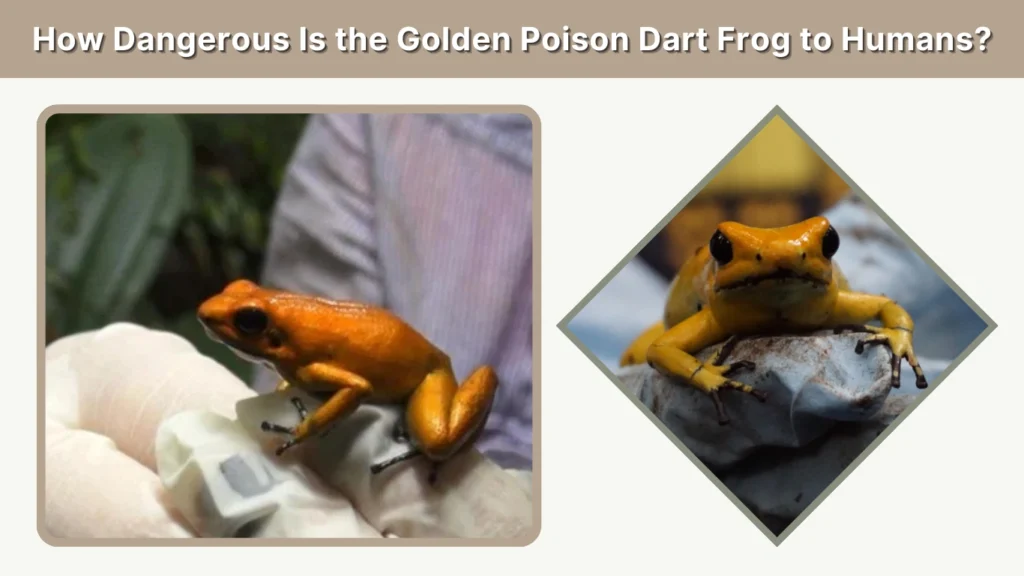
Despite its extreme toxicity, the golden poison dart frog poses little direct threat to humans under normal circumstances. The frog is not aggressive and does not inject venom through bites or stings. However, its skin contains powerful toxins that can be absorbed through open wounds or mucous membranes.
Historically, indigenous tribes used the frog’s toxin to coat the tips of blow darts for hunting, which demonstrates just how lethal the poison can be when introduced into the bloodstream. Accidental poisoning in modern times is extremely rare, largely due to limited human contact and habitat protection.
Can Touching One Kill You?
Touching a golden poison dart frog is unlikely to be fatal if the skin is intact. However, handling a wild frog with cuts or abrasions on the skin could allow the toxin to enter the bloodstream, potentially causing serious harm. For this reason, direct contact with wild individuals is strongly discouraged.
Natural Predators and Defense Mechanisms
The golden poison dart frog has very few natural predators due to its extreme toxicity. Most animals instinctively avoid it after recognizing its bright coloration. Some species, such as certain snakes, may have limited resistance, but confirmed predators are rare.
In addition to its poison, the frog relies on alert behavior and quick movements to avoid danger. Its combination of chemical defense and warning coloration makes it one of the most well-protected amphibians in the world.
Role in Indigenous Cultures
For centuries, indigenous communities in Colombia have used the golden poison dart frog as a hunting aid. The frog’s toxin was carefully extracted and applied to the tips of darts used in blowguns. This practice allowed hunters to bring down large prey with minimal effort.
The frog itself was not harmed in the process, as toxins could be collected repeatedly. This traditional knowledge reflects a deep understanding of the rainforest ecosystem and highlights the cultural importance of the species.
Lifespan and Reproduction
In the wild, golden poison dart frogs can live for approximately 10 to 15 years if environmental conditions remain stable. In captivity, where predators and habitat threats are absent, they may live even longer.
Reproduction involves the female laying eggs on moist surfaces, which the male guards until they hatch. Once the tadpoles emerge, they are often transported to water-filled plant cavities where they continue their development. This level of parental care increases survival rates in the challenging rainforest environment.
Conservation Status and Threats
The golden poison dart frog is currently classified as endangered due to habitat loss and environmental degradation. Deforestation, illegal logging, and agricultural expansion have significantly reduced its natural range.
Because the species occupies such a limited geographic area, even small changes to its habitat can have serious consequences. Conservation efforts focus on protecting rainforest ecosystems, regulating land use, and raising awareness about the importance of amphibian biodiversity.
Fascinating Facts About the Golden Poison Dart Frog
One golden poison dart frog carries enough toxin to kill multiple adult humans, making it one of the deadliest animals on the planet. Despite this, the frog itself is gentle and relies entirely on defense rather than aggression. Scientists continue to study its toxin for potential medical applications, including pain management and neurological research.
FAQs
Is the golden poison dart frog the most poisonous animal in the world?
The golden poison dart frog is considered the most poisonous amphibian and one of the most toxic animals on Earth. Its skin contains batrachotoxin, a substance powerful enough to kill several humans. While some marine animals are venomous, this frog’s toxin is among the deadliest known.
Can a golden poison dart frog kill a human?
Yes, theoretically a single golden poison dart frog carries enough toxin to kill multiple adult humans. However, deaths are extremely rare today because the frog is not aggressive and human contact is minimal. Poisoning usually requires the toxin to enter the bloodstream through wounds.
Why are golden poison dart frogs not poisonous in captivity?
Golden poison dart frogs lose their toxicity in captivity because their poison comes from their natural diet. In the wild, they eat specific ants and insects that contain toxin-producing compounds. Captive frogs are fed harmless insects, so they do not develop or maintain their poison.
Where do golden poison dart frogs live?
Golden poison dart frogs are native to a small region of western Colombia, primarily in humid lowland rainforests near the Pacific coast. They depend on warm temperatures, high humidity, and dense vegetation, which makes them highly vulnerable to habitat destruction and deforestation.
Is it safe to touch a golden poison dart frog?
Touching a wild golden poison dart frog is not considered safe, especially if you have cuts or open wounds. While intact skin reduces risk, toxins can still be absorbed through sensitive areas. Captive frogs are non-toxic, but handling wild individuals should always be avoided.
Conclusion
The golden poison dart frog is a remarkable example of how nature combines beauty and danger. From its vibrant coloration to its unmatched toxicity, this tiny amphibian plays a crucial role in both science and rainforest ecosystems. While it poses little threat to humans today, its survival depends heavily on habitat conservation. Protecting this species ensures not only the preservation of a natural wonder but also the health of the ecosystems it inhabits.