
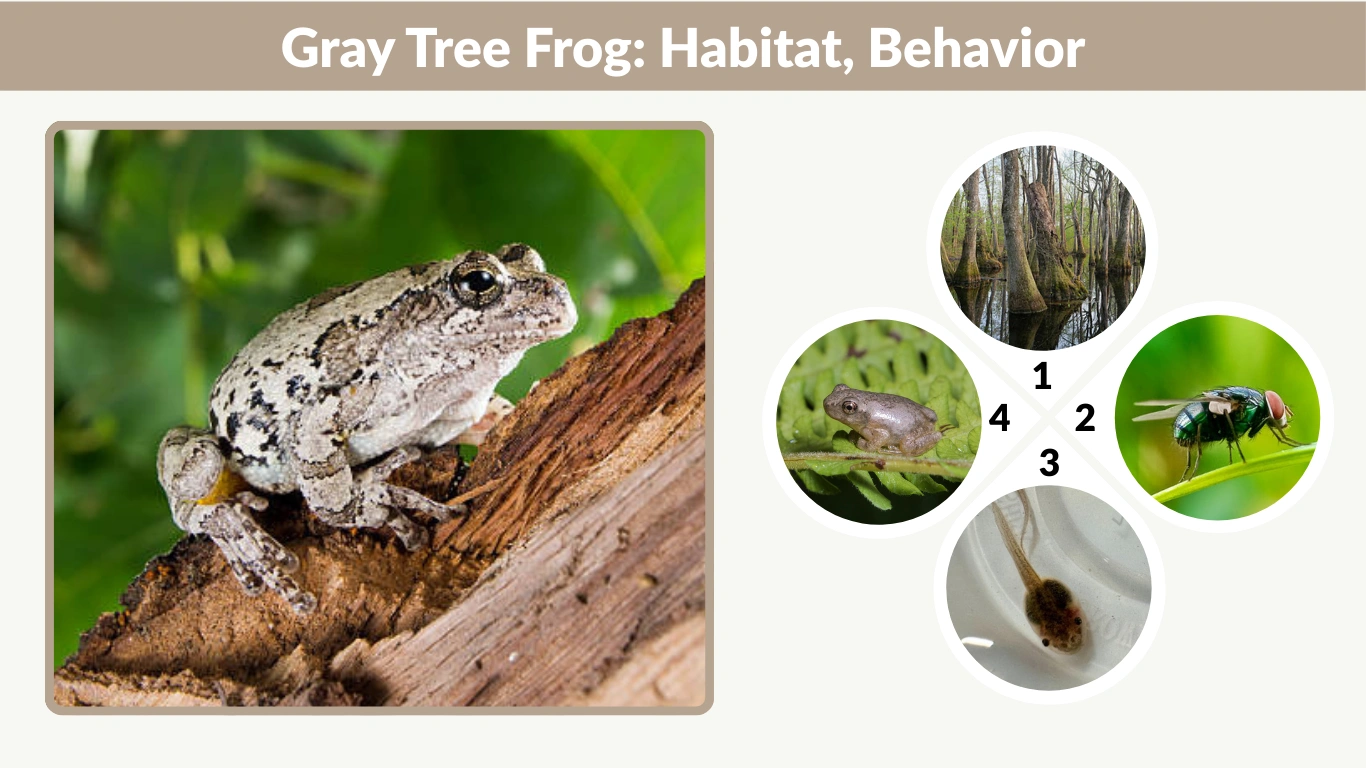
The gray tree frog is a small but fascinating amphibian found throughout much of North America. Known for its remarkable ability to change color and its excellent climbing skills, this frog is a master of camouflage and survival. Despite its name, the gray tree frog is not always gray—it can appear green, brown, or mottled depending on its surroundings. Often heard before it is seen, this species plays an important role in local ecosystems by controlling insect populations and serving as prey for larger animals. Its unique adaptations make it one of the most interesting tree-dwelling frogs in the region.
What Is a Gray Tree Frog?
The gray tree frog belongs to the genus Dryophytes, with the most commonly referenced species being Dryophytes versicolor. It is a true amphibian, meaning it relies on both land and water during different stages of its life cycle. Adult gray tree frogs are primarily arboreal, spending much of their time in trees and shrubs, while their eggs and tadpoles develop in freshwater environments.
This frog is well adapted to life above the ground. Its rounded body, strong hind legs, and adhesive toe pads allow it to cling to bark, leaves, and even smooth surfaces. Because of its excellent camouflage and quiet daytime behavior, it often goes unnoticed despite being relatively common in many areas.
Gray Tree Frog vs. Cope’s Gray Tree Frog
One of the most confusing aspects of gray tree frog identification is its similarity to Cope’s gray tree frog (Dryophytes chrysoscelis). These two species look almost identical in size, color, and markings. Even experts struggle to tell them apart based on appearance alone.
The most reliable way to distinguish between them is by sound. Their mating calls differ in speed and pitch, with Cope’s gray tree frog producing a faster, higher-pitched trill. Genetically, the two species are also different, though this distinction is not visible to the naked eye. Because of this, they are often discussed together under the common name “gray tree frog.”
Physical Characteristics of the Gray Tree Frog
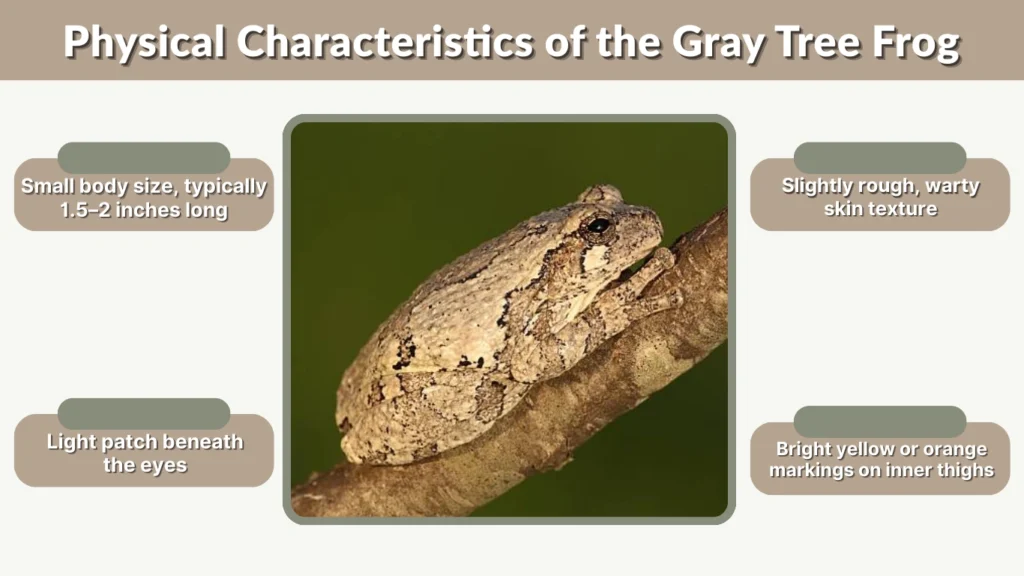
- Small body size, typically 1.5–2 inches long
- Slightly rough, warty skin texture
- Variable coloration ranging from gray and green to brown
- Light patch beneath the eyes
- Bright yellow or orange markings on inner thighs
- Large, round eyes adapted for night vision
- Adhesive toe pads for climbing trees and smooth surfaces
- Strong hind legs for jumping and gripping branches
Habitat and Geographic Range
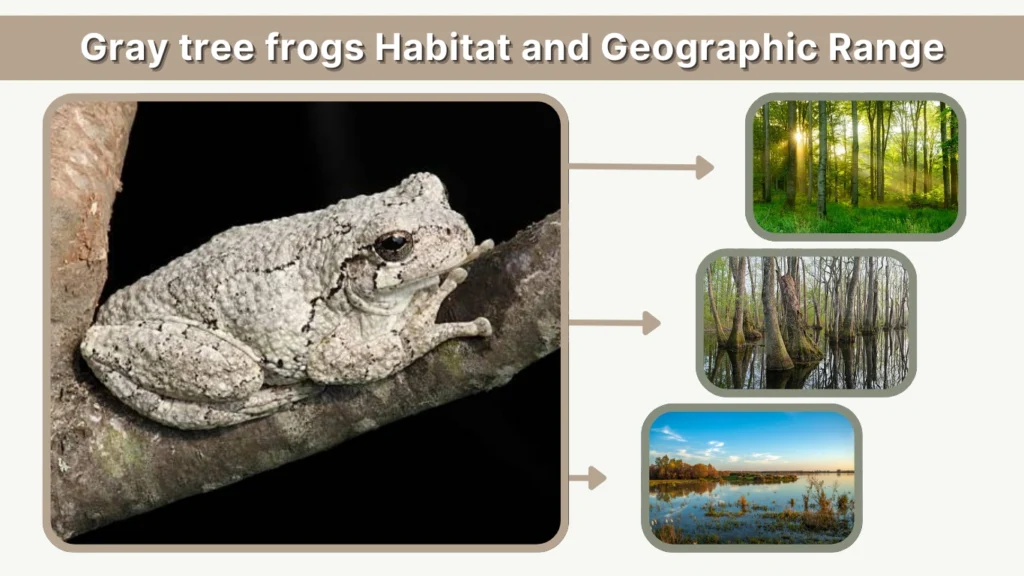
Gray tree frogs are highly adaptable and can live in a wide range of environments. They are commonly found in deciduous forests, wooded swamps, wetlands, and areas near ponds or slow-moving water. They also tolerate suburban and rural areas, often appearing near gardens, porch lights, and backyard trees.
Access to water is essential, especially during the breeding season. Temporary pools, ponds, and marshes provide safe places for eggs and tadpoles to develop without the presence of many fish predators.
Where Do Gray Tree Frogs Live in North America?
The gray tree frog’s range covers much of eastern and central North America. It can be found from southeastern Canada down through the eastern United States and as far west as parts of the Great Plains. This wide distribution is partly due to its adaptability and tolerance for different climates, including cold winters.
Behavior and Daily Activity
Gray tree frogs are primarily nocturnal. During the day, they rest quietly on tree trunks, leaves, or hidden crevices, relying on their camouflage to avoid detection. At night, they become active, moving through vegetation in search of food or mates.
Seasonal changes strongly influence their behavior. In colder months, gray tree frogs enter a state similar to hibernation, seeking shelter under leaf litter, logs, or loose bark. Their ability to survive freezing temperatures is one of their most impressive adaptations.
Adaptations for Survival
The gray tree frog has developed several specialized adaptations that help it survive in a variety of environments. One of the most important is its sticky toe pads, which allow it to climb trees, shrubs, and other vertical surfaces with ease. These pads give the frog access to food sources and safe resting spots that are out of reach for many ground-based predators.
Another remarkable adaptation is freeze tolerance. During winter, gray tree frogs can survive partial freezing of their bodies. Their bodies produce natural antifreeze-like substances, such as glucose, which protect their cells from damage. This ability allows them to overwinter in shallow shelters rather than burrowing deep underground, giving them an advantage in colder climates.
Diet and Feeding Habits
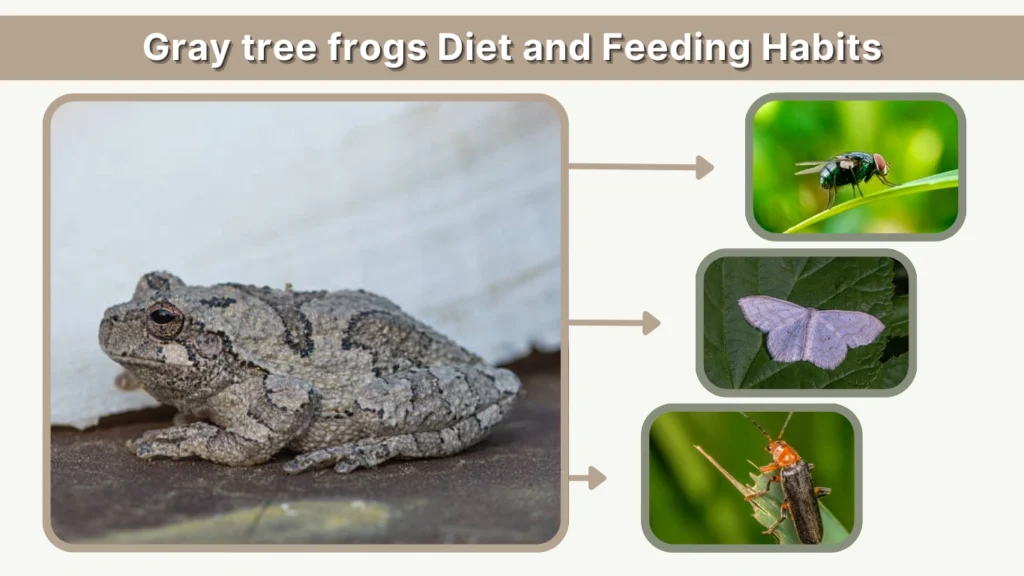
Gray tree frogs are carnivorous and feed primarily on small invertebrates. Their diet includes insects such as flies, moths, beetles, crickets, and ants, as well as spiders and other small arthropods. By feeding on these organisms, gray tree frogs play an important role in controlling insect populations.
They usually hunt at night when their prey is most active. Artificial lights in suburban areas often attract insects, which in turn attract gray tree frogs. This behavior explains why they are sometimes seen near porch lights or windows during warm evenings.
How Gray Tree Frogs Hunt
Gray tree frogs rely on a sit-and-wait hunting strategy. Rather than actively chasing prey, they remain still and strike when an insect comes within reach. Their large eyes provide excellent night vision, helping them detect movement in low light.
When hunting, the frog uses its long, sticky tongue to capture prey in a fraction of a second. Once caught, the prey is swallowed whole. This efficient hunting method allows the frog to conserve energy while still feeding effectively.
Predators and Natural Threats
Despite their camouflage and climbing abilities, gray tree frogs face many natural predators. Birds, snakes, raccoons, and larger amphibians all prey on adult frogs. Tadpoles are especially vulnerable and are often eaten by fish, aquatic insects, and other water-dwelling animals.
In addition to natural predators, human activities pose increasing threats. Habitat loss, pollution, pesticide use, and road traffic can reduce local populations. Because gray tree frogs rely on both land and water, they are particularly sensitive to environmental changes.
Reproduction and Life Cycle
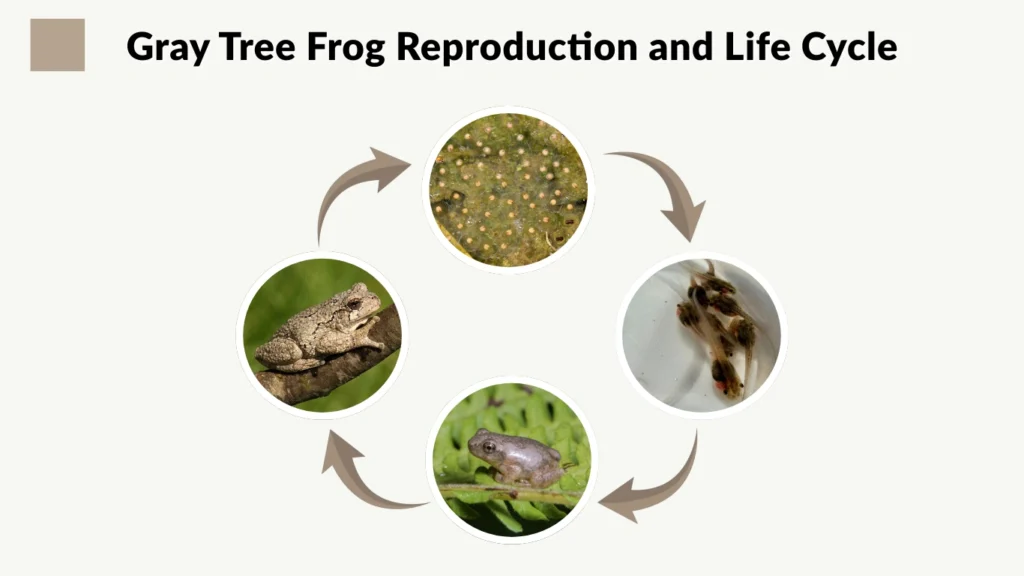
The breeding season for gray tree frogs typically begins in late spring and continues through early summer. Males gather near ponds, marshes, and temporary pools and call loudly to attract females. These calls are one of the most recognizable sounds of warm evenings in many regions.
After mating, females lay clusters of eggs attached to vegetation in shallow water. The eggs hatch within a few days, releasing tadpoles that feed on algae and organic matter. This aquatic stage is crucial for development and lasts several weeks.
Eggs, Tadpoles, and Metamorphosis
As tadpoles grow, they undergo a gradual transformation known as metamorphosis. Hind legs develop first, followed by front legs, while the tail slowly shrinks. During this time, the tadpole’s diet shifts as its digestive system changes to support a carnivorous adult lifestyle.
Once metamorphosis is complete, young frogs leave the water and move into nearby vegetation. Although small and vulnerable at this stage, they already possess the climbing ability and camouflage that characterize adult gray tree frogs.
Lifespan and Survival
In the wild, gray tree frogs typically live between 5 and 9 years, though many do not survive to adulthood due to predation and environmental hazards. Those that reach maturity benefit from their effective camouflage and ability to live high in vegetation.
In captivity, where predators and environmental stresses are reduced, gray tree frogs may live longer. However, maintaining proper habitat conditions is essential for their health and well-being.
Are Gray Tree Frogs Dangerous to Humans?
Gray tree frogs are not dangerous to humans. They do produce mild skin secretions that can cause irritation in sensitive individuals, but these substances are not harmful under normal circumstances. Washing hands after handling a frog is usually sufficient to avoid any issues.
They are generally shy and non-aggressive and will attempt to escape rather than defend themselves. For this reason, it is best to observe gray tree frogs in the wild without handling them.
Conservation Status and Ecological Importance
Gray tree frogs are currently considered a species of least concern, with stable populations across much of their range. However, local declines can occur where habitats are destroyed or polluted. Protecting wetlands and forested areas is essential for their continued survival.
Ecologically, gray tree frogs play an important role in maintaining balance within their ecosystems. They help control insect populations and serve as a food source for many predators, making them a vital part of the food web.
Conclusion
The gray tree frog is a remarkable example of adaptation and resilience. From its color-changing skin and climbing ability to its freeze tolerance and distinctive calls, this small amphibian is uniquely suited to life in trees and wetlands. By understanding and protecting the habitats that gray tree frogs depend on, humans can help ensure that these fascinating creatures continue to thrive for generations to come.
FAQs
Can gray tree frogs change color?
Yes, gray tree frogs can change their skin color between gray, green, and brown. This helps them blend into their surroundings and regulate body temperature.
Are gray tree frogs poisonous?
Gray tree frogs are not poisonous to humans. They produce mild skin secretions that may cause irritation in sensitive individuals but are generally harmless.
Where do gray tree frogs live?
They live in forests, wetlands, wooded swamps, and suburban areas near trees and water across much of eastern and central North America.
What do gray tree frogs eat?
Their diet mainly consists of insects, spiders, and other small invertebrates, making them helpful in controlling pest populations.
How long do gray tree frogs live?
In the wild, gray tree frogs typically live between 5 and 9 years, depending on environmental conditions and predation.