
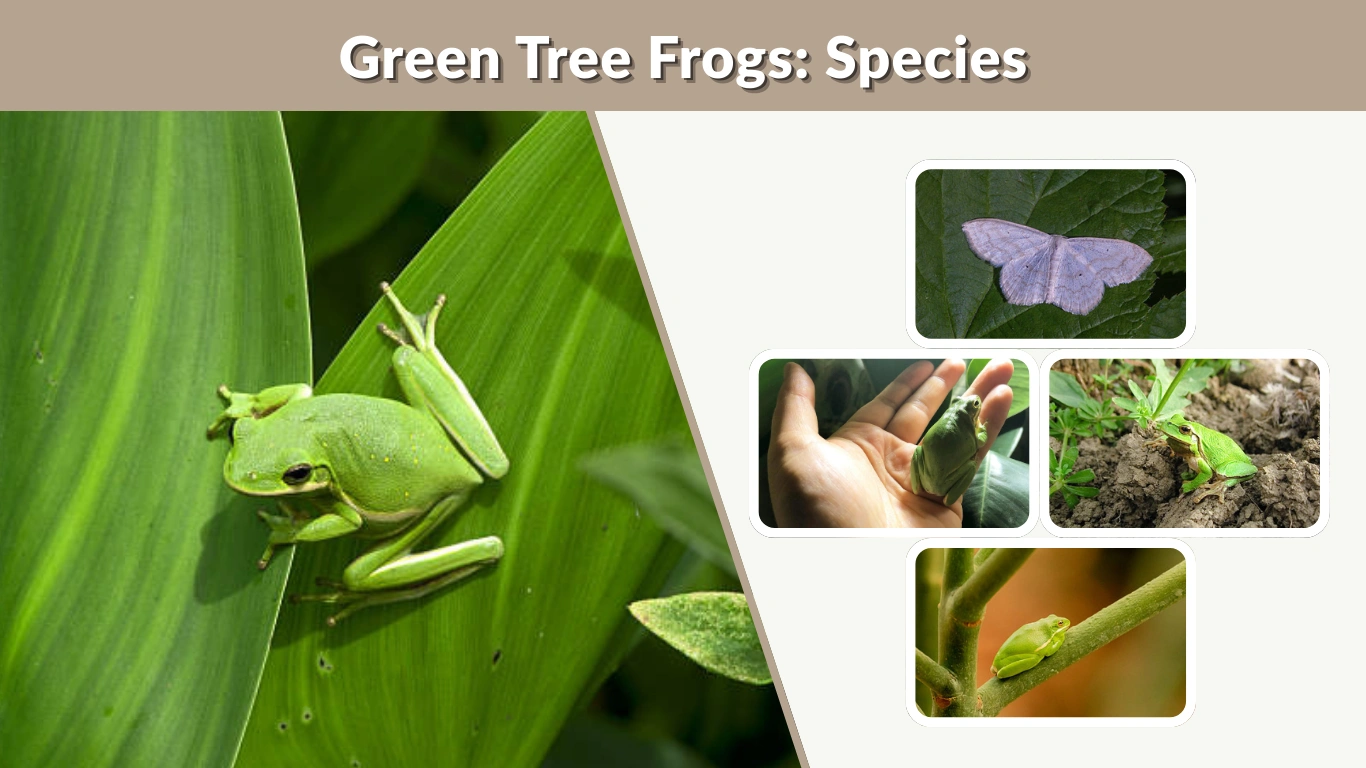
Green tree frogs are among the most familiar and well-loved amphibians, known for their bright green color, climbing ability, and distinctive nighttime calls. Found in many parts of the world, these frogs play an important role in local ecosystems and are also popular as pets. In the United States, the American green tree frog is commonly seen in backyards and wetlands, while the Australian green tree frog and red-eyed green tree frog are well known in the pet trade. Understanding how to identify green tree frogs, where they live, and how they behave helps people appreciate them in the wild and care for them responsibly in captivity.
What Is a Green Tree Frog?
The term “green tree frog” refers to several species of arboreal frogs that share similar physical traits and behaviors. These frogs are part of different scientific families, but they all have strong climbing abilities, sticky toe pads, and a preference for living in trees and vegetation near water. Their green coloration provides camouflage, helping them blend into leaves and avoid predators.
Green tree frogs are mostly nocturnal, becoming active after sunset when insects are abundant. During the day, they rest on leaves, branches, or walls, often remaining motionless. Their adaptability allows some species to live close to human settlements, where they benefit from artificial lights that attract insects.
Types of Green Tree Frogs
American Green Tree Frog
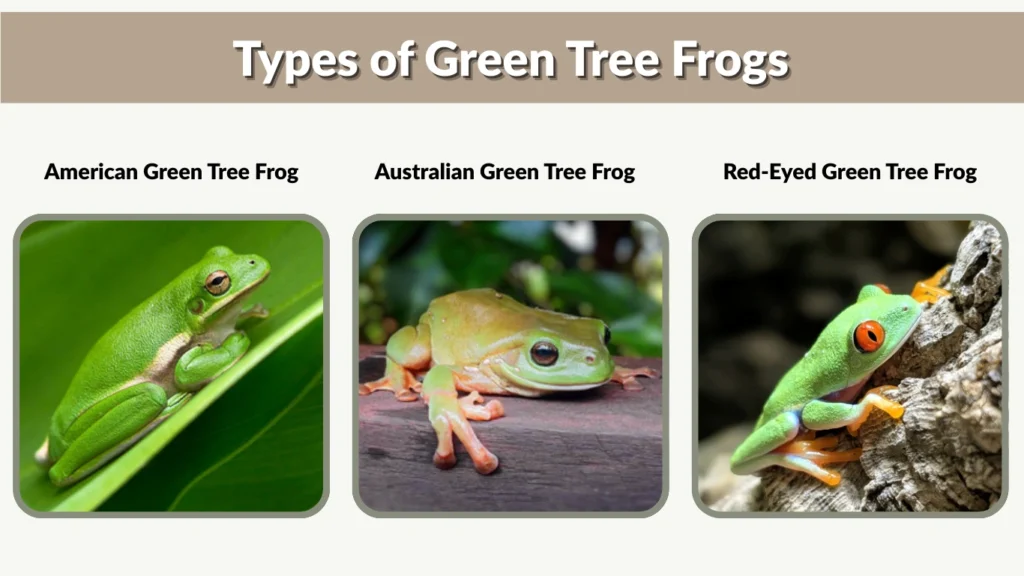
The American green tree frog (Hyla cinerea) is native to the southeastern United States. It is commonly found in states such as Florida, Georgia, Alabama, and Louisiana. This species is slender, bright green, and usually has a white or pale stripe running along the side of its body. American green tree frogs are frequently seen near ponds, swamps, and residential areas with outdoor lighting.
Australian Green Tree Frog
The Australian green tree frog (Litoria caerulea), also known as White’s tree frog or dumpy tree frog, is native to Australia and New Guinea. Compared to the American species, it is larger and more robust, with a calm temperament. Its hardy nature and tolerance of captivity make it one of the most popular pet frogs in the world.
Red-Eyed Green Tree Frog
The red-eyed green tree frog (Agalychnis callidryas) is instantly recognizable by its bright red eyes, vivid green body, and blue-and-yellow striped sides. Native to Central American rainforests, this species is primarily arboreal and highly dependent on humid environments. While visually striking, it requires more specialized care than other green tree frogs.
Green Tree Frog Identification
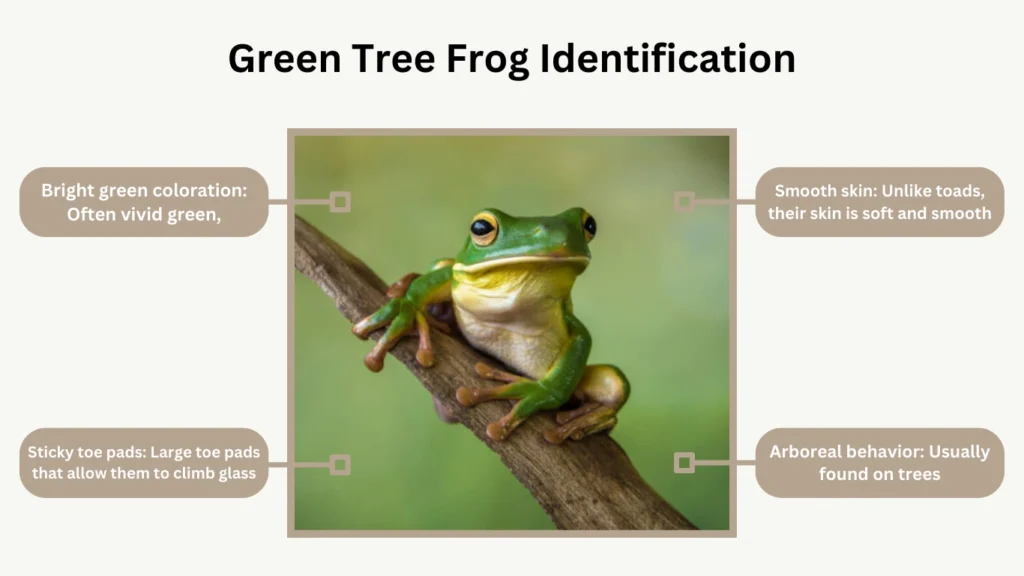
Green tree frogs are easy to recognize once you know their key traits. While several species share the “green tree frog” name, they all have physical features that help them climb, hide, and hunt in trees and vegetation. Color alone can vary, so size, body shape, and markings are more reliable for identification.
Common identification features include:
- Bright green coloration: Often vivid green, but may turn brown or dull under stress or cooler temperatures
- Smooth skin: Unlike toads, their skin is soft and smooth
- Sticky toe pads: Large toe pads that allow them to climb glass, leaves, and walls
- Slender body: Especially noticeable in American green tree frogs
- White or pale side stripe: Common in American green tree frogs
- Arboreal behavior: Usually found on trees, shrubs, walls, or near porch lights
Recognizing these features helps distinguish green tree frogs from similar species and supports safe interaction in both wild and captive settings.
Green Tree Frog Habitat
Natural Habitat
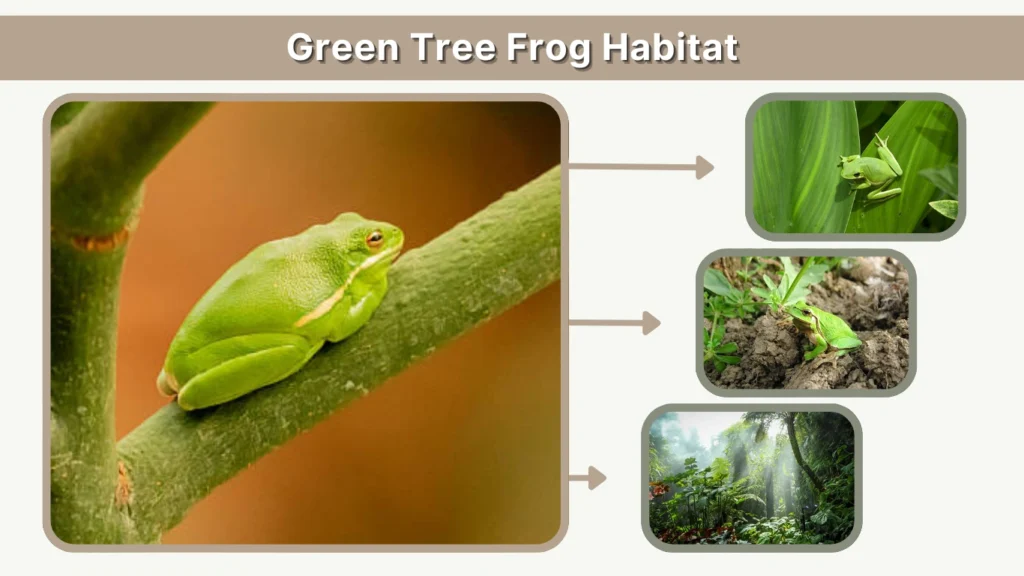
Green tree frogs live in environments that provide moisture, vegetation, and access to insects. Common habitats include forests, wetlands, marshes, and areas near ponds or streams. As arboreal animals, they spend much of their time in trees, shrubs, and tall plants, where they can hide and hunt.
Green Tree Frogs in Florida and Georgia
In Florida and Georgia, American green tree frogs are commonly found in suburban and rural areas. They often gather near porch lights, windows, and garden areas at night. Their presence is a sign of a healthy insect population and suitable environmental conditions.
Green Tree Frog Sounds and Calls
Green Tree Frog Call Explained
Green tree frogs are best known for their loud nighttime calls. Male frogs produce these sounds primarily during the breeding season to attract females and establish territory. Calling usually increases after rainfall, when conditions are ideal for reproduction. Each species has a unique call that helps females identify suitable mates.
American Green Tree Frog Call
The American green tree frog has a distinctive, high-pitched call that sounds like a repeated “queenk” or “quonk.” These calls are most commonly heard during warm summer nights in the southeastern United States. In areas such as Florida and Georgia, large groups of calling frogs can create a continuous background chorus.
What Green Tree Frogs Sound Like in Georgia
In Georgia, green tree frog sounds are often heard near ponds, wetlands, and residential areas with outdoor lighting. Their calls can be mistaken for insects or mechanical noises, but the rhythmic repetition usually gives them away. The presence of frogs is a strong indicator of nearby water sources and healthy habitats.
What Do Green Tree Frogs Eat?
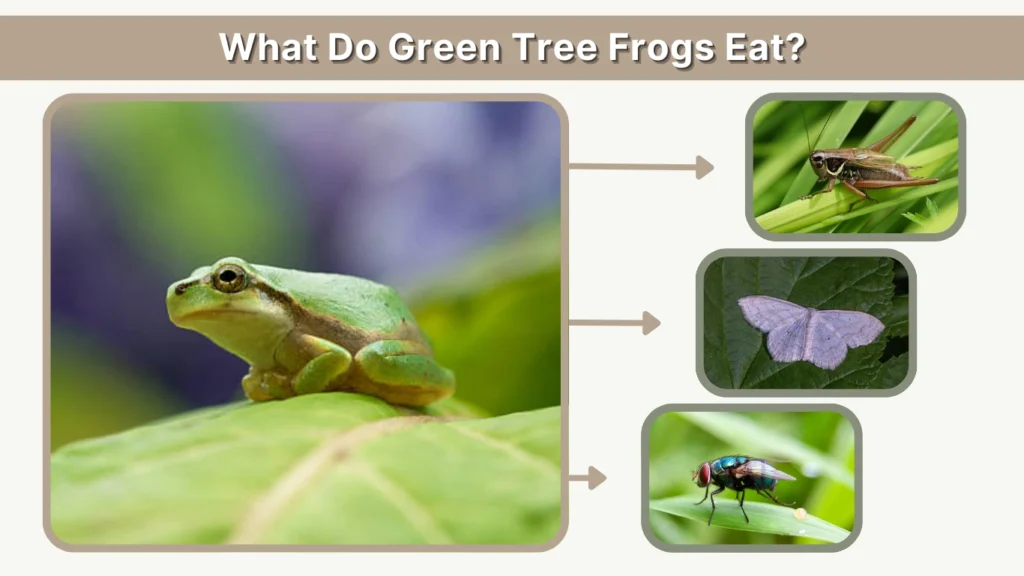
Green tree frogs are insectivores that feed on a variety of small prey. Their diet includes crickets, moths, flies, beetles, and other insects. In the wild, they hunt at night, using their excellent vision and quick reflexes to capture prey. Larger species may occasionally eat smaller frogs or other small animals.
In captivity, green tree frogs should be fed a diet of appropriately sized live insects. Feeding frequency depends on age and species, with juveniles requiring more frequent meals than adults.
Are Green Tree Frogs Poisonous?
Are Green Tree Frogs Dangerous to Humans?
Green tree frogs are not poisonous or dangerous to humans. While some species produce mild skin secretions, these substances are not harmful and primarily serve to deter predators. Handling green tree frogs does not pose a serious risk, but direct contact should be minimized to protect the frog’s sensitive skin.
American Green Tree Frog Poisonous or Not?
The American green tree frog is completely harmless. It does not produce toxins that affect humans or pets. Washing hands after contact is recommended to prevent the spread of bacteria and to protect the frog from oils or chemicals on human skin.
Green Tree Frog as a Pet
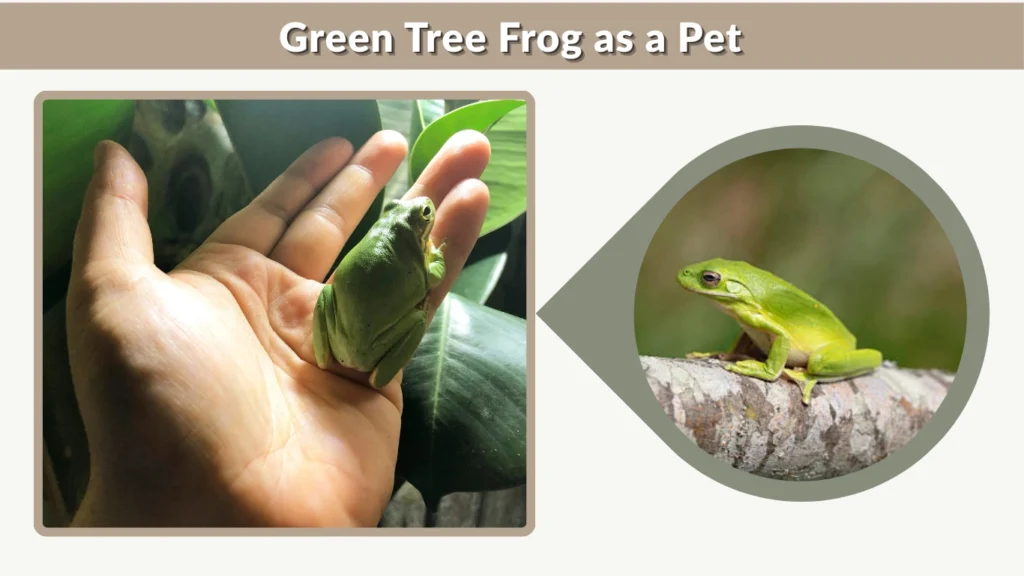
Green Tree Frog Care Basics
Green tree frogs can make rewarding pets when provided with proper care. They require a vertically oriented enclosure with climbing branches, plants, and hiding areas. Temperature and humidity levels should match the species’ natural environment, and clean, dechlorinated water should always be available.
Caring for a Green Tree Frog
Feeding, cleaning, and maintaining the enclosure are essential parts of care. Frogs should be fed live insects several times a week, and enclosures should be cleaned regularly to prevent bacterial growth. Handling should be kept to a minimum to reduce stress.
Red-Eyed Green Tree Frog Care
Red-eyed green tree frogs have more specific care requirements than other green tree frogs. They need higher humidity levels, stable temperatures, and a carefully maintained enclosure. Because of these needs, they are better suited for experienced keepers rather than beginners.
Buying a Green Tree Frog
Green Tree Frog for Sale
Before buying a green tree frog, it is important to research local laws and ensure the frog is legally obtained. Captive-bred frogs are preferred, as they adapt better to captivity and reduce pressure on wild populations.
Red-Eyed Green Tree Frog for Sale
Red-eyed green tree frogs are widely available in the pet trade, but buyers should choose reputable breeders. Proper setup should be completed before bringing a frog home to ensure a smooth transition and long-term health.
FAQs
Are green tree frogs poisonous?
No, green tree frogs are not poisonous. They are safe to observe and harmless to humans.
What do green tree frogs eat?
They eat insects such as crickets, moths, flies, and beetles.
How big do green tree frogs get?
Size varies by species, ranging from about 2 inches in American green tree frogs to over 4 inches in Australian green tree frogs.
Are green tree frogs good pets?
Yes, many species are good pets when properly cared for, especially American and Australian green tree frogs.
Why are green tree frogs so loud at night?
Males call at night to attract mates and communicate with other frogs, especially during breeding season.
Conclusion
Green tree frogs are fascinating amphibians that thrive in a wide range of environments. From the American green tree frog commonly seen in backyards to the striking red-eyed green tree frog of tropical rainforests, each species has unique traits and care needs. By understanding their habitat, sounds, diet, and behavior, people can better appreciate these frogs in the wild or provide responsible care in captivity.