
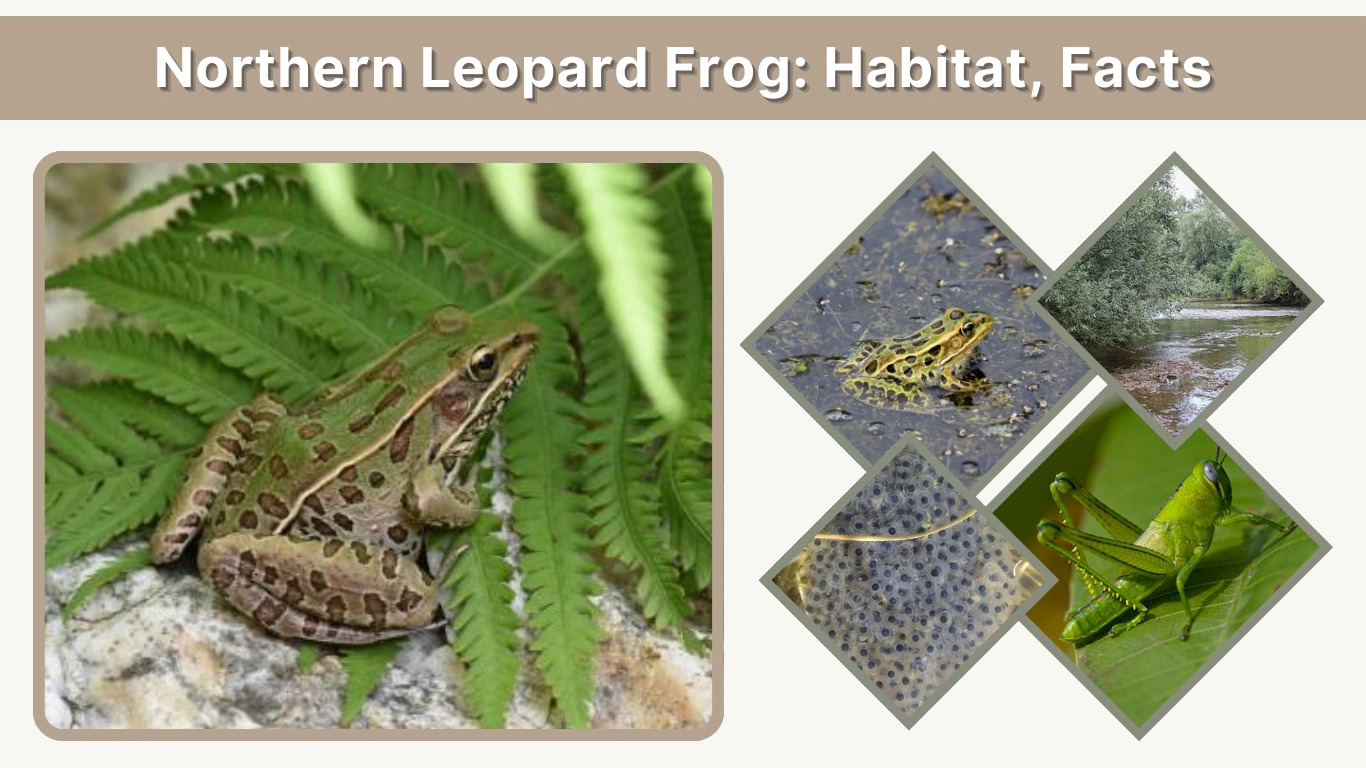
The northern leopard frog is a well-known amphibian native to North America, recognized for its green or brown body covered in dark, rounded spots. Commonly found near freshwater habitats, this semi-aquatic frog plays an important role in wetland ecosystems. Many people wonder about its safety, diet, and life cycle, especially whether northern leopard frogs are poisonous. In this guide, you’ll learn about the northern leopard frog’s habitat, scientific name, identification features, life cycle, and other fascinating facts.
What Is a Northern Leopard Frog?
The northern leopard frog is a medium-sized amphibian belonging to the “true frog” family, Ranidae. It is one of the most widely distributed frogs in North America and is often seen near ponds, marshes, and grassy wetlands.
This species is semi-aquatic, meaning it spends time both in water and on land. It relies on freshwater habitats for breeding but often ventures into surrounding fields and meadows during warmer months. Because of its adaptability and visibility, it is one of the most commonly observed frogs in its range.
Northern Leopard Frog Scientific Name
The scientific name of the northern leopard frog is Lithobates pipiens. It was previously classified under the genus Rana as Rana pipiens, and some older references may still use that name.
The word “pipiens” refers to the frog’s call, which has been described as a snore-like or rattling sound. As a member of the Ranidae family, the northern leopard frog shares traits common to true frogs, such as long legs, smooth skin, and strong jumping ability.
Northern Leopard Frog Identification Guide
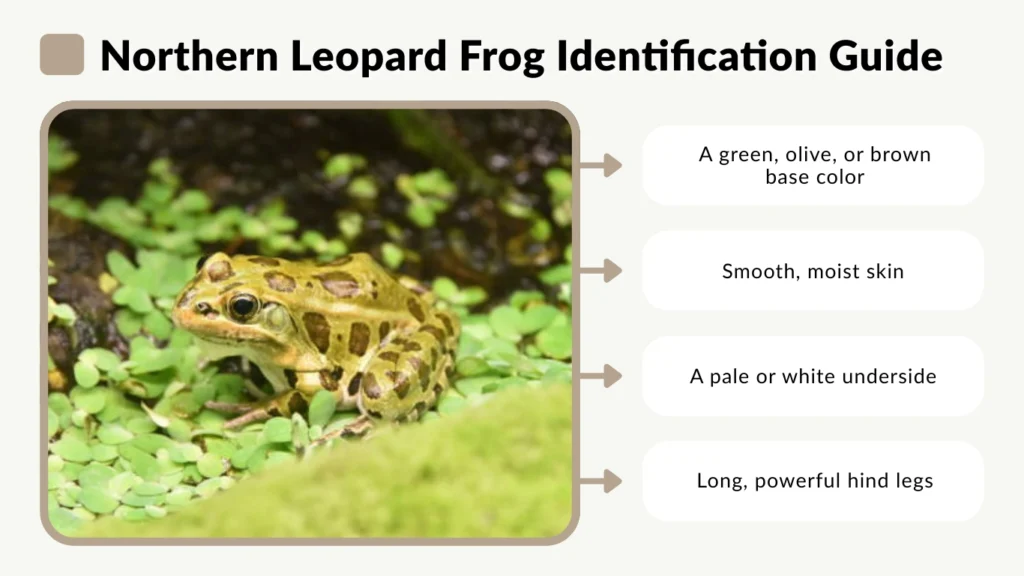
Identifying a northern leopard frog is relatively straightforward once you know its distinctive features. Its spotted pattern and body shape help set it apart from other frog species.
Physical Characteristics
Northern leopard frogs typically measure between 2 and 4.5 inches in length. They have:
- A green, olive, or brown base color
- Smooth, moist skin
- A pale or white underside
- Long, powerful hind legs
Their streamlined body and muscular legs make them excellent jumpers and swimmers.
Distinctive Markings
The most noticeable feature of the northern leopard frog is its pattern of dark, rounded spots. These spots:
- Are usually circular or oval
- Have light-colored borders
- Vary in size and arrangement
In addition, they have two light-colored ridges called dorsolateral folds that run down each side of their back from behind the eyes toward the hips. These ridges are prominent and help with identification.
Male vs. Female Differences
Females are generally larger than males, which is common among many frog species. During the breeding season, males may develop swollen thumbs that help them grip females during mating. Males may also have slightly different throat coloration due to vocal sac development.
Northern Leopard Frog Habitat
Geographic Range
The northern leopard frog is widely distributed across North America. Its range includes:
- Much of Canada
- The northern United States
- The Midwest
- The Great Plains
- Parts of the Rocky Mountain region
Although populations are widespread, their numbers can vary regionally depending on habitat conditions and environmental factors.
Preferred Habitats
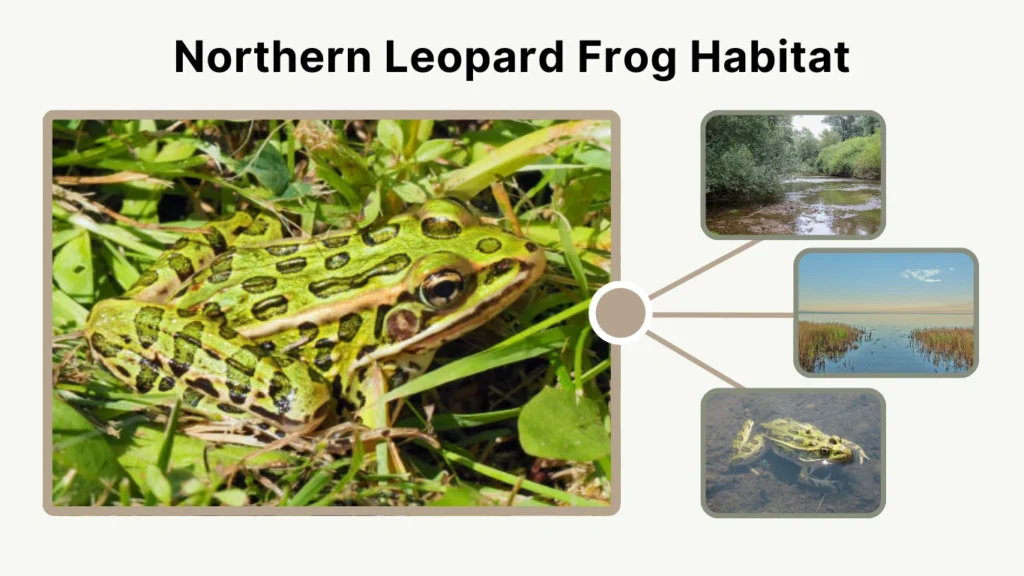
Northern leopard frogs prefer freshwater environments with abundant vegetation. Common habitats include:
- Ponds
- Marshes
- Lakes
- Slow-moving streams
- Wet meadows
They are often found in grassy areas near water, where they can hunt insects while staying close to a safe retreat.
Unlike some frogs that remain close to permanent water year-round, northern leopard frogs may travel some distance into fields and grasslands during the summer months.
Seasonal Habitat Changes
Seasonal changes influence where northern leopard frogs spend their time.
- Spring: They gather in shallow water to breed.
- Summer: They spread out into nearby grassy areas to feed.
- Winter: They hibernate underwater, often resting on the bottom of ponds or buried in mud and debris.
During winter, they absorb oxygen through their skin while remaining inactive. This adaptation allows them to survive cold climates.
Northern Leopard Frog Life Cycle
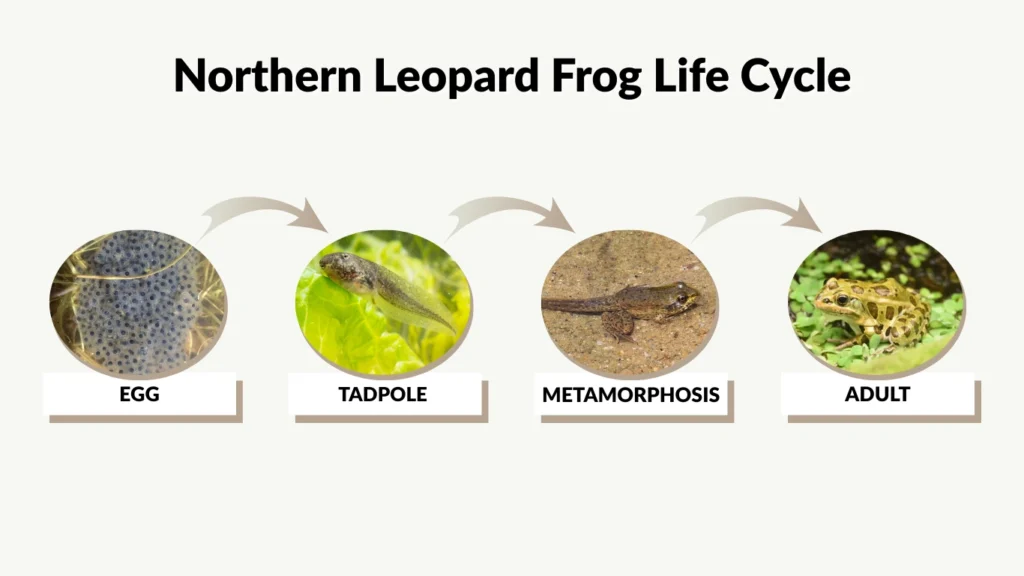
The northern leopard frog life cycle follows the typical amphibian pattern but is closely tied to seasonal temperature changes.
Breeding Season
Breeding usually begins in early spring, shortly after ice melts from ponds and wetlands. Males arrive first and begin calling to attract females. Their call is often described as a low snore or rattling sound.
Breeding takes place in shallow, vegetated water. After mating, females lay large clusters of eggs attached to underwater plants.
Egg Stage
Each female can lay thousands of eggs in a single breeding season. These eggs are enclosed in gelatinous masses that float or attach to vegetation in the water.
Depending on water temperature, eggs typically hatch within one to three weeks. Warmer temperatures speed up development, while cooler conditions slow it down.
Tadpole Stage
After hatching, northern leopard frog tadpoles begin a fully aquatic stage of development. At this point, they have gills for breathing underwater, long tails for swimming, and no legs. Tadpoles gather in shallow, warm areas of ponds and wetlands where food is abundant.
During this stage, they feed primarily on:
- Algae
- Aquatic plant material
- Organic debris
The tadpole stage usually lasts about two to three months, depending on temperature and environmental conditions. Warmer water speeds up growth, while cooler water slows development. Tadpoles must grow quickly to avoid predators such as fish, birds, and aquatic insects.
Metamorphosis and Juvenile Stage
As development continues, tadpoles undergo metamorphosis, transforming into small froglets.
Key changes during metamorphosis include:
- Growth of hind legs, followed by front legs
- Gradual absorption of the tail
- Development of lungs for breathing air
Once the tail is fully absorbed, the young frog leaves the water and begins life on land. These juvenile frogs are small and vulnerable, feeding on tiny insects as they grow. It typically takes two to three years for northern leopard frogs to reach full reproductive maturity.
Northern Leopard Frog Diet
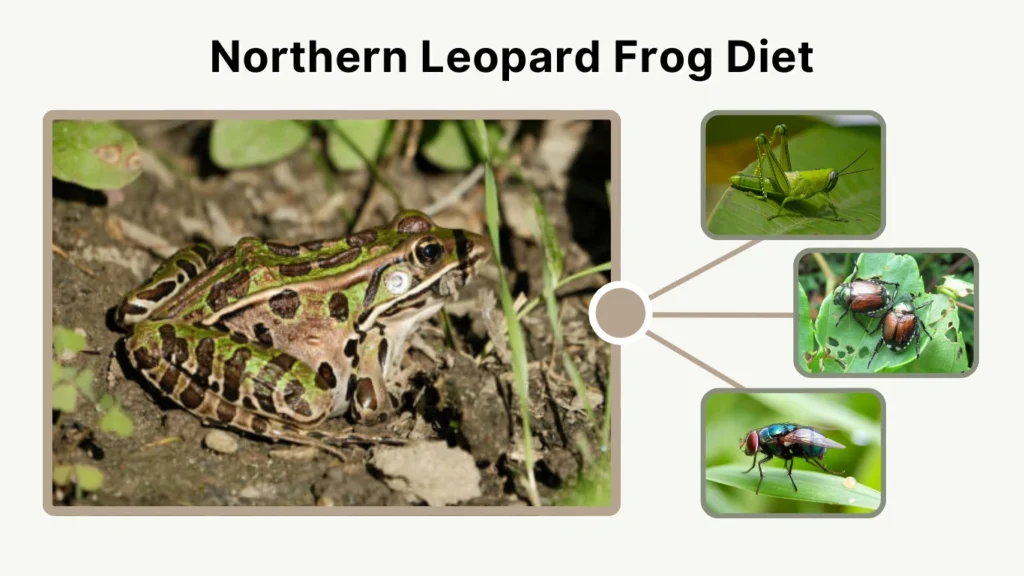
What Do Northern Leopard Frogs Eat?
Adult northern leopard frogs are carnivorous and have a varied diet. They feed on a wide range of small animals, including:
- Grasshoppers
- Beetles
- Flies
- Ants
- Spiders
- Worms
- Small crustaceans
They are opportunistic feeders, meaning they eat whatever suitable prey is available in their habitat.
Tadpole Diet
Unlike adults, tadpoles are mostly herbivorous. Their diet consists of algae, plant matter, and decaying organic material found in the water. This diet supports rapid growth before metamorphosis.
Hunting Behavior
Northern leopard frogs are sit-and-wait predators. They rely on camouflage and remain still until prey comes close. When ready, they quickly extend their sticky tongue to capture insects.
Their powerful hind legs also allow them to leap great distances, either to catch prey or escape predators.
Are Northern Leopard Frogs Poisonous?
One of the most common questions about this species is whether northern leopard frogs are poisonous. The simple answer is no, they are not poisonous to humans.
Like many amphibians, northern leopard frogs produce mild skin secretions. These secretions help protect them from bacteria and parasites, but they are not dangerous to people. They are neither venomous nor toxic in the way some brightly colored tropical frogs are.
However, it is always best to handle wild frogs gently and wash your hands afterward, as amphibians can carry bacteria such as Salmonella. Avoid using soaps or chemicals before handling them, since these substances can harm their sensitive skin.
Fascinating Northern Leopard Frog Facts
Northern leopard frogs have several interesting traits that make them unique.
Powerful Jumpers
They are excellent jumpers and can leap several times their body length in a single bound. Their strong hind legs are designed for both jumping on land and swimming in water.
Strong Swimmers
With webbed feet and muscular legs, they are agile swimmers. When threatened, they often dive quickly into water to escape predators.
Important Indicator Species
Northern leopard frogs are considered indicator species. Because amphibians are sensitive to pollution and environmental changes, declining populations can signal problems in freshwater ecosystems.
Role in Scientific Research
This species has been widely used in biological research and classroom studies due to its availability and adaptability. Scientists have studied their development, physiology, and environmental responses for decades.
Northern Leopard Frog Lifespan
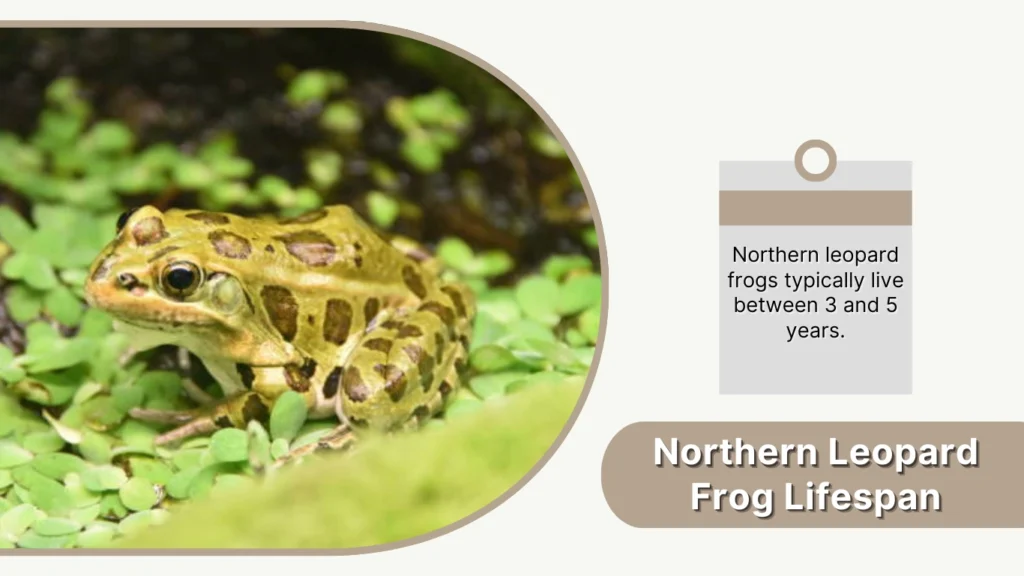
In the wild, northern leopard frogs typically live between 3 and 5 years. Some individuals may live longer in captivity under controlled conditions.
Factors Affecting Lifespan
Several factors influence how long they live:
- Predation by birds, snakes, fish, and mammals
- Habitat loss due to urban development or agriculture
- Pollution in wetlands
- Disease, including chytrid fungus
Eggs and tadpoles face the highest mortality rates, while adults that survive early stages have better chances of reaching maturity.
Conservation Status
The northern leopard frog is generally classified as a species of Least Concern across much of its range. However, some regional populations have experienced declines.
Wetland drainage, pesticide use, and habitat fragmentation have contributed to reduced numbers in certain areas. Conservation efforts that protect freshwater habitats, restore wetlands, and reduce pollution are essential for maintaining healthy populations.
Because of their ecological importance and sensitivity to environmental change, protecting northern leopard frogs also helps safeguard broader wetland ecosystems.
Conclusion
The northern leopard frog is a distinctive and ecologically important amphibian known for its spotted appearance, strong jumping ability, and semi-aquatic lifestyle. Found across much of North America, it thrives in freshwater habitats such as ponds and marshes. Although often asked, northern leopard frogs are not poisonous to humans. Understanding their habitat, life cycle, diet, and lifespan highlights the importance of protecting wetlands and preserving healthy ecosystems for future generations.