
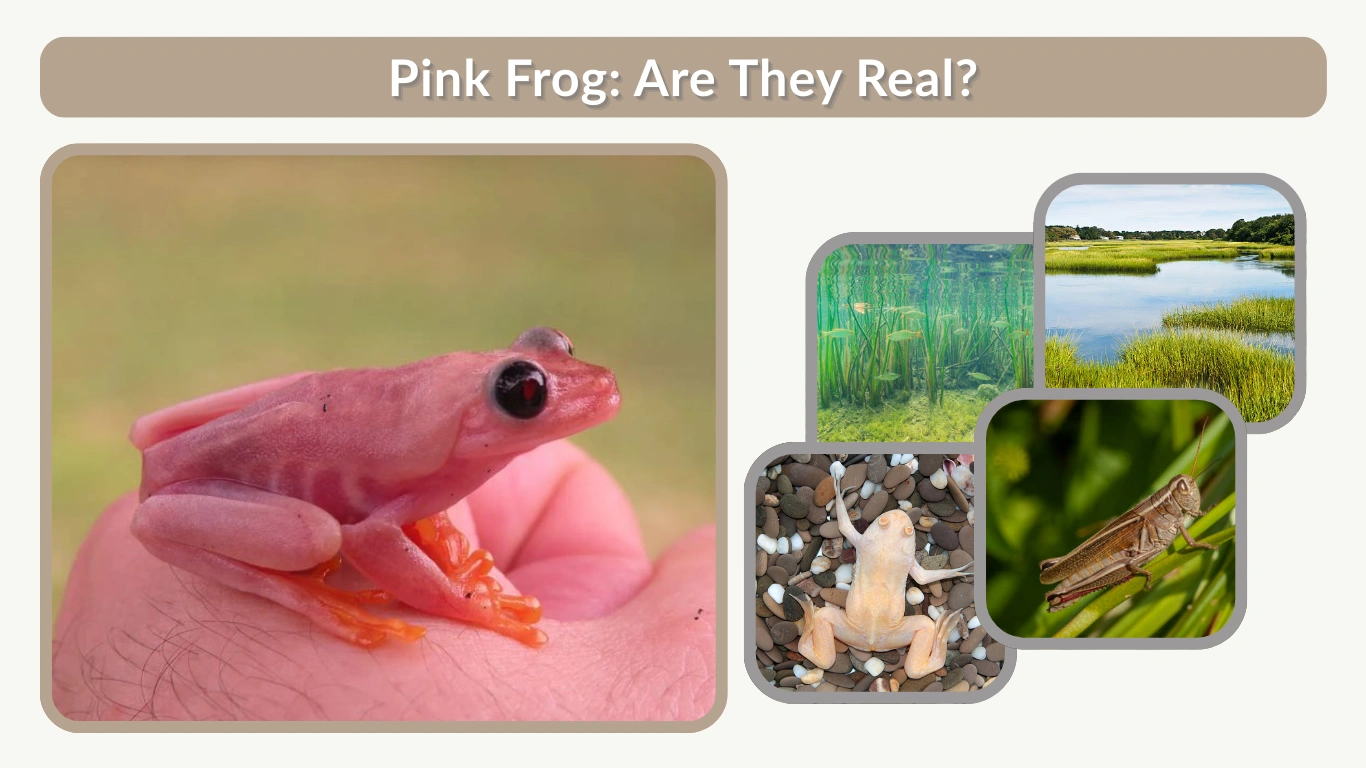
The idea of a pink frog sounds unusual, almost imaginary. Many people search for pink frogs after seeing viral photos or rare images online. But are pink frogs real, or are they simply edited pictures and internet myths? The truth is more scientific than mysterious. While there is no widely recognized frog species that is naturally bright pink, some frogs can appear pink due to genetic conditions, lighting, or rare color variations. In this article, we’ll explore what makes a frog look pink, which species can appear this way, and whether pink frogs truly exist in nature.
Is There Really a Pink Frog?
The short answer is yes — but not in the way most people expect. There is no common frog species that is naturally bubble-gum pink in the wild. However, certain frogs can appear pink due to genetic mutations, especially albinism.
Frogs typically get their color from pigments in their skin cells. These pigments help them blend into their environment for camouflage. Green frogs blend into leaves, brown frogs hide among soil and rocks, and brightly colored frogs often use warning colors to signal toxicity.
When pigment production is reduced or absent, a frog’s skin may appear pale, whitish, or even pinkish. In these cases, the pink tone usually comes from visible blood vessels beneath the skin rather than actual pink pigment.
Some online images exaggerate this appearance using filters or lighting effects, which can make frogs look brighter pink than they truly are. Understanding the science behind frog coloration helps separate fact from fiction.
What Makes a Frog Pink?
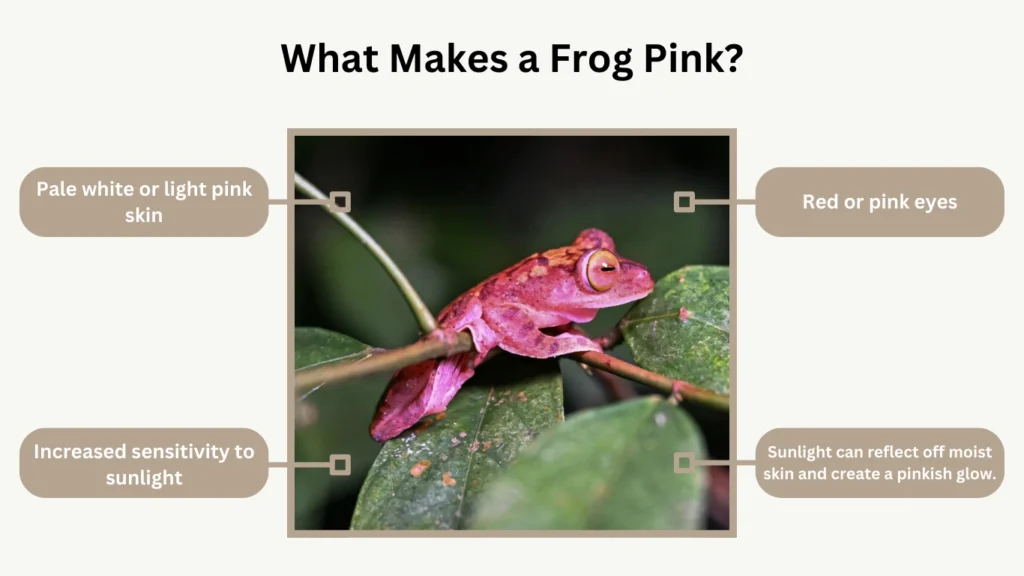
Several biological and environmental factors can cause a frog to appear pink.
Albinism and Genetic Mutations
The most common reason a frog appears pink is albinism. Albinism is a genetic condition in which the body cannot produce melanin, the pigment responsible for darker colors in skin, hair, and eyes.
Without melanin, the frog’s skin becomes very pale or translucent. Because frog skin is naturally thin, blood vessels underneath can show through, creating a soft pink or peach tone. Albino frogs often have:
- Pale white or light pink skin
- Red or pink eyes
- Increased sensitivity to sunlight
This condition is rare in the wild because albino animals lack camouflage, making them easier targets for predators.
In addition to albinism, other minor genetic mutations may slightly alter pigmentation. These mutations can produce lighter or unusual color tones, though true bright pink coloration remains extremely uncommon.
Environmental and Lighting Effects
Not all pink-looking frogs are albino. Sometimes environmental factors influence how a frog’s skin appears. For example:
- Sunlight can reflect off moist skin and create a pinkish glow.
- Temperature changes may temporarily affect pigmentation.
- Stress can slightly alter coloration in some species.
- Camera lighting and flash photography can intensify pink tones.
Social media photos often make frogs appear more vibrant than they are in natural settings. This contributes to the idea of vividly pink frogs being more common than they actually are.
Types of Frogs That Can Appear Pink
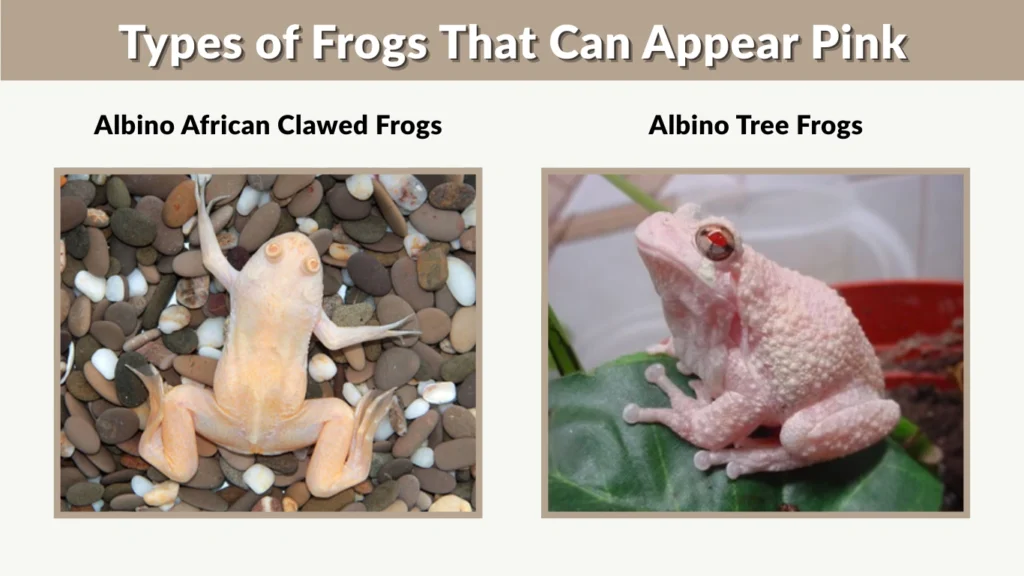
Although there is no official “pink frog” species, several types of frogs can appear pink under certain conditions.
Albino African Clawed Frogs
One of the most commonly seen pink frogs is the albino African clawed frog. These frogs are popular in aquariums and scientific research.
In their albino form, they have:
- Light pink or creamy white bodies
- Red or pink eyes
- Smooth, pale skin
Because they are often bred in captivity, albino African clawed frogs are easier to find than wild albino frogs. In proper lighting, their bodies can appear distinctly pink.
Albino Tree Frogs
Tree frogs can also be born with albinism, though this is much rarer. Albino tree frogs lack their usual green pigmentation and instead appear pale with a faint pinkish hue.
Since tree frogs rely heavily on camouflage to survive in leafy environments, albino individuals face greater risks in the wild. As a result, they are rarely seen outside controlled environments or breeding programs.
Other Rare Color Variations
Occasionally, frogs may display peach, reddish, or unusually pale tones due to minor pigmentation differences. These frogs are not truly pink species but may appear pinkish depending on lighting conditions.
In some cases, misidentification plays a role. Certain frogs photographed under red or sunset lighting may seem pink even though their natural coloration is different.
Pink Frog Habitat
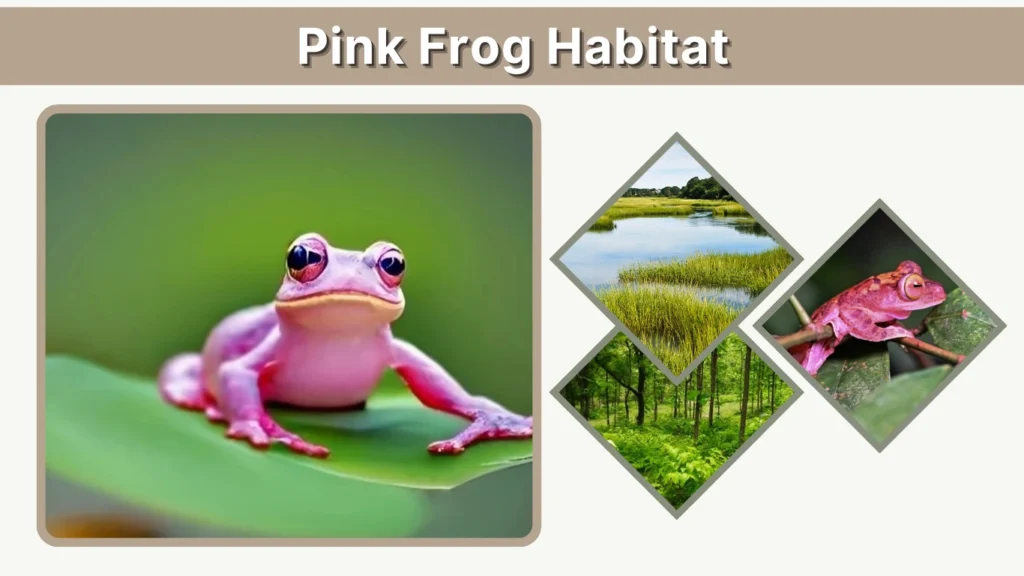
Because there is no single pink frog species, habitat depends on the specific frog involved. In most cases, pink frogs are simply albino versions of normal species, meaning they live in the same environments as their non-albino counterparts.
For example:
- Albino African clawed frogs live in freshwater ponds, slow-moving streams, and lakes. In captivity, they are commonly kept in aquariums.
- Albino tree frogs inhabit forests, wetlands, and tropical regions where regular tree frogs are found.
- Other pale or pinkish frogs follow the same habitat patterns as their species group.
Survival Challenges in the Wild
While their habitat may be the same, survival is much more difficult for pink or albino frogs.
Camouflage is one of a frog’s primary defenses. Green frogs hide among leaves, and brown frogs blend into soil or bark. A pale pink frog stands out clearly against natural backgrounds, making it easier for predators such as birds, snakes, and mammals to spot.
Albino frogs also tend to be more sensitive to sunlight because they lack protective pigmentation. Increased UV exposure can damage their skin and eyes.
As a result, pink frogs are rarely seen in the wild and are more commonly found in captivity, where they are protected from predators and environmental stress.
Pink Frog Diet
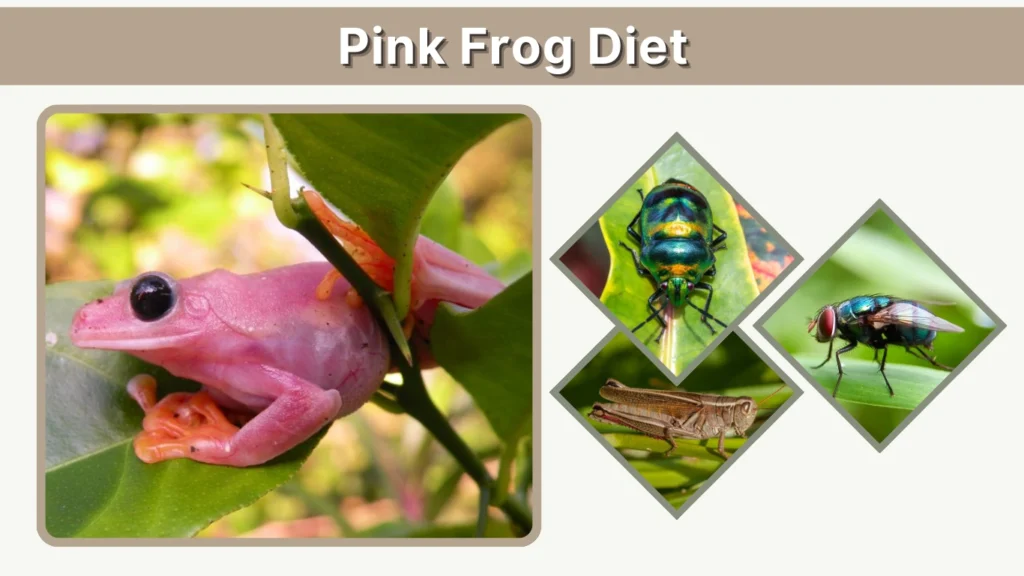
A frog’s color does not affect what it eats. Pink frogs, including albino frogs, follow the same dietary patterns as their species.
Most frogs are carnivorous as adults. Their diet typically includes:
- Insects (flies, beetles, ants, grasshoppers)
- Spiders
- Worms
- Small crustaceans
- Other small invertebrates
Frogs use a sit-and-wait hunting strategy. They remain still and strike quickly with a long, sticky tongue when prey comes within reach.
Tadpole Diet
During the tadpole stage, the diet is very different. Tadpoles are usually herbivorous or omnivorous. They feed on:
- Algae
- Decaying plant material
- Organic debris
- Microscopic aquatic organisms
As they grow and undergo metamorphosis, their digestive system changes, allowing them to switch to a carnivorous diet as adult frogs.
Even albino or pink frogs follow this same life cycle and feeding pattern.
Are Pink Frogs Rare?
Yes, pink frogs are extremely rare in the wild.
Albinism occurs in only a small percentage of amphibians. Because albino frogs lack camouflage, their chances of surviving to adulthood are much lower than normally pigmented frogs. Many fall prey to predators early in life.
In contrast, pink or albino frogs are more commonly seen in captivity. Some species, such as the African clawed frog, are selectively bred for albinism. This controlled breeding increases the likelihood of pink coloration appearing.
However, in natural ecosystems, spotting a pink frog would be an unusual and rare event.
Interesting Pink Frog Facts
- Pink frogs are usually albino, not a separate species.
- The pink tone often comes from visible blood vessels under translucent skin.
- Albino frogs typically have red or pink eyes due to lack of pigmentation in the iris.
- They are more sensitive to bright light and UV exposure.
- Some pink frogs are intentionally bred in aquariums for their unique appearance.
- Despite their unusual color, their behavior and intelligence are the same as other frogs of their species.
FAQs
Are pink frogs real?
Yes, pink frogs are real, but they are usually albino frogs rather than a separate pink species. Their pale or pinkish color results from a lack of melanin, which makes blood vessels visible beneath the skin.
What species of frog is pink?
There is no common naturally pink frog species. Most pink frogs are albino versions of existing species, such as the African clawed frog or certain tree frogs.
Why do albino frogs look pink?
Albino frogs lack melanin, the pigment that gives normal frogs their green or brown coloration. Because their skin is pale and somewhat translucent, underlying blood vessels show through, creating a pink appearance.
Can pink frogs survive in the wild?
Pink or albino frogs can survive in the wild, but their chances are lower. Without camouflage, they are easier for predators to spot, and their increased sensitivity to sunlight can also pose challenges.
Conclusion
The pink frog may sound like a mythical creature, but in reality, it is usually an albino frog displaying a rare genetic condition. While no widely recognized frog species is naturally bright pink, certain frogs can appear pink due to albinism, lighting, or minor pigmentation changes. These unique amphibians share the same habitats, diets, and behaviors as their normally colored counterparts, though they face greater survival challenges in the wild. Understanding the science behind pink frogs helps separate online myths from biological reality.