
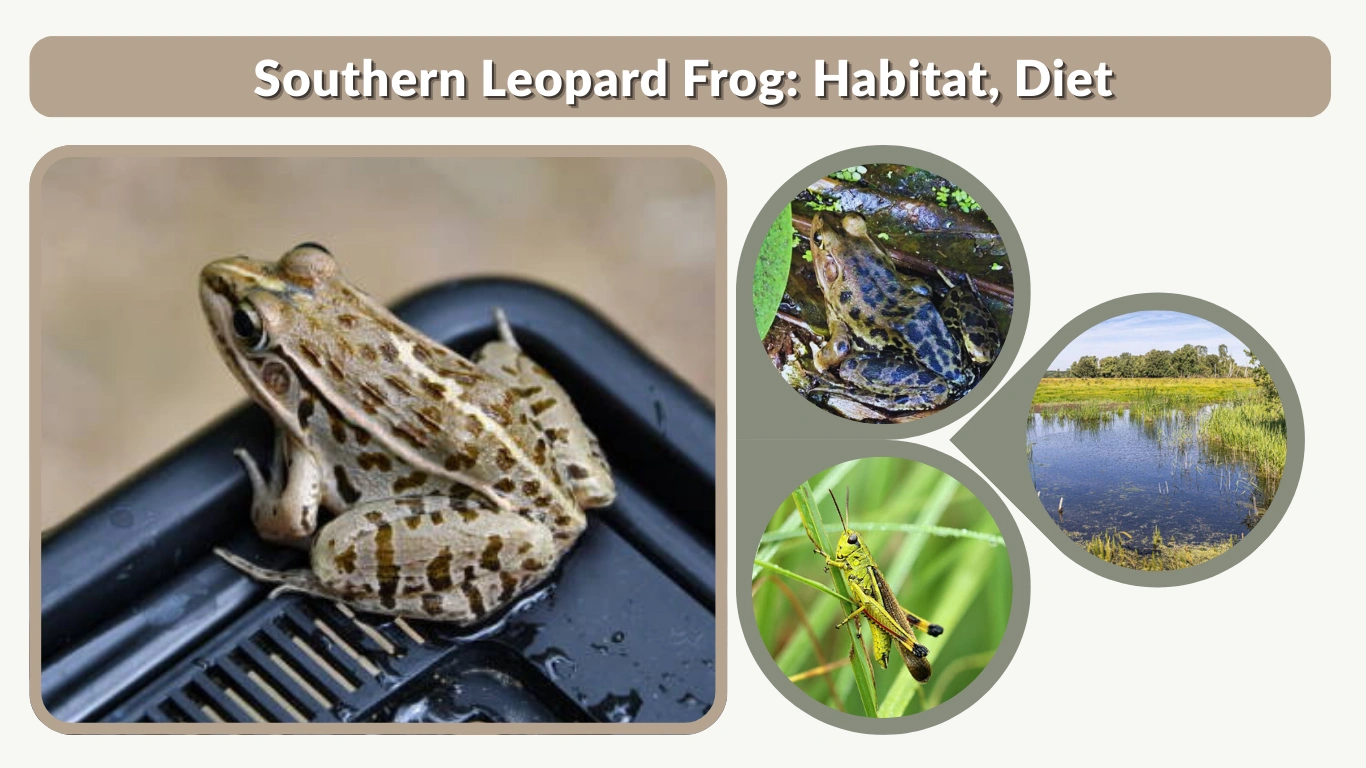
The southern leopard frog is a common amphibian found across the southeastern United States. Recognized for its green or brown body covered in dark spots, this semi-aquatic frog thrives in wetlands, ponds, and marshes. Many people are curious about southern leopard frog habitat, diet, and whether southern leopard frogs are poisonous. Others want to understand the difference between northern and southern leopard frogs. In this guide, we’ll explore identification features, habitat preferences, feeding habits, and key facts about this adaptable species.
What Is a Southern Leopard Frog?
The southern leopard frog is a medium-sized amphibian that belongs to the “true frog” family, Ranidae. It is well adapted to warm, humid climates and is often seen near freshwater habitats.
Unlike fully aquatic frogs, the southern leopard frog spends time both in water and on land. It depends on wetlands for breeding but may travel into grassy fields and nearby vegetation during warmer months. Because of its adaptability, it is one of the most commonly encountered frogs in the southeastern United States.
Scientific Classification
The scientific name of the southern leopard frog is Lithobates sphenocephalus. In older classifications, it was placed in the genus Rana, and you may still see it referred to as Rana sphenocephala in some sources.
It belongs to:
- Family: Ranidae
- Common group: True frogs
The species name “sphenocephalus” refers to its wedge-shaped head structure.
Southern Leopard Frog Identification Guide
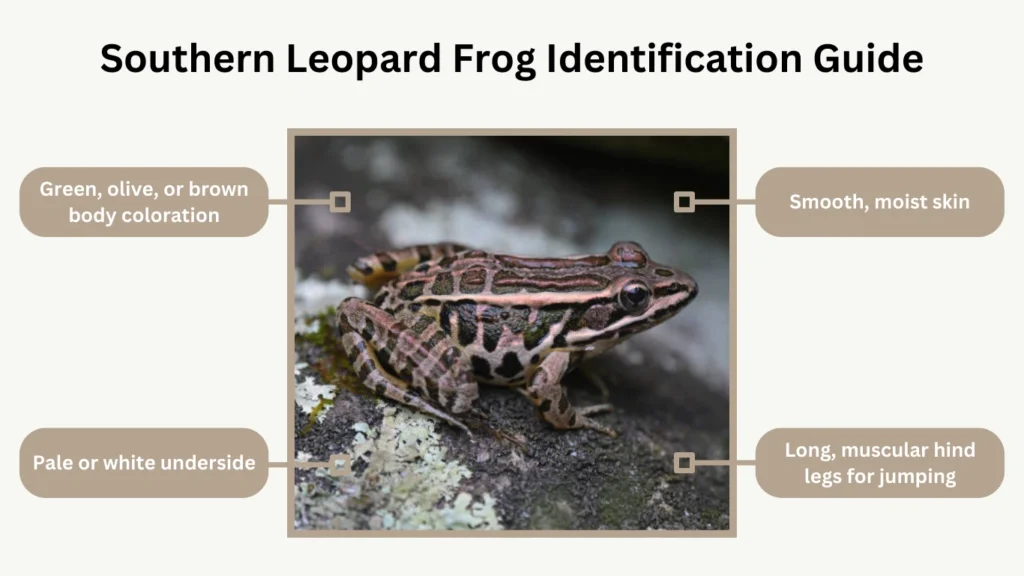
Correct identification is important because the southern leopard frog closely resembles the northern leopard frog. However, several features help distinguish it.
Physical Characteristics
Southern leopard frogs typically measure between 2 and 3.5 inches long. Key physical traits include:
- Green, olive, or brown body coloration
- Smooth, moist skin
- Pale or white underside
- Long, muscular hind legs for jumping
Their slender body and strong legs make them excellent jumpers and swimmers.
Distinctive Markings
The most noticeable feature is the pattern of dark spots across the back and sides. These spots:
- Are irregular in shape
- Often vary in size
- May appear more scattered than in northern species
They also have two light-colored ridges called dorsolateral folds that run along each side of the back.
A helpful identifying feature of the southern leopard frog is a light or white spot often found in the center of the tympanum (the circular eardrum behind the eye). While not always present, this marking is more common in southern species than northern ones.
Male vs Female Differences
Females are generally slightly larger than males. During the breeding season, males develop vocal sacs that allow them to produce mating calls. They may also have roughened thumb pads that help them grip females during mating.
Southern Leopard Frog Habitat
Geographic Range
The southern leopard frog is primarily found in the southeastern United States. Its range includes:
- Florida
- Georgia
- Alabama
- Mississippi
- Louisiana
- South Carolina
- Texas and surrounding Gulf Coast regions
Its range overlaps slightly with the northern leopard frog in some areas, but southern leopard frogs are more common in warmer, coastal climates.
Preferred Habitats
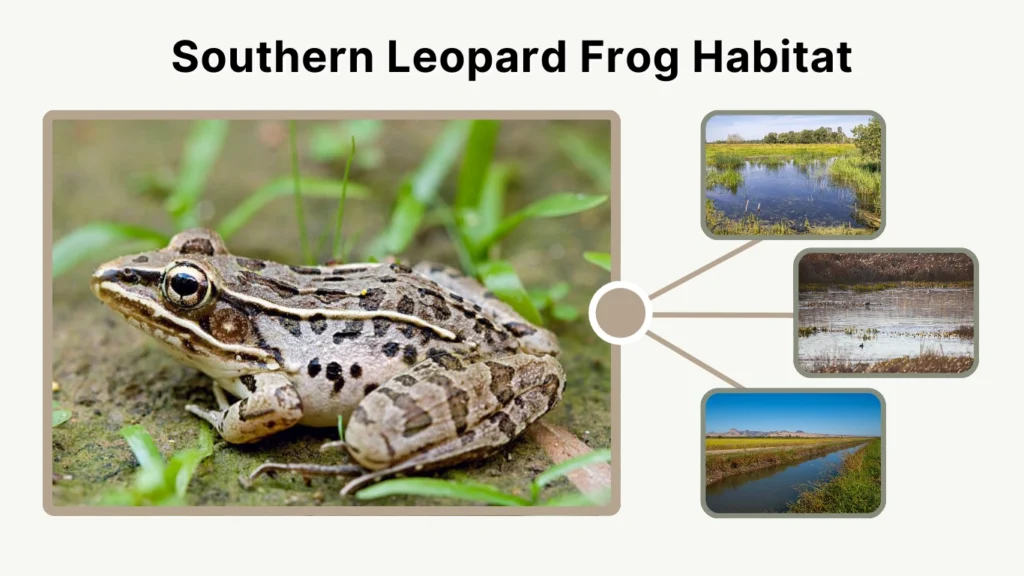
Southern leopard frogs prefer freshwater environments with abundant vegetation. Common habitats include:
- Ponds
- Marshes
- Swamps
- Wet ditches
- Flooded fields
- Slow-moving streams
They are often seen along the edges of water bodies where grass and aquatic plants provide cover.
Unlike some frog species that remain near permanent water, southern leopard frogs may travel short distances into grassy or wooded areas, especially during rainy periods.
Seasonal Habitat Changes
In warmer southern climates, habitat use can vary by season.
- Fall and Winter: Breeding often occurs during cooler, wetter months.
- Spring and Summer: Frogs disperse into wetlands and grassy areas to feed.
- Dry periods: They may shelter in mud, vegetation, or under debris to stay moist.
Because southern regions experience milder winters than northern areas, these frogs may remain active for longer periods of the year.
What Do Southern Leopard Frogs Eat?
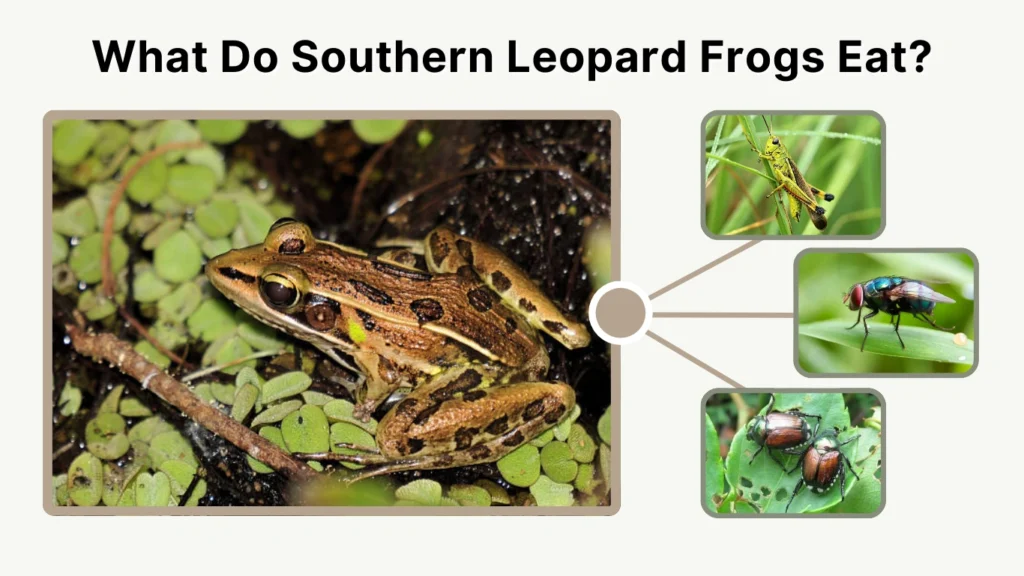
Southern leopard frogs are carnivorous as adults and play an important role in controlling insect populations.
Adult Diet
Their diet consists mainly of small invertebrates, including:
- Grasshoppers
- Beetles
- Flies
- Spiders
- Ants
- Worms
- Small crustaceans
They are opportunistic feeders, meaning they eat whatever suitable prey is available in their environment.
Tadpole Diet
In the tadpole stage, southern leopard frogs feed mostly on:
- Algae
- Aquatic plant matter
- Organic debris
This herbivorous diet supports rapid growth before metamorphosis.
Hunting Behavior
Southern leopard frogs use a sit-and-wait hunting strategy. They remain still and rely on camouflage to avoid detection. When prey approaches, they quickly flick out their sticky tongue to capture it.
Their strong hind legs also allow them to leap quickly to escape predators or reposition while hunting.
Are Southern Leopard Frogs Poisonous?
A common question people ask is whether southern leopard frogs are poisonous. The simple answer is no, southern leopard frogs are not poisonous to humans.
Like most amphibians, they produce mild skin secretions that help protect them from bacteria and some predators. However, these secretions are not toxic in the way brightly colored poison dart frogs are. Southern leopard frogs are neither venomous nor dangerous to touch.
That said, it is always best to handle wild frogs carefully. Amphibians can carry bacteria such as Salmonella, so washing your hands afterward is recommended. It is also important to avoid handling them with lotions, sunscreen, or chemicals on your skin, as these substances can harm the frog’s sensitive skin.
Life Cycle of the Southern Leopard Frog
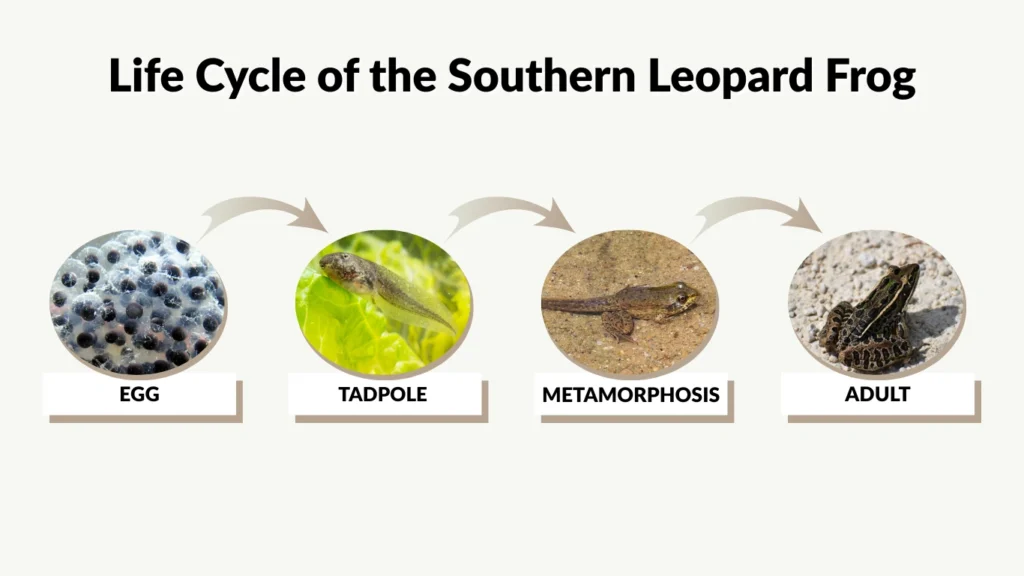
The southern leopard frog life cycle follows the typical amphibian pattern: egg, tadpole, and adult. However, breeding timing may vary depending on climate.
Breeding Season
In warmer southern regions, breeding can occur from late fall through early spring, especially during rainy periods. Males gather in shallow water and produce low, chuckling calls to attract females.
Breeding often takes place in temporary or permanent wetlands with plenty of vegetation. Unlike northern leopard frogs, which typically breed once in early spring, southern leopard frogs may breed multiple times in favorable conditions.
Egg Stage
After mating, females lay large clusters of eggs attached to submerged plants or floating vegetation. A single female can lay thousands of eggs in one clutch.
The eggs are surrounded by a jelly-like substance that provides protection and moisture. Depending on water temperature, the eggs hatch within one to three weeks.
Tadpole Stage
Once hatched, tadpoles remain fully aquatic. They have gills for breathing underwater and long tails for swimming. During this stage, they feed on algae and plant matter.
The tadpole stage usually lasts about two to three months, though warmer temperatures can speed up development. Tadpoles must grow quickly to avoid predators such as fish, birds, and aquatic insects.
Adult Stage
As tadpoles mature, they undergo metamorphosis. Legs develop, lungs replace gills, and the tail gradually shrinks. Once the transformation is complete, young froglets leave the water and begin life on land.
Southern leopard frogs typically reach reproductive maturity within one to two years and return to breeding sites annually.
Northern vs Southern Leopard Frog
Because these two species look similar, many people confuse them. However, there are important differences between northern and southern leopard frogs.
Key Physical Differences
- Spot patterns: Southern leopard frogs often have more irregularly shaped spots, while northern leopard frogs tend to have rounder, more defined spots.
- Tympanum marking: Southern leopard frogs often display a light or white spot in the center of the tympanum.
- Size differences: Northern leopard frogs may grow slightly larger on average.
Geographic Range Comparison
- Northern leopard frog: Found across Canada and the northern United States.
- Southern leopard frog: Found primarily in the southeastern United States and Gulf Coast regions.
Climate plays a major role in distinguishing these species, with the northern species adapted to colder conditions.
Breeding Differences
Northern leopard frogs typically breed once in early spring after ice melt. Southern leopard frogs, living in warmer climates, may breed multiple times during cooler, rainy months.
Fascinating Leopard Frog Facts
Both northern and southern leopard frogs share some impressive traits.
- They are powerful jumpers and can leap several times their body length.
- They are strong swimmers with fully webbed hind feet.
- Their camouflage helps them blend into grassy wetlands.
- They serve as indicator species, meaning their health reflects the condition of their environment.
- Their calls vary by species but are important for attracting mates during breeding season.
Because amphibians are sensitive to pollution and habitat changes, monitoring leopard frog populations helps scientists assess ecosystem health.
Conservation Status
Southern leopard frogs are generally listed as a species of Least Concern, meaning their overall populations remain stable. However, local declines can occur due to:
- Wetland drainage
- Urban development
- Agricultural runoff
- Pesticide use
- Climate change
Protecting wetlands and maintaining clean freshwater habitats are essential for ensuring the long-term survival of southern leopard frogs and other amphibians.
Conclusion
The southern leopard frog is a distinctive and adaptable amphibian found throughout the southeastern United States. Known for its spotted appearance and strong jumping ability, it thrives in ponds, marshes, and wetlands. Southern leopard frogs are not poisonous to humans and play an important role in controlling insect populations. Understanding their habitat, diet, life cycle, and differences from northern leopard frogs highlights the importance of conserving freshwater ecosystems for future generations.