
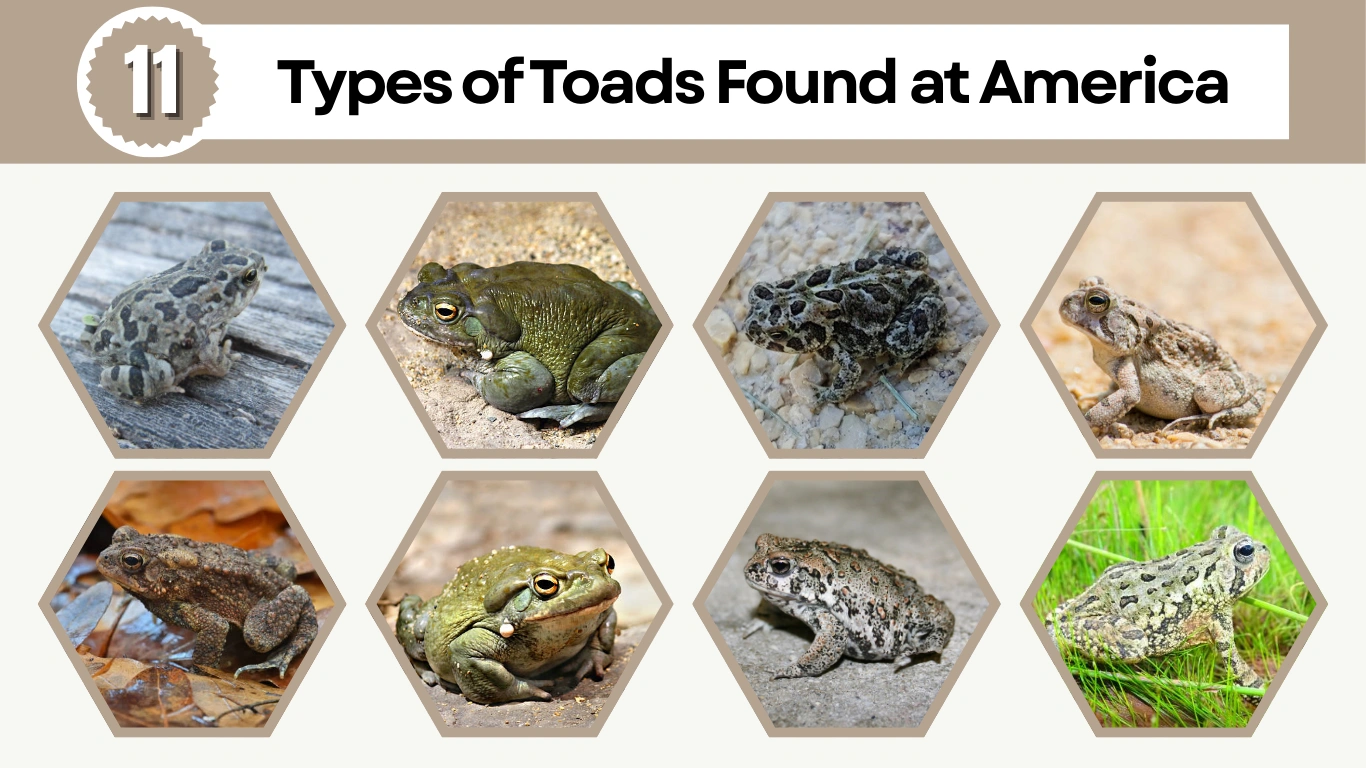
Toads are fascinating amphibians found across a wide range of habitats in America, from forests and grasslands to deserts and suburban areas. Known for their warty skin and calm behavior, toads play an important role in maintaining ecological balance by controlling insect populations. America is home to many unique toad species, each adapted to specific climates and environments. Understanding these toads helps highlight their importance in nature and the need for their conservation.
1. American Toad (Anaxyrus americanus)
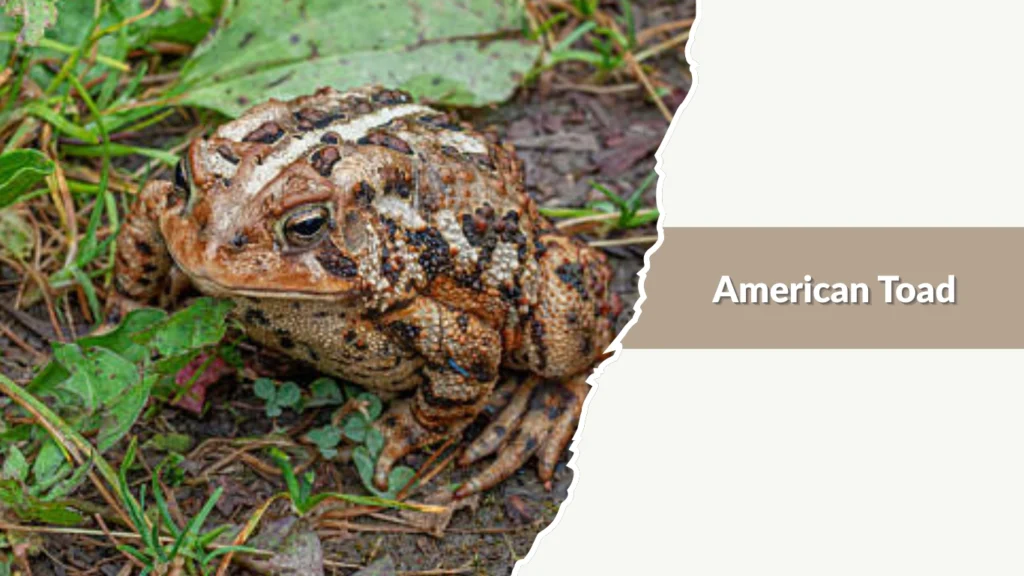
The American Toad is one of the most common and widely distributed toads in North America. It is easily recognized and often seen in backyards, gardens, forests, and fields. This species is highly adaptable and can survive in both natural and human-modified environments. Because of its appetite for insects, the American Toad is considered beneficial to ecosystems and agriculture.
Identification
- Medium-sized toad with a stout body
- Rough, dry, warty skin
- Color ranges from brown and gray to reddish-brown
- Each dark spot on the back usually contains one or two large warts
- Light-colored belly with dark speckles
- Large parotid glands located behind the eyes
Habitat
American Toads inhabit a wide variety of environments including forests, grasslands, wetlands, farmland, and suburban areas. They prefer moist conditions but can tolerate drier habitats by hiding under logs, rocks, or leaf litter during the day. Breeding occurs in shallow ponds, lakes, and slow-moving streams.
Diet
This toad feeds mainly on insects and other small invertebrates. Common prey includes ants, beetles, worms, spiders, slugs, and caterpillars. Young toads often eat smaller insects such as mites and flies. Their feeding habits help reduce pest populations naturally.
Behavior
American Toads are mostly nocturnal and become active at night to hunt for food. During the breeding season in spring, males produce a long, high-pitched trill to attract females. In colder regions, they survive winter by burrowing underground and entering a state of hibernation.
2. Fowler’s Toad (Anaxyrus fowleri)
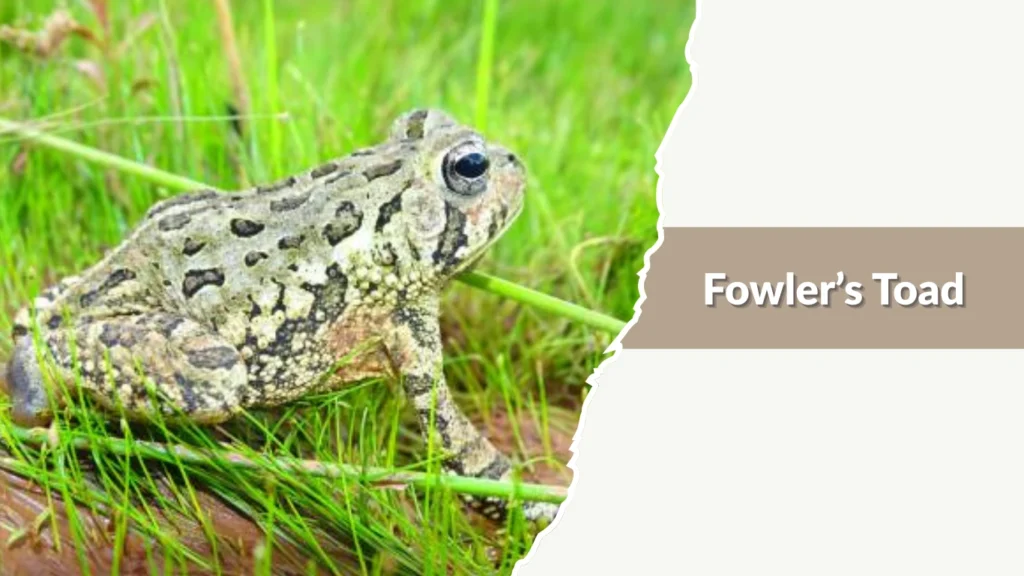
Fowler’s Toad is a common toad species found mainly in the eastern and central United States. It often shares habitats with the American Toad but can be distinguished by subtle physical traits and its distinctive call. This species is well adapted to sandy and open environments and is frequently seen near rivers, beaches, and human settlements.
Identification
- Medium-sized toad with a compact body
- Skin color ranges from grayish-brown to olive
- Each dark spot on the back usually contains three or more warts
- Light-colored underside, often with little or no spotting
- Parotoid glands are present but less prominent than in American Toads
Habitat
Fowler’s Toad prefers open and sandy habitats such as riverbanks, floodplains, lake shores, dunes, and coastal areas. It is also found in agricultural fields and suburban environments. Breeding takes place in shallow, temporary pools, ponds, and slow-moving waters.
Diet
This species feeds on a wide variety of small invertebrates. Its diet includes ants, beetles, flies, spiders, moths, and small worms. Fowler’s Toad is an active ground hunter and contributes to controlling insect populations in its habitat.
Behavior
Fowler’s Toad is mostly nocturnal and remains hidden during the day under rocks, logs, or loose soil. During the breeding season, males produce a short, nasal “waaa” call. In colder regions, they overwinter by burrowing deep into sandy or loose soil to avoid freezing.
3. Western Toad (Anaxyrus boreas)
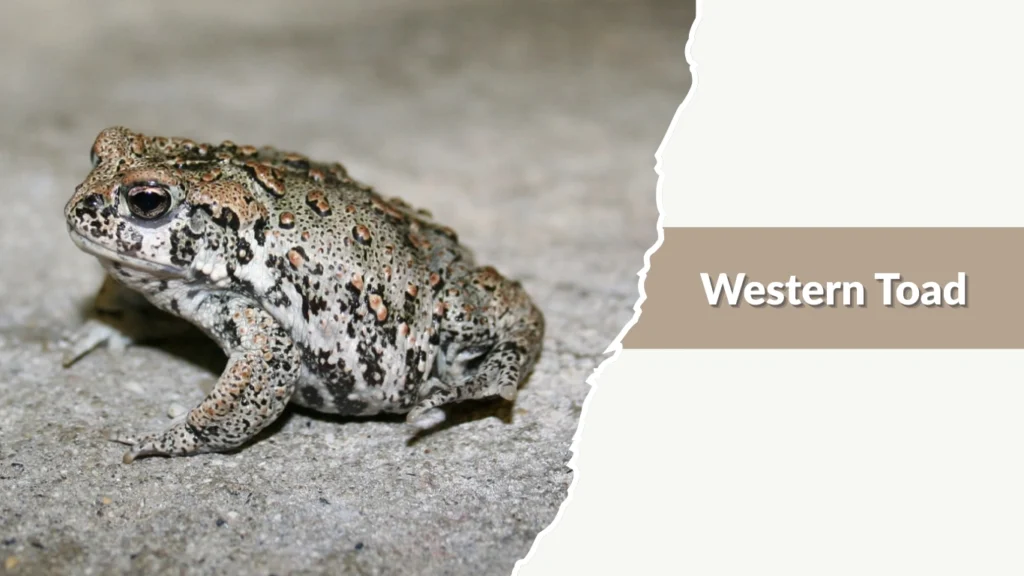
The Western Toad is a widely distributed species found across western North America, ranging from lowland valleys to high-elevation mountain regions. It is known for its resilience and ability to survive in cooler climates. Despite its wide range, some populations have declined due to habitat loss and disease.
Identification
- Medium to large-sized toad with a broad body
- Skin is dry and covered with small warts
- Color varies from brown, gray, to olive green
- Distinct light-colored stripe running down the center of the back
- Pale underside, sometimes with faint spotting
- Prominent parotoid glands behind the eyes
Habitat
Western Toads inhabit forests, meadows, grasslands, wetlands, and mountain areas. They are often found near ponds, lakes, marshes, and slow-moving streams, especially during the breeding season. This species can live at elevations exceeding 10,000 feet.
Diet
Their diet consists mainly of insects and other small invertebrates. Common prey includes ants, beetles, spiders, flies, and worms. Juvenile Western Toads often feed in large groups, consuming tiny insects and helping regulate insect populations.
Behavior
Western Toads are primarily nocturnal but may be active during cooler daytime hours. Breeding occurs in spring or early summer, depending on elevation. During winter, they hibernate underground, often in burrows or natural cavities, to survive freezing temperatures.
4. Great Plains Toad (Anaxyrus cognatus)
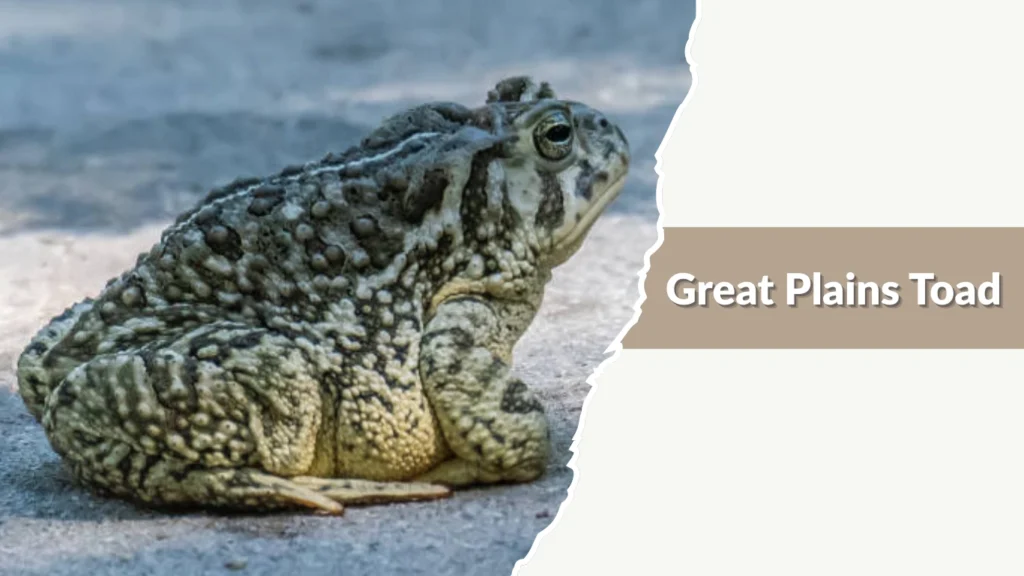
The Great Plains Toad is a distinctive species native to the central regions of North America. It is best known for its striking markings and loud, musical call, which is often heard after heavy rains. This toad is well adapted to dry environments and spends much of its life underground.
Identification
- Medium to large-sized toad with a rounded body
- Light brown, tan, or gray background color
- Dark blotches on the back outlined with pale borders
- Numerous small warts covering the skin
- Whitish underside with minimal markings
- Prominent parotoid glands behind the eyes
Habitat
Great Plains Toads inhabit prairies, grasslands, deserts, and semi-arid regions. They prefer loose, sandy soils that allow easy burrowing. Breeding occurs in temporary pools, roadside ditches, and rain-filled depressions formed after storms.
Diet
This species feeds primarily on insects and other small invertebrates. Its diet includes ants, beetles, grasshoppers, spiders, and worms. Great Plains Toads are opportunistic feeders and take advantage of sudden insect abundance following rainfall.
Behavior
Great Plains Toads are mostly nocturnal and remain buried during dry periods. After heavy rains, they emerge in large numbers to feed and breed. Males produce a long, loud trill that can last up to a minute, making them one of the most vocal toads in their range.
5. Sonoran Desert Toad (Anaxyrus alvarius)
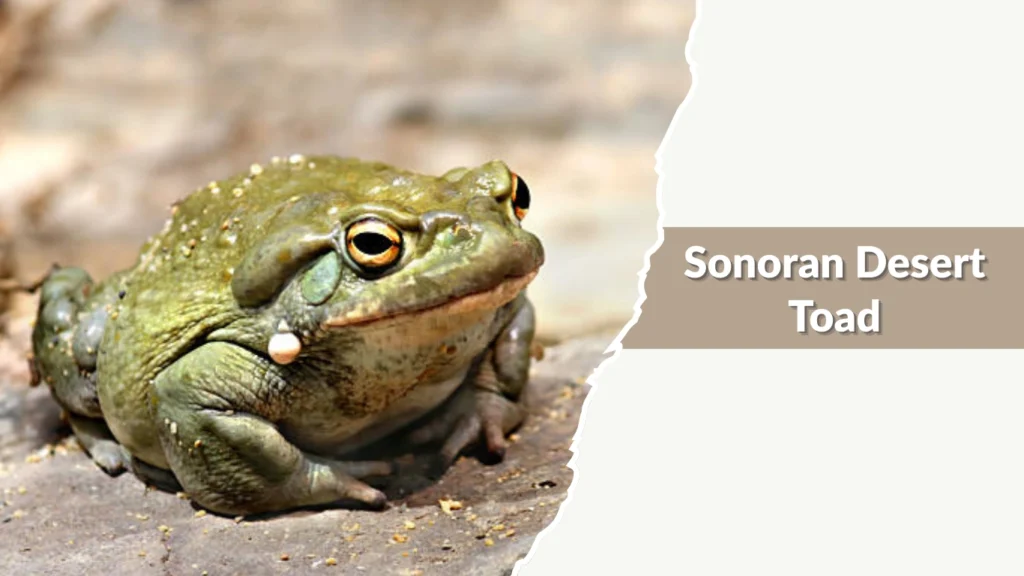
The Sonoran Desert Toad is one of the largest toad species in North America and is native to the southwestern United States and northwestern Mexico. It is well adapted to hot, arid environments and is most active during warm, rainy periods. This toad is also notable for its powerful skin toxins used as a defense against predators.
Identification
- Large, heavy-bodied toad with smooth, leathery skin
- Color ranges from olive green to dark brown
- Distinctive large parotoid glands behind the eyes
- Broad head with a blunt snout
- Pale gray or cream-colored underside
- Relatively fewer warts compared to other toads
Habitat
Sonoran Desert Toads inhabit deserts, scrublands, grasslands, and agricultural areas. They are often found near canals, ponds, streams, and irrigation ditches. During dry periods, they remain underground in burrows to conserve moisture.
Diet
This species feeds on a wide range of prey, including insects, spiders, worms, small rodents, lizards, and even other amphibians. Its large size allows it to consume bigger prey than most other toads.
Behavior
Sonoran Desert Toads are primarily nocturnal and emerge during summer monsoon rains. Breeding occurs in temporary pools formed by rainfall. When threatened, they secrete potent toxins from their parotid glands as a defense mechanism.
6. Oak Toad (Anaxyrus quercicus)
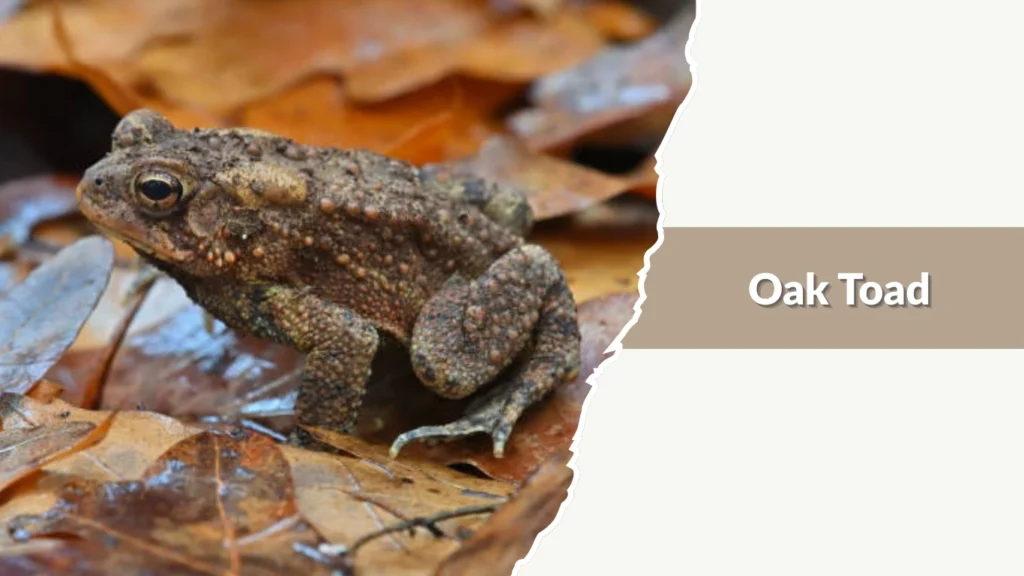
The Oak Toad is the smallest toad species in North America and is native to the southeastern United States. Despite its tiny size, it is easily recognizable by the light stripe running down its back. This species prefers warm, sandy habitats and is most active during the rainy season.
Identification
- Very small toad with a slender body
- Dark brown to black coloration
- Distinct pale or yellowish stripe down the center of the back
- Smooth to lightly warty skin
- Light-colored underside with little to no markings
- Small parotoid glands
Habitat
Oak Toads inhabit pine forests, oak woodlands, sandy scrub, and open grasslands. They favor areas with loose, sandy soil and seasonal wetlands. Breeding takes place in shallow, temporary pools formed by rainfall.
Diet
Their diet consists mainly of tiny insects and invertebrates. Common prey includes ants, mites, small beetles, and flies. Because of their small size, Oak Toads focus on smaller prey than most other toad species.
Behavior
Oak Toads are mostly diurnal, which is unusual for toads. They are especially active after rainfall. Males produce a short, high-pitched chirping call during the breeding season. In dry conditions, they burrow into sandy soil to avoid dehydration.
7. Arroyo Toad (Anaxyrus californicus)
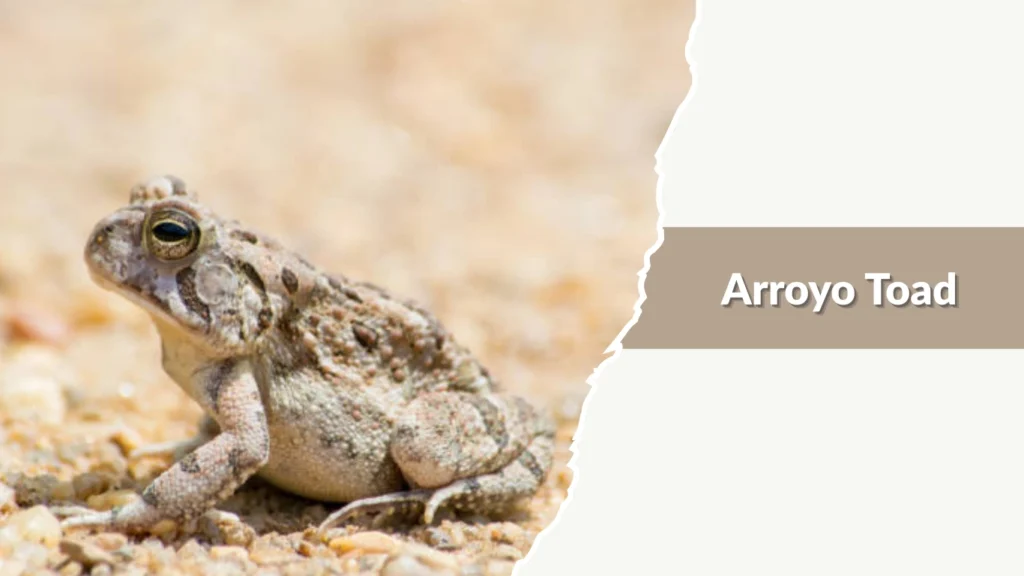
The Arroyo Toad is a rare and endangered species native to southern California and parts of Baja California. It is closely associated with streamside habitats and is highly sensitive to environmental changes. Due to habitat loss and altered water flow, its population has declined significantly.
Identification
- Medium-sized toad with a relatively flat body
- Pale gray, tan, or olive coloration
- Light speckling or faint blotches on the back
- Smooth to slightly warty skin
- Whitish or cream-colored underside
- Prominent parotoid glands behind the eyes
Habitat
Arroyo Toads are found along sandy or gravelly streambeds, washes, and riverbanks with slow-moving or seasonal water. They prefer open areas with minimal vegetation and rely on natural flooding cycles for successful breeding.
Diet
Their diet includes a variety of insects and small invertebrates such as ants, beetles, flies, spiders, and larvae. They forage mostly on land, often near water sources.
Behavior
Arroyo Toads are primarily nocturnal and spend the day buried in sand or under debris near streams. Breeding occurs in late spring, with eggs laid in shallow pools. During dry or hot periods, they remain underground to conserve moisture.
8. Texas Toad (Anaxyrus speciosus)
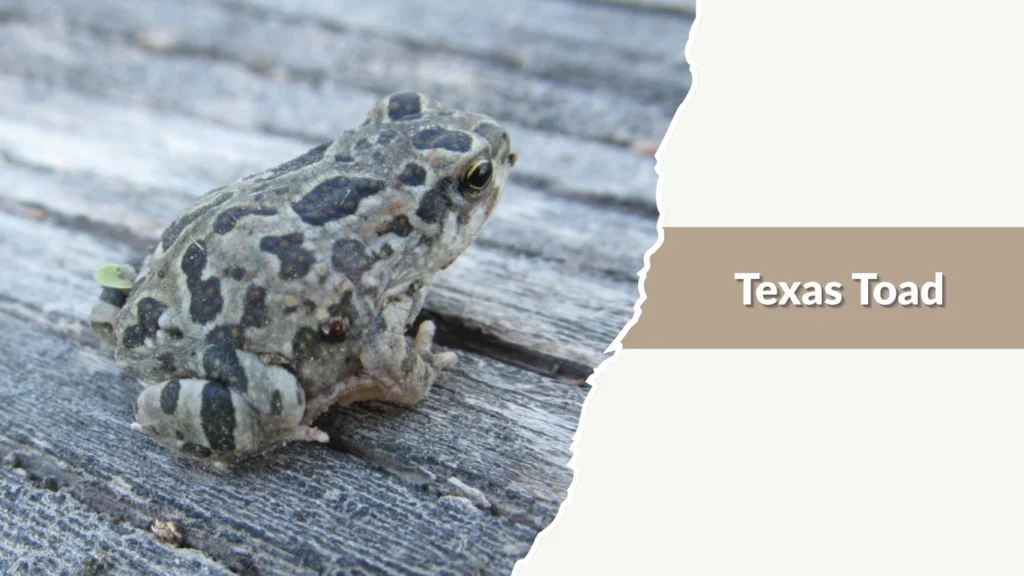
The Texas Toad is a large, striking species native to the south-central United States, particularly Texas and surrounding areas. It is best known for its bold markings and extremely loud, musical call that is often heard after heavy rainfall. This species is well adapted to dry, open landscapes.
Identification
- Large toad with a broad, rounded body
- Light gray, tan, or olive background color
- Dark blotches outlined with pale borders on the back
- Numerous small warts across the skin
- Creamy white underside with minimal spotting
- Large parotid glands behind the eyes
Habitat
Texas Toads inhabit prairies, grasslands, scrublands, and semi-arid regions. They prefer areas with loose soil that allow burrowing. Breeding usually takes place in temporary rain-filled pools, roadside ditches, and shallow ponds.
Diet
This species feeds mainly on insects and other small invertebrates. Common prey includes beetles, ants, grasshoppers, spiders, moths, and worms. They are opportunistic feeders and often take advantage of insect booms after rain.
Behavior
Texas Toads are mostly nocturnal and spend dry periods buried underground. After heavy rains, they emerge in large numbers to feed and breed. Males produce a loud, prolonged trill that can be heard from long distances.
9. Canadian Toad (Anaxyrus hemiophrys)
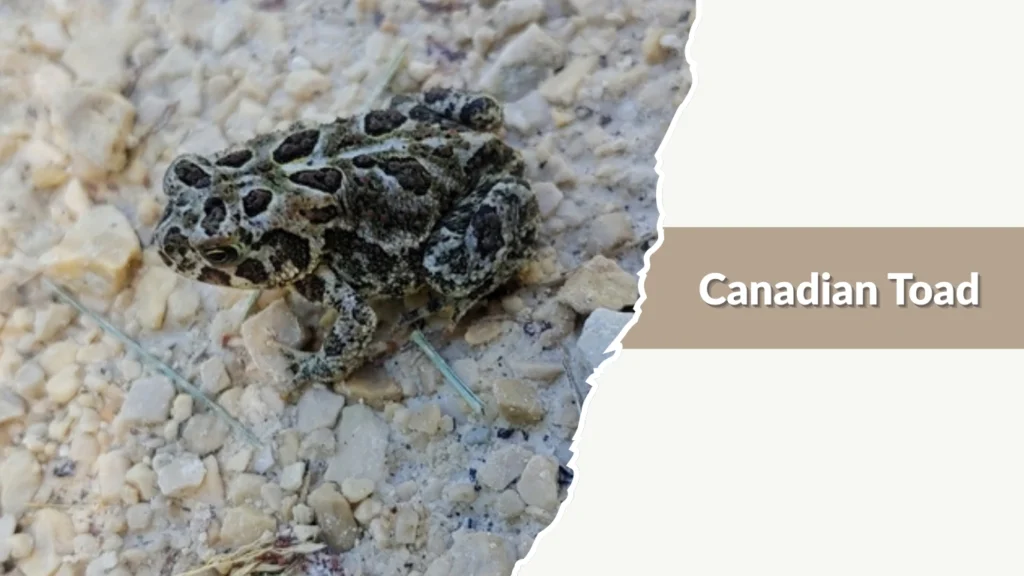
The Canadian Toad is a medium-sized species found primarily in the northern United States and southern Canada. It is well adapted to cooler climates and open landscapes. This toad is known for the distinct ridge that runs across its head, giving it a unique appearance among North American toads.
Identification
- Medium-sized toad with a stout body
- Grayish-brown to olive coloration
- Prominent cranial ridge across the head
- Rough, warty skin with dark spots
- Pale underside with some dark speckling
- Noticeable parotoid glands behind the eyes
Habitat
Canadian Toads inhabit grasslands, prairies, meadows, and forest edges. They prefer moist environments near ponds, lakes, marshes, and slow-moving streams, especially during the breeding season.
Diet
Their diet consists mainly of insects and other small invertebrates. Common prey includes beetles, ants, spiders, flies, caterpillars, and worms. Juveniles feed on smaller insects and help control local pest populations.
Behavior
Canadian Toads are mostly nocturnal but may be active during cool, overcast days. Breeding occurs in late spring or early summer. During winter, they hibernate underground, often below the frost line, to survive harsh temperatures.
10. Colorado River Toad (Anaxyrus alvarius)
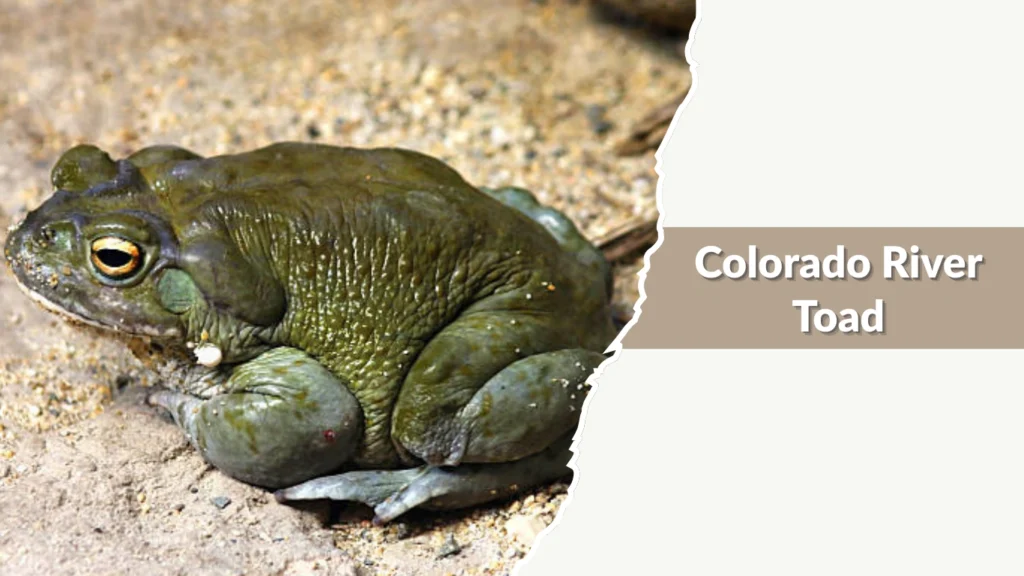
The Colorado River Toad, also known as the Sonoran Desert Toad, is one of the largest toad species in North America. It is native to the southwestern United States and northern Mexico. This toad is highly adapted to desert environments and is most active during warm, rainy periods, especially during summer monsoons.
Identification
- Very large, heavy-bodied toad
- Smooth, leathery skin with fewer warts
- Olive green to dark brown coloration
- Extremely large parotid glands behind the eyes
- Broad head and blunt snout
- Pale gray or cream-colored underside
Habitat
Colorado River Toads inhabit deserts, grasslands, scrublands, and agricultural areas. They are commonly found near permanent or temporary water sources such as rivers, canals, ponds, and irrigation ditches. During dry seasons, they remain buried underground.
Diet
This species feeds on a wide variety of prey due to its large size. Its diet includes insects, spiders, worms, small mammals, reptiles, and other amphibians. They are opportunistic feeders and hunt mostly at night.
Behavior
Colorado River Toads are nocturnal and emerge mainly after rainfall. Breeding occurs in temporary pools formed by summer rains. When threatened, they secrete powerful toxins from their parotid glands to deter predators.
11. Southern Toad (Anaxyrus terrestris)
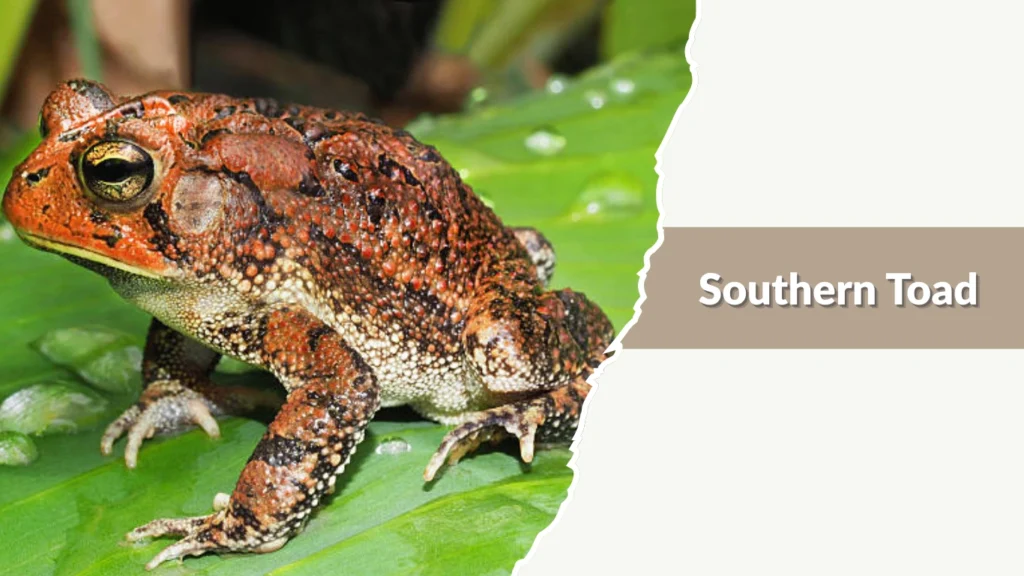
The Southern Toad is a common species found throughout the southeastern United States. It is closely related to the American Toad but can be distinguished by its darker coloration and more pronounced cranial knobs. This adaptable toad thrives in a wide range of habitats, including both natural and human-altered environments.
Identification
- Medium-sized toad with a stout body
- Dark brown, gray, or nearly black coloration
- Large, prominent cranial knobs on the head
- Rough, warty skin with dark blotches
- Pale underside, usually without heavy spotting
- Oval parotoid glands behind the eyes
Habitat
Southern Toads inhabit pine forests, woodlands, fields, swamps, and suburban gardens. They prefer moist areas but can tolerate drier conditions by hiding under leaf litter, logs, or debris. Breeding takes place in shallow ponds, ditches, and temporary pools.
Diet
Their diet consists mainly of insects and other small invertebrates. Common prey includes ants, beetles, spiders, caterpillars, worms, and flies. Southern Toads play an important role in controlling insect populations in their ecosystems.
Behavior
Southern Toads are primarily nocturnal and spend daytime hours hidden in moist shelters. Breeding occurs in spring and early summer, with males producing a soft, musical trill. In cooler weather, they burrow underground to avoid temperature extremes.
FAQs
What is the difference between a toad and a frog?
Toads generally have dry, warty skin and shorter legs, making them better suited for walking or hopping on land. Frogs usually have smooth, moist skin and long legs adapted for jumping and swimming. Toads can live farther from water, while frogs stay closer to aquatic environments.
Are toads poisonous to humans?
Most toads produce mild toxins from glands behind their eyes as a defense against predators. These toxins are usually not dangerous to humans but can cause skin or eye irritation if handled improperly. Washing hands after touching a toad is recommended.
What do toads eat in the wild?
Toads feed mainly on insects and other small invertebrates such as beetles, ants, spiders, worms, and caterpillars. Larger toad species may also eat small vertebrates. Their diet makes them beneficial for natural pest control.
Where do toads live in America?
Toads are found across North, Central, and parts of South America. They live in forests, grasslands, deserts, wetlands, and even suburban gardens. Most species prefer moist environments but can survive in dry areas by burrowing.
Do toads hibernate?
Yes, many toad species hibernate during cold months. They burrow underground, hide in leaf litter, or take shelter in natural cavities to avoid freezing temperatures. In warmer climates, some toads become inactive during extremely dry or hot periods instead of true hibernation.