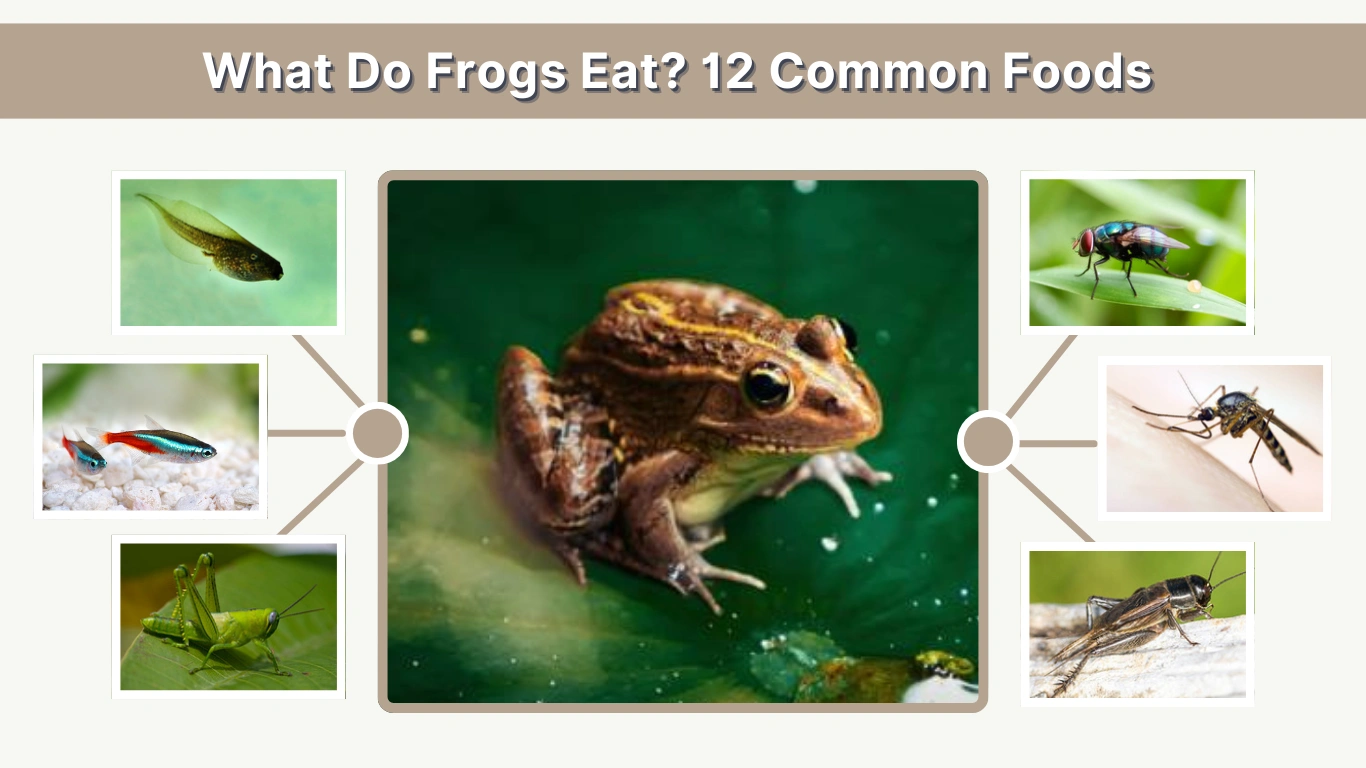
Frogs are fascinating amphibians with diets that play an important role in nature. Most frogs are carnivores and rely on a wide variety of small animals to survive. From tiny flying insects to creatures found in water and soil, frogs are skilled hunters with unique feeding habits. What a frog eats depends on its size, species, and habitat. Understanding their diet helps explain how frogs stay healthy and why they are essential for controlling pests and maintaining ecological balance in both land and water ecosystems.
1.Insects
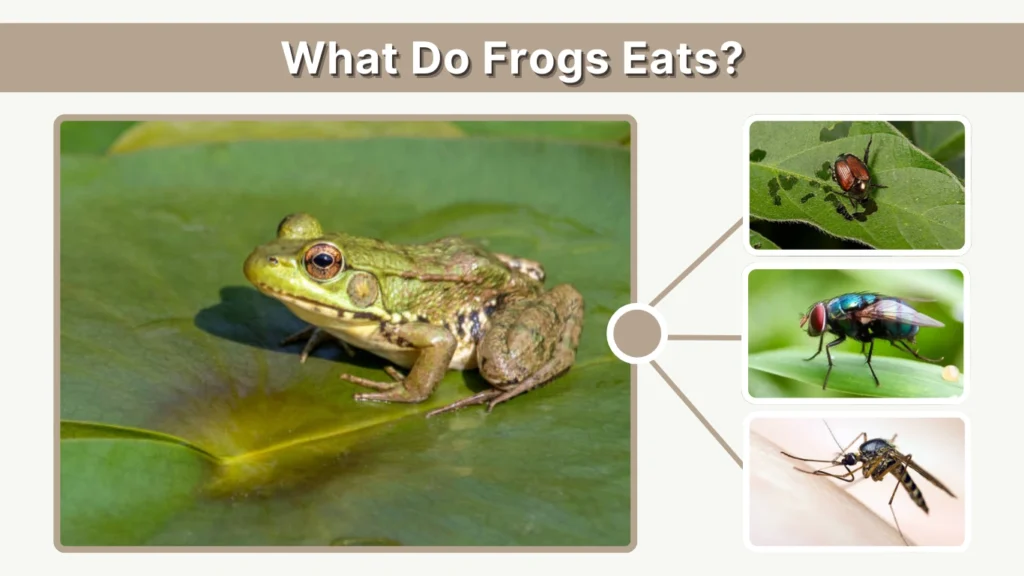
Insects are the most common and important food in a frog’s diet. Most frogs are natural insect-eaters and rely heavily on them for daily nutrition. From tiny flies to larger crawling bugs, insects are easy for frogs to find and catch in their natural habitat.
Frogs hunt insects using a sit-and-wait strategy. They stay still, blending into their surroundings, and watch carefully for movement. When an insect comes close, the frog strikes quickly with its long, sticky tongue. The tongue snaps out in a fraction of a second, traps the insect, and pulls it straight into the frog’s mouth.
Eating insects provides frogs with essential nutrients like protein, fats, vitamins, and minerals. These nutrients help frogs grow, maintain strong muscles, and produce energy for jumping and swimming. A diet rich in insects also supports healthy skin and a strong immune system.
Insects are beneficial because they are abundant in most environments, including ponds, gardens, forests, and wetlands. By eating insects, frogs also help control pest populations, such as mosquitoes and flies. This makes frogs important for maintaining ecological balance and benefiting humans and other animals in the ecosystem.
2. Flies
Flies are a favorite and easily accessible food for many frog species. Because flies are small, lightweight, and constantly moving, they are perfect prey for frogs, especially smaller frogs and young ones. Flies are commonly found near water, plants, and damp areas where frogs usually live.
Frogs hunt flies using their excellent vision and quick reflexes. They remain still, watching for the fast, zigzag movement of a fly. Once a fly comes within range, the frog launches its sticky tongue with incredible speed and accuracy. The tongue sticks to the fly instantly and pulls it back into the mouth before the fly can escape.
Flies provide frogs with high-quality protein, which is essential for growth, muscle strength, and overall health. They also contain fats and other nutrients that help frogs maintain energy levels needed for jumping, swimming, and breeding activities.
Eating flies also benefits the environment. By feeding on flies, frogs help reduce populations of insects that can spread disease or become household pests. This natural pest control supports a balanced ecosystem and highlights the important role frogs play in maintaining healthy natural habitats.
3. Mosquitoes
Mosquitoes are a common and valuable food source for frogs, especially in wet and humid environments. Since mosquitoes breed near standing water, they often share the same habitats as frogs, making them easy prey. Both adult mosquitoes and their larvae are eaten by different frog species.
Frogs hunt mosquitoes by staying alert near water edges and vegetation. Adult frogs catch flying mosquitoes with their fast, sticky tongues, while tadpoles and some aquatic frogs feed on mosquito larvae directly in the water. This dual feeding method makes mosquitoes an efficient and reliable food source.
Mosquitoes provide frogs with protein and essential nutrients needed for survival and growth. Even though they are small, frogs can eat large numbers of mosquitoes, which adds up to a nutritious meal. This helps frogs maintain energy and support healthy development.
By eating mosquitoes, frogs play a major role in controlling mosquito populations. This reduces the spread of mosquito-borne diseases and helps keep ecosystems and human communities healthier.
4. Crickets
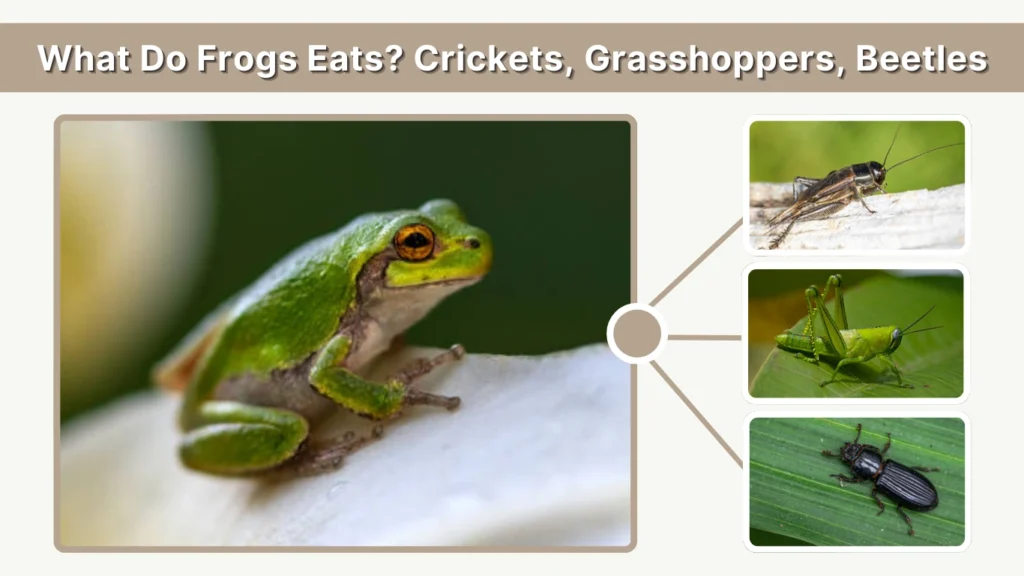
Crickets are one of the most nutritious foods in a frog’s diet. They are commonly eaten by both wild and captive frogs because of their size, movement, and high nutritional value. Crickets are easy to find in grassy areas, forests, and near water sources.
Frogs hunt crickets by waiting patiently and watching their jumping movements. When a cricket comes close, the frog quickly strikes with its sticky tongue or lunges forward to catch it. Larger frogs may also use their mouths directly to grab crickets.
Crickets are rich in protein, calcium, and other essential nutrients that support strong bones, muscle development, and overall health. They provide long-lasting energy and help frogs grow and stay active.
Eating crickets also helps frogs control insect populations, making them important contributors to ecological balance in their natural environments.
5. Grasshoppers
Grasshoppers are a popular food choice for larger frogs due to their size and high nutritional value. These insects are commonly found in grassy fields, wetlands, and near ponds, which makes them accessible prey for frogs living in these areas.
Frogs hunt grasshoppers by staying hidden among plants and waiting for them to hop nearby. When a grasshopper comes within reach, the frog strikes quickly with its sticky tongue or makes a short leap to capture it. Timing and precision are key, as grasshoppers can jump long distances.
Grasshoppers provide frogs with a rich source of protein and energy. Their larger bodies offer more nutrients than smaller insects, helping frogs maintain strength, support growth, and fuel active behaviors like jumping and swimming.
By feeding on grasshoppers, frogs help keep insect populations under control. This natural balance prevents overgrazing of plants and supports a healthy ecosystem.
6. Beetles
Beetles are commonly eaten by many frog species, especially medium to large frogs. They are found in soil, under leaves, near water, and on plants, making them frequent prey in a frog’s environment.
Frogs hunt beetles by relying on movement and vibration. Once a beetle is spotted crawling or flying nearby, the frog quickly extends its sticky tongue to capture it. Some frogs may crush hard-shelled beetles using strong jaws before swallowing.
Beetles are packed with protein and fats, which provide frogs with sustained energy. Their tough exoskeleton also offers trace minerals that contribute to overall nutrition.
Eating beetles helps frogs manage insect populations and maintain ecological balance in forests, gardens, and wetland habitats.
7. Worms
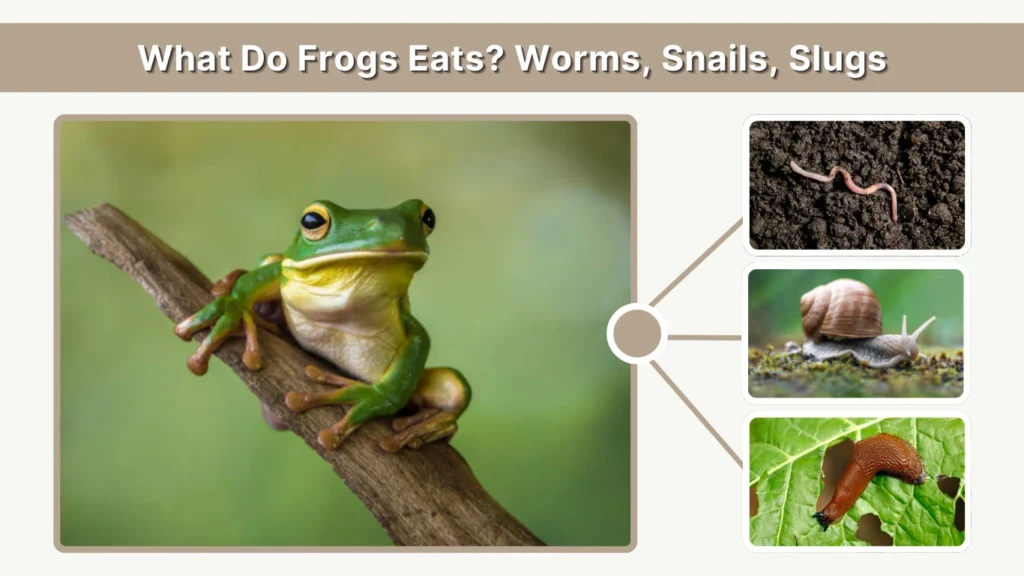
Worms are a soft, nutritious, and easy-to-eat food for many frogs. They are especially popular with ground-dwelling and semi-aquatic frogs because worms live in moist soil near ponds, streams, and wetlands.
Frogs hunt worms by sensing movement in the soil or on the ground after rain. When a worm wriggles nearby, the frog quickly grabs it using its sticky tongue or snaps it up directly with its mouth. Because worms move slowly, they are easy prey.
Worms are rich in protein, moisture, and essential nutrients that support muscle growth and hydration. Their soft bodies are easy to digest, making them ideal for younger frogs and frogs recovering from stress or injury.
By eating worms, frogs benefit from a reliable food source while also participating in the natural food chain that keeps soil ecosystems healthy and balanced.
8. Snails
Snails are eaten by larger frog species that can handle tougher prey. These slow-moving animals are commonly found in damp environments such as ponds, marshes, and gardens where frogs live.
Frogs hunt snails by spotting them on plants or along the ground. Once captured, frogs use strong jaws to crush the snail’s shell or swallow smaller snails whole. Some frogs specialize in eating hard-shelled prey.
Snails provide frogs with protein, calcium, and minerals that help maintain strong bones and healthy body functions. The calcium from shells is especially beneficial for skeletal strength.
Eating snails also helps control snail populations, protecting plants and maintaining balance in wetland ecosystems.
9. Slugs
Slugs are a common food for many frogs, especially in moist and shaded environments. Since slugs lack hard shells, they are easier to eat than snails and are often targeted by medium to large frogs.
Frogs hunt slugs at night or after rainfall when slugs are most active. Using their sharp eyesight and sensitivity to movement, frogs quickly catch slugs with their sticky tongues or snap them up directly. Slugs’ slow movement makes them easy prey.
Slugs are rich in protein and moisture, which helps keep frogs hydrated and energized. Their soft bodies are easy to digest, making them a suitable food source for frogs of different sizes.
By feeding on slugs, frogs help protect plants and gardens from damage. This natural pest control supports healthy ecosystems and reduces the need for chemical pesticides.
10. Spiders
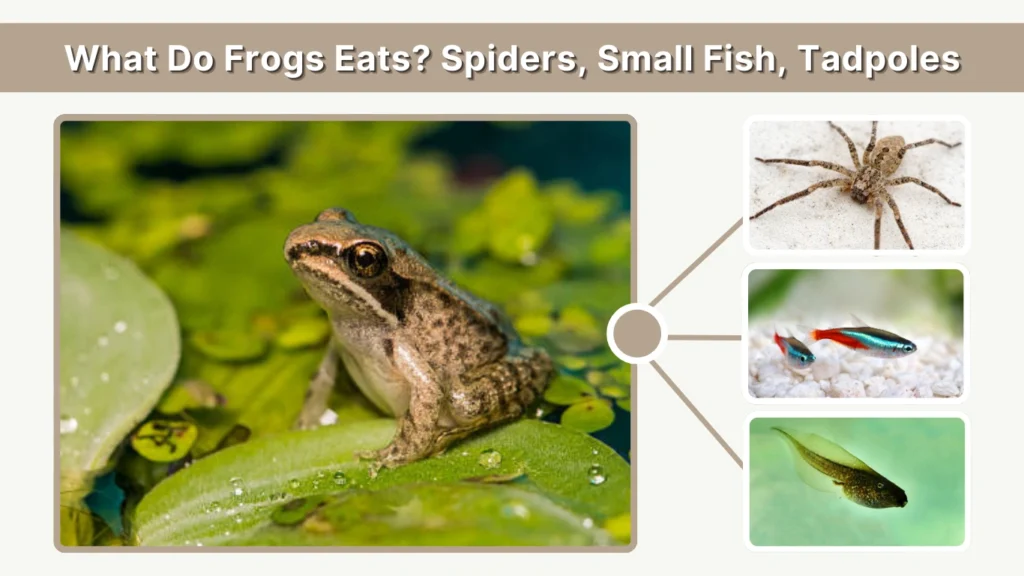
Spiders are occasionally eaten by frogs, especially those living in forests, gardens, and near vegetation. Although spiders are predators themselves, they become prey when they cross paths with frogs.
Frogs hunt spiders by staying still and watching for quick movements on leaves, tree trunks, or the ground. When a spider moves within range, the frog strikes instantly with its sticky tongue. Some tree frogs may catch spiders while climbing or jumping between plants.
Spiders provide frogs with protein and important nutrients that support muscle strength and energy. Despite their small size, spiders contribute to a balanced diet.
By eating spiders, frogs help regulate insect and arachnid populations, contributing to a stable and healthy ecosystem.
11. Small Fish
Small fish are an important food source for larger and fully aquatic frogs. These frogs often live in ponds, lakes, streams, and slow-moving rivers where small fish are plentiful.
Frogs hunt small fish by staying motionless in the water and waiting for them to swim close. When the moment is right, the frog lunges forward and grabs the fish with its mouth. Unlike insect hunting, frogs usually rely more on their jaws than their tongues when catching fish.
Small fish provide frogs with high-quality protein, healthy fats, and essential nutrients that support growth, strength, and energy. This diet helps aquatic frogs remain strong swimmers and effective hunters.
By feeding on small fish, frogs help maintain balance in aquatic ecosystems by preventing fish populations from becoming too large.
12. Tadpoles
Tadpoles are sometimes eaten by adult frogs, especially larger species and during times when other food is scarce. This behavior is more common in crowded or limited habitats.
Frogs hunt tadpoles in shallow water where they gather in groups. Adult frogs catch them by quickly snapping them up with their mouths. Tadpoles have limited escape ability, making them vulnerable prey.
Tadpoles are rich in protein and nutrients that support muscle development and energy. While it may seem harsh, this behavior helps reduce overcrowding and competition for food.
By eating tadpoles, frogs help regulate population numbers, which supports a healthier and more balanced aquatic ecosystem.
FAQs
1. Do all frogs eat the same food?
No, frogs do not all eat the same food. Their diet depends on their size, species, and habitat. Smaller frogs eat tiny insects, while larger frogs can eat fish, snails, and even other frogs.
2. Do frogs eat every day?
Most frogs do not eat every day. Adult frogs usually eat every few days, while young frogs may eat more often to support growth and development.
3. Do frogs eat plants or vegetables?
Adult frogs are carnivores and do not eat plants. However, tadpoles often eat algae and plant matter before they grow into adult frogs.
4. How do frogs catch their food?
Frogs mainly use their long, sticky tongues to catch prey. Aquatic frogs may also use their mouths directly to grab food while swimming.
5. Why are frogs important for pest control?
Frogs eat large numbers of insects like mosquitoes and flies. This helps control pest populations naturally and supports a balanced ecosystem.