Green tree frogs are primarily insectivores, but their exact diet depends on species, age, size, and whether they are living in the wild or captivity. American, Australian, and other regional green tree frog species eat a wide variety of prey, ranging from tiny fruit flies to beetles, roaches, and even small vertebrates in rare cases. This guide explores what they eat, how they hunt, what they should never be fed, and how to maintain a healthy feeding schedule.
What Does a Green Tree Frog Eat?
Green tree frogs are strictly carnivorous and rely almost entirely on insects and small invertebrates. Their diet varies slightly by species—American green tree frogs (Hyla cinerea) eat smaller prey than Australian green tree frogs (Litoria caerulea), which are known for tackling larger meals.
Across all species, their diet includes:
- Crickets
- Flies and fruit flies
- Grasshoppers
- Beetles
- Spiders
- Ants
- Moths
- Mosquitoes
- Caterpillars
- Cockroaches
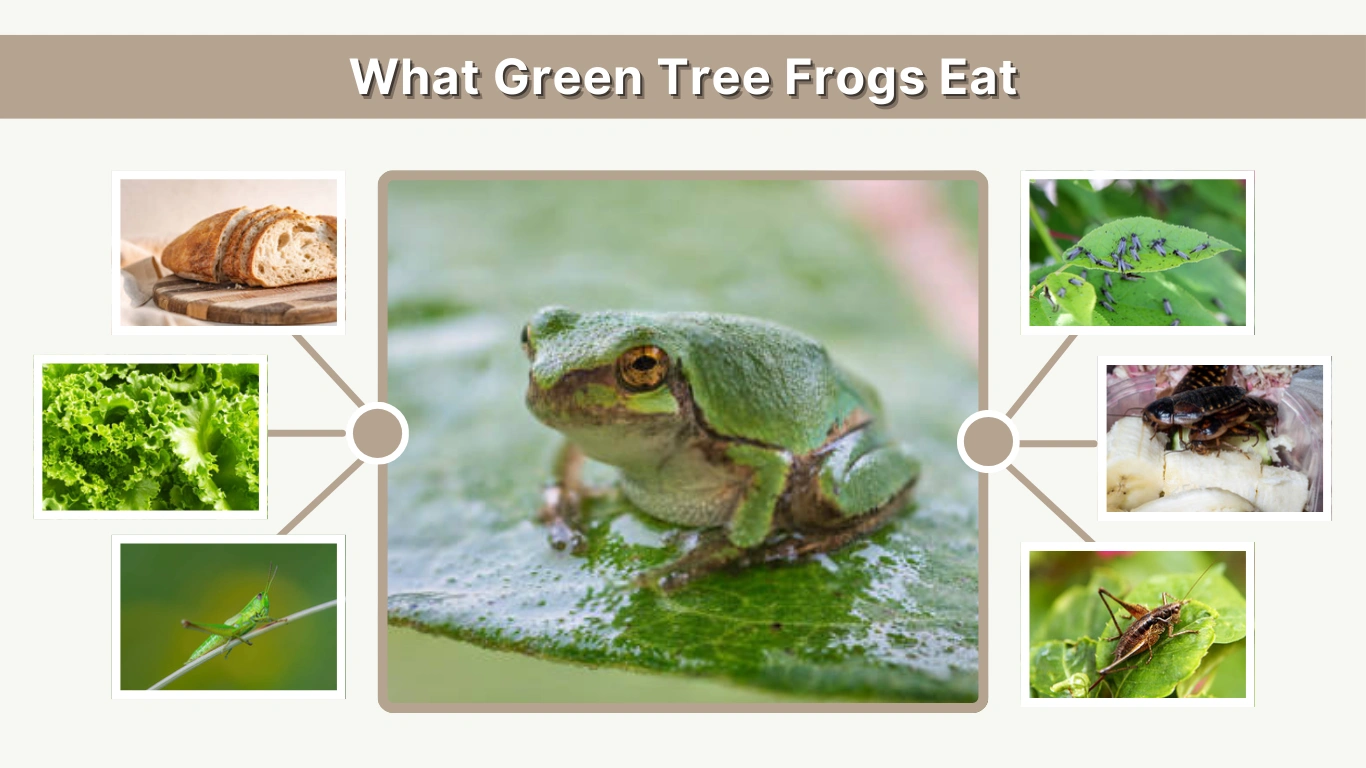
Many people ask whether green tree frogs can eat fruit, vegetables, or human foods. They cannot, as their digestive systems are built strictly for animal protein.
Wild Diet: How Green Tree Frogs Eat in Nature
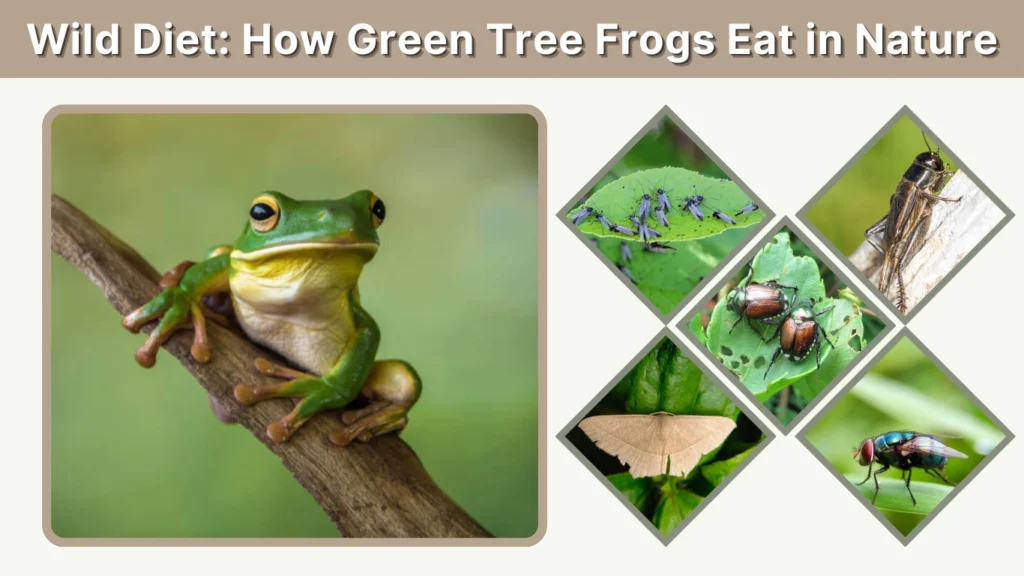
In the wild, green tree frogs are opportunistic hunters. They wait motionless on leaves or branches until movement triggers their feeding response. Their sticky tongue projects quickly to grab prey, pulling it into the mouth where it is swallowed whole—sometimes with the help of their eyes pushing food downward.
Wild prey commonly includes:
- Mosquitoes and gnats
- Crickets
- Beetles
- Butterflies
- Caterpillars
- Grasshoppers
- Spiders
- Slugs
- Snails
Some people wonder: Do green tree frogs eat ants?
Yes—ants are frequently eaten in the wild, though captive frogs should be fed them sparingly due to their acidity and defensive chemicals.
Green tree frogs do not eat plants, lettuce, vegetables, or fruit. Even species in Central Texas that live near gardens are not plant-eaters; tadpoles are the only life stage that may consume algae or plant material.
Captive Diet: What Green Tree Frogs Eat as Pets
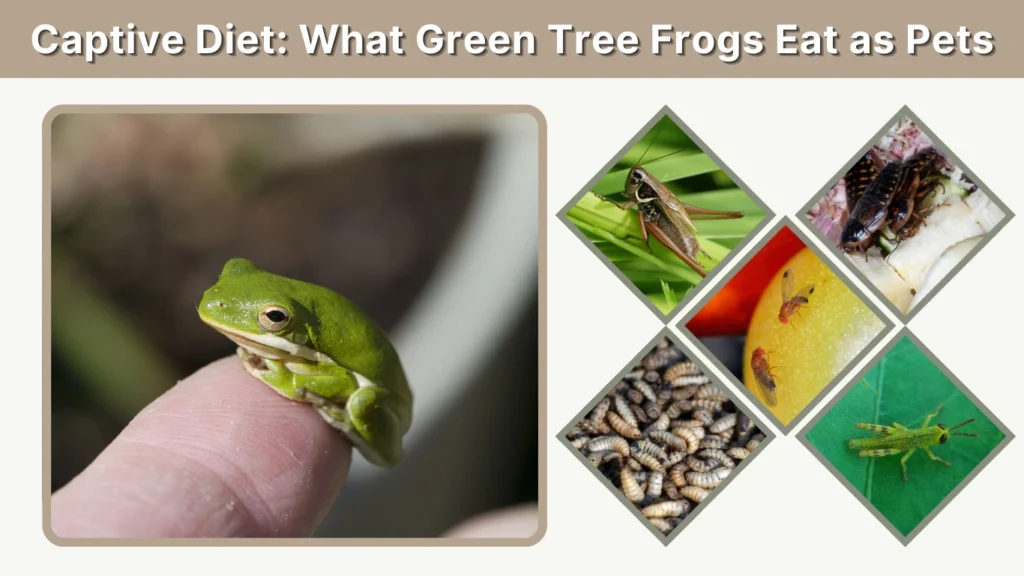
In captivity, green tree frogs thrive when fed safe, nutritious insects that match their size. Their core diet includes:
- Crickets
- Dubia roaches
- Fruit flies (for small juveniles)
- Black soldier fly larvae
- Small locusts
- Occasional waxworms or mealworms
Mealworms are acceptable occasionally, but because they have hard chitin shells, they should not make up a large portion of the diet. Waxworms should be rare treats due to their fat content.
Many ask: Can green tree frogs eat fruit? Bread? Lettuce? Vegetables?
No—these foods are unsafe and indigestible.
Foods They Should NOT Eat
- Fruit
- Lettuce
- Bread
- Vegetables
- Dog food
- Processed foods
- Dead insects from windowsills
- Bees or monarch caterpillars (toxic)
Captive frogs should always eat live, gut-loaded insects supplemented with calcium to prevent metabolic issues.
Diet by Species Type
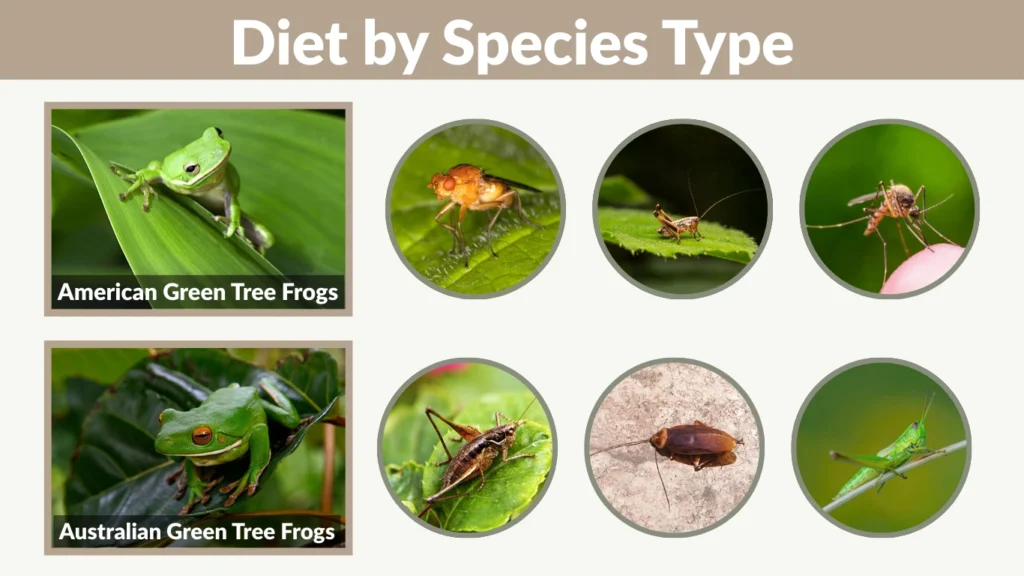
American Green Tree Frogs (Hyla cinerea)
American green tree frogs are small, nimble hunters that prefer tiny prey. They eat mostly:
- Fruit flies
- Small crickets
- Gnats
- Moths
- Small roaches
Owners often search “American green tree frog not eating.” This species commonly refuses food when stressed, kept too cold, or moved to a new enclosure. Nighttime warming and humidity adjustments typically help.
Australian Green Tree Frogs (Litoria caerulea)
Australian green tree frogs are famous for their large size and powerful appetite. Their diet includes everything the American species eats, plus:
- Larger crickets
- Big roaches
- Grasshoppers
- Small fish
- Pinky mice (rare cases)
Because of their size, these frogs are frequently filmed eating unusual prey. Viral clips show:
- Australian green tree frog eating snake
- Australian green tree frog eats taipan
- Australian green tree frog eating brown snake
- Australian green tree frog eating mouse
These events are real but rare. They are not typical or recommended foods for pet frogs.
Green-Eyed Tree Frogs
These frogs follow the same insect-based diet and rarely consume anything larger than a medium insect.
Diet by Life Stage
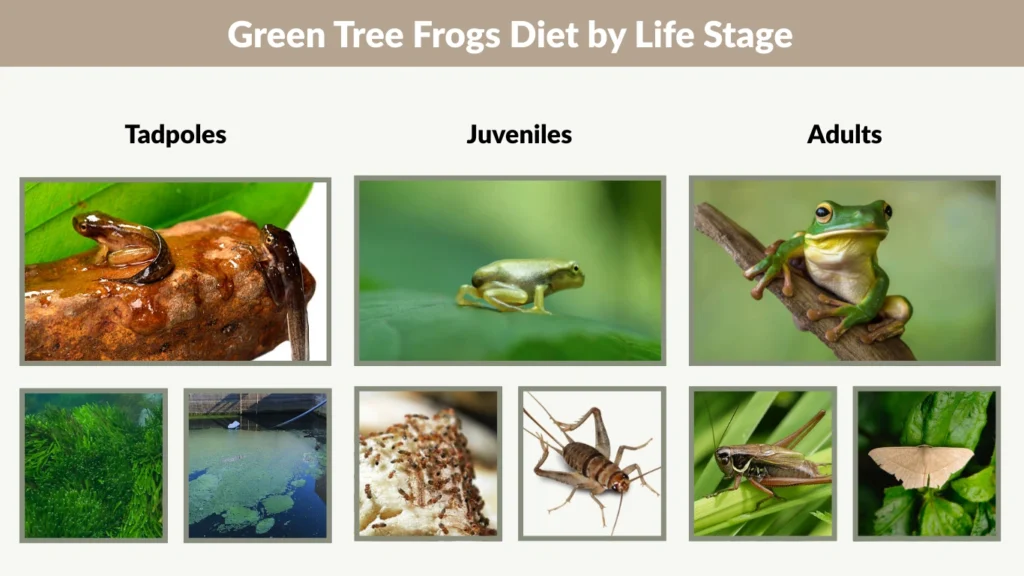
Tadpoles
Green tree frog tadpoles eat primarily:
- Algae
- Plant material
- Biofilm
- Soft detritus
They later transition to tiny animal foods as their legs develop.
Juveniles (Little or Small Green Tree Frogs)
Young frogs need softer, smaller prey such as:
- Wingless fruit flies
- Pinhead crickets
- Springtails
They eat more frequently than adults and must be supplemented with calcium.
Adults
Adult frogs shift to larger prey:
- Full-size crickets
- Small roaches
- Grasshoppers
- Moths
- Occasional mealworms or waxworms
Extreme & Unusual Foods (Rare but Documented)
Green tree frogs are primarily insectivores, but larger species—especially the Australian green tree frog—are known to grab surprising prey when the opportunity arises. These cases are not part of a normal diet, but they occur due to instinct, size advantage, or food scarcity.
Rare recorded prey includes:
- Small snakes
- Brown snakes
- Taipan juveniles
- Small birds
- Tiny rodents (pinky mice)
- Fish
- Other frogs
Videos often show an Australian green tree frog eating a snake or rodent. These events do happen, but they should not be replicated in captivity. Feeding vertebrates places unnecessary stress on a frog’s digestive system and can result in regurgitation or impaction.
Some predators also turn the tables—clips show a green tree snake eating a frog, an egret eating a green tree frog, or a cane toad swallowing one. In the wild, green tree frogs are both hunters and prey within their ecosystem.
Foods Green Tree Frogs Should NOT Eat
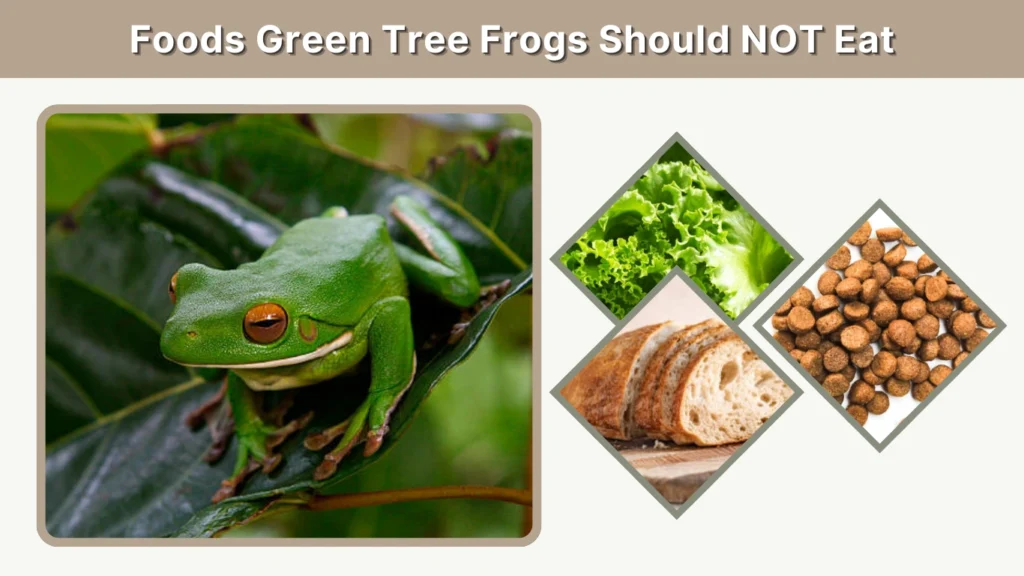
Because keepers frequently ask whether green tree frogs can eat human foods, vegetables, or strange items, it’s important to clarify what is unsafe.
Foods to Absolutely Avoid
- Fruit
- Bread
- Lettuce
- Vegetables
- Dog food
- Processed foods
- Cooked meats
- Bread crumbs
- Pine needles
- Dead insects
- Large hard-shelled beetles
- Bees, wasps, or stinging insects
- Monarch caterpillars (poisonous)
These items either provide no nutrition, contain toxins, or may cause impaction. Green tree frogs are designed to digest soft-bodied, moving prey—nothing else.
Foods Safe Only in Moderation
- Mealworms (hard shell—only occasionally)
- Waxworms (very fatty—occasional treat)
- Small fish (in rare, supervised cases only)
Feeding Frequency & How Much to Feed
Green tree frog feeding depends heavily on size, age, and species.
Juveniles
- Eat daily
- 3–5 tiny insects per night
- Must receive calcium every other feeding
Adults
- Eat 3–4 times per week
- 4–8 appropriately sized insects per feeding
- Supplement calcium 2× per week, vitamins 1× per week
Many keepers ask, “How often should a green tree frog eat?”
A good rule: Offer what they can eat in 10–15 minutes, at night.
How Many Crickets Do They Eat?
Most adults eat 4–6 medium crickets per feeding, depending on appetite and size.
How Long Can They Go Without Eating?
Healthy adults can survive 1–2 weeks without food, but juveniles cannot. If your frog refuses food for more than 4–5 days, check temperatures, humidity, and stress levels.
Feeding Problems & Why Frogs Stop Eating
A common search phrase—“my green tree frog won’t eat”—usually has predictable causes:
- Incorrect temperature (too cold)
- Low nighttime humidity
- Stress from handling or relocation
- Shedding period
- Illness or parasites
- Prey too large
- Lack of nighttime lighting cycle
A frog that appears lethargic, dark-colored, or hides constantly may be stressed. Address environmental conditions first; if appetite doesn’t return within a week, consultation with an exotic vet is recommended.
American green tree frogs in particular frequently refuse food when stressed or moved to a new enclosure.
FAQs
What do green tree frogs eat?
They eat live insects such as crickets, flies, roaches, spiders, beetles, ants, and moths. Larger species, like Australian green tree frogs, can eat bigger prey but should stick mainly to insects in captivity.
Do green tree frogs eat ants?
Yes, especially in the wild. However, captive frogs should eat ants sparingly because some species can bite or contain acids that irritate the frog’s mouth and stomach.
Can green tree frogs eat mealworms?
They can, but only occasionally. Mealworms have tough shells that are harder to digest. They should never be the main food source.
Why is my green tree frog not eating?
Stress, improper temperature, low humidity, new environments, parasites, or prey that is too large can all cause appetite loss. Check environmental conditions first.
What eats green tree frogs?
Birds, snakes, larger frogs, toads, rats, some mammals, and even cane toads prey on green tree frogs, especially in Australia and the southern United States.