
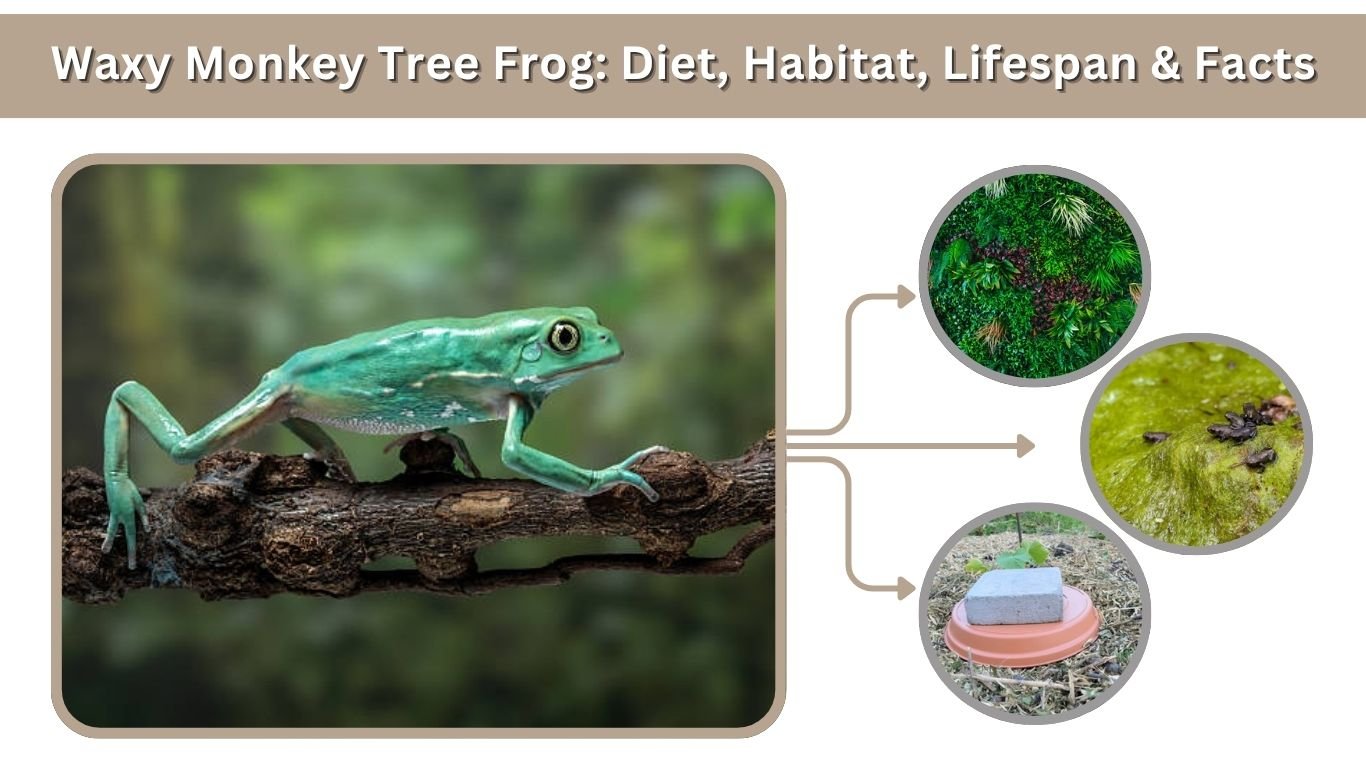
The waxy monkey tree frog is one of the most unique and fascinating amphibians in the world. Known for its unusual movement, waxy skin coating, and calm behavior, this species has become increasingly popular among exotic pet enthusiasts. Scientifically called Phyllomedusa bicolor, it is often referred to as the giant waxy monkey tree frog due to its relatively large size compared to other tree frogs.
In this guide, you’ll learn everything about waxy monkey tree frogs, including their physical characteristics, natural habitat, diet, lifespan, and whether they are safe to handle. If you’re considering keeping one as a pet, this article will also help you understand their care needs.
What Is a Waxy Monkey Tree Frog?
The waxy monkey tree frog is a species of tree frog native to the Amazon rainforest in South America. Unlike many frogs that hop, this species is known for its slow, deliberate walking motion, which resembles how monkeys move—hence the name.
This frog belongs to the Phyllomedusidae family, a group known for their tree-dwelling lifestyle and unique adaptations. The term “giant” is often used to describe larger individuals of this species, though there is no separate species classification for them.
Waxy Monkey Tree Frog Physical Characteristics
Waxy monkey tree frogs are easily recognizable due to their striking appearance and unusual features. Their body structure and skin adaptations make them stand out among amphibians.
Size and Growth
Adult waxy monkey tree frogs typically grow between 3 to 5 inches in length. The so-called “giant” individuals usually fall on the higher end of this range. Males are generally smaller than females, which is common in many frog species.
Color and Appearance
These frogs have a bright green back with a pale or creamy underside. Their sides may feature subtle white markings, and their eyes are large and expressive, often appearing silver or light gray with dark pupils.
Unique Features
One of their most distinctive traits is their waxy skin coating. This secretion helps them retain moisture, allowing them to survive in relatively dry conditions compared to other amphibians.
They also have opposable, grasping digits that help them climb branches easily. Unlike most frogs, they walk slowly instead of hopping, giving them a very unusual and almost reptile-like movement style.
Waxy Monkey Tree Frog Natural Habitat and Behavior

Understanding where waxy monkey tree frogs come from helps explain their unique adaptations and care requirements.
Habitat
These frogs are native to the Amazon Basin, including parts of Brazil, Peru, and surrounding regions. They live in tropical rainforests where humidity levels are high, but they often stay in areas with less direct water exposure.
Being arboreal, they spend most of their lives in trees, resting on branches and leaves during the day.
Behavior
Waxy monkey tree frogs are nocturnal, meaning they are most active at night. During the day, they typically remain still, conserving energy and moisture.
At night, they become more active, climbing and hunting for food. Their movement is slow and deliberate, which helps them conserve energy and avoid detection by predators.
They are also known to produce soft calls, especially during the breeding season.
Waxy Monkey Tree Frog Diet

Feeding plays a major role in maintaining the health of these frogs, both in the wild and in captivity.
What Do They Eat in the Wild?
In their natural habitat, waxy monkey tree frogs feed mainly on insects and small invertebrates. Their diet may include:
- Crickets
- Beetles
- Moths
- Small arthropods
Occasionally, they may consume slightly larger prey if available.
Diet in Captivity
When kept as pets, their diet should closely mimic what they would eat in the wild. Common food options include:
- Crickets
- Dubia roaches
- Mealworms (in moderation)
Providing a varied diet is important to ensure proper nutrition.
Feeding Tips
Adult frogs should be fed a few times per week, while younger frogs require more frequent feeding. It’s also recommended to dust their food with calcium and vitamin supplements to prevent deficiencies.
Waxy Monkey Tree Frog Lifespan and Growth Cycle

Waxy monkey tree frogs are relatively long-lived compared to many other amphibians.
In captivity, they can live between 8 to 15 years with proper care. In the wild, their lifespan may be slightly shorter due to predators and environmental factors.
Their life cycle begins as eggs laid on leaves above water. After hatching, the tadpoles drop into water where they continue developing. Over time, they transform into juvenile frogs and eventually reach adulthood.
Proper nutrition, habitat conditions, and low stress levels all play a significant role in their longevity.
Are Waxy Monkey Tree Frogs Poisonous?
This is one of the most common questions people ask about this species.
Toxicity Explained
Waxy monkey tree frogs are not considered dangerously poisonous in the traditional sense, but they do produce a skin secretion that contains bioactive compounds. This secretion serves as a defense mechanism against predators.
Safety Around Humans
While the secretion is not deadly to humans, it can cause irritation or mild reactions if it comes into contact with skin or eyes. For this reason, it’s best to handle these frogs minimally.
Always wash your hands before and after handling to protect both yourself and the frog, as their skin is highly sensitive to chemicals and oils.
Waxy Monkey Tree Frog as a Pet
Waxy monkey tree frogs can make interesting pets, but they are not suitable for everyone. Their specific care requirements mean they are better suited for intermediate or experienced amphibian keepers.
Pros
- Unique appearance and behavior
- Relatively long lifespan
- Calm and slow-moving nature
Cons
- Sensitive to environmental changes
- Require controlled humidity and temperature
- Not ideal for frequent handling
Overall, they are best for owners who enjoy observing rather than interacting physically with their pets.
Waxy Monkey Tree Frog Care Guide

Providing proper care is essential to keep your frog healthy and stress-free.
Enclosure Setup
A vertical terrarium is ideal since these frogs are tree-dwelling. The enclosure should include:
- Plenty of branches for climbing
- Live or artificial plants
- Secure lid to prevent escape
A 15–20 gallon tank is usually sufficient for one adult frog, but larger is always better.
Temperature and Humidity
Maintaining the correct environment is crucial:
- Temperature: 24–28°C (75–82°F)
- Humidity: 60–80%
Regular misting helps maintain humidity, but avoid over-saturating the enclosure.
Lighting
A natural day/night cycle should be maintained. While UVB lighting is not always required, low-level UVB can be beneficial for overall health.
Cleaning and Maintenance
Clean the enclosure regularly to prevent bacteria and mold buildup. Remove uneaten food and waste promptly, and perform deeper cleaning periodically.
Giant Waxy Monkey Tree Frog Care (Special Notes)
Giant individuals require slightly more space and food compared to smaller frogs. A larger enclosure with more vertical climbing space is recommended.
Their care is otherwise similar, but portion sizes and feeding frequency may need adjustment to match their size.
Breeding Waxy Monkey Tree Frogs
Breeding these frogs in captivity can be challenging but rewarding.
Breeding Conditions
To encourage breeding, you may need to simulate seasonal changes:
- Increased humidity
- Slight temperature variation
- Access to water sources
Reproduction Process
Females lay eggs on leaves hanging over water. Once the eggs hatch, the tadpoles fall into the water below, where they continue developing until metamorphosis.
Raising tadpoles requires clean water and careful monitoring.
Where to Buy Waxy Monkey Tree Frogs
If you’re planning to get one, it’s important to choose a healthy, ethically sourced frog.
Where to Find Them
- Reputable exotic pet breeders
- Specialized pet stores
- Online amphibian sellers
Price Range
Prices typically range from moderate to high depending on:
- Age (babies vs adults)
- Size (giant individuals may cost more)
- Availability
Buying Tips
- Always choose captive-bred frogs
- Check for active behavior and clear eyes
- Avoid wild-caught specimens
Waxy Monkey Tree Frog vs White’s Tree Frog
These two species are often compared by beginners.
White’s tree frogs are generally easier to care for and more tolerant of handling, making them better for beginners. In contrast, waxy monkey tree frogs require more precise environmental control and are less tolerant of stress.
If you are new to amphibians, White’s tree frog may be the better choice.
Interesting Facts
Waxy monkey tree frogs have several fascinating traits:
- They produce a natural “sunscreen” using their waxy secretion
- They walk instead of hop like most frogs
- They have a strong grip, similar to primates
- Their skin secretes compounds studied for medical research
FAQs
Are waxy monkey tree frogs poisonous to humans?
They are not deadly, but their skin secretes compounds that may cause irritation or mild reactions. It’s best to avoid excessive handling and always wash your hands after contact.
What do waxy monkey tree frogs eat?
They mainly eat insects such as crickets and roaches. A varied diet with proper supplementation ensures they stay healthy in captivity.
How big do waxy monkey tree frogs get?
They typically grow between 3 and 5 inches, with larger individuals reaching the upper end of that range.
Are they good pets for beginners?
No, they are better suited for experienced keepers due to their specific humidity and care requirements.
Conclusion
The waxy monkey tree frog is a truly unique amphibian known for its unusual movement, waxy skin, and fascinating behavior. While they can make rewarding pets, they require proper care, attention to environmental conditions, and responsible handling.
Before getting one, it’s important to fully understand their needs and ensure you can provide a suitable habitat. With the right care, these frogs can thrive and live for many years, making them a captivating addition to any exotic pet collection.
