
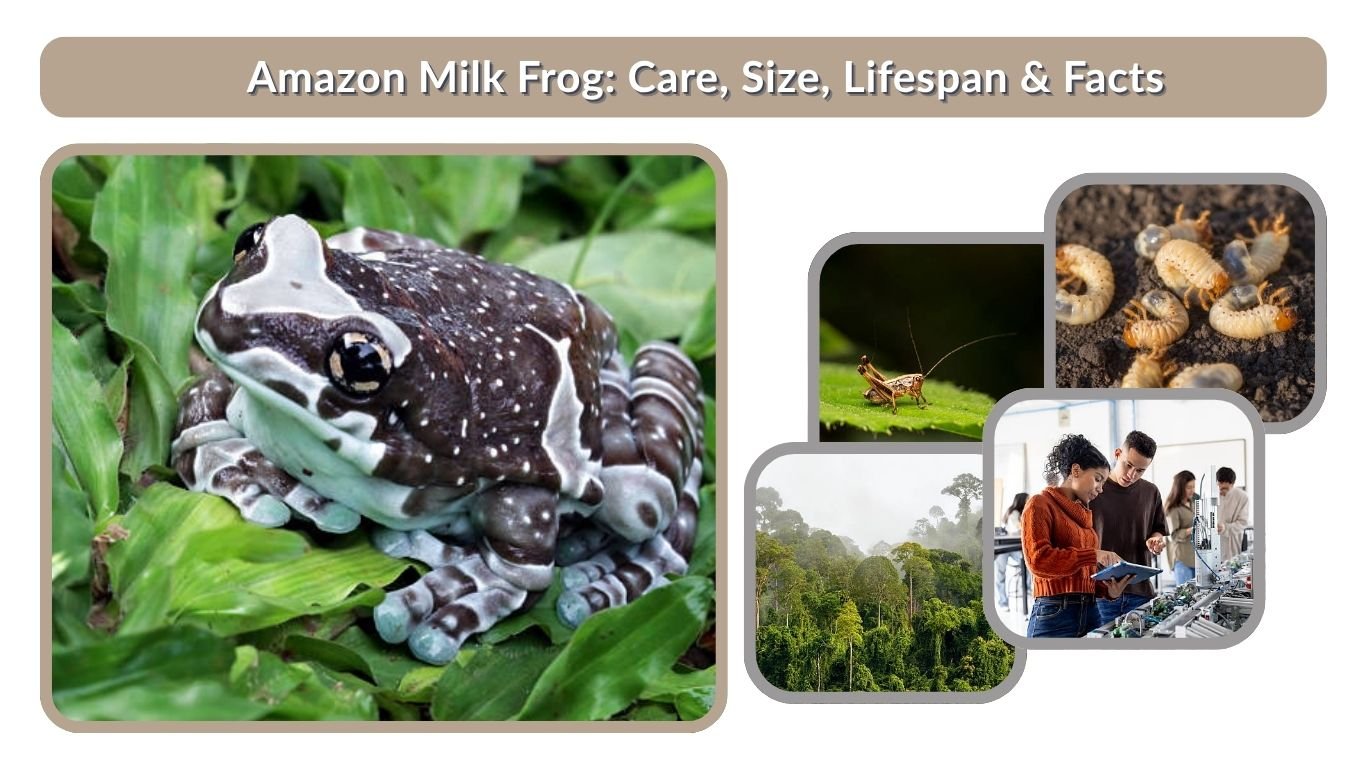
The Amazon milk frog (Trachycephalus resinifictrix) is a striking tree-dwelling amphibian native to the Amazon rainforest. Known for its blue-gray body and unique milky skin secretion, this species is popular among frog enthusiasts. It is relatively easy to care for, making it suitable for beginners, while still offering fascinating behaviors and characteristics that appeal to experienced keepers.
What Is an Amazon Milk Frog?
The Amazon milk frog is a large, hardy tree frog species commonly kept as a pet. It belongs to the Hylidae family and is known for its calm temperament and distinctive appearance.
- Scientific name: Trachycephalus resinifictrix
- Common names: Amazon milk frog, Amazon milk tree frog, blue milk frog
- Arboreal species (lives in trees)
- Native to South America
Amazon Milk Frog Habitat & Distribution

Amazon milk frogs are native to tropical rainforests and require warm, humid environments to thrive. Their natural habitat plays a key role in shaping their behavior and survival strategies.
Natural Habitat
In the wild, these frogs live high in the trees, where moisture and shelter are abundant. They rely on humidity and access to water for survival and reproduction.
- Tropical rainforest canopy
- Tree branches and hollows
- Water-filled tree cavities
- High humidity conditions
Where Do Amazon Milk Frogs Live?
Amazon milk frogs are found throughout the Amazon Basin in South America. Their range includes multiple countries with dense forest ecosystems.
- Brazil, Peru, Colombia, and surrounding regions
- Warm, humid climates
- Areas with dense vegetation
Amazon Milk Frog Size & Growth
Amazon milk frogs are considered medium to large compared to many other pet frogs. Their size and growth rate make them easy to manage while still being impressive in appearance.
- Adult size: 2.5–4 inches
- Females are larger than males
- Reach full size within 12–18 months
- Growth depends on diet and environment
Amazon Milk Frog Lifespan

Amazon milk frogs are long-lived amphibians when properly cared for. Their lifespan depends largely on environmental conditions and diet quality.
- Average lifespan: 8–10 years
- Can live up to 15 years in captivity
- Proper care significantly increases longevity
- Stress and poor conditions reduce lifespan
Are Amazon Milk Frogs Poisonous?
Amazon milk frogs are often misunderstood when it comes to toxicity. While they do produce defensive secretions, they are not considered dangerous in normal situations.
Nature of Their Secretion
These frogs produce a sticky, milky substance through their skin when threatened. This secretion helps deter predators and protect the frog from harm.
Are They Poisonous to Humans?
The secretion can cause mild irritation if it comes into contact with sensitive areas such as the eyes or mouth. However, it is not harmful when basic hygiene practices, like washing hands after handling, are followed.
Amazon Milk Frog Diet

The diet of Amazon milk frogs is simple but important for maintaining their health and energy levels. Both wild and captive diets consist mainly of small live prey.
What Do Amazon Milk Frogs Eat?
In the wild, these frogs consume a variety of insects that provide essential nutrients for growth and survival.
- Crickets and roaches
- Worms and larvae
- Occasional soft-bodied insects
Feeding Schedule & Tips
In captivity, maintaining a proper feeding schedule is essential. Overfeeding or poor nutrition can lead to health problems.
- Feed 2–3 times per week
- Use calcium and vitamin supplements
- Adjust portion size based on age and size
- Provide fresh, live prey
Amazon Milk Frog Behavior
Amazon milk frogs are known for their calm and predictable behavior, making them ideal for observation in captivity. Their activity patterns and social habits are influenced by their natural environment.
- Nocturnal and active at night
- Slow-moving and generally calm
- Known for soft croaking calls
- Can live alone or in small groups
- Prefer climbing and resting on elevated surfaces
Amazon Milk Frog Life Cycle & Breeding

The life cycle of the Amazon milk frog is closely tied to moisture and environmental conditions. Their breeding process is unique and fascinating.
Breeding Behavior
During the breeding season, males call to attract females. Eggs are typically laid in water-filled tree cavities, providing a safe environment for development.
Development Stages
After hatching, tadpoles grow in water before transforming into froglets. This process involves several stages and depends on temperature and humidity for proper development.
- Eggs hatch into tadpoles
- Tadpoles develop in water
- Metamorphosis into froglets
- Growth into adult frogs
Amazon Milk Frog Predators & Threats

Amazon milk frogs face several threats in the wild, although their arboreal lifestyle helps them avoid many ground-based predators. Environmental changes also play a role in their survival.
- Predators include birds, snakes, and larger amphibians
- Tree-dwelling behavior reduces some risks
- Habitat destruction due to deforestation
- Pollution affecting rainforest ecosystems
- Climate change impacting humidity levels
Amazon Milk Frog Care Guide
Proper care is essential for keeping Amazon milk frogs healthy in captivity. They are relatively hardy but still require a well-maintained environment.
Enclosure Setup
A vertical enclosure is ideal since these frogs spend most of their time climbing.
- Use a tall terrarium with secure lid
- Add branches, cork bark, and plants
- Provide hiding spots and climbing areas
Tank Size
Choosing the right tank size ensures comfort and reduces stress.
- Minimum 20-gallon for one adult
- Larger tanks for multiple frogs
- More vertical space is better than floor space
Temperature & Humidity
Maintaining the correct climate is critical for their health.
- Temperature: 24–28°C
- Humidity: 60–80%
- Daily misting to maintain moisture
- Use a thermometer and hygrometer
Lighting & UVB
Lighting helps regulate natural behavior.
- UVB is optional but beneficial
- Maintain a consistent day-night cycle
- Avoid excessive heat from lights
Amazon Milk Frog Enclosure & Tank Setup
Creating a natural environment helps mimic their rainforest habitat and reduces stress.
- Use moisture-retaining substrate like coconut fiber
- Include a shallow water dish or small pool
- Add live plants to increase humidity
- Ensure proper airflow to prevent mold
- Clean enclosure regularly
Amazon Milk Frog Price & Cost
The cost of owning an Amazon milk frog includes both the frog itself and the setup required to care for it properly.
- Average frog price: $30–$80
- Blue morphs may cost more
- Initial setup (tank, decor, lighting) can be higher
- Ongoing costs include food and maintenance
Amazon Milk Frog for Sale (Buying Guide)
When purchasing an Amazon milk frog, it is important to make responsible and informed choices.
- Buy from reputable breeders or pet stores
- Choose captive-bred frogs only
- Avoid wild-caught individuals
- Check for signs of good health (clear eyes, active behavior)
- Verify local laws and regulations
Are Amazon Milk Frogs Good for Beginners?
Amazon milk frogs are often recommended for beginner amphibian keepers due to their hardy nature and relatively simple care requirements.
- Adapt well to captivity
- Require basic humidity and temperature control
- Easy feeding routine
- Calm and easy to observe
- Suitable first frog with proper setup
Amazon Milk Frog Tank Setup Summary
A quick overview of the essential setup requirements helps reinforce key care points.
- Vertical terrarium with climbing structures
- Moderate to high humidity levels
- Stable temperature range
- Clean water source
- Regular maintenance and monitoring
Fun Facts About Amazon Milk Frogs
These frogs are not only easy to care for but also full of interesting traits that make them unique.
- Named for their milky skin secretion
- Sticky skin helps retain moisture
- Can slightly change shade depending on mood or environment
- Often seen resting on glass surfaces in captivity
- Popular in the exotic pet trade worldwide
Amazon Milk Frog Facts
Amazon milk frogs are fascinating amphibians with several unique features that make them stand out among other frogs. Their behavior, appearance, and defense mechanisms contribute to their popularity.
- Produces a milky secretion when stressed
- Nocturnal and most active at night
- Has a blue-gray body with dark brown bands
- Known for its sticky skin texture
- Popular in the exotic pet trade
FAQs
How big do Amazon milk frogs get?
Amazon milk frogs typically grow between 2.5 and 4 inches in length. Females are usually larger than males, and they reach full size within about one to one and a half years when kept in proper conditions.
Are Amazon milk frogs poisonous to humans?
They produce a mild milky secretion that can irritate the skin or eyes, but it is not dangerous. Washing hands after handling them is enough to prevent any irritation or discomfort.
What do Amazon milk frogs eat?
They mainly eat insects such as crickets, roaches, and worms. In captivity, they should be fed a balanced diet with calcium and vitamin supplements to maintain good health.
Where do Amazon milk frogs live?
Amazon milk frogs are native to the Amazon rainforest in South America. They live in trees, often near water sources like rain-filled tree holes used for breeding.
Do Amazon milk frogs need UVB lighting?
UVB lighting is not required but can be beneficial. Providing proper temperature, humidity, and a consistent day-night cycle is more important for their overall health and well-being.
