
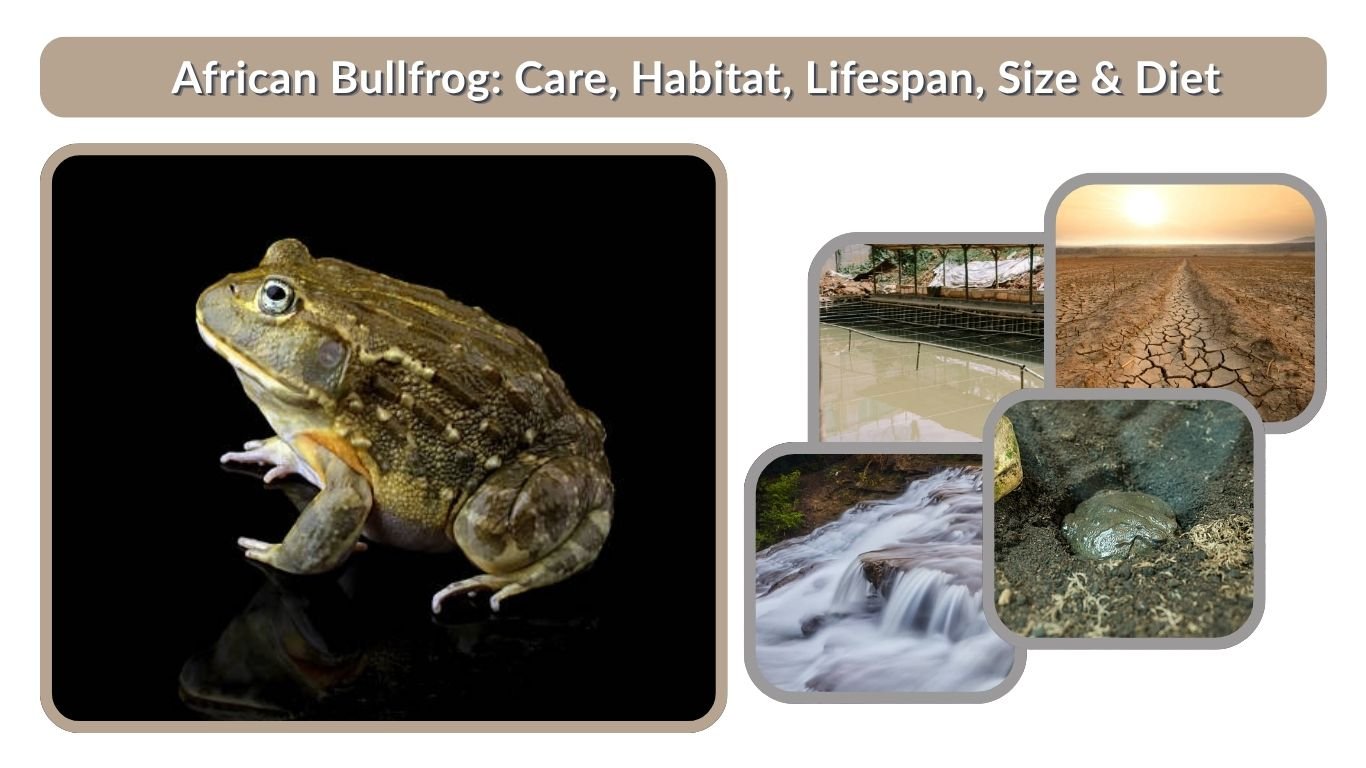
The African bullfrog is one of the largest and most powerful frogs in the world, known for its aggressive nature and massive size. Scientifically called Pyxicephalus adspersus, it is also known as the giant African bullfrog or Pixie frog. Native to sub-Saharan Africa, this species is popular among reptile and amphibian enthusiasts. However, due to its strength, appetite, and specific care needs, it is not ideal for beginners. This guide explores its size, habitat, diet, and essential care requirements.
What Is an African Bullfrog?
The African bullfrog is a large terrestrial amphibian that spends much of its time on land rather than in water. It is famous for its wide mouth, powerful jaws, and ability to eat large prey. Unlike many frogs, it has a stocky body and strong limbs designed for digging and ambush hunting.
Scientific Name and Classification
The African bullfrog’s scientific name is Pyxicephalus adspersus. It belongs to the family Pyxicephalidae and is one of the most well-known amphibians in Africa. This species is closely related to other large burrowing frogs but stands out due to its size and aggressive behavior.
Common Names and Variations
The African bullfrog is known by several names, including:
- Giant African bullfrog
- Pixie frog
- South African bullfrog
- African giant bullfrog
These names all refer to the same species, though they are used in different regions or pet communities.
African Bullfrog Facts

African bullfrogs are unique amphibians with remarkable characteristics. They are known for their strength, survival abilities, and unusual behavior compared to other frogs.
- One of the largest frogs in the world
- Can produce loud croaking sounds
- Known for aggressive feeding behavior
- Capable of surviving harsh dry conditions
African Bullfrog Size and Growth
The African bullfrog is famous for its impressive size, especially in males. It grows much larger than most pet frogs and requires space and proper nutrition to develop fully. Their size is one of the main reasons they attract attention from exotic pet keepers.
How Big Do African Bullfrogs Get?
Adult male African bullfrogs can grow up to 9–10 inches in length and become very heavy. Females are smaller but still significantly larger than many other frog species. Their large size makes them one of the biggest frogs in the world.
Growth Stages
African bullfrogs go through several stages as they develop:
- Tadpole stage in water
- Juvenile frog with rapid growth
- Full-grown adult with maximum size
African Bullfrog Lifespan

African bullfrogs are long-lived amphibians that require a long-term commitment. With proper care, they can live for decades, making them a serious responsibility for pet owners.
In captivity, they often live longer than in the wild because they are protected from predators and receive consistent food. However, poor care conditions such as improper humidity or diet can reduce their lifespan significantly.
African Bullfrog Natural Habitat and Adaptations

African bullfrogs are native to sub-Saharan Africa, where they live in grasslands and savannas. These regions often experience extreme seasonal changes, including long dry periods. To survive, the frogs have developed unique adaptations that allow them to endure harsh environments.
Where Do African Bullfrogs Live?
They are commonly found in countries across southern and eastern Africa. Their habitat includes open grasslands, temporary water pools, and areas that water pools. They rely heavily on seasonal water sources for breeding.
Adaptations for Survival
To survive in tough environments, African bullfrogs have developed several adaptations:
- Burrowing underground to escape heat
- Forming a protective cocoon during drought
- Ability to remain inactive for long periods
African Bullfrog Diet
The African bullfrog is a carnivorous predator with a powerful appetite. It is known for eating a wide variety of prey, often surprising new owners with its aggressive feeding habits. Providing the right diet is essential for maintaining health and proper growth.
What Do African Bullfrogs Eat?
Their diet typically includes:
- Insects such as crickets and worms
- Rodents like mice
- Small birds and reptiles
- Other amphibians
Feeding Behavior
African bullfrogs are ambush predators. They wait for prey to come close before striking quickly with their powerful jaws. They will attempt to eat almost anything they can overpower, which is why careful feeding is important.
African Bullfrog Behavior and Temperament
African bullfrogs are known for their bold and sometimes aggressive behavior. Unlike many frogs, they are not shy and will defend themselves if they feel threatened. Their behavior is heavily influenced by their environment, feeding schedule, and handling. These frogs are best observed rather than handled frequently, as they can become stressed or defensive.
Typical Behavior
They spend much of their time burrowed in substrate, especially during dry conditions. When active, they may sit still for long periods, waiting to ambush prey. During breeding seasons, males become more vocal and territorial, producing loud croaking sounds to attract mates.
African Bullfrog Care Guide

Caring for an African bullfrog requires attention to humidity, temperature, and enclosure setup. These frogs are relatively hardy but still need proper conditions to thrive. A well-maintained environment will help prevent stress and health issues.
Basic Care Needs
To keep your African bullfrog healthy, focus on the following:
- Large enclosure with enough floor space
- Moist substrate for burrowing
- Clean water source
- Minimal handling to reduce stress
Temperature and Humidity
Maintaining proper environmental conditions is essential:
- Temperature range: 75–85°F
- High humidity levels (around 60–80%)
- Regular misting to keep substrate moist
African Bullfrog Enclosure Setup
A proper enclosure mimics the frog’s natural environment and supports its natural behaviors. Since African bullfrogs spend time burrowing, the setup should prioritize ground space and substrate depth rather than height.
Enclosure Size
Adult African bullfrogs require a spacious tank, typically at least 20–40 gallons. Larger enclosures are always better, especially for fully grown males.
Substrate and Setup
A suitable enclosure should include:
- Deep soil or coconut fiber substrate
- Water dish for soaking
- Hiding spots for security
- Stable, secure tank lid
African Bullfrog Tadpoles and Breeding
African bullfrogs have a unique and fascinating breeding cycle that depends on seasonal rainfall. They reproduce in temporary water bodies formed during rainy seasons. This process is crucial for the survival of their species in the wild.
Tadpole Stage
Tadpoles grow quickly and can become quite aggressive. In some cases, they may even show cannibalistic behavior if food is limited. Providing adequate food is essential during this stage.
Breeding Behavior
Males are known to guard eggs and protect tadpoles from predators. Eggs are typically laid in shallow water, where they hatch and develop rapidly under favorable conditions.
African Bullfrog Anatomy and Features
African bullfrogs have a powerful and unique body structure that supports their lifestyle as ambush predators. Their anatomy allows them to capture and consume large prey relative to their size.
Teeth and Mouth
Although they do not have true teeth, they possess tooth-like structures called odontoid projections. These help them grip prey securely. Their large mouth and strong jaws make them capable hunters.
Body Characteristics
They have thick, muscular bodies and strong legs designed for digging and sudden movements. Their wide mouths and large heads give them a distinctive appearance among amphibians.
Is an African Bullfrog a Good Pet?
African bullfrogs can be fascinating pets, but they are not suitable for everyone. Their aggressive nature, large size, and specific care requirements make them better suited for experienced keepers who understand amphibian care.
Pros
- Unique appearance and behavior
- Long lifespan
- Interesting feeding habits
Cons
- Can be aggressive and may bite
- Requires specific humidity and temperature
- Not suitable for frequent handling
Conclusion
The African bullfrog is a powerful and unique amphibian that stands out due to its size, behavior, and survival adaptations. While it can make an interesting pet, it requires proper care, space, and commitment. By understanding its needs and providing the right environment, owners can ensure a healthy and long life for this remarkable species.
FAQs
How big do African bullfrogs get?
African bullfrogs can grow up to 9–10 inches in length, especially males. They are among the largest frog species in the world, with females being slightly smaller but still quite large.
What do African bullfrogs eat?
They are carnivorous and eat insects, rodents, small birds, reptiles, and other amphibians. Their diet should be varied and appropriate for their size to maintain proper health.
How long do African bullfrogs live?
With proper care, African bullfrogs can live between 20 and 40 years in captivity. Their lifespan depends on diet, environment, and overall care quality.
Are African bullfrogs good pets?
They can be good pets for experienced keepers. However, they are not beginner-friendly due to their aggressive nature, large size, and specific care requirements.
Do African bullfrogs bite?
Yes, African bullfrogs can bite if they feel threatened. They have strong jaws and tooth-like structures that can cause a painful bite, so handling should be minimal.
