
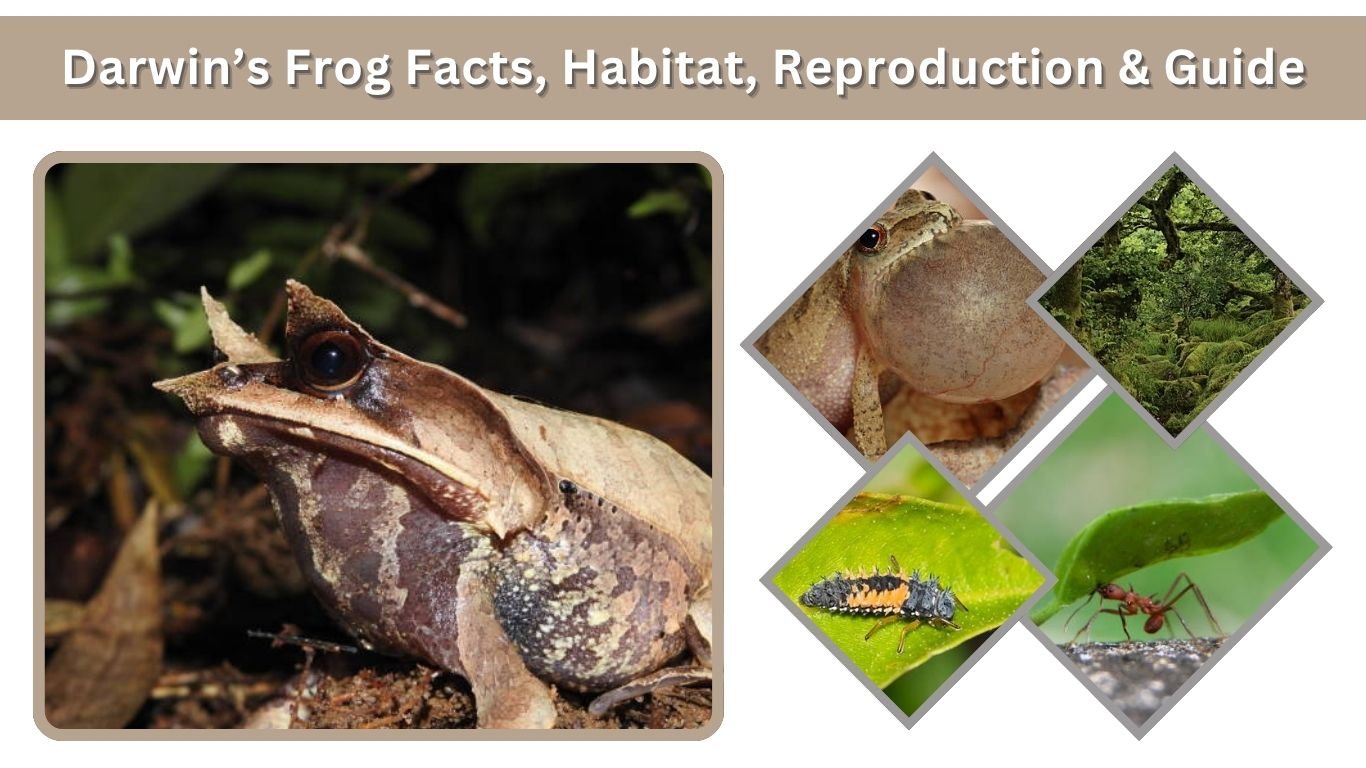
Darwin’s frog is one of the most unique amphibians in the world, famous for its unusual method of reproduction. Named after Charles Darwin, this tiny frog is native to the forests of Chile and Argentina. What makes it truly fascinating is that the male carries and releases its young from his mouth. Due to habitat loss and environmental threats, Darwin’s frog is now considered rare and endangered. This guide covers its habitat, size, diet, and incredible life cycle.
What Is Darwin’s Frog?
Darwin’s frog is a small amphibian known for its leaf-like appearance and remarkable parental care. It belongs to a rare group of frogs that use mouth brooding to raise their young. This species is highly adapted to forest environments and relies heavily on camouflage to survive in the wild.
Scientific Name and Classification
The scientific name of Darwin’s frog is Rhinoderma darwinii. It belongs to the family Rhinodermatidae, which includes only a few specialized frog species. It is closely related to the northern Darwin’s frog, a species that is now believed to be extinct.
Types of Darwin’s Frogs
There are two known types of Darwin’s frogs:
- Southern Darwin’s frog (still living)
- Northern Darwin’s frog (possibly extinct)
Darwin’s Frog Facts

Darwin’s frogs are small but highly specialized amphibians with several unusual traits. Their behavior and biology make them stand out among other frog species.
- Very small size compared to most frogs
- Known for male mouth brooding behavior
- Excellent camouflage resembling leaves
- Rare and considered endangered
Darwin’s Frog Size and Appearance
Darwin’s frog is easily recognized by its unique shape and small size. Its appearance helps it blend into forest environments, making it difficult for predators to detect.
Size
Adult Darwin’s frogs typically measure between 2.5 and 3.5 centimeters in length. Their tiny size makes them one of the smaller frog species in the world.
Appearance
They have a pointed snout and a flattened body that resembles a fallen leaf. Their coloration ranges from green to brown, allowing them to blend perfectly into leaf litter on the forest floor.
Darwin’s Frog Habitat and Distribution

Darwin’s frogs live in cool, moist environments where they can stay hidden and protected. Their habitat is closely tied to forest ecosystems, which provide the humidity and cover they need to survive.
Where Do Darwin’s Frogs Live?
They are primarily found in southern Chile and parts of Argentina. These regions offer the ideal climate and vegetation required for their survival.
Habitat Features
Their natural habitat includes:
- Temperate rainforests
- Moist leaf litter on forest floors
- Areas near streams and small rivers
Darwin’s Frog Diet

Darwin’s frogs are insectivores, meaning they feed on small invertebrates found in their environment. Their diet plays an important role in maintaining their health and energy levels.
What Do Darwin’s Frogs Eat?
Their diet typically includes:
- Ants and small insects
- Beetles and larvae
- Tiny invertebrates found in leaf litter
How Do They Hunt?
They rely on camouflage and patience. By blending into their surroundings, they wait for prey to come close before quickly capturing it with their tongue.
Darwin’s Frog Reproduction (Unique Feature)
Darwin’s frog is best known for its extraordinary reproductive method, which is unlike most amphibians. This process has fascinated scientists and nature enthusiasts for decades.
Mouth Brooding Behavior
The male frog plays a key role in raising the young:
- Swallows fertilized eggs
- Carries them inside his vocal sac
- Protects them during development
Darwin Frog Birth Process
After development is complete, the male releases fully formed froglets from his mouth. This process is often described as “coughing up babies” and is one of the rarest reproductive strategies in the animal kingdom.
Darwin’s Frog Life Cycle

The life cycle of Darwin’s frog is closely tied to its unique reproductive method. Unlike most frogs, their development occurs inside the male rather than in open water. This adaptation increases survival rates but also makes the species highly sensitive to environmental changes.
Life Cycle Stages
Darwin’s frogs go through several distinct stages:
- Eggs laid on moist ground
- Tadpoles develop inside the male’s vocal sac
- Fully formed froglets emerge from the mouth
Darwin’s Frog Behavior and Adaptations
Darwin’s frogs are quiet, secretive animals that rely heavily on camouflage and stillness. Their behavior is shaped by the need to avoid predators and survive in dense forest environments. They are rarely seen in the wild because of their excellent ability to blend into leaf litter.
Key Adaptations
They have evolved several survival strategies:
- Leaf-like body shape for camouflage
- Mouth brooding to protect offspring
- Minimal movement to avoid detection
Darwin’s Frog Predators
Darwin’s frogs face threats from a variety of natural predators. Due to their small size, they rely on camouflage and hiding to survive. However, they are still vulnerable, especially when exposed or in disturbed habitats.
Birds, snakes, and small mammals are among the main predators. These animals can easily prey on them if they are spotted. Their ability to remain still and blend in is their primary defense against these threats.
Darwin’s Frog Population and Conservation
Darwin’s frog populations have declined significantly over the years. Environmental changes and human activities have had a major impact on their survival. Conservation efforts are now crucial to protect this unique species from extinction.
Main Threats
Several factors contribute to their decline:
- Habitat destruction from deforestation
- Climate change affecting moisture levels
- Disease such as chytrid fungus
Conservation Efforts
Efforts are being made to protect Darwin’s frogs:
- Habitat protection programs
- Captive breeding initiatives
- Scientific research and monitoring
Are Darwin’s Frogs Poisonous?
Darwin’s frogs are not poisonous and do not rely on toxins for defense. Instead, they depend on camouflage and their ability to remain hidden. Their leaf-like appearance allows them to blend into their surroundings, making it difficult for predators to detect them.
Can Darwin’s Frogs Be Kept as Pets?
Darwin’s frogs are not suitable as pets due to their specialized habitat needs and conservation status. They are rarely available and should not be taken from the wild. Protecting their natural environment is far more important than keeping them in captivity.
Conclusion
Darwin’s frog is one of the most extraordinary amphibians in the world, known for its unique mouth-brooding reproduction and incredible camouflage. Despite its fascinating biology, it faces serious threats in the wild. Protecting its habitat and supporting conservation efforts are essential for its survival. Understanding this species helps highlight the importance of preserving delicate ecosystems.
FAQs
How do Darwin’s frogs give birth?
Male Darwin’s frogs carry fertilized eggs in their vocal sac. Once the young are fully developed, they release tiny froglets from their mouth, a process often described as “coughing up babies.”
Where do Darwin’s frogs live?
They are native to southern Chile and parts of Argentina. They live in cool, moist temperate forests, usually near streams and areas with dense leaf litter.
Are Darwin’s frogs endangered?
Yes, Darwin’s frogs are considered endangered due to habitat loss, climate change, and disease. The northern species is possibly extinct, while the southern species remains at risk.
What do Darwin’s frogs eat?
They feed on small insects such as ants, beetles, and larvae. Their diet consists mainly of tiny invertebrates found in leaf litter within their forest habitat.
Are Darwin’s frogs poisonous?
No, Darwin’s frogs are not poisonous. They rely on camouflage and stillness to avoid predators rather than using toxins for defense.
