
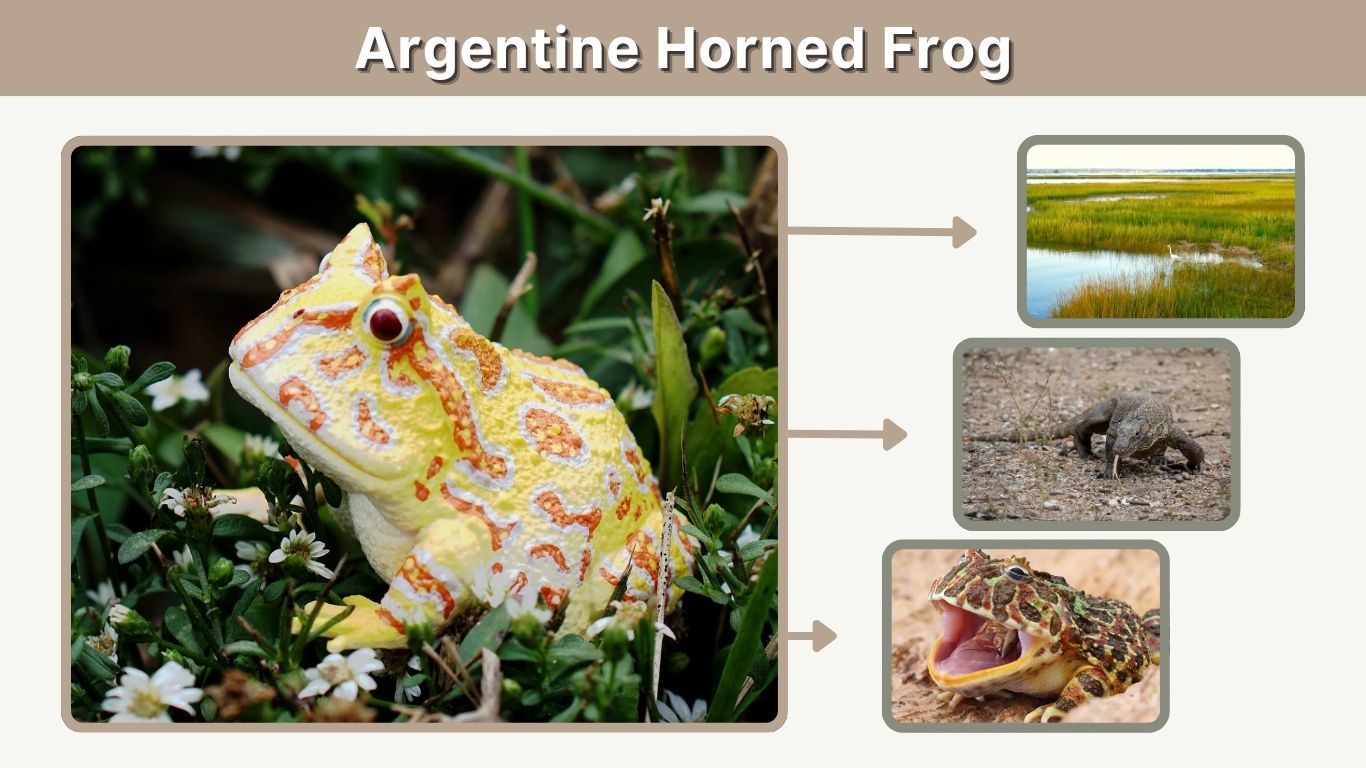
The Argentine horned frog is one of the most recognizable amphibians in the exotic pet world. Known for its huge mouth, aggressive feeding behavior, and striking patterns, this frog has become a favorite among amphibian keepers. Native to South America, the species thrives in warm and humid environments where it spends much of its time hidden in soil waiting for prey. This guide covers essential facts about the Argentine horned frog, including habitat, size, diet, lifespan, and proper care requirements for beginners and experienced keepers.
What Is an Argentine Horned Frog?
The Argentine horned frog, scientifically known as Ceratophrys ornata, is a large terrestrial amphibian commonly referred to as the Pacman frog. Its nickname comes from its round body and extremely wide mouth that resembles the classic arcade character. This species belongs to the Ceratophryidae family and is famous for its powerful appetite and ambush hunting style.
Argentine Horned Frog Scientific Name
The scientific name of the Argentine horned frog is Ceratophrys ornata. The genus Ceratophrys includes several horned frog species found throughout South America. The “horned” appearance comes from the pointed projections above the eyes, although these are not true horns.
Argentine Horned Frog Facts
Several unique characteristics make this amphibian stand out from other frog species.
- Large mouth capable of swallowing surprisingly big prey
- Excellent camouflage for hiding in leaf litter and soil
- Strong bite compared to many other amphibians
- Often remains partially buried while waiting for food
- Commonly called the Pacman frog in the pet trade
These frogs are also known for their bold personalities. Unlike tree frogs or aquatic frogs, Argentine horned frogs spend most of their lives on land and rarely move unless hunting or threatened.
Argentine Horned Frog Adaptations
The Argentine horned frog has developed several survival adaptations that help it thrive in the wild. Its rounded body allows it to conserve moisture during dry conditions, while its natural camouflage helps it blend into forest floors and grassy habitats. The frog’s enormous mouth enables it to consume insects, rodents, reptiles, and even other frogs.
Its ambush hunting strategy is another important adaptation. Instead of actively chasing prey, the frog remains still and hidden until an animal comes close enough for a quick strike. This method conserves energy and increases hunting success.
Argentine Horned Frog Habitat and Distribution
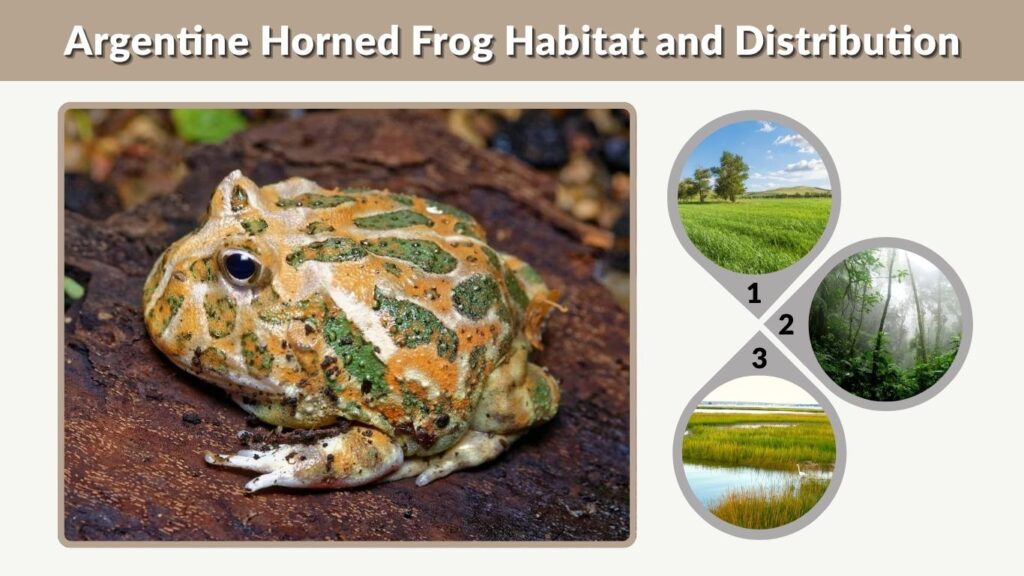
The Argentine horned frog naturally occurs in South America, particularly in Argentina, Uruguay, and parts of Brazil. It inhabits warm grasslands, rainforests, marshes, and tropical forest floors where humidity levels remain relatively high.
Where Do Argentine Horned Frogs Live?
In the wild, these frogs prefer moist environments with soft soil and dense vegetation. They often bury themselves in mud or damp substrate during hot weather to avoid dehydration. Their habitats usually contain shallow water sources, leaf litter, and shaded areas that help maintain humidity.
Argentine Horned Frog Habitat Requirements
Captive frogs require conditions similar to their natural habitat to remain healthy. The enclosure should replicate a warm and humid environment with adequate substrate depth for burrowing.
Important habitat features include:
- Moist coconut fiber or soil substrate
- Stable humidity between 60% and 80%
- Temperatures ranging from 75°F to 85°F
- Shallow water dish for soaking
- Low lighting with a natural day and night cycle
A secure enclosure is essential because these frogs can become stressed in overly bright or dry conditions. Proper humidity also helps prevent skin problems and dehydration.
Argentine Horned Frog Wild Behavior
Wild Argentine horned frogs are mostly solitary animals. They spend long periods hidden beneath soil or leaves and become active when prey is nearby. Their feeding response is extremely aggressive, which helps them survive in competitive environments.
During dry seasons, they may enter a dormant state known as estivation. In this condition, the frog buries itself underground and forms a protective layer around its body to retain moisture until environmental conditions improve.
Argentine Horned Frog Size and Appearance
The Argentine horned frog is considered one of the largest frog species commonly kept as pets. Females are generally larger than males and can grow significantly over time.
Argentine Horned Frog Size
Adult females usually reach between 5 and 7 inches in length, while males tend to stay slightly smaller. Their round bodies and wide heads give them a heavy appearance even at younger ages.
Growth depends on several factors, including diet quality, enclosure conditions, and feeding frequency. Young frogs grow rapidly during the first year when provided with proper nutrition and stable temperatures.
Argentine Horned Frog Mouth and Teeth
One of the species’ most famous features is its oversized mouth. The frog uses powerful jaws to capture prey quickly and efficiently. Although frogs do not have traditional teeth like mammals, Argentine horned frogs possess sharp bony projections called odontoid structures that help grip prey.
Because of their strong feeding response, handlers should use caution during feeding sessions. These frogs may accidentally bite fingers if they mistake movement for food.
Argentine Horned Frog Diet and Feeding
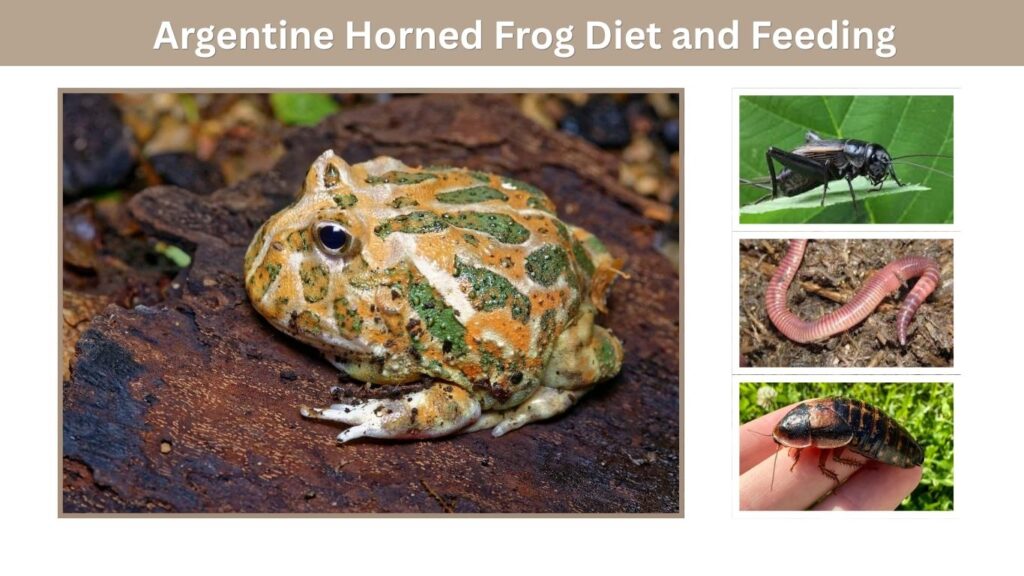
The Argentine horned frog is a carnivorous predator with a massive appetite. In captivity, a balanced feeding routine is important for maintaining healthy growth and preventing obesity.
Argentine Horned Frog Diet
These frogs consume a wide variety of prey items in both the wild and captivity. Their diet should contain appropriately sized food rich in nutrients and calcium.
Common food options include:
- Crickets
- Earthworms
- Dubia roaches
- Small feeder fish
- Occasional pinkie mice
Juveniles typically require more frequent feeding than adults because they grow quickly. Overfeeding, however, can lead to obesity and health complications.
Can Argentine Horned Frogs Eat Mealworms?
Argentine horned frogs can eat mealworms occasionally, but they should not become a primary food source. Mealworms contain hard exoskeletons that may be difficult to digest in large amounts. Softer prey items such as earthworms and roaches are usually safer and more nutritious choices for regular feeding.
Argentine Horned Frog Lifespan and Health
The Argentine horned frog can live for many years when provided with proper care and a healthy environment. Captive frogs generally survive much longer than wild frogs because they are protected from predators, disease, and habitat loss. A clean enclosure, balanced diet, and stable temperatures all contribute to long-term health.
Argentine Horned Frog Lifespan
Most Argentine horned frogs live between 6 and 10 years in captivity, although some may survive even longer with exceptional care. Females often grow larger than males and may require slightly different feeding schedules to avoid obesity.
Wild frogs usually have shorter lifespans due to environmental stress, predators, and changing climate conditions. Proper hydration is especially important because amphibians absorb moisture through their skin.
Common Health Problems
Argentine horned frogs can develop health issues if their environment is not maintained correctly. Poor humidity, dirty substrate, and improper temperatures often lead to illness.
Common health concerns include:
- Skin infections caused by dirty enclosures
- Obesity from excessive feeding
- Impaction from swallowing unsafe substrate
- Dehydration from low humidity
- Vitamin deficiencies from poor diet variety
Regular enclosure cleaning and proper nutrition are the best ways to prevent these problems.
Argentine Horned Frog Breeding and Reproduction
Breeding Argentine horned frogs requires careful environmental control and healthy adult frogs. In nature, breeding usually occurs during rainy seasons when moisture levels increase and temperatures remain warm.
Argentine Horned Frog Reproduction
Female Argentine horned frogs lay eggs in shallow water after mating. Fertilization occurs externally, and the eggs hatch into tadpoles within several days under suitable conditions. Tadpoles grow rapidly and begin developing legs during metamorphosis.
Young froglets require high humidity and frequent feeding because they grow quickly during the early stages of life. Breeding projects are generally recommended for experienced amphibian keepers because the process can be challenging.
How Many Eggs Does an Argentine Horned Frog Lay?
A healthy female may lay hundreds of eggs during a single breeding cycle. The exact number depends on age, size, and environmental conditions. Many breeders separate tadpoles early because aggressive behavior and cannibalism can occur even at young ages.
Argentine Horned Frog Predators and Defense
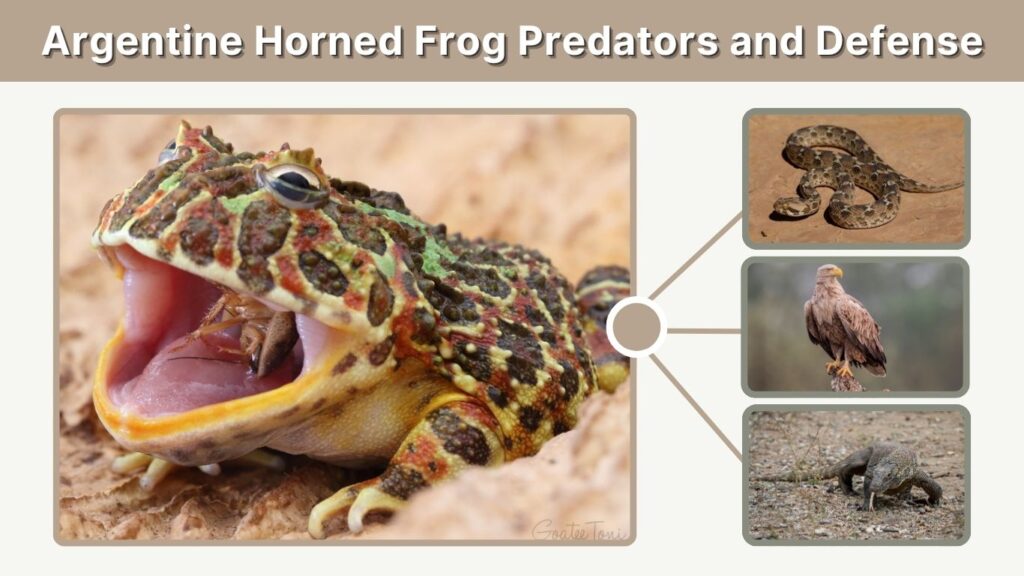
Although Argentine horned frogs are aggressive predators, they are also prey animals in the wild. Their survival depends on camouflage, defensive behavior, and remaining hidden from danger.
Argentine Horned Frog Predators
Several animals hunt Argentine horned frogs in their natural habitats.
- Snakes
- Large birds
- Mammals
- Larger reptiles
- Wild carnivorous amphibians
Young frogs are especially vulnerable because of their smaller size and limited defense abilities.
Defense Mechanisms
Argentine horned frogs rely heavily on camouflage to avoid predators. Their patterned skin helps them blend into leaves, mud, and soil. When threatened, they may puff up their bodies and open their mouths in an attempt to scare away attackers.
These frogs are also capable of delivering surprisingly strong bites. Their aggressive defensive behavior discourages some predators from attacking.
Argentine Horned Frog as Pets

The Argentine horned frog is popular among amphibian enthusiasts because of its unusual appearance and relatively simple care needs. However, these frogs are not ideal pets for frequent handling.
Are Argentine Horned Frogs Good Pets?
These frogs are often recommended for beginner amphibian keepers because they do not require large enclosures or complex setups. They spend most of their time resting or hiding, which makes them easy to observe in quiet environments.
Unlike social reptiles or mammals, Argentine horned frogs prefer solitude. Housing multiple frogs together is risky because cannibalism may occur, especially when one frog is larger than the other.
Argentine Horned Frog Special Care
Owners should focus on maintaining proper humidity and temperature levels throughout the year. Stress from excessive handling can weaken the frog’s immune system and reduce appetite.
Important care practices include:
- Cleaning the water dish daily
- Monitoring humidity regularly
- Feeding properly sized prey
- Avoiding frequent handling
- Using safe substrate materials
A calm environment and consistent care routine help keep these frogs healthy and active.
FAQs
How big does an Argentine horned frog get?
Adult Argentine horned frogs usually grow between 4 and 7 inches long. Females are normally larger than males and develop wider bodies as they mature.
What does an Argentine horned frog eat?
These frogs eat insects, worms, roaches, feeder fish, and occasionally small mice. Their diet should include calcium-rich prey to support healthy growth.
Do Argentine horned frogs need UVB lighting?
Low-level UVB lighting can be beneficial, although many keepers successfully raise them with proper supplementation and natural light cycles.
Are Argentine horned frogs aggressive?
They are known for aggressive feeding behavior and may bite when they mistake movement for food. However, they are generally calm when left undisturbed.
How often should you feed an Argentine horned frog?
Juveniles usually eat every day or every other day, while adults are typically fed two to three times each week depending on size and activity level.
