
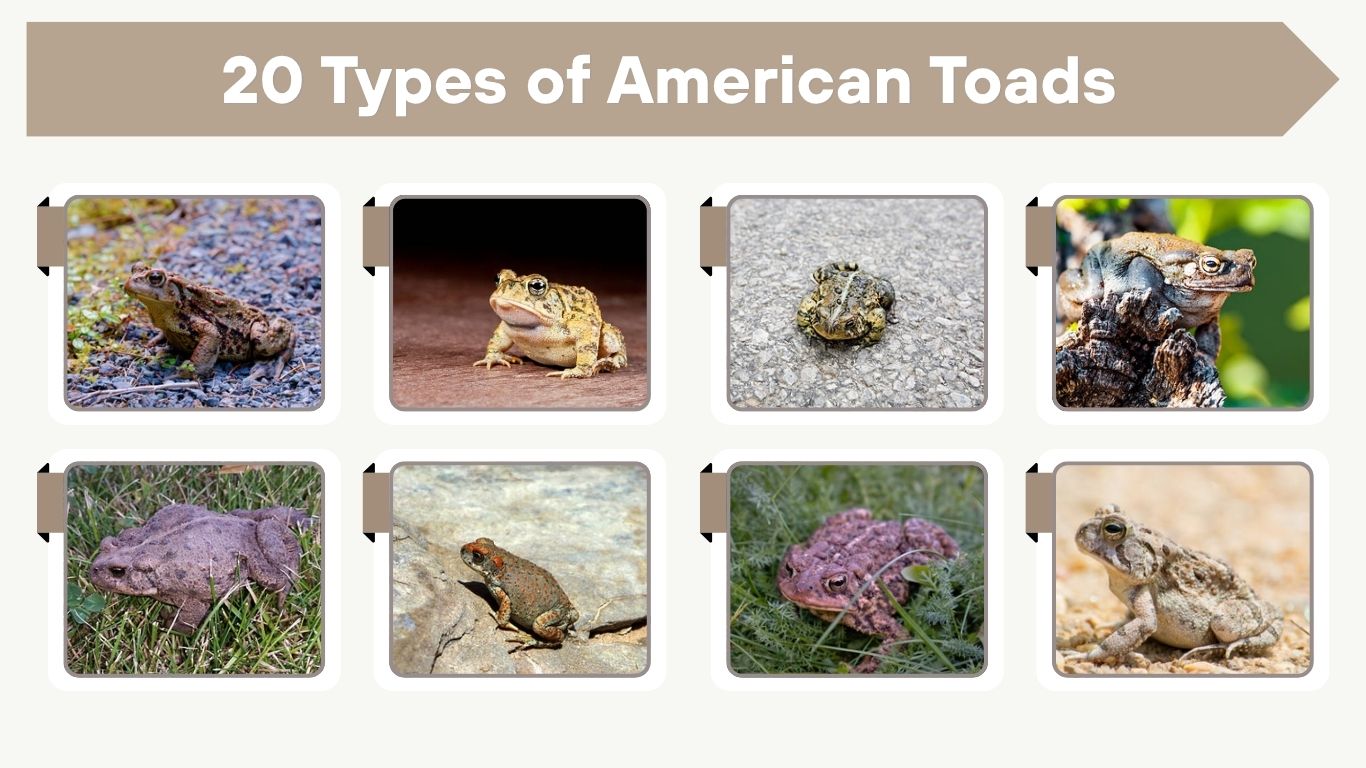
American toads are fascinating amphibians found across forests, deserts, wetlands, grasslands, and mountain regions throughout North America. These adaptable creatures play an important role in controlling insect populations and maintaining ecological balance within their habitats. From the common American Toad to the rare Houston Toad and colorful Sonoran Green Toad, each species has unique features, behaviors, and environmental adaptations. Some thrive in cold alpine climates, while others survive in warm deserts and coastal plains. Learning about different American toad species helps highlight the diversity of wildlife and the importance of habitat conservation efforts.
1. American Toad

The American Toad is one of the most common and recognizable toad species found across North America. Known for its rough skin and adaptable nature, this amphibian thrives in forests, gardens, wetlands, and grasslands. It plays an important role in controlling insect populations and is widely appreciated for its ability to survive in a variety of environmental conditions.
Identification
- Medium-sized body with rough, warty skin
- Brown, gray, olive, or reddish coloration
- Large poison glands behind the eyes
- Dark spots scattered across the back
- Cream or pale-colored underside with speckles
Habitat and Distribution
American Toads are widely distributed throughout the United States and Canada. They inhabit forests, fields, wetlands, suburban gardens, and wooded regions with moist soil and freshwater sources nearby. These toads prefer cool and damp environments where they can hide beneath logs, rocks, or leaf litter during daytime hours.
Behavior and Diet
American Toads are mostly nocturnal and become active during evenings and rainy weather. Their diet includes insects, ants, beetles, worms, spiders, and other small invertebrates. They use camouflage and stillness to avoid predators while relying on their sticky tongues to capture prey quickly and efficiently.
Lifecycle
Breeding usually begins during spring when temperatures become warmer and rainfall increases. Females lay long strings of eggs in shallow ponds, lakes, or slow-moving water bodies. Tadpoles hatch within days and gradually transform into young toads before moving onto land to continue their development in terrestrial habitats.
2. Fowler’s Toad

Fowler’s Toad is a medium-sized amphibian commonly found in eastern regions of North America. This adaptable species thrives in sandy areas, grasslands, forests, and coastal habitats near freshwater sources. It is well known for its distinctive breeding call and ability to survive in both natural and human-altered environments while helping control insect populations across its range.
Identification
- Gray, brown, or olive-colored rough skin
- Dark spots with several warts inside each spot
- Pale underside usually without markings
- Large poison glands behind the eyes
- Compact body with short sturdy legs
Habitat and Distribution
Fowler’s Toads are widely distributed throughout the eastern United States and parts of southeastern Canada. They inhabit sandy beaches, open woodlands, meadows, grasslands, and wetlands close to freshwater sources. These toads often hide beneath loose soil, logs, or vegetation to stay cool and protected during daytime hours.
Behavior and Diet
Fowler’s Toads are primarily nocturnal and become active during warm evenings and humid weather conditions. Their diet mainly consists of insects, beetles, ants, spiders, and worms. They remain motionless when threatened, relying on camouflage to avoid predators while hunting small prey across open ground and moist habitats.
Lifecycle
Breeding occurs during late spring and summer when males gather near ponds and wetlands to attract females with loud calls. Females lay long strands of eggs in shallow water where tadpoles hatch and develop. Young toads complete metamorphosis within weeks before leaving aquatic habitats for life on land.
3. Great Plains Toad

The Great Plains Toad is a hardy amphibian native to central North America and is commonly found in prairies, grasslands, and semi-arid environments. This species is famous for its loud breeding calls and strong digging abilities. It survives harsh environmental conditions by burrowing underground and becoming active mainly after heavy rains or humid weather.
Identification
- Medium-sized body with rough skin
- Brown, gray, or olive coloration
- Distinct pale stripe running down the back
- Dark blotches across the body
- Strong hind legs adapted for digging
Habitat and Distribution
Great Plains Toads are distributed across the central United States, southern Canada, and northern Mexico. They inhabit grasslands, prairies, open plains, and dry foothill regions with loose soil for burrowing. These toads are usually found near temporary ponds and wetlands during breeding seasons after rainfall.
Behavior and Diet
Great Plains Toads are mostly nocturnal and emerge during rainy nights to search for food. Their diet includes beetles, ants, spiders, worms, and various small insects. They spend dry periods hidden underground to conserve moisture and avoid extreme temperatures common in prairie and semi-arid environments.
Lifecycle
Breeding begins during warm rainy seasons when temporary pools form across grasslands and plains. Females lay eggs in shallow water where tadpoles hatch and develop rapidly. Young toads complete metamorphosis within a short period, allowing them to survive before seasonal water sources dry out completely.
4. Texas Toad

The Texas Toad is a small to medium-sized amphibian native to the southern United States and northern Mexico. This species is well adapted to warm climates, dry grasslands, and semi-arid habitats. It is commonly seen after rainfall and plays an important ecological role by feeding on insects and other small invertebrates in its environment.
Identification
- Rough, warty skin texture
- Gray, brown, or olive body coloration
- Light stripe often visible along the back
- Dark spots scattered across the skin
- Rounded body with short sturdy legs
Habitat and Distribution
Texas Toads are found throughout Texas, Oklahoma, New Mexico, and parts of northern Mexico. They inhabit grasslands, scrublands, open woodlands, and semi-arid regions with loose soil and seasonal water sources. These toads often shelter beneath rocks, logs, or underground burrows during hot daytime conditions.
Behavior and Diet
Texas Toads are mostly nocturnal and become active during humid evenings or after heavy rain. Their diet consists of ants, beetles, spiders, termites, and other small insects. They use camouflage to remain hidden from predators and rely on burrowing behavior to conserve moisture in dry environments.
Lifecycle
Breeding occurs during spring and summer following seasonal rainfall. Females lay long strands of eggs in shallow ponds, ditches, or temporary pools. Tadpoles hatch quickly and develop rapidly before transforming into juvenile toads that move onto land and adapt to surrounding terrestrial habitats.
5. Oak Toad

The Oak Toad is the smallest toad species native to North America and is commonly found in the southeastern United States. This tiny amphibian prefers warm, sandy habitats with open vegetation and shallow wetlands. Despite its small size, the Oak Toad plays an important role in controlling insect populations and maintaining ecological balance within its natural environment.
Identification
- Very small body compared to other toads
- Gray or black coloration with rough skin
- Distinct white or pale stripe along the back
- Short legs with compact body shape
- Light-colored underside with minimal markings
Habitat and Distribution
Oak Toads are commonly found in Florida, Georgia, Alabama, and nearby southeastern states. They inhabit pine forests, oak woodlands, grasslands, sandy flatwoods, and shallow wetlands. These toads prefer warm climates with moist soil and low vegetation where they can hide and breed near temporary water sources.
Behavior and Diet
Oak Toads are active mainly during daytime and humid weather conditions. Their diet includes ants, beetles, spiders, termites, and other tiny invertebrates. Males produce high-pitched calls during breeding season to attract females, while both adults rely on camouflage and vegetation cover to avoid predators in open habitats.
Lifecycle
Breeding takes place during warm rainy months when temporary pools and wetlands become available. Females lay eggs in shallow freshwater habitats where tadpoles hatch and grow rapidly. Young Oak Toads complete metamorphosis within weeks before moving onto land to continue developing in sandy woodland environments.
6. Yosemite Toad

The Yosemite Toad is a rare amphibian native to the high-elevation regions of California’s Sierra Nevada Mountains. This species is specially adapted to cold alpine meadows, wetlands, and mountain streams. Due to habitat loss, climate change, and disease, Yosemite Toad populations have declined significantly, making conservation efforts essential for protecting this unique American toad species.
Identification
- Small to medium-sized body structure
- Yellow, olive, or brown skin coloration
- Dark irregular spots across the back
- Rough, warty skin texture
- Males appear brighter during breeding season
Habitat and Distribution
Yosemite Toads inhabit alpine meadows, marshes, and shallow ponds within the Sierra Nevada region of California. They prefer cool, moist environments at high elevations with seasonal wetlands and grassy areas. These toads often remain close to freshwater sources and sheltered vegetation during active months of the year.
Behavior and Diet
Yosemite Toads are active during warmer daytime hours in summer and feed on insects, beetles, ants, spiders, and small invertebrates. They rely on camouflage to blend into meadow vegetation and muddy surroundings. During colder periods, they remain inactive beneath soil or vegetation to survive harsh mountain conditions.
Lifecycle
Breeding begins after snowmelt when shallow pools form in alpine meadows. Females lay eggs in calm freshwater habitats where tadpoles hatch and develop during summer months. Young toads complete metamorphosis before winter arrives, allowing them to survive seasonal freezing conditions within mountainous ecosystems.
7. Wyoming Toad

The Wyoming Toad is one of the rarest amphibians in North America and is native to the wetlands and grasslands of Wyoming. This critically endangered species has faced major population declines because of habitat destruction, disease, and environmental changes. Conservation programs and captive breeding efforts are helping protect and restore remaining populations within their natural American habitats.
Identification
- Small, stocky body structure
- Dark brown, gray, or olive coloration
- Rough skin covered with small warts
- Short legs with rounded snout
- Light-colored underside with scattered markings
Habitat and Distribution
Wyoming Toads are primarily found in wetlands, floodplains, and moist grasslands near the Laramie Basin in Wyoming. They prefer shallow freshwater ponds and damp environments with abundant vegetation. Their natural range has become extremely limited, and most surviving populations exist within carefully protected conservation areas.
Behavior and Diet
Wyoming Toads are mostly nocturnal and become active during cool evenings and humid weather. Their diet includes insects, beetles, ants, spiders, and worms found in wetland habitats. They remain hidden during the day beneath vegetation, mud, or burrows to stay protected from predators and dry conditions.
Lifecycle
Breeding occurs during late spring and early summer when females lay eggs in shallow ponds and marshes. Tadpoles hatch quickly and develop in freshwater habitats before transforming into young toads. Juveniles gradually mature on land while depending on stable wetland ecosystems for shelter, feeding, and long-term survival.
8. Colorado River Toad

The Colorado River Toad is one of the largest toad species in North America and is native to the southwestern United States and northern Mexico. Also known as the Sonoran Desert Toad, this amphibian thrives in warm desert and semi-arid environments. It is well known for its powerful defensive toxins and its strong connection to seasonal rainfall patterns.
Identification
- Large, heavy-bodied appearance
- Smooth olive-green or dark brown skin
- Large poison glands behind the eyes
- Broad head with thick limbs
- Cream-colored underside with rounded snout
Habitat and Distribution
Colorado River Toads inhabit desert grasslands, scrublands, rocky foothills, and areas near streams or temporary pools. Their range includes Arizona, California, New Mexico, and northern Mexico. These toads prefer warm climates with seasonal rainfall and spend much of their time hidden underground during dry conditions.
Behavior and Diet
Colorado River Toads are mostly nocturnal and emerge during humid nights to hunt insects, spiders, beetles, and small animals. They use burrows to avoid heat and dehydration during the daytime. When threatened, they release toxic substances from skin glands to protect themselves from predators in harsh desert habitats.
Lifecycle
Breeding begins during summer rainy seasons when temporary pools form across desert landscapes. Females lay thousands of eggs in shallow water where tadpoles hatch within days. Young toads develop rapidly before water sources dry up, helping the species survive in unpredictable and arid environmental conditions.
9. Arroyo Toad

The Arroyo Toad is a rare amphibian native to southern California and parts of northern Mexico. This species prefers sandy riverbanks, seasonal streams, and open floodplain habitats with slow-moving water. Habitat destruction and environmental changes have greatly reduced its population, making the Arroyo Toad an important focus of wildlife conservation and habitat restoration programs.
Identification
- Small to medium-sized body
- Gray, olive, or light green coloration
- Smooth to slightly warty skin texture
- Light stripe running along the back
- Broad head with large eyes
Habitat and Distribution
Arroyo Toads inhabit sandy washes, riverbanks, floodplains, and shallow streams in southern California and Baja California. They prefer warm environments with loose soil for burrowing and slow-moving freshwater for breeding. These toads often remain hidden beneath sand or vegetation during dry daytime conditions.
Behavior and Diet
Arroyo Toads are mainly nocturnal and emerge during cool evenings to feed on insects, ants, beetles, spiders, and other small invertebrates. They rely heavily on camouflage and burrowing for protection against predators. Their quiet behavior and sandy coloration help them blend naturally into riverbank environments.
Lifecycle
Breeding occurs during spring and early summer when water levels become suitable in shallow streams and pools. Females lay eggs in calm freshwater habitats where tadpoles hatch and develop over several weeks. Young toads later leave aquatic areas and adapt to nearby sandy terrestrial environments for continued growth.
10. Houston Toad

The Houston Toad is a rare amphibian native to southeastern Texas and is considered an endangered species due to habitat loss and environmental pressures. This toad is closely associated with pine forests and sandy soils near temporary ponds. Conservation programs are actively working to protect remaining populations and restore the natural habitats essential for its survival.
Identification
- Medium-sized body with rough skin
- Brown or gray coloration with dark spots
- Distinct pale stripe along the back
- Large poison glands behind the eyes
- Rounded snout with short sturdy legs
Habitat and Distribution
Houston Toads are primarily found in sandy pine forests and woodland regions of southeastern Texas. They prefer moist environments near temporary ponds and shallow wetlands used for breeding. These toads rely on loose soil and dense vegetation for shelter, protection, and maintaining proper moisture levels throughout the year.
Behavior and Diet
Houston Toads are mostly nocturnal and become active during humid evenings and rainy weather. Their diet includes insects, beetles, ants, spiders, and worms found within forest habitats. They spend daytime hours hidden beneath logs, vegetation, or underground burrows to avoid predators and extreme temperatures.
Lifecycle
Breeding occurs during spring after heavy rainfall fills temporary ponds and wetlands. Females lay long strands of eggs in shallow freshwater habitats where tadpoles hatch and develop over several weeks. Young toads later complete metamorphosis and gradually move into nearby forested environments for continued growth and survival.
11. Red-Spotted Toad

The Red-Spotted Toad is a small amphibian commonly found in the southwestern United States and northern Mexico. This species is well adapted to rocky deserts, canyons, and semi-arid regions where water sources may be limited. Its colorful markings and ability to survive harsh environmental conditions make it one of the most distinctive American toad species.
Identification
- Small body with smooth to slightly rough skin
- Light gray, olive, or green coloration
- Bright red or orange spots across the back
- Slender limbs with rounded body shape
- Pale underside with minimal markings
Habitat and Distribution
Red-Spotted Toads inhabit rocky deserts, canyon regions, grasslands, and foothill environments throughout Arizona, New Mexico, Texas, and northern Mexico. They prefer areas close to springs, streams, or temporary pools. These toads often hide beneath rocks or within crevices to avoid extreme daytime heat.
Behavior and Diet
Red-Spotted Toads are mainly nocturnal and emerge during cooler evenings to search for food. Their diet consists of ants, beetles, spiders, flies, and other small insects. They are excellent climbers compared to many other toad species and rely on camouflage to remain hidden from predators.
Lifecycle
Breeding begins during warm rainy periods when temporary pools and streams become available. Females lay eggs in shallow freshwater habitats where tadpoles hatch and develop quickly. Young toads complete metamorphosis within weeks before moving onto land and adapting to dry desert and rocky environments.
12. Western Toad

The Western Toad is a widespread amphibian found across western North America in forests, wetlands, grasslands, and mountainous regions. This adaptable species can survive in a variety of climates ranging from coastal habitats to high elevations. Western Toads are important insect predators and are recognized for their distinctive pale stripe running along the center of their backs.
Identification
- Medium to large body size
- Rough, warty skin texture
- Brown, olive, or greenish coloration
- Distinct pale stripe down the back
- Large poison glands behind the eyes
Habitat and Distribution
Western Toads inhabit forests, mountain meadows, wetlands, lakeshores, and grasslands throughout western Canada, the United States, and parts of Alaska. They prefer moist environments near freshwater breeding areas but can also survive in dry habitats by sheltering beneath logs, rocks, and underground burrows during hot conditions.
Behavior and Diet
Western Toads are mostly nocturnal and become active during cool evenings and rainy weather. Their diet includes insects, beetles, ants, spiders, worms, and other small invertebrates. They rely on camouflage and stillness to avoid predators while using their sticky tongues to capture prey quickly and effectively.
Lifecycle
Breeding occurs during spring and early summer when snowmelt and rainfall create suitable aquatic habitats. Females lay long strings of eggs in shallow ponds, marshes, or slow-moving water. Tadpoles hatch within days and develop over several weeks before transforming into young toads and moving onto land.
13. Sonoran Green Toad

The Sonoran Green Toad is a brightly colored amphibian native to the deserts and grasslands of the southwestern United States and northern Mexico. This species is especially active during seasonal rains and is known for its vibrant green coloration. Its adaptability to dry environments and unique appearance make it one of the most recognizable American toads.
Identification
- Bright green or olive-green skin coloration
- Small to medium-sized compact body
- Rough skin with dark blotches
- Pale underside with smooth texture
- Short sturdy legs with rounded snout
Habitat and Distribution
Sonoran Green Toads inhabit desert grasslands, scrublands, semi-arid plains, and rocky foothill regions in Arizona, New Mexico, and northern Mexico. They prefer warm climates with temporary pools and moist areas formed after rainfall. These toads often shelter underground or beneath rocks during dry daytime conditions.
Behavior and Diet
Sonoran Green Toads are mostly nocturnal and become highly active after summer rains. Their diet includes ants, beetles, spiders, termites, and other small insects found in desert environments. Males produce loud calls during breeding periods, while adults rely on camouflage and burrowing behavior for protection from predators.
Lifecycle
Breeding occurs during rainy summer months when temporary ponds and pools become available. Females lay eggs in shallow water where tadpoles hatch and develop rapidly in warm conditions. Young toads complete metamorphosis within a short time before moving onto land and adapting to surrounding desert habitats.
14. Woodhouse’s Toad

Woodhouse’s Toad is a widespread amphibian found throughout central and western North America. This adaptable species thrives in grasslands, forests, agricultural areas, and suburban environments near freshwater sources. It is recognized for its loud breeding calls and ability to survive in diverse habitats, making it one of the most common American toad species across its range.
Identification
- Medium-sized body with rough skin
- Gray, brown, or olive coloration
- Pale stripe running along the back
- Large poison glands behind the eyes
- Dark blotches scattered across the body
Habitat and Distribution
Woodhouse’s Toads inhabit grasslands, woodlands, river valleys, wetlands, and suburban regions throughout the United States, Canada, and northern Mexico. They prefer moist environments near ponds, streams, and irrigation areas. These toads often hide beneath rocks, logs, and vegetation to remain cool and protected during daytime hours.
Behavior and Diet
Woodhouse’s Toads are mostly nocturnal and emerge during evenings to feed on insects, beetles, ants, worms, spiders, and other small invertebrates. They use camouflage and stillness to avoid predators while hunting across open ground and moist habitats. Their loud calls are especially noticeable during breeding seasons near water sources.
Lifecycle
Breeding occurs during spring and summer when rainfall and warmer temperatures create suitable aquatic habitats. Females lay long strings of eggs in shallow ponds and wetlands where tadpoles hatch and develop. Young toads complete metamorphosis within several weeks before moving onto land to continue growing in terrestrial environments.
15. Canadian Toad

The Canadian Toad is a northern amphibian commonly found in cool grasslands, wetlands, and forested regions of Canada and the northern United States. This species is well adapted to colder climates and seasonal environmental changes. It plays an important ecological role by feeding on insects and supporting healthy freshwater and terrestrial ecosystems throughout its range.
Identification
- Medium-sized body with rough skin
- Brown, gray, or olive coloration
- Dark spots scattered across the back
- Pale stripe often visible along the spine
- Large eyes with horizontal pupils
Habitat and Distribution
Canadian Toads inhabit wetlands, meadows, grasslands, forests, and marshy regions throughout Canada and nearby northern American states. They prefer cool, moist environments near ponds, lakes, and slow-moving streams. These toads commonly shelter beneath logs, rocks, and dense vegetation to remain protected during daytime hours.
Behavior and Diet
Canadian Toads are mostly nocturnal and become active during cool evenings and humid conditions. Their diet includes insects, beetles, ants, spiders, worms, and other small invertebrates. They rely on camouflage to avoid predators while hunting across moist ground and grassy habitats near freshwater sources.
Lifecycle
Breeding begins during spring after snowmelt and seasonal rainfall increase water availability. Females lay eggs in shallow ponds and marshes where tadpoles hatch and develop over several weeks. Young toads later complete metamorphosis before moving onto land and adapting to cooler northern environmental conditions.
16. Southern Toad

The Southern Toad is a medium-sized amphibian native to the southeastern United States. This species is commonly found in forests, wetlands, gardens, and sandy coastal plains where warm temperatures and moisture are available. Southern Toads are highly adaptable and play an important role in controlling insect populations while thriving in both natural and suburban environments.
Identification
- Medium-sized body with rough skin
- Brown, reddish, or gray coloration
- Distinct raised knobs on the head
- Large poison glands behind the eyes
- Cream-colored underside with dark speckles
Habitat and Distribution
Southern Toads inhabit pine forests, coastal plains, swamps, wetlands, and suburban gardens throughout the southeastern United States. They prefer warm climates with moist soil and freshwater breeding sites nearby. These toads often hide beneath logs, leaf litter, rocks, or loose soil during dry daytime conditions.
Behavior and Diet
Southern Toads are mostly nocturnal and become active during humid evenings or rainy weather. Their diet includes insects, ants, beetles, spiders, worms, and other small invertebrates. They rely on camouflage and stillness for protection while searching for prey across forest floors and grassy habitats.
Lifecycle
Breeding occurs during spring and summer when rainfall creates suitable aquatic habitats. Females lay long strings of eggs in shallow ponds, ditches, or wetlands where tadpoles hatch and grow. Young toads complete metamorphosis within weeks before leaving the water and adapting to nearby terrestrial environments.
17. Gulf Coast Toad

The Gulf Coast Toad is a large and adaptable amphibian commonly found in the southern United States near coastal regions and warm lowland habitats. This species thrives in urban areas, wetlands, forests, and grasslands where moisture and shelter are available. Its loud calls and strong tolerance for human-altered environments make it a well-known American toad species.
Identification
- Large body with rough, warty skin
- Gray, brown, or olive coloration
- Distinct pale stripe along the back
- Large poison glands behind the eyes
- Dark spots and blotches across the body
Habitat and Distribution
Gulf Coast Toads inhabit coastal plains, wetlands, forests, grasslands, suburban gardens, and agricultural regions along the Gulf Coast of the United States and northeastern Mexico. They prefer warm, humid climates with access to freshwater breeding sites and moist hiding places beneath vegetation, rocks, or loose soil.
Behavior and Diet
Gulf Coast Toads are mostly nocturnal and become highly active after rainfall or during humid evenings. Their diet includes insects, beetles, ants, worms, spiders, and other small invertebrates. They rely on camouflage and defensive toxins for protection while searching for prey in open and wooded environments.
Lifecycle
Breeding occurs during warm rainy months when ponds, ditches, and shallow wetlands fill with water. Females lay long strings of eggs in calm freshwater habitats where tadpoles hatch and develop rapidly. Young toads later complete metamorphosis and move onto land to continue growing in terrestrial habitats.
18. Rocky Mountain Toad

The Rocky Mountain Toad is a hardy amphibian commonly associated with cool mountain regions, forests, and high-elevation wetlands in western North America. This species is well adapted to rugged environments with lower temperatures and seasonal rainfall. Its natural camouflage and ability to survive in rocky habitats help it thrive in challenging mountainous ecosystems.
Identification
- Medium-sized body with rough skin
- Brown, gray, or olive coloration
- Large poison glands behind the eyes
- Compact body with short sturdy legs
- Dark markings across the back and sides
Habitat and Distribution
Rocky Mountain Toads inhabit alpine meadows, mountain forests, wetlands, streams, and rocky foothill regions throughout western North America. They prefer cool and moist habitats near freshwater breeding areas. These toads often shelter beneath rocks, logs, or dense vegetation to remain protected from predators and harsh weather conditions.
Behavior and Diet
Rocky Mountain Toads are mostly nocturnal and become active during cool evenings and rainy periods. Their diet includes insects, beetles, ants, worms, spiders, and other small invertebrates found in mountain habitats. They rely on camouflage and stillness for protection while hunting prey across rocky and forested terrain.
Lifecycle
Breeding begins during spring and early summer after snowmelt increases water availability in mountain wetlands and ponds. Females lay eggs in shallow freshwater habitats where tadpoles hatch and develop over several weeks. Young toads later complete metamorphosis and gradually adapt to life in mountainous terrestrial environments.
19. California Toad

The California Toad is a resilient amphibian commonly found in diverse habitats across California and nearby western regions. This species thrives in forests, grasslands, wetlands, and foothill environments with reliable moisture and freshwater sources. Its adaptable nature and insect-eating behavior make it an important contributor to maintaining ecological balance within local ecosystems and natural habitats.
Identification
- Medium-sized body with rough skin
- Brown, olive, or gray coloration
- Dark blotches scattered across the back
- Pale stripe often visible along the spine
- Large poison glands behind the eyes
Habitat and Distribution
California Toads inhabit forests, meadows, grasslands, wetlands, streams, and foothill regions throughout California and nearby western states. They prefer moist habitats close to ponds or slow-moving freshwater areas used for breeding. These toads often shelter beneath rocks, logs, and vegetation to remain cool and protected during daytime hours.
Behavior and Diet
California Toads are mostly nocturnal and become active during cool evenings or after rainfall. Their diet consists of insects, beetles, ants, worms, spiders, and other small invertebrates. They rely on camouflage and defensive behaviors to avoid predators while searching for food across moist woodland and grassland environments.
Lifecycle
Breeding occurs during spring and early summer when rainfall and snowmelt create suitable aquatic habitats. Females lay eggs in shallow ponds, marshes, and streams where tadpoles hatch and develop over several weeks. Young toads complete metamorphosis before leaving the water and adapting to surrounding terrestrial habitats.
20. Boreal Toad

The Boreal Toad is a cold-tolerant amphibian native to mountainous and northern regions of North America. This species is commonly associated with alpine wetlands, forests, and high-elevation meadows where cool temperatures and freshwater habitats are available. Boreal Toads are important insect predators, but their populations have declined in some areas due to disease and habitat changes.
Identification
- Medium-sized body with rough, warty skin
- Brown, olive, or gray body coloration
- Distinct pale stripe along the back
- Large poison glands behind the eyes
- Short sturdy legs with broad body shape
Habitat and Distribution
Boreal Toads inhabit mountain forests, alpine meadows, wetlands, marshes, and lakeshores throughout western North America and parts of Canada. They prefer cool climates and moist environments near freshwater breeding habitats. These toads often shelter beneath rocks, logs, and vegetation to remain protected from harsh environmental conditions.
Behavior and Diet
Boreal Toads are mostly nocturnal and become active during cool evenings and rainy weather. Their diet includes insects, ants, beetles, worms, spiders, and other small invertebrates found in mountain habitats. They rely on camouflage and stillness to avoid predators while foraging across wetlands and forest floors.
Lifecycle
Breeding begins during spring and early summer after snowmelt increases water availability in alpine ponds and wetlands. Females lay long strings of eggs in shallow freshwater habitats where tadpoles hatch and develop slowly in cool conditions. Young toads later complete metamorphosis before adapting to life on land.
FAQs
What do American toads eat?
American toads mainly eat insects, spiders, beetles, ants, worms, and other small invertebrates. They use their sticky tongues to catch prey quickly. Their feeding habits help reduce insect populations naturally, making them beneficial for gardens, forests, wetlands, and agricultural environments across North America.
Where do American toads live?
American toads live in forests, grasslands, wetlands, gardens, deserts, and mountain regions throughout North America. Most species prefer moist habitats near freshwater sources such as ponds, marshes, streams, or temporary pools. They commonly hide beneath rocks, logs, soil, or vegetation during the daytime for protection.
Are American toads poisonous?
Many American toads produce mild toxins from glands located behind their eyes as a defense against predators. These toxins are generally not dangerous to humans but may irritate skin or eyes if handled improperly. Washing hands after touching a toad is recommended for safety and hygiene.
When do American toads breed?
American toads usually breed during spring or summer when rainfall and warmer temperatures create suitable aquatic habitats. Males gather near ponds, wetlands, and shallow pools to attract females with loud calls. Females lay eggs in water where tadpoles hatch and later transform into young toads.
Why are some American toad species endangered?
Some American toad species face threats from habitat destruction, pollution, climate change, disease, and loss of wetlands. Human development and environmental changes have reduced breeding and feeding areas for certain populations. Conservation efforts, habitat restoration, and wildlife protection programs are important for preserving endangered toad species.
