
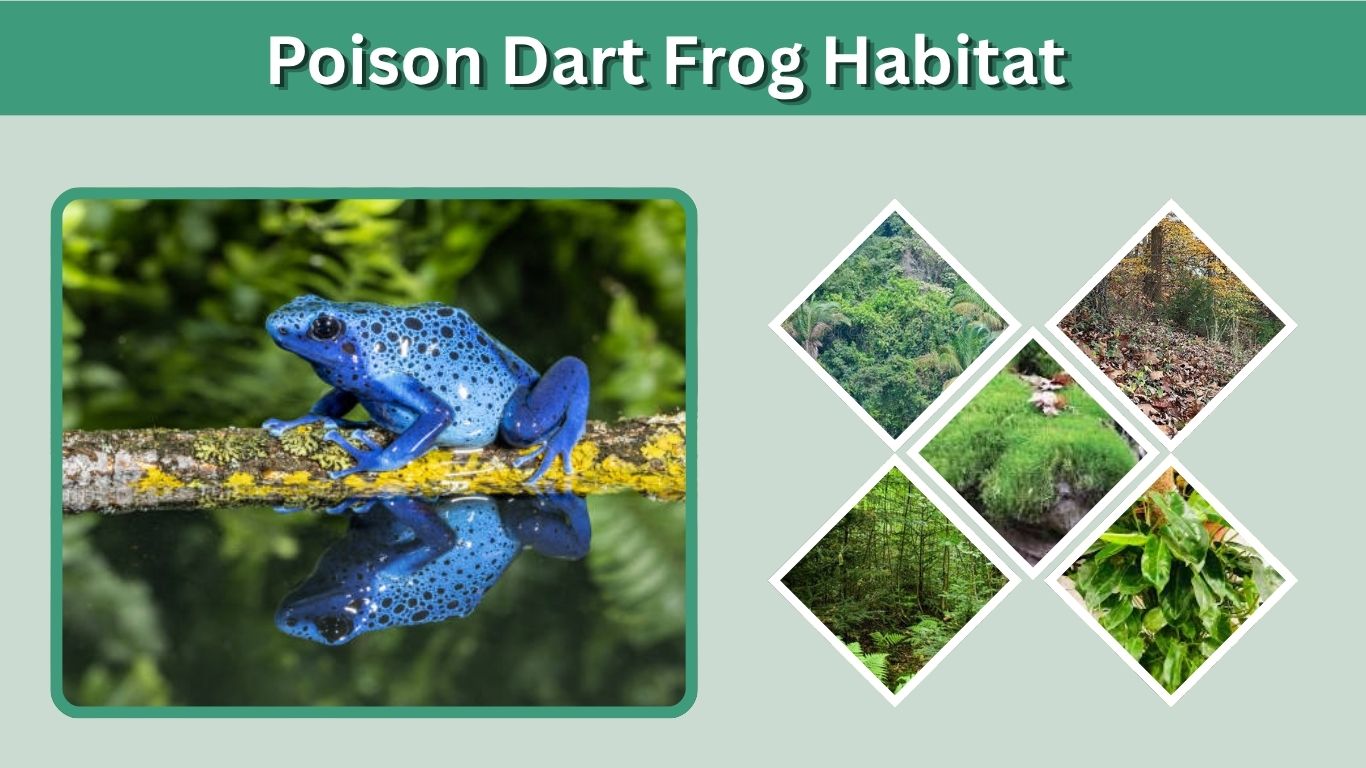
Poison dart frogs live in warm, humid habitats where moisture, plants, leaf litter, and tiny insects are abundant. Most species are found in tropical forests of Central and South America, though each species has its own range and microhabitat. Some live on the forest floor, while others climb low plants or use small pools of water in leaves and tree holes for breeding.
What Is the Habitat of a Poison Dart Frog?
The habitat of a poison dart frog is usually a wet tropical forest. These forests provide the warmth, humidity, cover, and food that dart frogs need to survive. Most poison dart frogs are small, so they depend on moist ground, dense vegetation, and hiding places to avoid drying out and escaping predators.
Poison dart frogs are amphibians, which means their skin must stay moist. Their habitat is not just a place to live; it controls their body moisture, breeding success, food supply, and safety.
Common Habitat Features
A poison dart frog habitat often includes:
- High humidity
- Warm temperatures
- Tropical rainfall
- Leaf litter
- Moss and damp soil
- Fallen logs and roots
- Dense plants
- Small pools of water
- Tiny insects and arthropods
- Shaded forest cover
These frogs do not usually live in dry open areas. Even when they are found near forest edges, they still need damp, sheltered places.
Poison Dart Frog Habitat Facts
Poison dart frogs are strongly connected to rainforest ecosystems. Their bright colors may stand out, but their small size means they rely on hidden spaces and moist microhabitats.
| Habitat Feature | Why It Matters |
| Rainforest moisture | Keeps their skin from drying out |
| Leaf litter | Provides shelter and hunting areas |
| Plants | Offer cover, climbing surfaces, and breeding sites |
| Small pools | Used by some species for tadpole development |
| Warm climate | Supports activity, feeding, and reproduction |
| Insect-rich ground | Supplies food such as ants, mites, and termites |
| Dense shade | Helps maintain humidity and cooler microclimates |
Where Do Poison Dart Frogs Live?
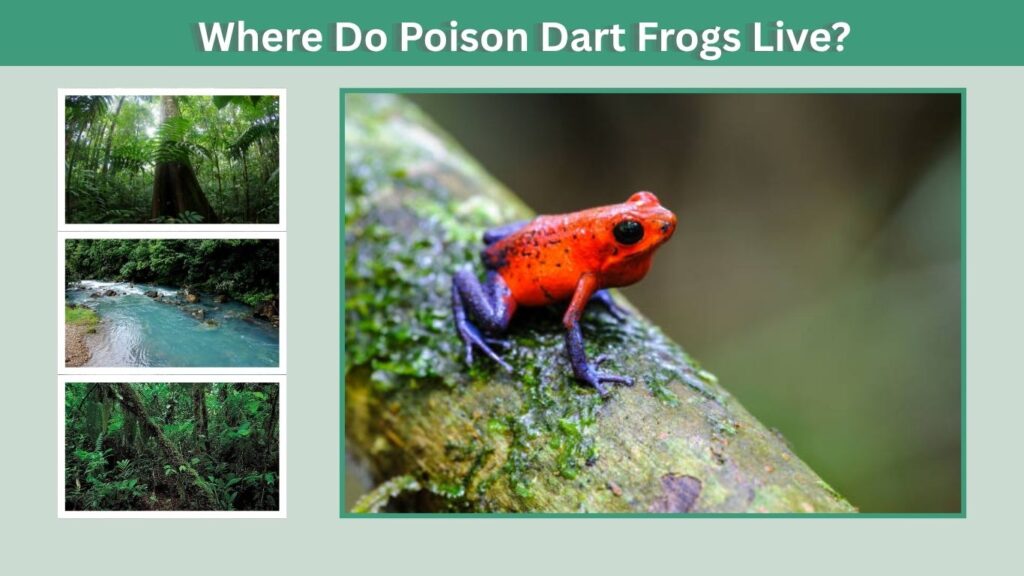
Poison dart frogs live mainly in Central and South America. They are found in countries such as Costa Rica, Panama, Colombia, Ecuador, Peru, Brazil, Suriname, Guyana, French Guiana, and nearby regions.
Not every species lives everywhere. Some poison dart frogs have wide ranges, while others are found only in a small area. This is why habitat loss can be especially dangerous for them. If a species lives in one limited region, destroying that forest can threaten the entire population.
Poison Dart Frog Habitat Range
The broad habitat range includes:
- Central American rainforests
- Amazon rainforest regions
- Chocó rainforest regions
- Lowland tropical forests
- Moist foothill forests
- Forest edges and plantations for some adaptable species
- Forest islands and isolated habitat patches for certain species
Some species live close to streams or wet forest floors. Others use bromeliads, tree holes, or water-filled plant cups as breeding sites.
Poison Dart Frog Rainforest Habitat
The rainforest is the best-known poison dart frog habitat. Rainforests provide the high humidity and dense plant life these frogs need. The forest floor is especially important because it contains leaf litter, rotting wood, roots, moss, and small insects.
Life on the Forest Floor
Many poison dart frogs spend much of their time close to the ground. They move through leaves, hide under plants, and hunt tiny prey. Their colors may be bright, but they are still small enough to disappear among leaves and roots.
The forest floor provides:
- Cover from predators
- Moisture for skin
- Places to lay eggs
- Insects for food
- Safe pathways between hiding spots
- Decaying material that supports insect life
Without healthy leaf litter, many species would lose both shelter and food.
Microhabitats: The Small Spaces That Matter
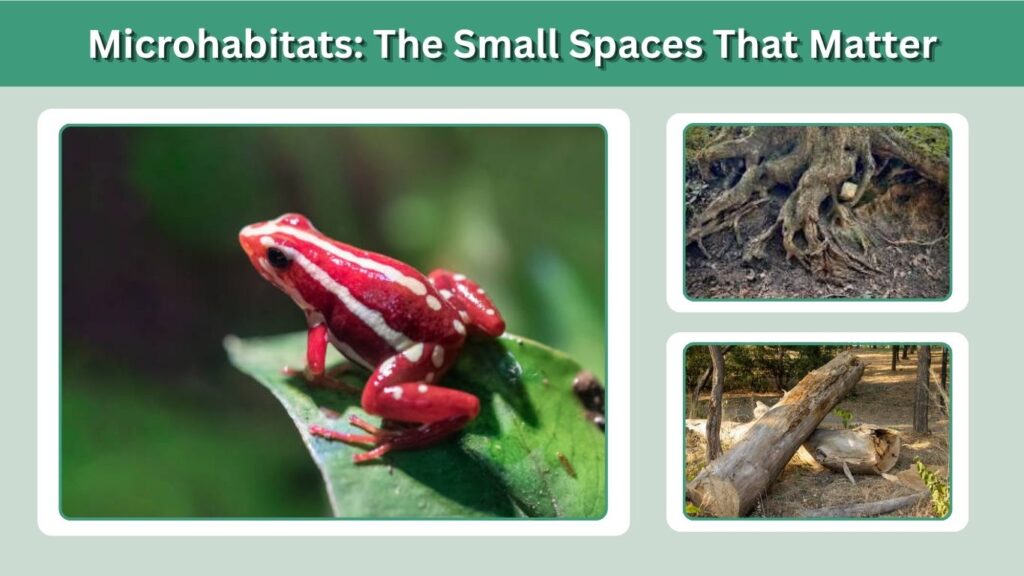
A microhabitat is a small area within a larger habitat. For poison dart frogs, microhabitats are extremely important. A whole rainforest may look suitable, but a frog may depend on one specific type of small space.
Examples of Poison Dart Frog Microhabitats
Poison dart frogs may use:
- Leaf litter on the forest floor
- Mossy rocks
- Tree roots
- Fallen logs
- Bromeliads
- Water-filled tree holes
- Small ground pools
- Stream edges
- Low branches and vines
Some frogs are mostly terrestrial, meaning they stay on the ground. Others are more arboreal or semi-arboreal, meaning they climb plants and use elevated water pools.
Blue Poison Dart Frog Habitat
The blue poison dart frog is closely associated with Suriname, especially forest island habitats near the Sipaliwini Savanna. It is often linked to humid forest patches rather than one continuous rainforest area.
Blue poison dart frogs are mostly terrestrial. They live near moisture, leaf litter, moss, and forest cover. Like other dart frogs, they need high humidity and access to small prey.
Blue Poison Dart Frog Habitat Facts
Blue poison dart frog habitat usually includes:
- Humid forest areas
- Leaf litter
- Mossy ground
- Rocky or root-covered spaces
- Nearby water sources
- Dense cover
- Small insects and arthropods
Because their natural range is limited, habitat protection is important for long-term survival.
Golden Poison Dart Frog Habitat
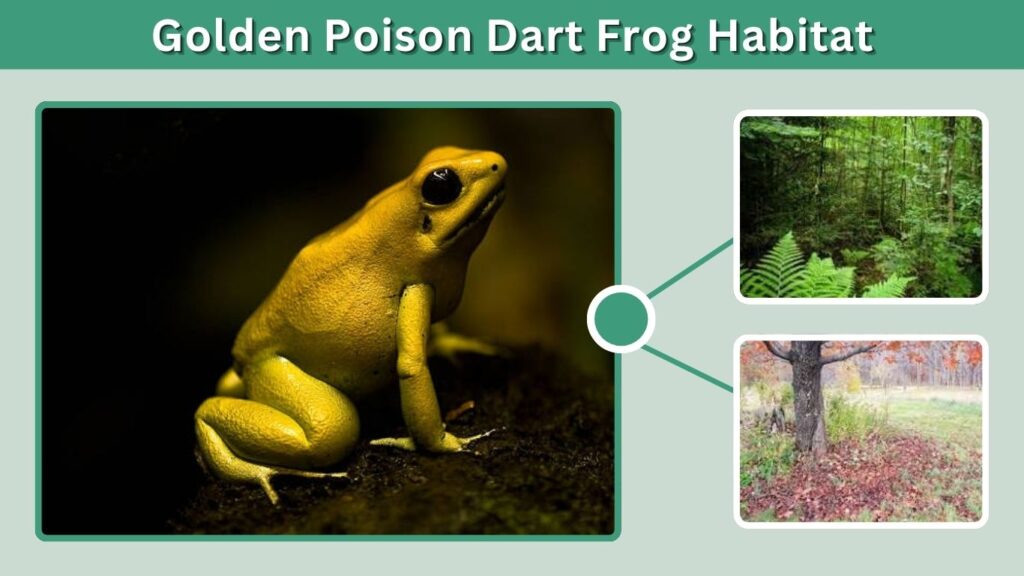
The golden poison dart frog lives in the Pacific coastal rainforest region of Colombia. This species is famous for being one of the most toxic animals on Earth, but its habitat is just as important as its poison.
Golden poison dart frogs need warm, wet forest conditions with high rainfall and humidity. They live in rainforest areas where tiny prey is abundant and moisture remains stable.
Golden Poison Dart Frog Natural Habitat
The golden poison dart frog’s habitat includes:
- Colombian rainforest
- Very humid conditions
- Dense vegetation
- Leaf litter
- Warm temperatures
- Small invertebrate prey
- Forest cover and shelter
Because this species has a limited natural range, habitat destruction can be a major threat.
Strawberry Poison Dart Frog Habitat
The strawberry poison dart frog is found in parts of Central America. It is especially known from rainforest habitats in countries such as Costa Rica, Panama, and Nicaragua. This frog is famous for its bright colors and complex breeding behavior.
Strawberry poison dart frogs often use moist forest floors and low vegetation. Some populations use water-filled plant structures for tadpoles. Females may feed tadpoles unfertilized eggs, which makes the breeding habitat especially important.
Strawberry Poison Dart Frog Habitat and Behavior
Its habitat may include:
- Wet lowland forests
- Leaf litter
- Low plants
- Bromeliads
- Small water pools
- Humid forest edges
- Dense plant cover
This frog’s habitat is not just about shelter. It must also support reproduction, including safe places for tadpoles.
Green and Black Poison Dart Frog Habitat
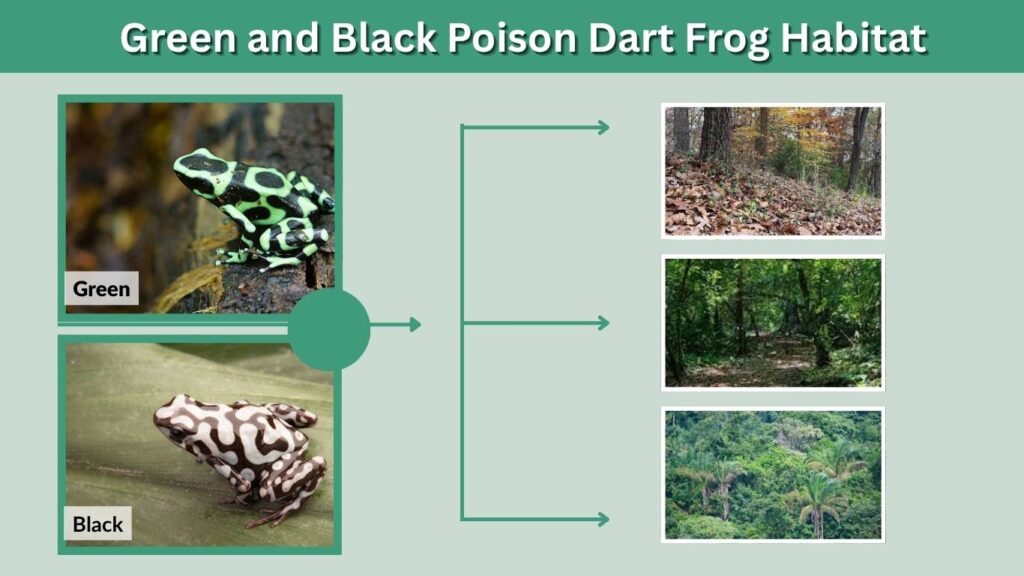
Green and black poison dart frogs live in humid tropical forest habitats in Central and South America. They are often found on the forest floor, in leaf litter, and around low vegetation.
These frogs may be more adaptable than some highly restricted species, but they still need moisture and cover. Their green and black coloration helps warn predators while they move through the forest.
Habitat Needs
Green and black poison dart frogs need:
- Warm temperatures
- High humidity
- Leaf litter
- Dense vegetation
- Small insects
- Moist hiding places
- Safe breeding areas
Dyeing Poison Dart Frog Habitat
Dyeing poison dart frogs are associated with the Guiana Shield region of South America, including areas such as Suriname, Guyana, French Guiana, and nearby regions. They live in humid forests with plenty of cover and small prey.
Many dyeing poison dart frogs are found near the forest floor but may also climb low surfaces. Their bold colors and patterns vary widely, which is one reason they are popular in educational displays and the pet trade.
Amazon Rainforest Poison Dart Frog Habitat
Many poison dart frog species live in or near the Amazon rainforest. The Amazon provides a huge variety of microhabitats, from leaf-covered forest floors to plant-held water pools.
However, not every poison dart frog is an Amazon species. Some live in Central America, the Chocó region, the Guiana Shield, or other tropical areas. It is better to say that many poison dart frogs live in tropical rainforests, including Amazon regions, rather than saying all poison dart frogs live in the Amazon.
How Do Poison Dart Frogs Adapt to Their Habitat?
Poison dart frogs have several adaptations that help them survive in wet tropical forests. Their small bodies help them move through leaf litter, while their bright colors warn predators that they may be toxic.
Their skin absorbs moisture, which helps them live in humid places but also makes them vulnerable to drying out. This is why they need damp habitats.
Important Habitat Adaptations
Poison dart frogs adapt through:
- Bright warning colors
- Toxic skin secretions in wild frogs
- Small size for moving through leaf litter
- Sticky tongues for catching tiny prey
- Daytime activity in many species
- Parental care in some species
- Use of plant pools and tree holes for tadpoles
These adaptations work best in healthy rainforest environments.
Poison Dart Frog Habitat and Food
Habitat and food are closely connected. Poison dart frogs eat tiny insects and arthropods that live in rainforest leaf litter and vegetation. These may include ants, mites, termites, beetles, flies, and springtails.
Their habitat also influences their poison. Many wild poison dart frogs gain toxic compounds from the insects they eat. If the habitat loses those insects, the frog’s diet and chemical defenses may change.
Why Leaf Litter Matters
Leaf litter supports many small insects. It also holds moisture and gives frogs places to hide. Removing or damaging forest floor habitat reduces both shelter and food.
Poison Dart Frog Habitat Loss
Habitat loss is one of the biggest threats to poison dart frogs. Forests may be cleared for farming, logging, mining, roads, and development. Pollution and climate change can also affect moisture, temperature, and breeding sites.
Because some poison dart frogs live in very small ranges, even limited habitat destruction can have serious effects.
Main Threats to Habitat
Threats include:
- Deforestation
- Agriculture
- Logging
- Mining
- Pollution
- Climate change
- Illegal collection
- Disease
- Fragmented forest patches
Protecting rainforest habitats helps protect poison dart frogs and many other species.
Poison Dart Frog Habitat Setup for Pets
A pet poison dart frog habitat is usually called a terrarium or vivarium. It should copy the frog’s natural environment as closely as possible, with humidity, plants, hiding places, and safe surfaces.
Pet dart frogs are display animals, not handling pets. Their enclosure should be stable, clean, and designed for the exact species.
Basic Habitat Setup
A poison dart frog habitat setup may include:
- Glass terrarium
- Secure lid
- Drainage layer
- Moist substrate
- Leaf litter
- Live plants
- Cork bark or hides
- Small water areas or bromeliads
- Thermometer and hygrometer
- Mist system or hand misting
- Springtails and isopods in bioactive setups
Most dart frogs do not need a deep swimming area. They need moisture, but they can drown in deep water if the setup is unsafe.
Poison Dart Frog Habitat Plants
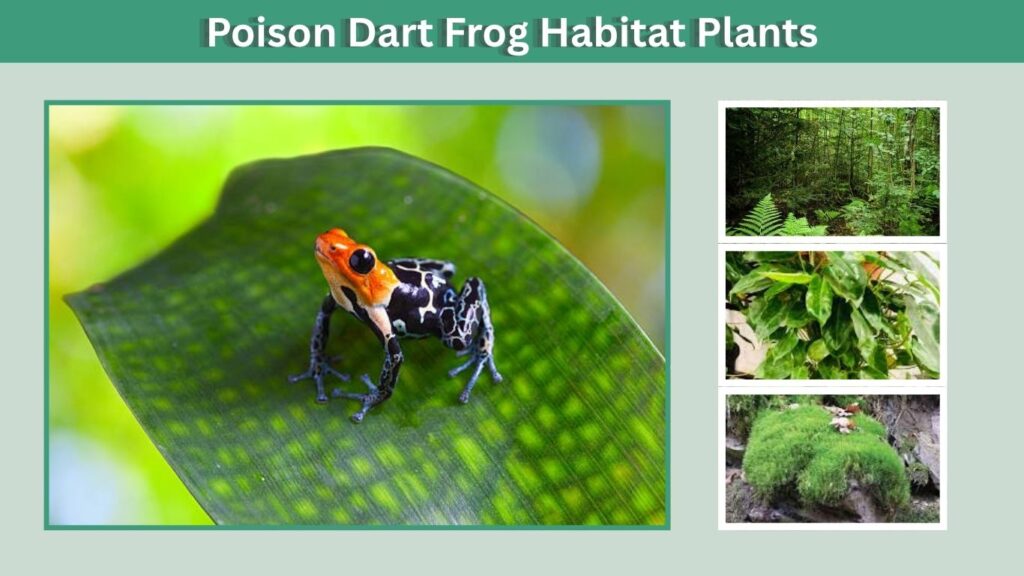
Plants are important in both wild and captive habitats. In the wild, plants provide shelter, breeding sites, and moisture. In captivity, plants help maintain humidity and create a natural-looking enclosure.
Common Vivarium Plant Types
Popular plant choices may include:
- Bromeliads
- Pothos
- Ferns
- Peperomia
- Philodendron
- Mosses
- Small tropical plants
Plants should be pesticide-free and safe for amphibians. Any plant added to a frog enclosure should be cleaned and prepared properly.
Special Habitat Considerations for Poison Dart Frogs
Poison dart frogs need stable conditions. Sudden drops in humidity, poor ventilation, dirty substrate, or unsafe water can cause stress and illness. A habitat should be humid but not stagnant.
Key Considerations
Important habitat factors include:
- High humidity with airflow
- Clean water
- No chemical exposure
- Safe plants and decorations
- No sharp surfaces
- No deep water hazards
- Species-appropriate group size
- Regular cleaning and monitoring
Different species may need slightly different conditions, so always research the exact frog before creating a habitat.
FAQs
What is the habitat of a poison dart frog?
A poison dart frog’s habitat is usually a warm, humid tropical forest in Central or South America. These frogs live in leaf litter, moss, plants, roots, and other damp hiding places. Many species need rainforest moisture, small insects, and safe breeding sites.
Do poison dart frogs live in the rainforest?
Yes, many poison dart frogs live in rainforest habitats. Rainforests provide the high humidity, warmth, plants, and insect prey they need. However, not all species live in the same rainforest region; different species may live in Central America, the Amazon, Colombia, Suriname, or other areas.
What is the blue poison dart frog habitat?
Blue poison dart frogs are associated with humid forest habitats in Suriname, especially forest patches near the Sipaliwini Savanna. They live near leaf litter, moss, roots, and water sources. They are mostly ground-dwelling but need moist, sheltered forest conditions.
What is the golden poison dart frog habitat?
The golden poison dart frog lives in the Pacific coastal rainforest region of Colombia. Its habitat is warm, wet, and very humid, with dense forest cover, leaf litter, and many small invertebrates. Because its range is limited, habitat protection is important.
What habitat do pet poison dart frogs need?
Pet poison dart frogs need a humid terrarium or vivarium with live plants, leaf litter, hiding places, clean water, and stable temperatures. The setup should have high humidity with good airflow. Deep water should be avoided because dart frogs are not strong swimmers.
