
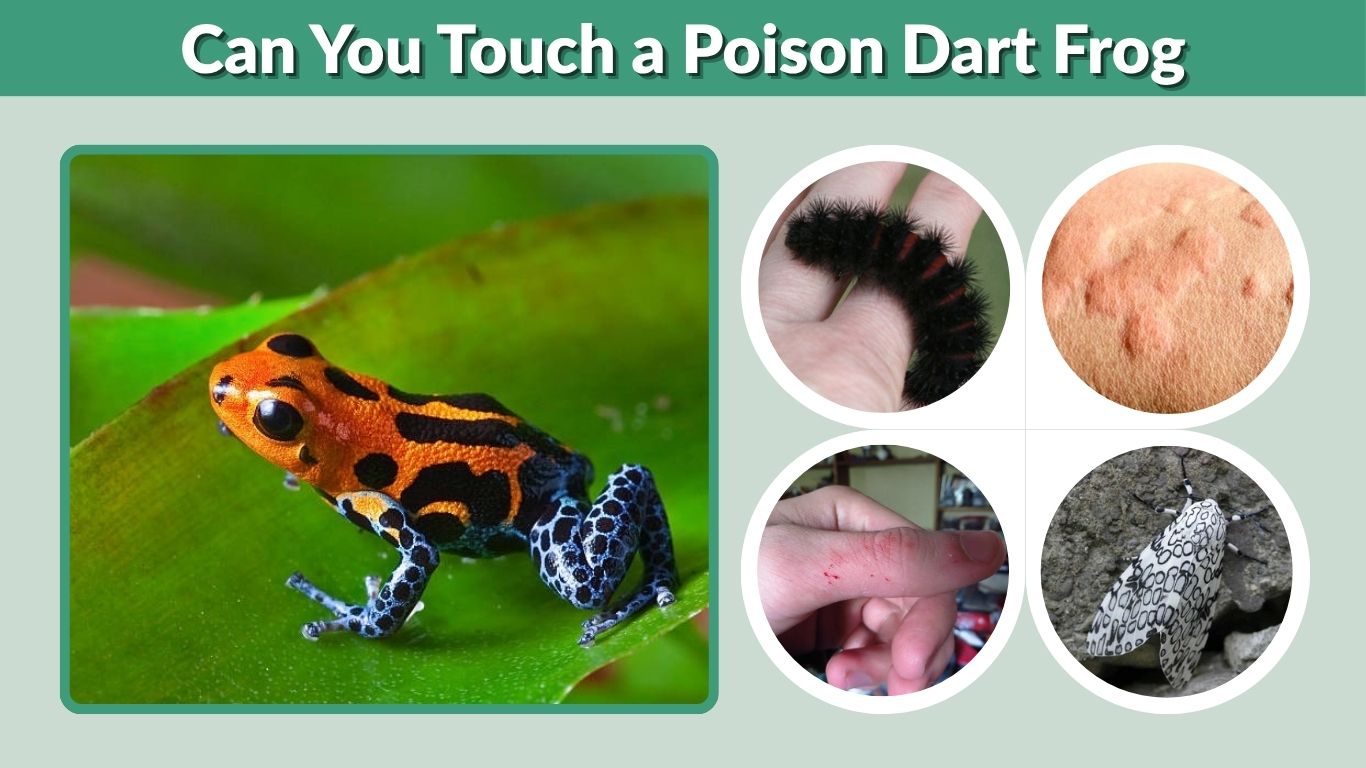
Can you touch a poison dart frog? The safest answer is no, especially if the frog is wild. Poison dart frogs carry toxins in their skin, and some species can be extremely dangerous. Captive-bred poison dart frogs are usually far less toxic, but they are still delicate amphibians that should not be handled unless absolutely necessary.
Can You Touch a Poison Dart Frog?
You should not touch a poison dart frog in the wild. These frogs are famous for their bright colors and powerful skin toxins. Their color is a warning signal to predators, but it is also a warning to people: do not pick them up, rub them, or let their skin secretions touch your eyes, mouth, cuts, or broken skin.
Why Touching Wild Poison Dart Frogs Is Risky
Wild poison dart frogs get their toxins from what they eat. In rainforest habitats, they feed on tiny insects and arthropods such as ants, termites, beetles, and other small invertebrates. Some of these prey contain alkaloids, which the frogs store in their skin glands.
That means the frog does not need to bite, sting, or attack you to be dangerous. The toxin is on the skin. If you touch a highly toxic species and then touch your mouth, eyes, or an open wound, you could expose yourself to harmful chemicals.
Are Captive Poison Dart Frogs Safe to Touch?
Captive-bred poison dart frogs are usually much less toxic than wild frogs. In human care, they are normally fed fruit flies, pinhead crickets, and other feeder insects that do not contain the same toxin-building compounds found in the rainforest. Over time, captive frogs usually lose most or all of their toxicity.
Even so, “less toxic” does not mean “good to handle.” Poison dart frogs have sensitive skin that absorbs moisture, chemicals, soap residue, lotion, oils, and salts from human hands. Handling can stress or injure them, even if they are not dangerous to you.
Can a Poison Dart Frog Kill You?
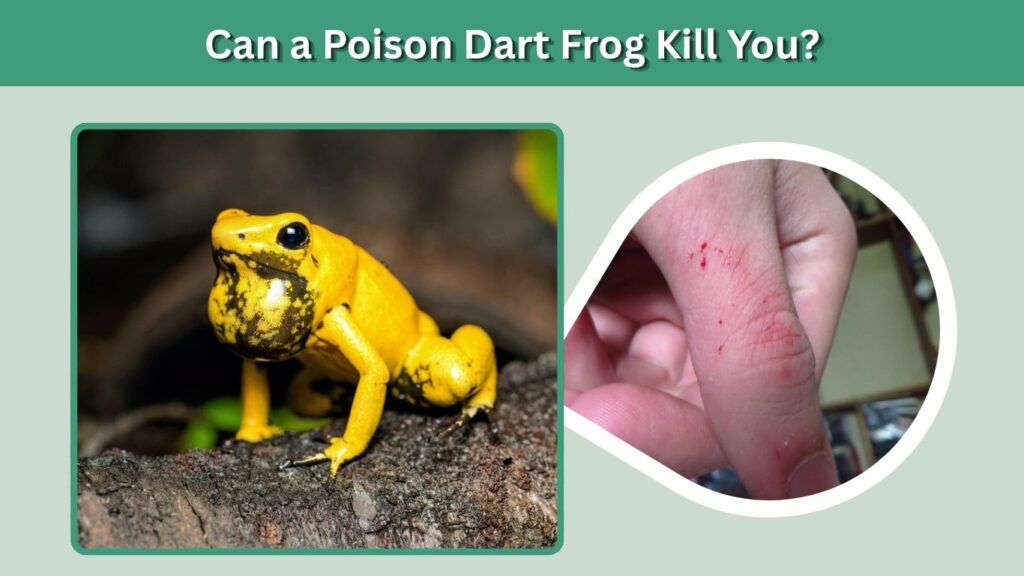
Some poison dart frogs can kill humans, but the risk depends heavily on the species, whether it is wild or captive, and how exposure happens. The most dangerous species are not the ones most people see in pet collections.
The Most Dangerous Poison Dart Frogs
The golden poison frog is often considered one of the most toxic animals in the world. It belongs to the genus Phyllobates, a group known for especially powerful toxins. In the wild, the skin secretions of certain species can contain toxins strong enough to affect nerves, muscles, and heart function.
However, fatal human cases from casual contact are not common. Most danger comes from direct toxin exposure, especially if toxins enter the bloodstream or mucous membranes. Historically, some Indigenous groups used toxins from certain poison frogs on hunting darts, which is where the name “poison dart frog” comes from.
Can Touching a Poison Dart Frog Kill You?
Touching a wild poison dart frog could be dangerous, but death from a brief touch is not the typical scenario. The bigger risk is transferring toxin from your hand to your mouth, eyes, nose, or a cut. Children, pets, and people who do not wash their hands afterward may face higher risk.
Possible exposure symptoms may include:
- Burning, numbness, or irritation where contact happened
- Nausea, weakness, or dizziness
- Muscle problems or breathing difficulty in serious cases
- Heart rhythm problems with very potent toxins
- Severe poisoning if toxin enters the bloodstream
If someone touches a wild poison dart frog, they should wash the area thoroughly with clean water and seek medical advice, especially if symptoms appear.
Wild vs Captive Poison Dart Frogs
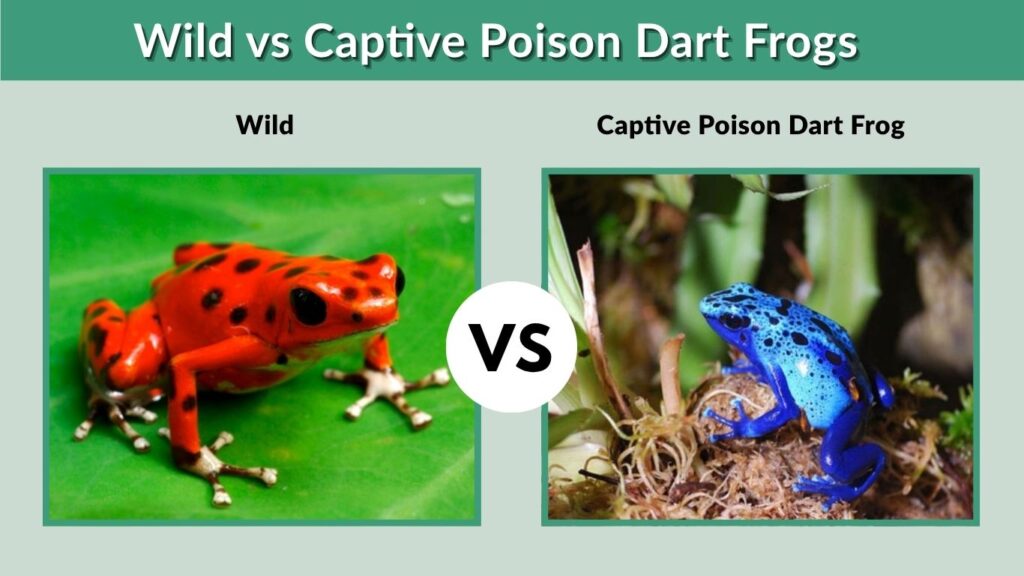
The difference between wild and captive poison dart frogs is one of the most important things to understand. The same type of frog may be dangerous in the wild but far less toxic after generations in captivity.
| Type of poison dart frog | Toxicity level | Handling risk | Main reason |
| Wild poison dart frog | High to extreme, depending on species | Very high | Natural diet provides toxin-building compounds |
| Wild-caught frog kept in captivity | Decreases over time | Still risky | Toxins may remain for a period after capture |
| Captive-bred pet frog | Usually low or non-toxic | Low to moderate for humans, high stress for frog | Captive diet lacks wild alkaloid sources |
| Unknown-source frog | Uncertain | Avoid handling | Origin and toxin level may be unclear |
Why Captive Frogs Lose Their Poison
Poison dart frogs do not create their toxins in the same way venomous animals produce venom. Instead, they collect chemical compounds from wild prey and store them in their skin. When they no longer eat those prey items, they lose the source of their chemical defense.
This is why many captive-bred poison dart frogs are popular among experienced amphibian keepers. They are colorful, active during the day, and fascinating to observe. Still, they display animals, not handling pets.
Can You Hold a Poison Dart Frog?
You should not hold a poison dart frog unless it is necessary for care, medical treatment, or safe relocation. Even captive-bred frogs can be harmed by handling. Their skin is thin, moist, and highly absorbent.
Why Handling Is Bad for the Frog
Human hands can damage amphibians in several ways. Even clean hands may carry oils or tiny traces of soap. Dry hands can remove moisture from the frog’s skin. Rough handling can injure their legs, body, or delicate toes.
Avoid handling poison dart frogs because:
- Their skin absorbs chemicals easily
- Handling causes stress
- Their small bodies are easy to injure
- They can jump suddenly and fall
- Wild frogs may carry dangerous toxins
- Pet frogs do better as display animals
If you must move a captive frog, use clean, damp gloves or a small container instead of bare hands. Keep the process short and gentle.
Can You Touch a Poison Dart Frog With Gloves?
Gloves reduce risk, but they do not make handling ideal. Powder-free nitrile gloves, lightly moistened with dechlorinated water, are safer than bare hands when handling is unavoidable. Gloves protect you from possible toxins and protect the frog from oils or residue on your skin.
Do not use gloves with powder, soap residue, sanitizer, or chemicals. Amphibians are extremely sensitive to contaminants.
Can Poison Dart Frogs Be Pets?
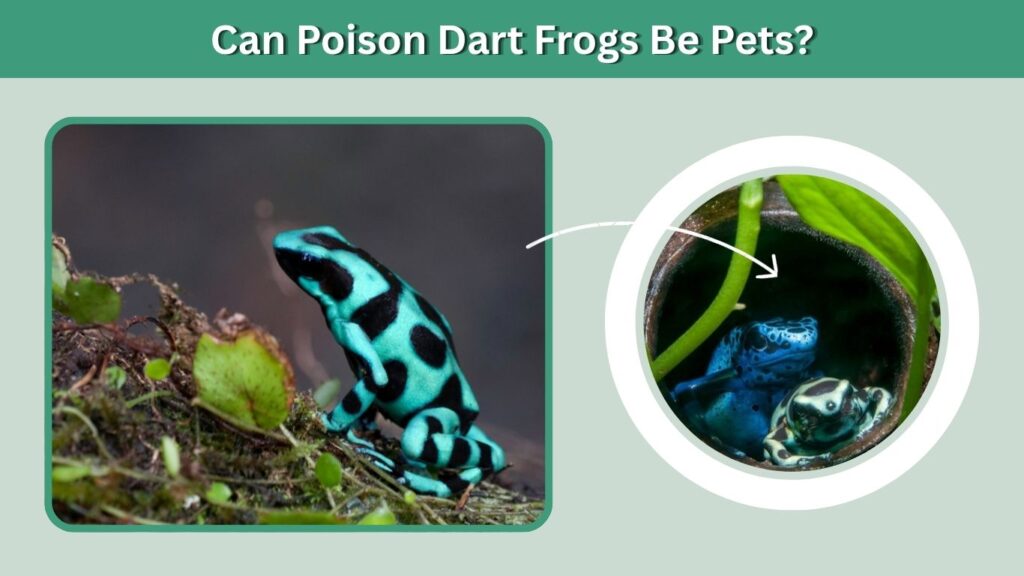
Yes, captive-bred poison dart frogs can be kept as pets in many places, but they are best for people who understand amphibian care. They are not beginner pets in the same way as a hardy fish or common reptile. They need stable humidity, temperature, clean water, live food, and a properly planted enclosure.
What Makes Them Good Display Pets
Poison dart frogs are popular because they are colorful and active during the day. Many frogs hide at night, but dart frogs often move around when people are awake. This makes them enjoyable to watch in a naturalistic terrarium.
Good reasons people keep them include:
- Bright colors and interesting behavior
- Small space needs compared with many reptiles
- Beautiful planted vivariums
- Daytime activity
- Captive-bred frogs are usually non-toxic
However, they should not be treated like pets you hold or play with. They are better compared to aquarium fish: observe them, care for them, and avoid unnecessary handling.
Can You Own a Poison Dart Frog Legally?
In many places, captive-bred poison dart frogs are legal to own, but laws vary by country, state, province, and city. Some species may be restricted, and importing wild frogs may be illegal or unethical. Before buying one, check local wildlife rules and buy only from reputable captive breeders.
Avoid wild-caught frogs. Wild collection can harm local populations, spread disease, and introduce animals with unknown toxin levels into the pet trade.
Where Can Poison Dart Frogs Live?
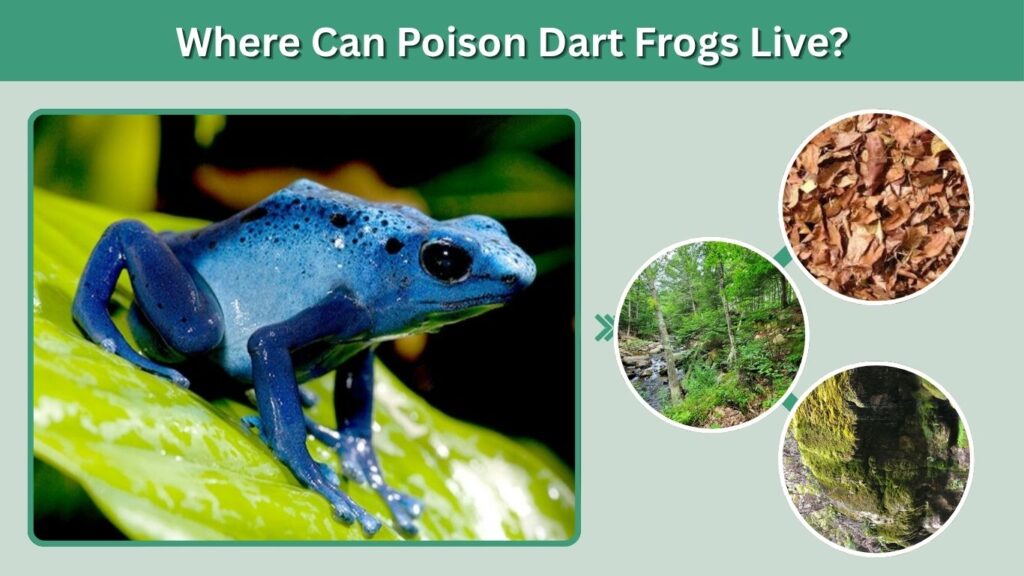
Poison dart frogs naturally live in warm, humid forests in Central and South America. They are often found in tropical rainforests, leaf litter, near streams, and in damp forest floors where small insects are abundant.
Natural Habitat
Most poison dart frogs need moisture to survive. Their skin must stay damp, and their eggs and tadpoles depend on water or very humid environments. Some species lay eggs on leaves or land, then transport tadpoles to tiny pools of water.
Their natural habitats may include:
- Tropical rainforests
- Wet forest floors
- Leaf litter
- Mossy areas
- Stream edges
- Bromeliads and small water pockets
Bright coloration helps warn predators that the frogs may be toxic. This warning coloration is called aposematism.
Can Poison Dart Frogs Swim?
Poison dart frogs can swim, but they are not strong aquatic frogs. They are mostly land-dwelling amphibians that need humid surroundings. In a pet enclosure, they should have access to moisture, but deep water can be dangerous because small dart frogs may drown if they cannot climb out easily.
A shallow water area, moist substrate, and high humidity are safer than a deep pool.
Can Poison Dart Frogs Live Together?
Some poison dart frogs can live together, but it depends on species, sex, enclosure size, and temperament. Not all dart frogs should be mixed. Some species are territorial, and males may fight. Females of certain species may also compete aggressively.
Same-Species Groups
Many keepers have the best success keeping one species per enclosure. Same-species groups can work if the enclosure is large enough and the species is known to tolerate groups. Even then, behavior should be monitored.
Warning signs include chasing, one frog hiding constantly, weight loss, or one frog blocking another from food.
Mixed-Species Enclosures
Mixing different poison dart frog species is usually not recommended. Different species may need slightly different conditions, and mixing can cause stress, aggression, disease spread, or accidental hybrid breeding. For responsible keeping, a single-species setup is usually safer.
What Can Eat a Poison Dart Frog?
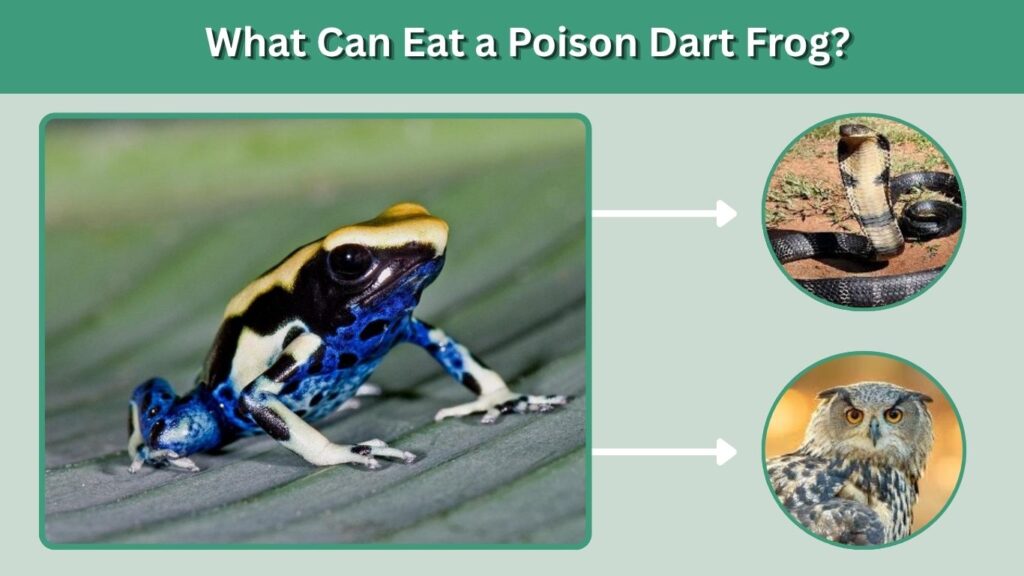
Because poison dart frogs are toxic, many predators avoid them. Their bright colors advertise that they are not worth eating. However, some predators may still eat them or tolerate their toxins.
Possible predators can include certain snakes, birds, spiders, and larger animals that have resistance or that target less toxic species. Eggs and tadpoles are more vulnerable than adult frogs.
How Poison Dart Frogs Protect Themselves
Poison dart frogs rely on chemical defense rather than size or strength. They are small animals, so their survival depends on warning colors, toxins, hiding places, and quick movement. Their poison does not help them hunt. It helps stop predators from eating them.
They do not spit poison, shoot poison, or inject venom. They are poisonous, not venomous. This difference matters: poisonous animals are harmful when touched or eaten, while venomous animals inject toxins through a bite or sting.
What Should You Do If You Touch One?
If you accidentally touch a poison dart frog, stay calm but take it seriously. Risk depends on the species and whether the frog is wild or captive.
Safety Steps After Contact
Follow these steps after accidental contact:
- Do not touch your eyes, mouth, nose, food, or open cuts.
- Wash your hands and the contact area with clean running water.
- Remove contaminated gloves or clothing if needed.
- Watch for symptoms such as numbness, nausea, weakness, or breathing trouble.
- Seek urgent medical help if symptoms appear or if the frog was wild.
For pet dart frogs, accidental brief contact is usually less concerning if the frog is captive-bred. Still, wash your hands and avoid making handling a habit.
FAQs
Can you touch a poison dart frog safely?
You should not touch a wild poison dart frog. Some species carry powerful skin toxins that can be dangerous if they reach your eyes, mouth, or broken skin. Captive-bred frogs are usually far less toxic, but handling can still harm the frog and cause stress.
Can a poison dart frog kill a human?
Yes, some wild poison dart frogs have toxins strong enough to kill humans, especially highly toxic species such as the golden poison frog. However, death from casual contact is rare. The greatest danger comes when toxin enters the bloodstream, mouth, eyes, or an open wound.
Can you hold a pet poison dart frog?
You should avoid holding a pet poison dart frog. Captive-bred dart frogs are usually not dangerously toxic, but their skin is delicate and absorbs oils, salts, soap, and chemicals from human hands. They are best kept as display pets in a planted vivarium.
Can poison dart frogs kill you if you touch them?
A brief touch may not kill you, but touching a wild poison dart frog can still be dangerous. The toxin is carried on the skin, so the risk increases if you rub your eyes, touch your mouth, or have cuts. Wash immediately after contact.
Can you own poison dart frogs?
In many places, captive-bred poison dart frogs can be owned legally, but local laws vary. Always check your area’s rules before buying one. Choose captive-bred frogs from reputable breeders and avoid wild-caught animals because of conservation, health, and toxicity concerns.
